
The Word on the Street: Nuart Aberdeen 2026 to Pivot Toward Text and Poetry in Global First
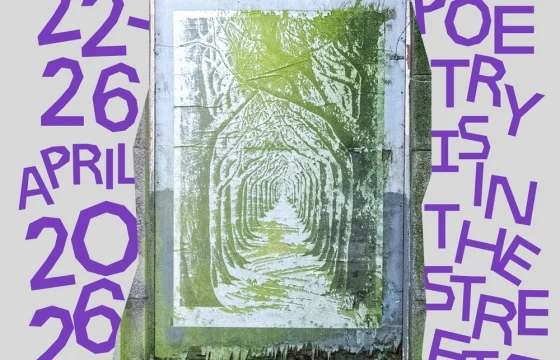
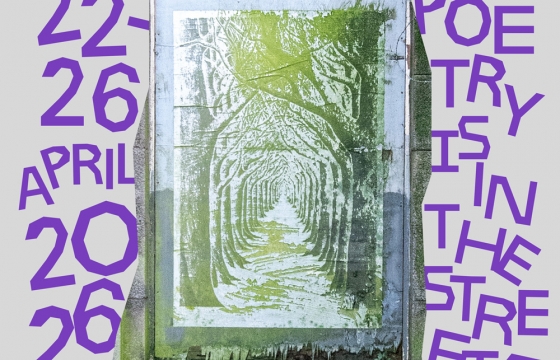
ABERDEEN, SCOTLAND – In a move that signals a significant shift in the landscape of contemporary urban art, the organizers of Nuart Aberdeen have announced that the 2026 edition of the world-renowned festival will focus almost exclusively on poetry and text-based works. Scheduled to take place from April 22 to April 26, 2026, this iteration marks a departure from the "muralismo" trend that has dominated the street art circuit for the past decade, positioning Aberdeen as the site of a unique cultural experiment.
As street art festivals have proliferated globally, many critics have pointed to the "muralization" of cities—the production of massive, colorful, figurative works that often require heavy machinery and significant funding. Nuart Aberdeen 2026 seeks to challenge this status quo by returning the power of public expression to the written word, aiming to foster a more democratic and accessible form of urban intervention.
Main Facts: A New Chapter for Urban Expression
Nuart Aberdeen, widely considered one of the leading street art festivals in the world, has consistently pushed the boundaries of what public art can achieve. For 2026, the festival’s theme is rooted in the democratization of the "canvas." According to festival founder and curator Martyn Reed, the 2026 edition will likely be the first street art festival in history to prioritize text and poetry over figurative imagery.
The festival will feature an international roster of artists, including prominent Scottish figures and global pioneers of "subvertising" and text-based intervention. The goal is to transform the Granite City into a living library, where the walls do not just show pictures, but speak directly to the citizenry.
Key Event Details:
- Dates: April 22 – April 26, 2026
- Location: Various sites across Aberdeen, Scotland
- Core Theme: "La poésie est dans la rue" (Poetry is in the Streets)
- Primary Mediums: Stencils, paste-ups, typography, subvertising, and poetic installations.
Chronology: From Muralism to the Printed Word
The evolution of Nuart Aberdeen reflects a broader history of the street art movement. Since its inception, Nuart has balanced the "big wall" spectacle with grassroots activism. However, the path to the 2026 theme was paved by a growing concern within the curatorial team regarding the "elitism" of large-scale murals.
The Rise of the "Mega-Mural"
Over the last fifteen years, the "festivalization" of street art led to a focus on massive gable-end murals. While these works are aesthetically stunning and popular with tourists, they require significant resources: scaffolding, cherry pickers, and tens of thousands of pounds in insurance and materials. This, Reed argues, has made the mural the "least democratic" form of street art, as it is impossible for an average citizen to replicate or participate in.
The Genesis of the 2026 Theme
The inspiration for the 2026 pivot came from two distinct historical touchstones. First, the 1968 student uprisings in Paris, where the slogan "La poésie est dans la rue" (Poetry is in the streets) became a rallying cry for creative liberation. Second, a quote from UK graffiti pioneer Mode2, who noted that the power of early graffiti lay in its accessibility: unlike fine art classes that required realistic drawing skills, graffiti only required a person to know their "ABCs."
By late 2025, the Nuart team finalized the decision to strip back the spectacle and return to these roots. The 2026 festival is the culmination of this philosophical shift, moving away from the "fine art degree" requirement and toward the "craft knife and cardboard" ethos of early stencil culture.
Supporting Data: The Accessibility of Text-Based Art
The shift toward text-based art is supported by sociological observations of how the public interacts with urban spaces. Data from previous Nuart festivals suggests that while large murals are the most photographed for social media, smaller interventions—stencils, stickers, and short poetic phrases—often have a more profound psychological impact on residents.
The "Banksy Effect" and DIY Culture
The festival organizers point to the "Banksy Effect" as evidence of the power of simplicity. A stencil requires only a craft knife, a piece of cardboard, and an idea. This low barrier to entry is what Nuart 2026 seeks to revitalize. By showcasing world-class text-based artists, the festival aims to prove that the most powerful messages in the city don’t need to be five stories tall.
Several artists participating in the 2026 event began their careers as Nuart volunteers or assistants, illustrating a pipeline of talent that thrives on the "do-it-yourself" (DIY) nature of the culture. The 2026 focus is designed to inspire a new generation of "non-artists" to take ownership of their visual environment.
Official Responses: Curatorial and Civic Perspectives
Martyn Reed, the visionary behind Nuart, has been vocal about the responsibility of curators to ensure the survival of street art’s rebellious spirit.
"As curators, we have a responsibility to not only showcase the most technically competent works of our time but to also ensure the culture’s development and survival," Reed stated. "No one stands in front of a tower block mural and thinks, ‘I’ll pop home and have a go myself on the gable end of Gran’s house.’ But with text and stencils, that spark of ‘I can do this’ is ignited."
The Artist Roster
The 2026 lineup represents a diverse cross-section of the text-based movement:
- Robert Montgomery (SCT): Known for his hauntingly beautiful light poems and billboard takeovers.
- dr.d AKA Subvertiser (UK): A master of "subvertising," altering public signage to deliver political and social critiques.
- The Rebel Bear (SCT): Often referred to as Scotland’s answer to Banksy, focusing on poignant, often humorous stenciled commentary.
- Ciarán Glöbel (SCT): A sign writer and artist who bridges the gap between traditional craftsmanship and modern street interventions.
- Alisa Oleva (UK): Her work often involves "walking" and site-specific text that interacts with the city’s geography.
Other confirmed artists include HICKS (UK), James Klinge (SCT), KMG (SCT), Molly Hankinson (UK), Remi Rough (UK), The Writing Is On The Wall (UK), Trackie McLeod (SCT), and V2k (LT-SCT).
Civic Support
Despite the potentially subversive nature of text-based art, the Aberdeen City Council and local partners have remained steadfast in their support. The council views Nuart as a primary driver of "cultural tourism," but also as a vital part of the city’s identity. By allowing the festival to experiment with more experimental, text-heavy forms, the city is positioning itself as a progressive hub for contemporary thought.
Implications: Reclaiming the Urban Narrative
The move toward a text-based festival carries significant implications for the future of urban design and public discourse. In an era where public space is increasingly privatized and saturated with advertising, the "poetry in the streets" movement represents a reclamation of the commons.
The City as a Canvas, Not a Billboard
By focusing on text, Nuart 2026 highlights the tension between commercial messaging and public expression. When an artist replaces a billboard with a poem, it forces the pedestrian to stop and engage with their surroundings in a way that a passive figurative mural might not. It transforms the city from a place of consumption into a place of contemplation.
Academic and Scholarly Interest
The 2026 festival is also expected to draw significant attention from scholars of semiotics, linguistics, and urban studies. The transition from image to word provides a rich field for researching how "human-scale" interventions affect the livability and social cohesion of a city.
Future Outlook
If Nuart Aberdeen 2026 is successful, it could signal the end of the "arms race" for the world’s largest mural. It suggests a future where street art festivals are judged not by the square footage of paint applied to walls, but by the depth of the dialogue they spark among the people who live there.
As the city of Aberdeen prepares for the arrival of these artists in April, the message from the organizers is clear: art belongs to everyone, and sometimes, the most revolutionary thing you can do is simply pick up a pen—or a spray can—and write.
For further information on the 2026 festival, including walking tour schedules and artist workshops, visit the official Nuart Aberdeen website.

Leave a Comment