The Fabric of the Uncanny: How Modern Puppetry Reclaims the Surrealist Manifesto
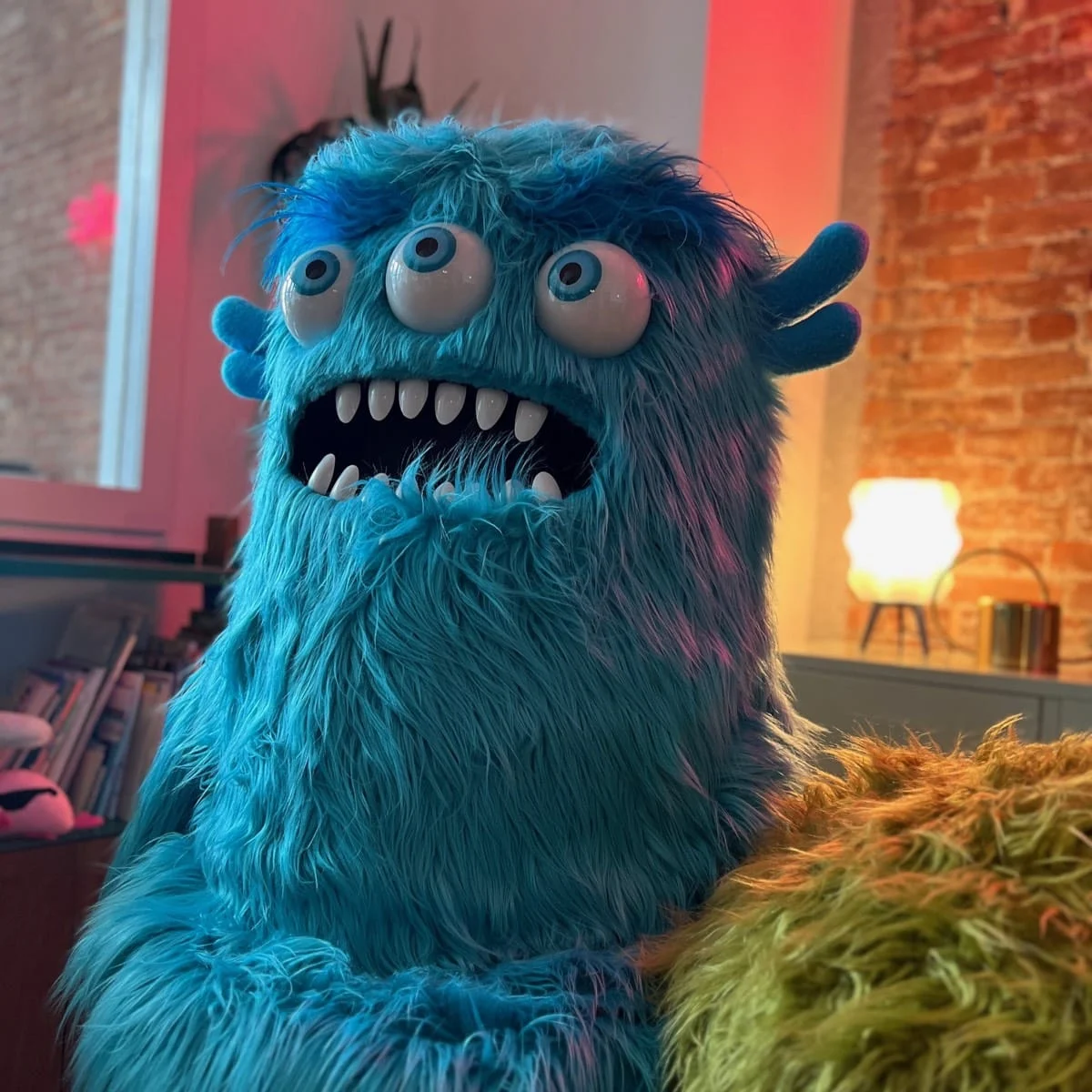
In a discreet studio located in the heart of SoHo, New York, a group of artisans is engaged in an act of physical alchemy. They take blocks of industrial foam, sharp blades, and a proprietary textile known as "dream fleece" to create beings that have no biological right to exist. To the casual observer, Furry Puppet Studio is a high-end design house catering to global brands and musical icons. To the art historian, however, it is something more profound: a contemporary outpost for the Surrealist movement, proving that the "marvelous" is not merely a concept for the canvas, but something that can be held, operated, and looked in the eye.
The link between puppetry and surrealism is not incidental; it is foundational. Both disciplines share a singular, impossible goal: to place a fabricated entity in front of a viewer and convince them, if only for a fleeting second, that the object possesses a soul. While the materials have evolved from oil paint and celluloid to latex and silicon, the underlying psychological "trick" remains constant.
Main Facts: The Architecture of an Impossible Being
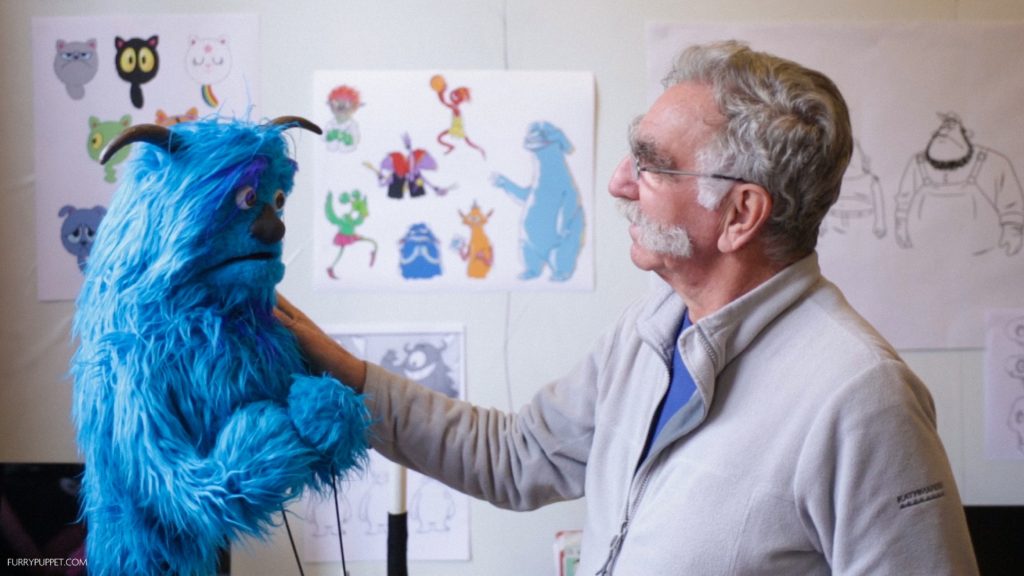
Furry Puppet Studio, founded by Zack Buchman, operates on a philosophy of "unusual work." Unlike the mass-produced animatronics of major film studios, every creature produced here is a bespoke creation, carved by hand in a process that allows for no "undo" command. This commitment to the permanent, physical act of creation is what separates their work from the digital "uncanny valley" of modern CGI.

The Team and the Material
The studio’s output is the result of a highly specialized assembly of talent. The roster includes a foam carver Buchman likens to a real-life Edward Scissorhands, mechanical engineers who design the internal skeletons of these creatures, and Polly Smith—a legendary costume designer and the co-inventor of the sports bra. This blend of industrial engineering and high-fashion tailoring results in puppets that possess a startling tactile reality.
The studio’s signature material, "dream fleece," is manufactured in-house. This fabric is designed to catch light and move in a way that mimics organic skin or fur without losing its dreamlike quality. This material serves as the "skin" for characters that have populated everything from Apple campaigns in Japan to music videos for Missy Elliott and Pharrell Williams.
The Catalog of the Surreal
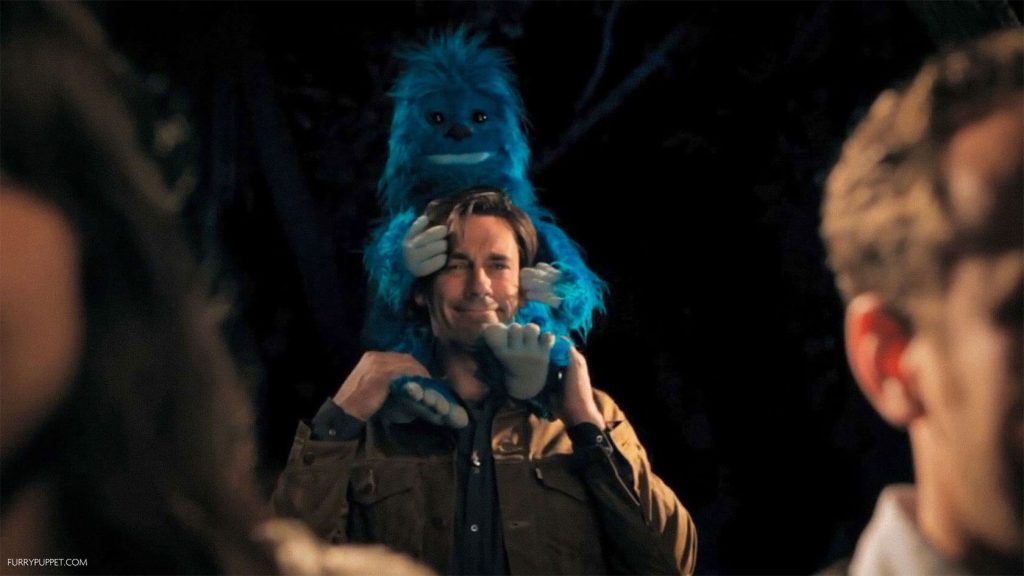
The studio’s portfolio reads like a checklist of Surrealist motifs. One notable project involved a music video for Herman Düne, featuring a lovelorn blue yeti. In a scene that André Breton—the father of Surrealism—would have recognized as the "marvelous" inserted into the mundane, the yeti stands on a dark roadside and hitches a ride from actor Jon Hamm. The yeti’s stillness, rather than its movement, is what sells the illusion of life.
Other projects include:
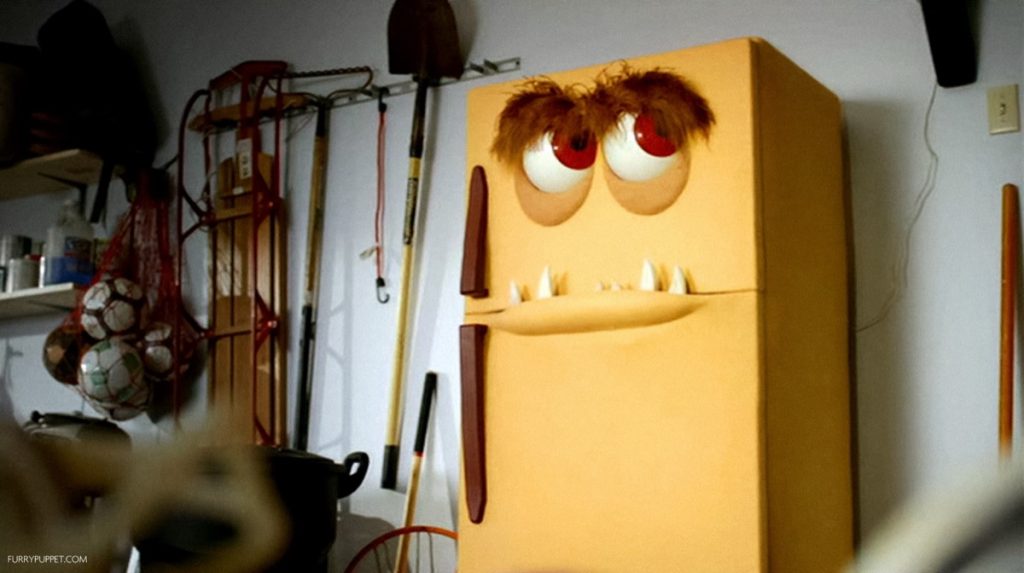
- The Animated Object: A refrigerator with heavy eyelids and bushy brows, turning a household appliance into a sentient watcher—a direct descendant of Meret Oppenheim’s fur-covered teacup.
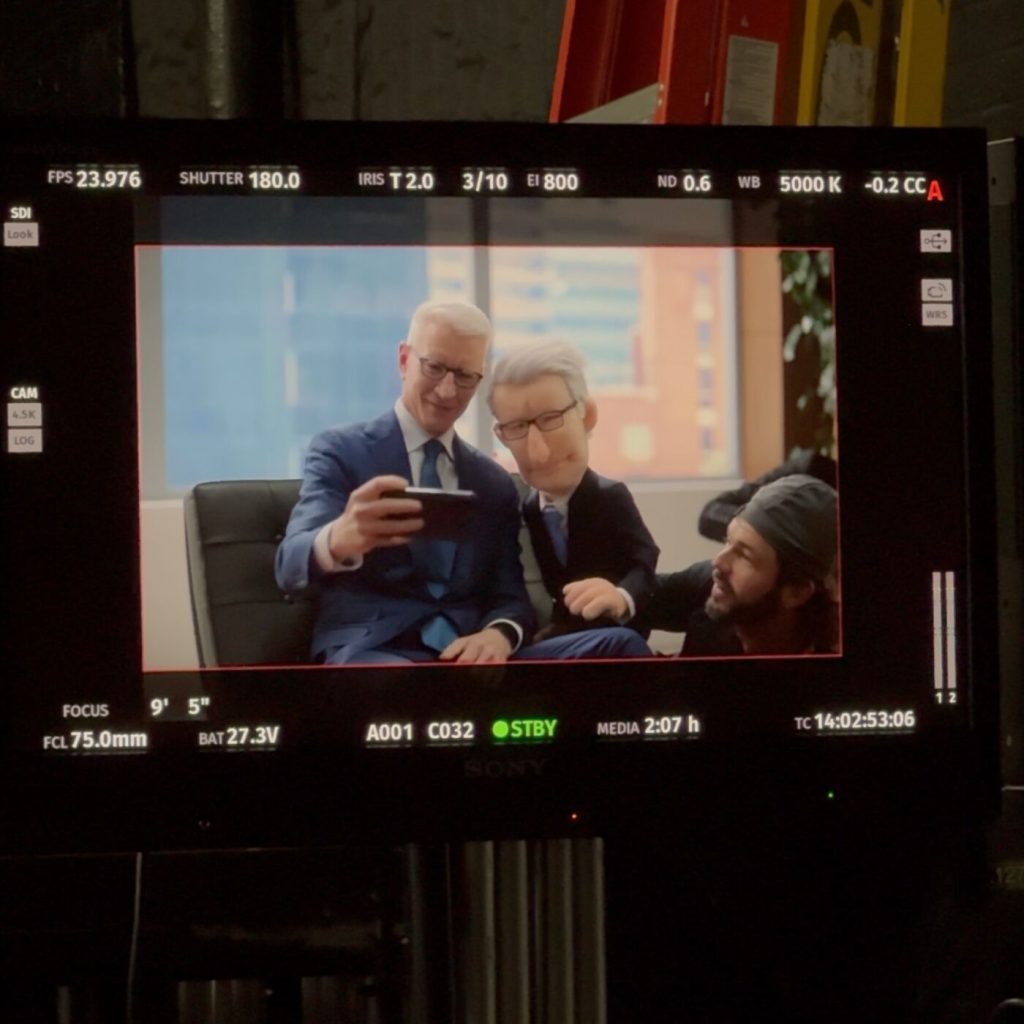
- The Doppelgänger: For CNN’s New Year’s Eve broadcast, the studio created puppet doubles of Anderson Cooper and Andy Cohen. The resulting images of the men posing with their foam counterparts invoked the "uncanny" (das Unheimliche), the psychological phenomenon Freud described where the familiar becomes strange.
- The Hybrid: Marionettes for Missy Elliott’s "WTF (Where They From)" video, which were reengineered internally to allow professional street dancers to control their movements, blending human athleticism with foam artifice.
Chronology: From Experimental Film to the SoHo Studio
To understand the current state of surreal puppetry, one must look back at the lineage of the medium, specifically the work of Jim Henson and the rise of "guerrilla" puppetry in the 1980s.
1965: The Henson Experiments
Long before Sesame Street became a cultural monolith, Jim Henson was an avant-garde filmmaker. In 1965, he released Time Piece, a nine-minute short film with no dialogue and no puppets. Nominated for an Academy Award and screened at the Museum of Modern Art, the film is a masterclass in Surrealist logic. It features a man in a hospital bed, a heartbeat that transforms into percussion, and a cowboy shooting a hole through the Mona Lisa. This era of Henson’s life proves that the puppet was always an instrument of the avant-garde that simply found a secondary, more lucrative home in children’s entertainment.
1982: The Dark Crystal and the Rejection of the "Safe"
Henson’s 1982 masterpiece, The Dark Crystal, represented a return to his darker, more surreal roots. He famously resisted studio pressure to "sand down" the weirdness of the film, reportedly offering to buy the film back himself to preserve its alien, unsettling atmosphere. This established the "Henson Lineage"—a belief that puppets should be used to explore the strange and the otherworldly rather than just the cuddly.
1986: Big Nazo and the Public Ambush
In 1986, Erminio Pinque, a RISD-trained illustrator, founded Big Nazo in Providence, Rhode Island. If Furry Puppet Studio represents the refined, craftsman’s version of the surreal, Big Nazo is the version that "kicks the door in." Pinque’s goal was to create a puppet show without a stage. His wearable, nine-foot-tall foam aliens and monsters roam street parades and festivals, forcing the "marvelous" to erupt into the ordinary lives of unsuspecting pedestrians. This practice aligns with the Surrealist concept of automatism—the belief that accidents and chance encounters hold more truth than a planned performance.
Supporting Data: The Science of the "Dream Fleece"
The effectiveness of these puppets relies on technical precision. The "Dream Fleece" manufactured by Furry Puppet Studio is not merely a aesthetic choice; it is a solution to a technical problem. Traditional fabrics often look "dead" under studio lights or appear too much like a toy. Dream fleece is engineered with a specific pile depth and light-refraction index that allows it to hold shadows, giving the puppet a sense of 3D mass even on a 2D screen.
In the Apple Japan campaign, characters were carved in New York and shipped to Tokyo to sit on public benches beside their human models. The project took two years of development. The data point of interest here is the "dwell time"—the amount of time a viewer looks at the image before their brain identifies it as "fake." By using hand-carved foam and custom textiles, the studio achieved a dwell time significantly higher than that of high-budget CGI characters of the same era.
Official Responses: The Philosophy of the "Last Cut"
Zack Buchman has often spoken about the "moment of the eyes." In the studio, the eyes of a creature are the very last thing to be attached. Buchman describes this as the "hinge" of the entire process. A fractional shift of a millimeter can turn a creature from being suspicious to being approachable, or from being gentle to being menacing.
"Everything before the eyes is fabrication," Buchman notes. "The moment the eyes go on is when the thing starts looking back at you."
This sentiment is echoed by Big Nazo’s Erminio Pinque, who discusses the importance of the "wonderful failure." Pinque believes that when a puppet breaks or an actor makes a mistake in a creature suit, the resulting "accidental juxtaposition" is often more surreal and effective than the rehearsed act. This philosophy prioritizes the experience of the creature over the perfection of the puppet.
Implications: The Weight of Belief in a Digital Age
The resurgence of interest in physical puppetry—exemplified by Furry Puppet Studio—carries significant implications for the future of art and media. As we enter an era dominated by AI-generated imagery and deepfakes, the "weight" of a physical object becomes a premium.
The Uncanny Valley vs. Physical Mass
The "Uncanny Valley," a term coined by Masahiro Mori in 1970, describes the revulsion humans feel when a robot or digital avatar looks almost human but not quite. Puppet makers like Buchman and Pinque work on the edge of this valley, but they use physical mass and warmth to bridge the gap. Because a puppet occupies physical space, our brains are more willing to forgive its "impossible" features. We accept the yeti or the talking refrigerator because it is subject to the same laws of gravity and light as we are.

The Puppet as an Avant-Garde Tool
The work being done in SoHo suggests that the puppet is reclaiming its status as a tool for the avant-garde. By moving away from the "cute" and toward the "impossible," these studios are forcing audiences to engage with the world in a more imaginative way. They are proving that surrealism is not a historical movement confined to 1920s Paris, but a living, breathing practice that utilizes modern engineering to manifest ancient dreams.
Conclusion: The Room on Broadway
Somewhere on Broadway in SoHo, a carver is currently making a permanent cut into a block of foam. There is no "command+Z," no way to undo the stroke. That nerve—the confidence to make a permanent mark in pursuit of a dream—is the thread that connects the modern puppet studio to the history of the Surrealist movement.
Furry Puppet Studio is not merely a vendor of oddities. They are fabricators of the uncanny, working in a tradition that spans from the experimental films of Jim Henson to the public ambushes of Big Nazo. They remind us that the most powerful images of the last decade didn’t necessarily come from a computer—they were carved out of a solid block with a blade, wrapped in dream fleece, and taught how to look back at us.