The Geometry of Restraint: Ridley Scott’s Technical and Emotional Mastery in ‘The Dog Stars’
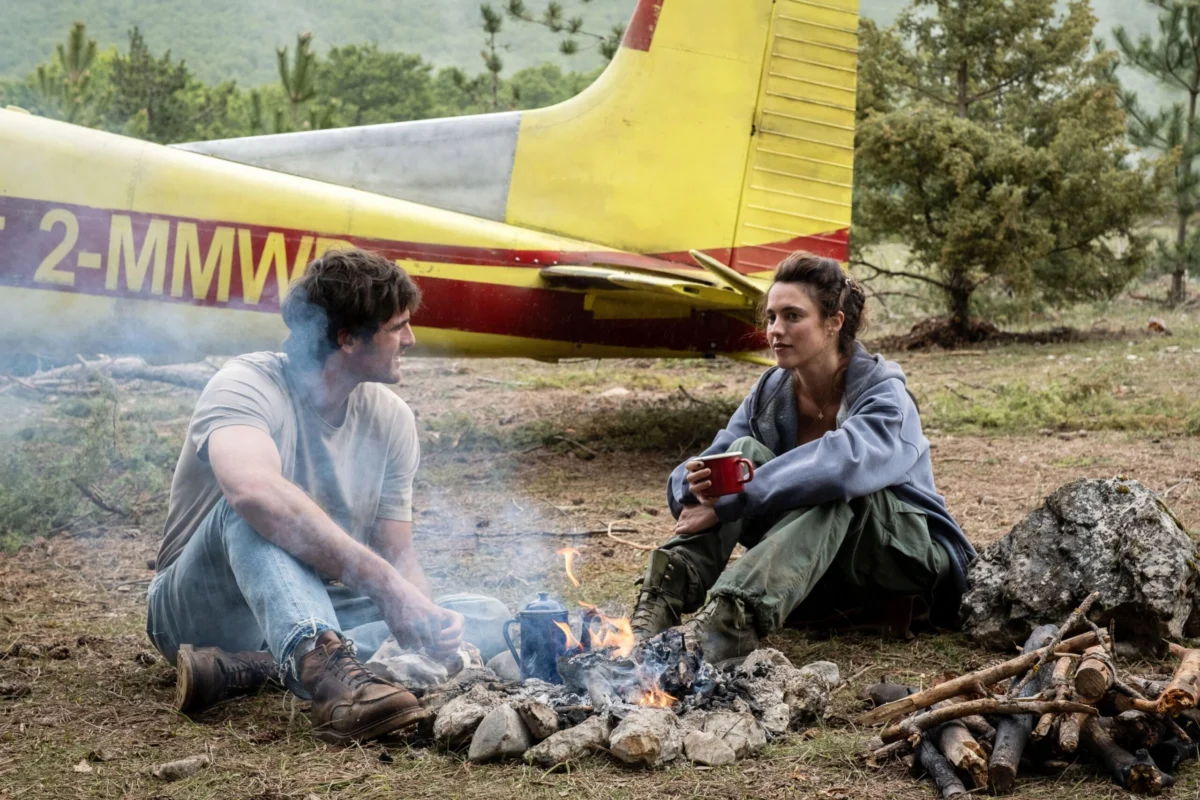
In an era where blockbuster filmmaking often leans into the hyperbolic, Ridley Scott remains a singular figure of disciplined efficiency and understated emotional depth. His latest cinematic offering, The Dog Stars, serves as a masterclass in genre-blending, merging the desolate landscapes of dystopian fiction with the intimacy of a character study. Starring Jacob Elordi, Margaret Qualley, and Josh Brolin, the film is not merely a survivalist tale but a profound exploration of human connection in the wake of a global collapse.
Through a recent deep-dive on the IndieWire Filmmaker Toolkit podcast, Scott revealed the inner workings of his directorial philosophy—a rigorous blend of British restraint, technical innovation, and a refusal to succumb to the "sentimental" traps of Hollywood storytelling.
Main Facts: A Dystopian Tapestry of Genre and Tone
The Dog Stars arrives as a multifaceted narrative that defies easy categorization. Based on the acclaimed novel by Peter Heller, the story follows Hig (Jacob Elordi), a mechanic and pilot living in the aftermath of a viral pandemic that has decimated the global population. Living in a secluded hangar with his dog and a flinty survivalist named Bangley (Josh Brolin), Hig’s life is defined by the tension between the necessity of isolation and the innate human hunger for companionship.
Critics and early audiences have noted that the film offers "several movies for the price of one." It seamlessly transitions between:
- Dystopian Drama: A bleak look at a world reclaimed by nature.
- Buddy Comedy: The prickly, often humorous chemistry between Elordi’s sensitive Hig and Brolin’s hardened Bangley.
- Kubrickian Horror: Moments of chilling, clinical isolation that evoke the atmosphere of 2001: A Space Odyssey or The Shining.
- Kinetic Action: High-stakes sequences that utilize Scott’s legendary ability to capture movement and scale.
However, at its core, Scott identifies the film as a love story between Elordi and a young widow, Cee (Margaret Qualley). In typical Scott fashion, this romance is stripped of melodrama, relying on subtext and the "geometry of the scene" rather than overt displays of affection.
Chronology: From BBC Live Drama to Multi-Camera Mastery
To understand the technical precision of The Dog Stars, one must look back at the trajectory of Ridley Scott’s six-decade career. His approach to the camera has evolved from the singular focus of a lone operator to the "commander-in-chief" style of a multi-monitor director.
The BBC Years and the "Geometry" of Live TV
Before he was a titan of the silver screen, Scott cut his teeth at the BBC. During the 1960s, he worked on live dramas that required the simultaneous use of up to six cameras. This environment necessitated a pre-planned "geometry," where the director had to know exactly where every actor and every lens would be at any given second. "I learned to pre-plan the geometry of the scene with the actors," Scott noted, citing this era as the foundation of his spatial awareness on set.

The Single-Camera Era: ‘Alien’ to ‘Thelma & Louise’
Following his transition into advertising and then feature films, Scott became known for his "hands-on" approach. On classics such as The Duellists (1977), Alien (1979), and Blade Runner (1982), Scott often operated the camera himself. This reached a zenith with Thelma & Louise (1991), where he covered intimate scenes with a single camera, capturing the raw, spontaneous energy of Susan Sarandon and Geena Davis.
The Multi-Camera Revolution: ‘Black Hawk Down’ and Beyond
The true shift in Scott’s methodology occurred during the production of Black Hawk Down (2001). Faced with the logistical nightmare of filming massive urban combat sequences, Scott began using 11 cameras simultaneously. This allowed him to capture complex action in a single take, drastically reducing production time. Since then, he has applied this "multi-cam" logic even to quiet dialogue scenes, a technique he utilized extensively on The Dog Stars.
Supporting Data: The Technical Efficiency of the Scott Set
The speed at which Ridley Scott operates is legendary in Hollywood, often completing films in half the time of his contemporaries. This efficiency is supported by several key data points and procedural habits:
- The 8:45 AM Rule: While many sets are bogged down in morning debates over camera placement, Scott’s productions are famously punctual. "I turn over by a quarter to nine every morning," Scott stated. By "filming on paper" through detailed storyboards (or "Ridleygrams") before arriving on set, he eliminates the guesswork that plagues other directors.
- The Four-to-Six Camera Standard: For The Dog Stars, Scott typically employed between four and six cameras for standard dialogue scenes. This ensures that every angle—wide, medium, and close-up—is captured in the same performance, providing the editor with perfectly matched footage.
- The Monitor Bank: Scott no longer stands behind a single viewfinder. Instead, he directs from a "bank of monitors," communicating in real-time with his operators. This allows him to adjust lenses, speed, and framing on the fly, acting as a live-action editor.
- The "One Take" Goal: By using multiple cameras, Scott often achieves what he needs in a single morning. He recounted that a sequence that would typically take two days was finished in a few hours on Black Hawk Down, a philosophy he maintains to this day to keep the energy of the actors fresh.
Official Responses: Scott on the "Terrible" Words of Hollywood
In his conversation with IndieWire, Scott was vocal about his disdain for the traditional Hollywood pitch. His comments reflect a deep-seated British sensibility that prioritizes "earning" the emotion rather than forcing it upon the viewer.
On Sentimentality:
"When I go to Hollywood, they’ll pitch me on a story and say ‘it’s sentimental,’ or ‘it’s melodramatic,’ like it’s a compliment," Scott remarked. "I say, ‘Stop.’ Those two words are terrible." To Scott, sentimentality is a shortcut that avoids the complexity of real human experience.
On the "Churchill" Philosophy of Language:
Citing Winston Churchill’s famous quip that the English and Americans are "divided by the same language," Scott emphasized the cultural difference in emotional expression. He believes that American cinema often leans too heavily on musical cues to signal emotion. "You’ve got to earn the emotion. As soon as the music comes up, that means it’s not quite working."
On Actor Freedom:
Despite his rigid technical planning, Scott insists his method is for the benefit of the performers. By using multiple cameras, actors like Jacob Elordi and Margaret Qualley do not have to worry about "matching" their movements across dozens of takes. "I’ll leave it on the actor," Scott said. "If they say, ‘I don’t like it that way,’ I say, ‘What do you want to do?’"

Implications: The Future of the "Master Craftsman" Model
Ridley Scott’s approach to The Dog Stars has significant implications for the future of mid-to-high-budget filmmaking. At 87 years old, Scott is proving that the "Master Craftsman" model—one that prioritizes preparation, technical speed, and emotional restraint—is perhaps the most sustainable way to create high-quality cinema in a volatile industry.
1. The Death of the "Over-Budget" Auteur
Scott’s ability to deliver films on time and under budget, without sacrificing visual grandeur, stands in stark contrast to the modern trend of ballooning production costs. His "filming on paper" technique suggests that the solution to industry instability lies in rigorous pre-production rather than digital "fixing it in post."
2. A New Standard for Performance
The multi-camera setup used in The Dog Stars creates a "theatrical" environment for film actors. Because the cameras are everywhere, the actors are always "on," leading to more immersive and less fragmented performances. As younger stars like Jacob Elordi seek out more challenging roles, Scott’s methodology offers a sanctuary where the performance takes precedence over the technical repetition of "coverage."
3. The Power of Silence
In an era of "content" designed to constantly stimulate the viewer, Scott’s focus on silence and restraint is a radical act. "Silence is the biggest sound you can have," he noted. By refusing to over-consummate the relationship between his leads or over-score his scenes, Scott invites the audience to lean in.
The Dog Stars is currently playing in theaters, standing as a testament to a director who refuses to slow down, refuses to be sentimental, and continues to find new ways to define the geometry of the human soul on screen. For those looking to understand the mechanics of modern mastery, the film—and the man behind it—remain the gold standard.