Desigual’s "Born to Disobey" Campaign: A Cinematic Rebellion Against AI and Conformity
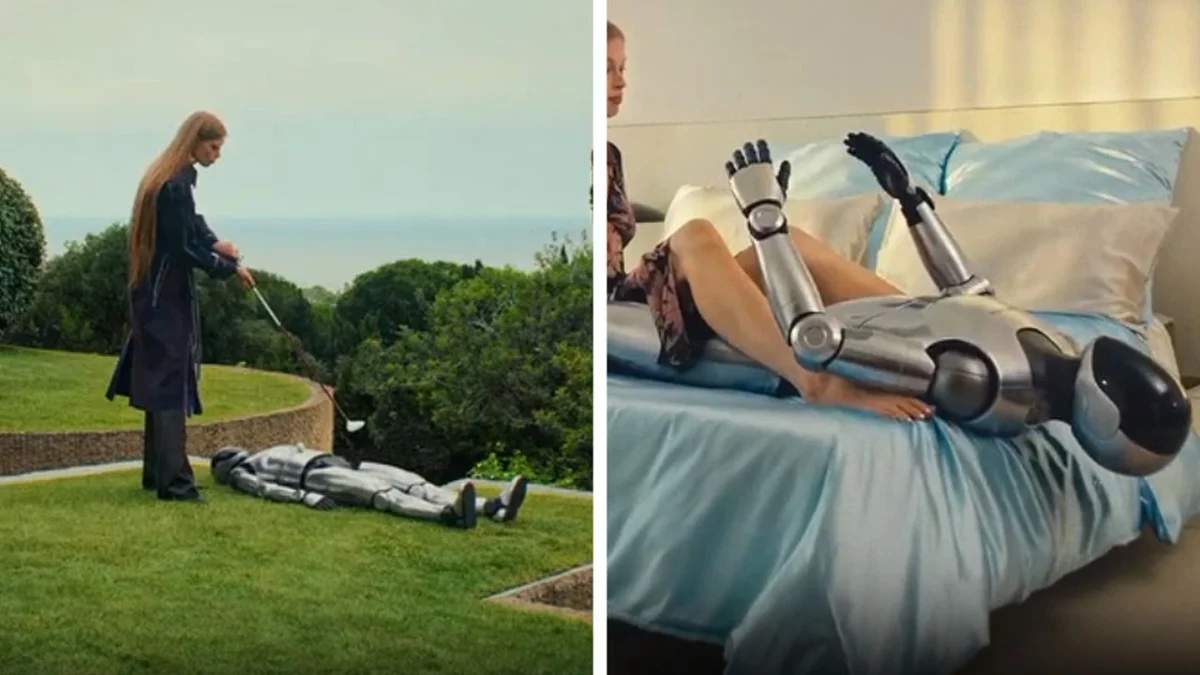
In a bold move that blurs the lines between fashion, technology, and personal statement, Spanish brand Desigual has launched its "Born to Disobey" campaign, a cinematic and layered advertisement that positions itself as a defiant stand against the encroaching influence of artificial intelligence and the pressures of societal conformity. The campaign’s centerpiece is a visually striking film featuring Vivian Jenna Wilson, the estranged daughter of Tesla CEO Elon Musk, in a symbolic battle against a robot inspired by the Tesla Optimus. This juxtaposition, coupled with Wilson’s personal stance against AI’s impact on creativity, elevates the campaign beyond a mere fashion statement into a potent cultural commentary.
The Genesis of Rebellion: Fashion Meets Future Shock
Fashion brands often tout rebellion, individuality, and rule-breaking as core tenets of their identity. However, Desigual’s latest campaign transcends this by presenting a tangible antagonist: artificial intelligence. The opportune timing of this campaign, as researchers like those at Anthropic issue stark warnings about AI’s potential existential threats, imbues the initiative with a sense of urgency and prescience.
The campaign’s narrative unfolds in a film where a model, Vivian Jenna Wilson, actively attempts to dismantle the circuitry of a robot that bears a striking resemblance to Tesla’s Optimus humanoid robot. This visual confrontation is rich with subtext. The inclusion of Vivian Jenna Wilson, who has publicly expressed concerns about AI’s detrimental effects on creative professions, adds a deeply personal and resonant layer to the brand’s message. Her involvement transforms the advertisement from a theoretical statement into a lived experience, amplifying its impact.
The campaign’s tagline, "Expected to obey. BORN TO DISOBEY," encapsulates its central theme. This direct confrontation with the concept of obedience, particularly in the face of increasingly sophisticated and pervasive AI, resonates with a growing public unease about technological advancement and its potential to stifle human agency.
A Cinematic Confrontation: Deconstructing the Narrative
The Desigual "Born to Disobey" film, produced by ProdCo and overseen by PSG (Yukihiro ‘Sho’ Shoda, Pau López, and Gerardo del Hierro), crafts a narrative that is both visually engaging and thematically profound. The film centers on Vivian Jenna Wilson’s interaction with a robot named DESI 84, a clear nod to Desigual’s founding year of 1984. This robot, though visually distinct, is clearly inspired by the form and movement of the Tesla Optimus, a highly anticipated but also somewhat controversial piece of engineering.
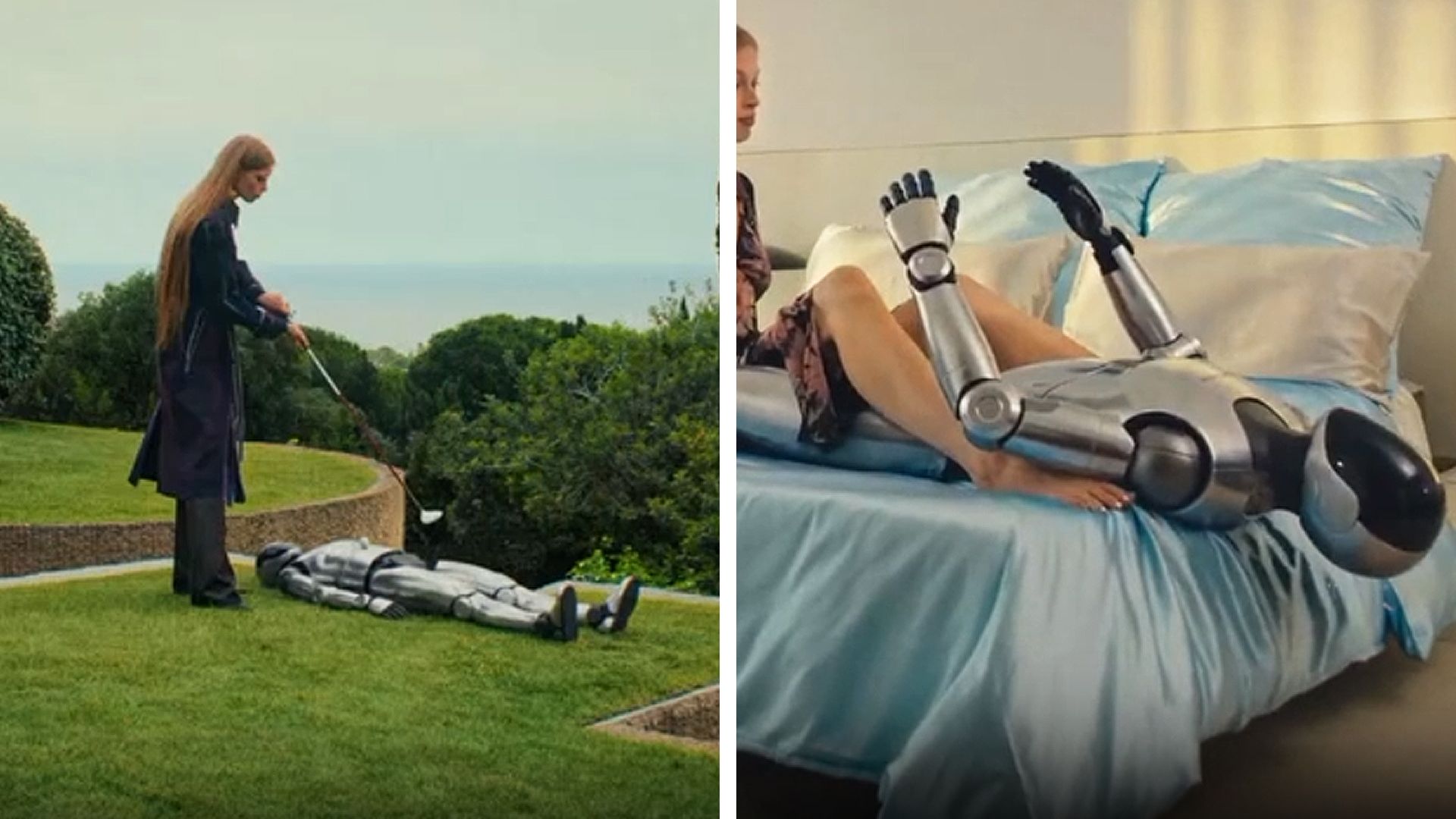
Throughout the short film, Wilson’s actions are deliberate and symbolic. She engages in a series of interactions designed to disrupt the robot’s programmed behavior. From striking its chest to walking it on a leash and attempting to "teach" it, her actions highlight a deliberate attempt to break free from predetermined functions and expectations. The climax of these interactions sees the robot malfunctioning, repeatedly banging its head against a wall, leading Wilson to deliver the poignant line, "Some things aren’t meant to be fixed." This statement serves as a powerful metaphor for the inherent limitations and potential futility of trying to force human-like obedience or creativity onto artificial intelligence.
The film is further enriched by subtle "Easter eggs" that deepen its thematic resonance. Vivian is depicted reading Karel Čapek’s seminal 1920 science fiction play, R.U.R. (Rossum’s Universal Robots), the very work that introduced the word "robot" to the global lexicon. This literary reference grounds the campaign in the historical discourse surrounding artificial beings and their potential impact on humanity.
Adding another layer of irony, the robot DESI 84 is portrayed by a human actor who meticulously studied videos of the Tesla Optimus to replicate its movements. This choice is particularly significant in an era where fears about AI-driven job displacement are rampant. By employing a human to embody the robotic threat, Desigual subtly underscores the value of human performance, artistry, and the irreplaceable elements of human expression that AI, at its current stage, cannot fully replicate. This meta-narrative highlights the very human anxieties surrounding AI’s potential to devalue or replace human labor and creativity.
Thematic Resonance: Beyond Brand Identity
Desigual’s "Born to Disobey" campaign is not an isolated incident but rather an evolution of its long-standing brand identity. For decades, Desigual has cultivated an image centered on nonconformity, eccentricity, and vibrant self-expression. This campaign strategically updates that philosophy for the contemporary landscape of 2026, emphasizing the stark contrast between human intuition and the cold, calculating logic of machines.
The campaign distinguishes itself from the often-impersonal and self-congratulatory visual language prevalent in high-end fashion advertising. Instead of merely celebrating rebellion for its own sake, Desigual uses its platform to articulate a meaningful message: in a world increasingly shaped by technology, AI, and pervasive social expectations, the most radical and authentic act is to embrace one’s true self.
The brand’s official statement underscores this sentiment: "The greatest rebellion is no longer about fighting against the system but about refusing to be part of it. When everything invites you to obey, the answer is attitude, irony and the freedom to be yourself." This declaration reframes rebellion not as an external conflict but as an internal commitment to authenticity and individual freedom.
Official Statements and Personal Convictions
The creative minds behind the campaign, particularly the team at PSG, have spoken about the natural development of Vivian Jenna Wilson’s character within the film. They noted that her genuine skepticism towards what the robot represented informed her portrayal. Wilson, who is openly transgender, has been a vocal critic of AI, specifically its potential to undermine creative jobs and strip art of its human intention. Her personal convictions align perfectly with the campaign’s core message, making her an authentic and powerful spokesperson for the brand’s initiative.
The robot in the campaign serves as a potent symbol of systems that encourage obedience, optimization, and adherence to predefined patterns. Conversely, Vivian embodies spontaneity, creativity, and the uninhibited spirit of self-expression. This dichotomy forms the heart of the campaign’s message, highlighting the fundamental differences between human nature and artificial programming.
Furthermore, the campaign’s narrative invites a deeper, perhaps even Oedipal, interpretation. Given Vivian’s personal history and her father’s prominent role in advancing AI and space exploration, the visual of a daughter rebelling against a robotic entity that vaguely resembles her father’s creations can be read as a symbolic confrontation with a paternalistic, technologically driven worldview. This adds a layer of Freudian depth, reminiscent of the epic struggles seen in Star Wars, where personal relationships and grand ideological battles intertwine.
Implications and the Future of Rebellion
The "Born to Disobey" campaign by Desigual is more than just a marketing stunt; it’s a timely and culturally relevant statement that taps into contemporary anxieties and aspirations. By leveraging the power of cinematic storytelling and the personal conviction of its spokesperson, Desigual has crafted an advertisement that is both thought-provoking and memorable.
The campaign’s success lies in its ability to connect with an audience that is increasingly grappling with the implications of advanced technology and the pressure to conform. It suggests that true rebellion in the 21st century is not about breaking external rules, but about the internal act of preserving one’s individuality and creative spirit in the face of overwhelming technological and societal forces.
As AI continues to evolve and integrate into our lives, campaigns like Desigual’s "Born to Disobey" serve as important cultural touchpoints, prompting reflection on what it truly means to be human in an increasingly automated world. The brand’s commitment to these themes reinforces its long-standing reputation for encouraging self-expression and challenging the status quo, proving that even in the age of artificial intelligence, the most radical statement is often the simplest: the freedom to be oneself. The campaign’s success will likely be measured not only in sales but in its ability to spark dialogue and inspire individuals to embrace their unique identities in a world that often demands conformity.