Bridging the Texas Triangle: Elon Musk’s Vision for a Precursor Hyperloop Between Austin and San Antonio
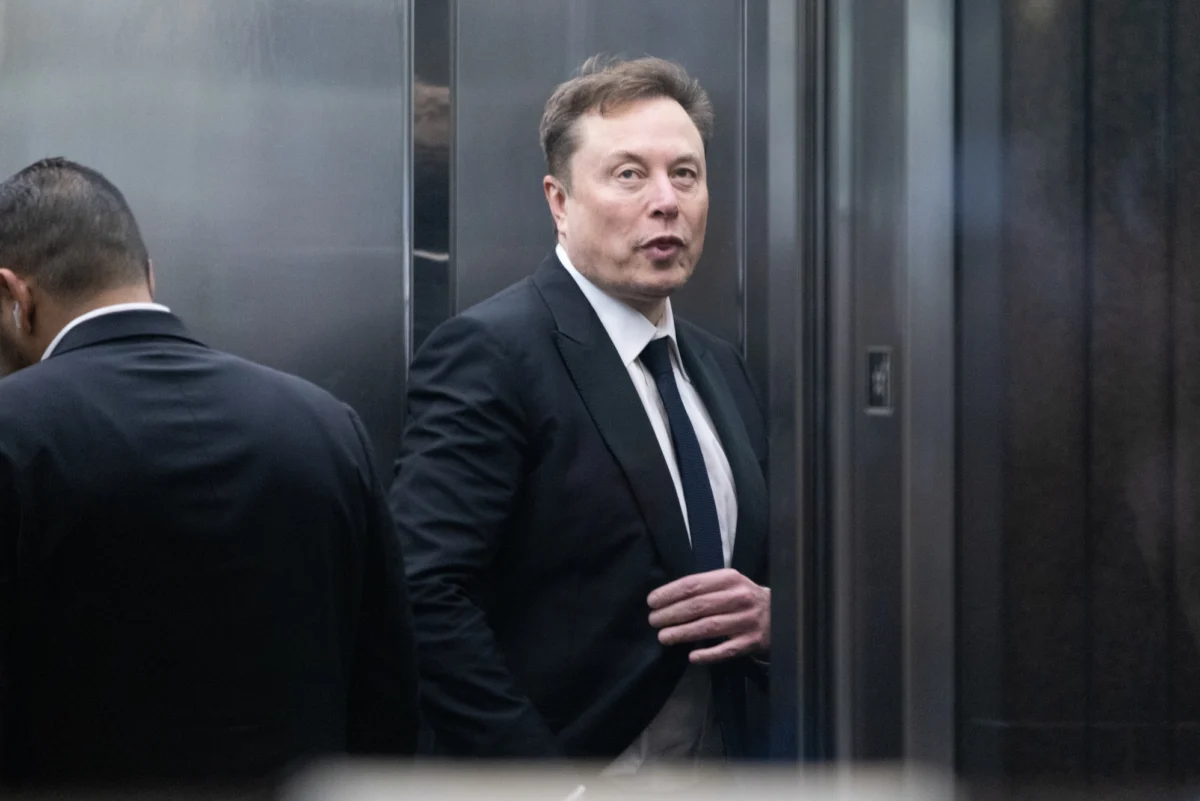
AUSTIN, TX — In a move that blends futuristic ambition with regional infrastructure needs, Elon Musk has announced that his tunnel-construction startup, The Boring Company (TBC), is shifting its focus toward a high-speed transit link between two of Texas’s fastest-growing metropolitan areas. The proposed "precursor Hyperloop" aims to connect Austin and San Antonio, promising to slash the travel time between the two cities to less than 30 minutes—a journey that currently takes upwards of 90 minutes during peak traffic on the infamously congested Interstate 35.
The announcement, delivered via Musk’s social media platform X, has reignited the debate over the feasibility of private high-speed transit and the role of "gadgetbahn" technology in modern urban planning. While the proposal remains in its conceptual infancy, the recent infusion of $3 billion in capital from international investors suggests that The Boring Company may finally have the "war chest" necessary to move beyond small-scale demonstration loops and into the realm of massive regional infrastructure.
The Core Proposal: Redefining the "Texas Triangle"
The fundamental premise of the project is the creation of a "precursor Hyperloop." In Musk’s terminology, this refers to a transitional technology that sits between the existing "Loop" system—which utilizes Tesla vehicles in narrow tunnels—and the theoretical "Hyperloop," which involves pressurized pods traveling through near-vacuum tubes at supersonic speeds.
The Austin-to-San Antonio corridor, a stretch of approximately 80 miles, is the primary target. By utilizing proprietary tunneling machines, such as the "Prufrock" series designed to "porpoise" (start and stop at the surface without needing deep excavation pits), The Boring Company intends to create a subterranean transit artery. If the system achieves its sub-30-minute goal, it would require average speeds exceeding 160 miles per hour, a significant leap from the 40-mile-per-hour speeds currently seen in the company’s Las Vegas operations.
The Boring Company’s official account corroborated Musk’s claims, stating the firm would be "excited and honored to build this massive infrastructure project." This project represents a strategic pivot for the company, which has spent the last several years focusing on smaller, localized projects while its more ambitious cross-state proposals languished in bureaucratic or technical hurdles.
A Chronology of Ambition and Skepticism
To understand the weight of the Austin-San Antonio proposal, one must look at the decade-long evolution of Musk’s tunneling ambitions.
- 2013: Musk releases the "Hyperloop Alpha" white paper, open-sourcing the concept of a vacuum-tube transportation system.
- 2016: The Boring Company is founded, born out of Musk’s frustration with Los Angeles traffic. The initial vision involves a vast network of 3D tunnels.
- 2017–2019: TBC announces several high-profile projects, including a "D.C.-to-New York" Hyperloop and a "Chicago Express Loop" connecting downtown to O’Hare International Airport.
- 2021: The Las Vegas Convention Center (LVCC) Loop opens. While functional, critics point out it is essentially "Teslas in a tunnel" rather than the high-speed autonomous platforms originally promised.
- 2022–2024: Many of the early ambitious projects, including those in Los Angeles and the Northeast Corridor, are quietly removed from the company’s website or face indefinite delays due to regulatory challenges and environmental reviews.
- September 2026: Following a successful $3 billion funding round led by the United Arab Emirates, Musk pivots back to the Hyperloop concept, identifying the Texas Hill Country as the testing ground for the next generation of TBC technology.
The shift to Texas is logical. Musk has moved the headquarters of Tesla, SpaceX, and The Boring Company to the Lone Star State. Furthermore, the company’s manufacturing facility in Bastrop, Texas, provides a localized base of operations for the "Prufrock" tunneling machines.
Supporting Data: The Economics and Engineering of the Tunnel
The feasibility of a Texas-based Hyperloop rests on two pillars: capital and geological conditions.
The $3 Billion Catalyst
The Boring Company recently closed a massive $3 billion Series C-2 funding round, with a significant portion of the lead investment coming from the United Arab Emirates (UAE). This investment is a game-changer for a company that previously relied on smaller rounds and Musk’s personal wealth. The UAE’s involvement is particularly noteworthy, as the nation has long expressed interest in Hyperloop technology to connect Dubai and Abu Dhabi. This capital provides the runway for TBC to procure more tunneling machines and hire the civil engineering expertise required for a project of this scale.
The Central Texas Corridor
The I-35 corridor between Austin and San Antonio is one of the most stressed transit segments in the United States. According to the Texas Department of Transportation (TxDOT), the region’s population is expected to double by 2050.

- Distance: ~80 miles.
- Current Travel Time: 1.5 to 2.5 hours via I-35.
- Proposed Travel Time: <30 minutes.
- Geology: The region sits atop the Edwards Aquifer and features significant limestone formations. While limestone is generally favorable for tunneling (it is stable and easy to cut), the environmental sensitivities regarding the aquifer present a major regulatory hurdle.
Official Responses and Public Sentiment
The reaction to the Austin-San Antonio Hyperloop has been a mixture of cautious optimism from local business leaders and sharp skepticism from urban planners and historians.
The Company Line
The Boring Company maintains that its technology is the only way to solve "soul-crushing traffic" without destroying the surface-level environment. By moving transportation underground, they argue, cities can remain walkable while high-speed transit happens out of sight.
The Academic Critique
Historian Jill Lepore has been a vocal critic of Musk’s approach to technology, arguing that his visions are often disconnected from the democratic needs of a city. Lepore recently noted that Musk’s projects seem inspired by "pulp science fiction and comic books," suggesting that he favors "sci-fi that completely defeats and defies all of his political beliefs."
Critics in the urban planning community often refer to TBC’s projects as "Gadgetbahns"—expensive, over-hyped transportation concepts that distract from proven solutions like high-speed rail or expanded bus rapid transit. They point to the fact that a tunnel filled with individual Teslas has a much lower throughput (passengers per hour) than a traditional subway or train.
Local Governance
While Texas officials have historically been welcoming to Musk’s ventures, a project connecting two major cities involves crossing multiple county lines and private properties. Unlike the Las Vegas Loop, which is mostly on private or municipal land, an 80-mile tunnel would require unprecedented right-of-way acquisitions and environmental impact studies that could take years, if not decades, to clear.
Implications: The Future of the "Muskian" Utopia
The proposal for an Austin-San Antonio link is more than just a transit project; it is a manifestation of Musk’s broader philosophy of "The Future." Musk’s recent comments were made in response to an AI-generated video of a sci-fi cityscape, to which he replied, "This is the future we shall bring into being."
The Privatization of Infrastructure
If successful, the Austin-San Antonio Hyperloop would represent a significant shift toward the privatization of core public infrastructure. Unlike traditional highways or rail systems funded by taxpayers, this would be a proprietary system owned and operated by a private corporation. This raises questions about accessibility, pricing, and who the "public" in public transit actually is.
Technological Convergence
The project serves as a convergence point for Musk’s various enterprises:
- Tesla: Provides the autonomous electric vehicles and battery storage.
- The Boring Company: Provides the tunneling infrastructure.
- SpaceX/Starlink: Provides the high-speed communications required for autonomous fleet management in deep tunnels.
The "Precursor" Risk
The use of the word "precursor" is a strategic hedge. It allows the company to build something more advanced than the Las Vegas Loop but less complex than a full vacuum-sealed Hyperloop. However, the risk remains that the project could become another "vaporware" promise. If the company fails to deliver the sub-30-minute time frame, it may find that the patience of its $3 billion investors—and the Texas public—is not infinite.
Conclusion
The Boring Company’s Austin-to-San Antonio precursor Hyperloop is an audacious attempt to solve a real-world problem with science-fiction-inspired technology. Backed by a $3 billion UAE-led investment and the political tailwinds of the Texas tech boom, the project has more momentum than any of Musk’s previous tunneling endeavors. However, the path from a social media post to a functioning 80-mile subterranean transit system is fraught with geological, regulatory, and engineering challenges. As the "Texas Triangle" continues to grow, the world will be watching to see if Musk can truly "bring into being" the future he has so long promised, or if this project will join the list of ambitious tunnels that never saw the light of day.