The Digital Ghost and the Displaced Son: A Critical Analysis of Yeon Sang-ho’s ‘Paradise Lost’
TORONTO — The 2026 Toronto International Film Festival (TIFF) arrived with high expectations for South Korean visionary Yeon Sang-ho. Known globally for the kinetic, high-concept adrenaline of Train to Busan and the satirical superhero deconstruction of Psychokinesis, Yeon has long been a darling of the international circuit. However, his latest offering, Paradise Lost, has left critics and audiences grappling with a rare misfire from a director usually celebrated for his precision.
Premiering in the Special Presentations program, Paradise Lost attempts to weave a complex tapestry of technological grief, sociopathic violence, and the fragility of maternal bonds. While the film boasts a compelling performance from veteran actress Kim Hyun-joo, the consensus from the festival floor suggests a narrative that is spread too thin—a "tri-pronged story," as critics have noted, where the ambitious themes of digital immortality and learned violence fail to find sufficient oxygen to thrive.
Main Facts: A Collision of High-Concept Sci-Fi and Gritty Procedural
At its core, Paradise Lost is a film of "too many ideas," a characteristic that often plagues ambitious science fiction. The narrative is built upon three distinct pillars:
- Virtual Reality (VR) as Grieving Tool: The use of digital avatars to help parents cope with the loss of children.
- The Prodigal Son’s Return: A mystery surrounding a child who reappears nearly a decade after being presumed dead.
- The Nature of Sociopathy: An exploration of "learned violence" and the dark reality of a child raised in the shadows.
The film introduces "Transhuman," a fictional tech conglomerate that has commodified the mourning process through a project titled "Children of Paradise." By creating pristine, age-locked digital copies of deceased children, the company offers parents a "dream state" to inhabit. However, this technological solution becomes a psychological trap for the protagonist, So-young (Kim Hyun-joo), whose world is upended when her biological son returns as a troubled, violent stranger.
Despite the pedigree of its creator, Paradise Lost has been met with a lukewarm reception, receiving a Grade: C+ from early reviews. Critics cite a "dispiritingly flat" execution and a tendency to favor "ultra-predictable twists" over the visceral emotional depth that defined Yeon’s earlier works.
Chronology: From Tragedy to Digital Stagnation
The narrative arc of Paradise Lost spans a decade, moving from a localized tragedy to a broader societal commentary on technological dependence.
The Inciting Incident: The Mine Disaster
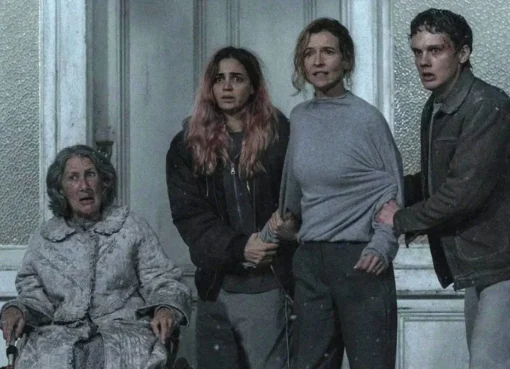
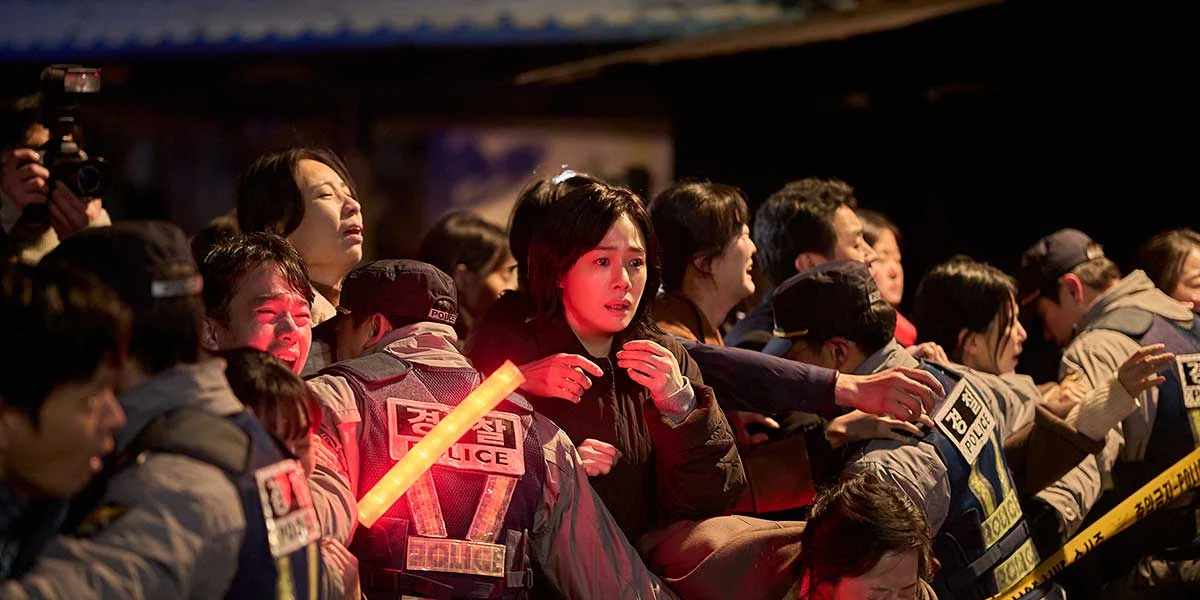
The film opens with a sequence of building dread. So-young, a single mother, waves goodbye to her tween son, Sun-woo, as he departs for a school camp. The atmosphere is uncharacteristically heavy for a sunny morning—a signature Yeon Sang-ho touch. The dread is soon justified: the school bus disappears. When it is eventually located near an unstable, abandoned mine, the scene is horrific. The driver and teacher have been murdered, and half the students are confirmed dead. The remaining children, including Sun-woo, are missing and presumed dead, leaving a community in a state of unresolved trauma.

The Rise of Transhuman (Years 1-9)
In the wake of the tragedy, the tech giant Transhuman launches the "Children of Paradise" program. For nine years, So-young lives on the periphery of reality. She utilizes VR glasses to interact with a digital version of Sun-woo, who remains an eternal tween, running through their home in a perpetual loop of innocent childhood. While other parents eventually "step away" from their avatars, recognizing the hollow nature of the simulation, So-young remains tethered to the digital ghost of her son.
The Return and the Divergence
The status quo is shattered when So-young is contacted by the police. A DNA match has identified a young drifter (Bae Hyun-sung) as the biological Sun-woo. Now a young adult, the real Sun-woo is a far cry from the "pristine" memory preserved in the Transhuman servers. The film’s second half deals with the friction between So-young’s sanitized digital memory and the "thorny reality" of a son who has spent a decade surviving in an environment of violence and sociopathy.
Supporting Data: The Mechanics of "Children of Paradise"
The film provides a detailed, if ultimately under-explored, look at the "Children of Paradise" technology. This fictional system mirrors emerging real-world trends in AI and "grief tech," where large language models and deepfake technology are used to simulate conversations with the deceased.
- The Tech Profile: Transhuman’s avatars are not just visual projections; they are programmed with the memories and personality traits of the children prior to their disappearance.
- The Psychological Impact: The film highlights a "dream state" addiction. So-young’s refusal to disconnect from the VR world serves as a metaphor for the dangers of refusing to process grief.
- The Contrast: While Hirokazu Kore-eda’s recent film Sheep in the Box (a 2026 Cannes entry) dealt with a similar theme via a physical android, Yeon Sang-ho opts for the intangible—a "ghost-child" accessible only through a headset. This choice emphasizes the isolation of the grieving process, but as critics pointed out, the film "suffers from a lack of interest in confronting its own implications."
Official Responses and Critical Context
The reaction from the Toronto International Film Festival has been one of respectful disappointment. While Yeon Sang-ho’s technical mastery remains evident, the script’s failure to engage with its own "emotional Catch-22s" has been the primary point of contention.
The Director’s Vision vs. Execution
Yeon Sang-ho has built a career on nestling intimate character dramas within high-concept sci-fi frameworks. In Train to Busan, the zombie apocalypse was a backdrop for a father-daughter reconciliation. In Jung_E, gun-toting androids explored the ethics of soul-cloning. However, Paradise Lost is described as "uncharacteristically guileless." Critics argue that by presenting his notions too plainly, Yeon leaves "little room for doubt or possibility."
Performance Reviews
Kim Hyun-joo, a frequent collaborator of Yeon (having starred in Hellbound and Jung_E), is praised for her portrayal of a grieving mother. However, critics note that the film "yanks her away from visceral emotions" to serve the needs of a "lurid procedural" subplot. Bae Hyun-sung, playing the adult Sun-woo, is relegated to being a "living embodiment of a wrenching emotional dilemma" rather than a fully realized character, often serving only to "verbalize underlying themes."
Comparison to Contemporaries
The film has been frequently compared to Hirokazu Kore-eda’s Sheep in the Box. Both films explore the ethics of replacing a lost child with an artificial copy. Where Kore-eda focuses on the domestic and philosophical fallout, Yeon attempts to pivot into a thriller. This pivot, according to festival reviews, is where Paradise Lost loses its way, as the "ultra-predictable twists and turns" make the central moral dilemmas feel "convenient" rather than challenging.

Implications: The Future of "Grief Tech" in Cinema
The lukewarm reception of Paradise Lost at TIFF 2026 suggests a growing fatigue with "tech-grief" narratives that fail to push beyond the initial "what if?" premise. As society moves closer to actualizing the technologies depicted in these films, the bar for science fiction storytelling has been raised.
The Mundanity of Technological Perversion
One of the most stinging criticisms of the film is that its "technological perversions end up quite mundane." This highlights a challenge for modern filmmakers: when the "futuristic" is already partially present in our daily lives (via AI and VR), the drama must lie in the human reaction rather than the gadgetry. Paradise Lost’s failure to deeply investigate So-young’s predicament—treating it as "deeply uninteresting" because the conclusions are "foreshadowed in bright lights"—serves as a cautionary tale for the genre.
Distribution and Market Trajectory
Currently, Paradise Lost is seeking U.S. distribution. While the Yeon Sang-ho brand ensures international interest, the film’s "C+" standing may lead to a more modest release strategy than his previous blockbusters. It remains to be seen if the film will find a second life on streaming platforms, where its "lurid procedural" elements might appeal to a different demographic than the high-minded festival crowd.
Final Thoughts
Paradise Lost stands as a testament to the risks of narrative over-saturation. By attempting to be a sci-fi meditation on loss, a sociopathic character study, and a corporate thriller all at once, it fails to achieve the "whizbang action" or the "wrenching emotional dilemma" required to satisfy any of those genres. For Yeon Sang-ho, a director whose career has been defined by his ability to balance the spectacular with the sentimental, Paradise Lost represents a rare moment where the balance was lost in the machine.
The film serves as a reminder that in the age of digital ghosts, the most compelling stories are still the ones that remain stubbornly, messily human. As it stands, Paradise Lost "wraps up neatly before it truly has the chance to get going," leaving audiences with a simulation of a story rather than the real thing.