Balancing Art and Parenthood: The Journey of Scarlett Bermingham and Andrew Rhymer’s ‘All That She Wants’
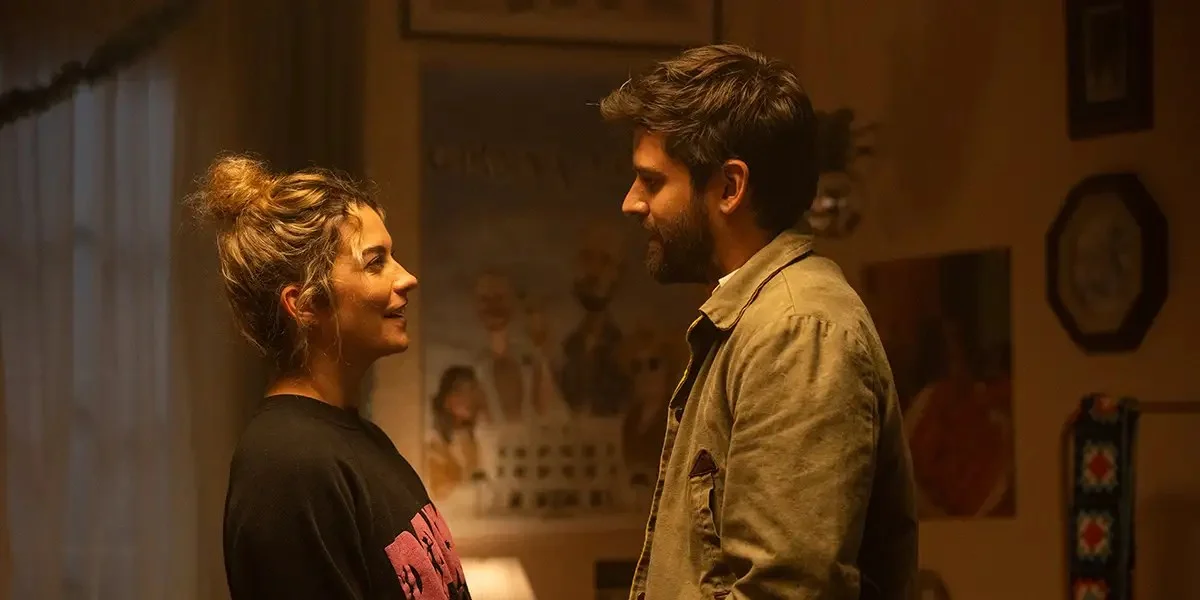
The landscape of the modern romantic comedy is undergoing a profound transformation, shifting away from the glossy, idealized narratives of the 1990s and toward a more grounded, visceral exploration of adulthood. At the forefront of this evolution is the filmmaking duo Scarlett Bermingham and Andrew Rhymer. Their latest feature, All That She Wants, which recently made its high-profile premiere at the Toronto International Film Festival (TIFF), serves as both a creative milestone and a personal mirror for its creators.
Main Facts: A New Vision for the Romantic Comedy
All That She Wants is a character-driven narrative that navigates the complex intersection of career stagnation, biological clocks, and unexpected romance. The film stars Emmy-winner Annie Murphy, best known for her iconic role in Schitt’s Creek, and Cooper Raiff, the indie darling behind Cha Cha Real Smooth.
The screenplay, penned by David West Read (the writer and producer behind Schitt’s Creek and the Broadway hit & Juliet), follows Emma (Murphy), a professional dancer in her 30s. Emma finds herself at a crossroads, weary of the grind of demeaning gigs and yearning for motherhood. Her plan to have a child independently is complicated by the arrival of Luke (Raiff), a sweet-natured graduate student significantly younger than her.
Directing as a husband-and-wife team, Bermingham and Rhymer have crafted a film that seeks to fill a void in the genre. Rather than leaning into the "hot mess" trope or the "hyper-successful careerist" archetype, the film explores the quiet, often un-cinematic desire for family stability. Produced after a grueling four-year financing cycle, the film marks the directorial debut of the duo in the feature film space, signaling a new chapter in their collaborative careers.
Chronology: Four Years of Development and Personal Milestones
The genesis of All That She Wants for Bermingham and Rhymer began in an unlikely place: a commercial flight. It was there that Rhymer handed the script to Bermingham, sensing it would resonate with her. Her reaction was immediate and visceral. “God, damn it,” she recalled. “I wish I had written this. It seemed to speak to everything I was going through.”
The timeline of the film’s production is inextricably linked to the directors’ personal lives, creating a parallel narrative of growth and creation:
- The Initial Discovery (4 Years Prior to Premiere): Bermingham and Rhymer boarded the project just as they were expecting their first child. The themes of the script—professional uncertainty and the longing for parenthood—hit home as they navigated the early stages of their own family life.
- The Financing Struggle: For the next four years, the duo faced the arduous task of securing independent financing. In an industry increasingly focused on established intellectual property and blockbusters, a character-centric rom-com about a dancer’s biological clock was a difficult sell.
- The Greenlight and the Second Pregnancy: In a stroke of cosmic timing, the film was greenlit almost simultaneously with the news of Bermingham’s second pregnancy. The logistical challenge of directing a feature while pregnant became a defining feature of the production.
- Production and Post-Production (The Final Year): The film was shot on location in Toronto, a city that also served as a homecoming for the production. The directors turned in the final director’s cut just one week before their son was born.
- The TIFF Premiere: In early September, the film debuted at the Toronto International Film Festival. The event was a culmination of nearly half a decade of work, with the directors’ children nearby in a hotel room—a testament to the "family business" nature of the project.
Supporting Data: Subverting the "Overcorrection" of Female Protagonists
A critical component of All That She Wants is its intentional subversion of contemporary tropes regarding women in film. During the press circuit at TIFF, Bermingham spoke extensively about what she perceives as an "overcorrection" in the portrayal of female leads.

For years, the "manic pixie dream girl" or the "perfect heroine" dominated the screen. In response, the industry shifted toward the "messy woman"—characters defined by chaos and professional failure. Bermingham argues that this has left little room for the nuance of a woman who is competent but simply desires something traditional, like motherhood, without it being framed as a loss of independence.
“It so rarely includes someone wanting to potentially start a family, in part because that’s seen as not being super sexy,” Bermingham noted. “But I think this film validates the experience of wanting to become a mother and still embeds it in the rom-com tradition.”
This thematic depth is supported by the casting of Annie Murphy. While Murphy’s role as Alexis Rose in Schitt’s Creek utilized her talent for physical comedy and "ditzy" charm, All That She Wants demands a more grounded, emotional vulnerability. Rhymer and Bermingham noted that Murphy’s ability to "go there" emotionally allowed the film to balance its comedic beats with the heavy reality of a woman facing a mid-life identity crisis.
Similarly, the casting of Cooper Raiff as Luke allowed for a shift in Raiff’s own on-screen persona. Previously known for playing neurotic, uncertain young men in his own films (Shithouse, Cha Cha Real Smooth), Raiff portrays Luke with a "maturity" and "old soul" quality that anchors the romantic tension of the film.
Official Responses: The Mechanics of a Married Directing Duo
The question of how a married couple manages the high-pressure environment of a film set is one Bermingham and Rhymer address with a mix of humor and pragmatism. While the industry has seen successful directing duos like the Coen Brothers or the Safdies, the addition of a marital bond introduces a unique dynamic.
According to Rhymer, the partnership acts as a built-in quality control system. “We end up getting to a better place on every decision,” he explained. “If someone vetoes something, and Option A and Option B aren’t working, we find Option C together. Any friction or tension we experience only sharpens things.”
The duo acknowledges that the boundaries between work and home are porous. Rhymer described 4:00 a.m. sessions where, while tending to a newborn, they would discuss script revisions or dialogue that wasn’t quite landing. However, they view this as an advantage rather than a burden. The constant dialogue eliminates the need for formal production meetings and allows for a more organic creative process. Bermingham joked that they have essentially revived the concept of the "family business," comparing their filmmaking to historical families working together on a farm.

Their history dates back to their freshman year at New York University. Bermingham was an acting student and Rhymer a film major. Their "meet-cute" occurred on a student film set where Rhymer, harboring a crush, volunteered to hold a bounce card just to be near her. This long-standing personal and professional history provides a foundation of trust that they believe is visible in the final product of All That She Wants.
Implications: A Bright Future in the Studio System
The success of All That She Wants at TIFF and its reception by critics suggest a bright trajectory for Bermingham and Rhymer. Their ability to deliver a polished, emotionally resonant film while navigating significant personal milestones has caught the attention of major studios.
The duo currently has several high-profile projects in development that indicate a move toward larger-scale storytelling:
- The Paper Bag Princess: An adaptation of the classic children’s book for Universal Pictures and LuckyChap (Margot Robbie’s production company). This project suggests a move into high-concept, female-centric IP.
- Big Time Abroad: Picked up by New Line Cinema, this project is described as a cross between Booksmart and Indiana Jones. This indicates the duo’s versatility, moving from the intimate drama of a rom-com to a genre-blending action-comedy.
The broader implication for the film industry is the continued viability of the "mid-budget" movie. For years, analysts have lamented the death of the romantic comedy and the mid-tier drama. However, by focusing on authentic human experiences and subverting tired tropes, Bermingham and Rhymer are proving that there is still a significant audience for stories that reflect the complexities of modern life.
All That She Wants stands as a testament to the power of persistence. By mirroring the protagonist’s journey of self-discovery and the pursuit of a non-traditional path, the directors have created a film that is as much a personal manifesto as it is a piece of entertainment. As they move into the studio system, they carry with them a unique perspective on the "family business" of Hollywood, proving that the most compelling stories often come from the most personal places.