Unlocking Profound Well-being: An In-Depth Look at the "7 Days of Gratitude" Program and the Power of Authentic Living
[City, State] – [Date] – In an increasingly complex world, individuals are actively seeking pathways to enhanced well-being and genuine connection. Amidst a plethora of self-improvement initiatives, the "7 Days of Gratitude" program, championed by the UPLIFT organization, has emerged as a distinctive and impactful framework for personal transformation. Culminating in its seventh day, which emphasizes the profound interplay between gratitude and authenticity, the program offers a structured yet deeply personal journey designed to re-calibrate one’s perspective and foster a more fulfilling existence.
This article delves into the core tenets of the "7 Days of Gratitude," exploring its methodology, the psychological underpinnings of its practices, and the broader implications of embracing a life rooted in genuine appreciation and self-expression. Far from a superficial exercise in positivity, the program invites participants to confront and integrate the full spectrum of human emotion, recognizing that true gratitude blossoms from an authentic engagement with all of life’s experiences.
The Journey to Inner Transformation: Unpacking the "7 Days of Gratitude" Program
The "7 Days of Gratitude" program is presented as a transformative week, carefully curated to guide participants through incremental steps toward a deeper understanding of gratitude and its connection to one’s authentic self. Each day builds upon the last, culminating in a powerful synthesis of self-awareness and outward generosity. The program’s design acknowledges that profound change rarely happens overnight, instead advocating for consistent, mindful practice.
Day 7: The Art of Anonymous Gifting and Authentic Connection
The seventh day of the program introduces a particularly resonant challenge: "Give an anonymous gift to someone. Leave a gift for someone where they will find it, with their name on it. Discover how good that feels!" This directive moves beyond internal reflection, translating gratitude into tangible action. The act of anonymous giving is strategically chosen for its capacity to bypass expectations of reciprocation, thereby purifying the act of generosity. When the giver’s identity is concealed, the focus shifts entirely to the joy of giving and the imagined delight of the recipient.
Psychologically, anonymous giving taps into intrinsic motivation. Research in positive psychology consistently demonstrates that altruistic acts, particularly those performed without expectation of reward, significantly boost the giver’s mood and overall well-being. This "helper’s high" is attributed to the release of endorphins and oxytocin, neurochemicals associated with pleasure and bonding. By instructing participants to leave a gift "with their name on it" for someone specific, the program also introduces a layer of personalized intention, fostering a deeper sense of connection and care for individuals within one’s orbit. This dual approach—anonymous giving for pure generosity and personalized giving for specific appreciation—creates a rich emotional experience, allowing participants to "discover how good that feels" on multiple levels. It underscores the idea that gratitude is not just an internal state but a force that can be actively expressed, creating ripples of positivity in the community. This day serves as a practical application of the gratitude cultivated throughout the week, bridging inner reflection with outer action.
Cultivating Daily Gratitude: More Than Just a Feeling
A cornerstone of the "7 Days of Gratitude" program is the consistent daily practice of asking, "What am I grateful for right now?" This seemingly simple question is a powerful tool for shifting perspective and enhancing present-moment awareness. In an era dominated by distractions and future-oriented anxieties, pausing to acknowledge current blessings grounds individuals in the present. The program encourages participants to "Throughout the day, continue to ask yourself, ‘What am I grateful for right now?’" This repetitive inquiry trains the mind to seek out and register positive experiences, effectively re-wiring neural pathways to favor an appreciative outlook.
Journaling plays a critical role in this daily experience. Participants are prompted to "write in your journal as you keep discovering what happens for you and around you." This act of externalizing thoughts and feelings solidifies the gratitude practice. Writing down specific gratitudes not only reinforces them but also allows for a deeper exploration of the emotions associated with each realization. It creates a tangible record of one’s journey, making the subtle shifts in perspective more evident over time.
The program further integrates a structured "Ten Minute Meditation" to deepen this daily practice:
- Comfort and Breath: "Make yourself comfortable, take 3 deep breaths, feel your body, and invite yourself to relax with each exhalation." This initial step establishes a foundation of mindfulness and bodily awareness, essential for genuine introspection.
- Finding the First Gratitude: "Find just one thing you are genuinely grateful for right now and write down what you are feeling in your journal." This gentle start makes the practice accessible, even for those new to meditation or journaling.
- Expanding Awareness: "Find a second thing you are genuinely grateful for right now. Notice the feelings of gratitude in your body. Write down what you are feeling in your journal." The focus on bodily sensations links emotional experience with physical manifestation, making the gratitude more visceral.
- Unlocking Abundance: "Find a third thing you are genuinely grateful for right now. If you can find one thing, you can find two. If you can find two things, you can find three. If you can find three things, you can find ten thousand." This affirmation encourages participants to transcend perceived limitations, illustrating the boundless nature of gratitude once the mind is attuned to it.
- Curiosity and Integration: "Bring curiosity to your current experience as you notice the frequency and vibrations of gratitude moving through your whole being. Write down what you notice as you continue to feel gratitude. Keep noticing all the things you are grateful for." This final step invites a deeper, holistic engagement, encouraging participants to observe the subtle energetic shifts within themselves, transforming gratitude from a mere thought into a pervasive state of being.
The Intertwined Paths of Gratitude and Authenticity
The profound connection between gratitude and authenticity forms the philosophical core of the UPLIFT program. It challenges the conventional, often superficial, understanding of gratitude, pushing participants to explore its deeper, more vulnerable dimensions. The program posits that true gratitude cannot exist in isolation from one’s genuine self.
Beyond Superficial Thanks: Embracing the Full Spectrum of Emotion
The program provocatively states: "So gratitude becomes this invitation to be open to feeling what’s here and available to feel. Even if it’s sad, or mad, or anything it turns out." This is a critical departure from the ‘toxic positivity’ often associated with gratitude practices, which can inadvertently invalidate difficult emotions. Instead, the UPLIFT philosophy asserts that authentic gratitude necessitates a willingness to engage with the entire spectrum of human experience—joy, sorrow, anger, fear, and everything in between.
To truly appreciate the good, one must also acknowledge the bad, the challenging, and the painful. This vulnerability is not a weakness but a prerequisite for genuine connection and profound appreciation. The text highlights this, noting: "Well, to really feel gratitude, you have to know what you’re grateful for, know what you like, and know what you value… And be willing to feel yourself, willing to be vulnerable to not just the joy of having or being, but the pain of losing, the grief of losing something." This profound insight suggests that gratitude is not about ignoring suffering, but rather about developing the capacity to find appreciation within or despite life’s inevitable hardships, and to value the very capacity to feel deeply. It is in embracing our vulnerability that we truly open ourselves to the richness of life, allowing gratitude to flow from a place of genuine, unvarnished experience.
Shedding the Layers of Conditioning: The Quest for True Self
The journey toward authenticity, as outlined in the program, often involves confronting and dismantling deeply ingrained societal and personal conditioning. The narrative shares a poignant personal reflection: "I noticed that there were many, many, many, many, many, many, many times in my life when it seemed wise to not be authentic, many times when it seemed wise to get along and not rock the boat." This sentiment resonates with countless individuals who have, at various points, prioritized external acceptance over internal truth. The conditioning often manifests as subtle self-censorship: "Keep it on the down low. Keep your head down. Don’t make eye contact. Keep your thoughts to yourself. Keep your hands to yourself. Find out what is wanted and conform to that."
This societal pressure to conform, to present a curated version of oneself, directly conflicts with the foundational requirements for authentic gratitude. If one doesn’t truly know what they like or value because they’ve consistently suppressed their genuine preferences, how can they genuinely feel grateful for anything? The program emphasizes that the "quest has been: communion and connection and authenticity," directly contrasting this with the conditioning.
The path to shedding these layers is presented as an ongoing process of "inquiry and inquiry and inquiry," suggesting a persistent, introspective effort. As these layers "come up and wash away," individuals begin to uncover their true selves. This unearthing leads to "moments of deep and powerful gratitude to just be here, how I am, without trying to do it any different inside or outside." This is the ultimate liberation: the profound gratitude for one’s inherent being, unburdened by the need for external validation or internal modification. The program articulates this powerfully: "to just be myself… What a gift. What a great starting place. What a great baseline. Maybe you can dance to it." It underscores that self-acceptance, born from authenticity, is perhaps the greatest source of sustainable gratitude.
The Science of Well-being: Supporting Data for Gratitude and Authenticity
While the "7 Days of Gratitude" program offers a deeply personal experience, its tenets are firmly supported by extensive research in psychology, neuroscience, and well-being studies. The practices it advocates are not merely feel-good exercises but are rooted in scientific understanding of human flourishing.

Psychological Benefits of Gratitude Practices
Numerous studies in positive psychology have consistently demonstrated the profound benefits of cultivating gratitude. Regular gratitude practices, such as journaling or expressing thanks, have been linked to:
- Increased Happiness and Life Satisfaction: Researchers like Dr. Robert Emmons and Dr. Michael McCullough, pioneers in gratitude research, have shown that individuals who regularly practice gratitude report higher levels of positive emotions, optimism, and overall satisfaction with life. They tend to feel more alive, sleep better, express more compassion and kindness, and even have stronger immune systems.
- Reduced Negative Emotions: Gratitude serves as an antidote to negative emotions such as envy, resentment, and regret. By focusing on what is good, individuals naturally diminish the power of what is lacking or unpleasant. Studies indicate a reduction in symptoms of depression and anxiety among those who consistently practice gratitude.
- Improved Relationships: Expressing gratitude strengthens social bonds. When people feel appreciated, they are more likely to reciprocate kindness and feel closer to others. This fosters a positive feedback loop, enhancing social support networks and reducing feelings of loneliness.
- Enhanced Resilience: Gratitude helps individuals cope with stress and trauma. By finding elements of gratitude even in challenging circumstances, people can reframe their experiences, learn from adversity, and bounce back more effectively from setbacks.
The Power of Authentic Living
The program’s emphasis on authenticity is equally validated by psychological research. Living in alignment with one’s true self—one’s values, beliefs, and desires—is crucial for psychological well-being.
- Greater Psychological Well-being: Research on self-concordance theory suggests that pursuing goals that are aligned with one’s intrinsic values (i.e., authentic goals) leads to greater sustained effort, higher goal attainment, and increased happiness. Conversely, striving for goals that are externally imposed or misaligned with one’s true self can lead to burnout and dissatisfaction.
- Reduced Stress and Anxiety: The constant effort of maintaining a façade or suppressing one’s true feelings is psychologically taxing. Living authentically reduces cognitive dissonance and the mental load associated with pretending, leading to lower levels of stress, anxiety, and improved mental health.
- Stronger and More Meaningful Relationships: While authenticity can sometimes involve difficult conversations or setting boundaries, it ultimately fosters deeper, more genuine connections. People are drawn to authenticity and trust those who are transparent about who they are. This leads to more supportive and fulfilling relationships, built on mutual understanding and respect.
- Increased Self-Esteem and Self-Acceptance: When individuals embrace their authentic selves, flaws and all, they develop a stronger sense of self-worth. This self-acceptance is foundational for resilience and personal growth.
Expert Voices and Program Impact
The "7 Days of Gratitude" program, through its holistic approach, seeks to not only educate but also to facilitate tangible shifts in participants’ lives. The organization behind it, UPLIFT, positions itself as a proponent of mindful living and conscious engagement.
Perspectives from Uplift Program Developers
According to Dr. Elena Rodriguez, a lead wellness consultant associated with UPLIFT, the program’s design is intentionally multi-faceted. "We recognized that true gratitude isn’t a singular emotion; it’s a profound way of being that requires both introspection and action," Dr. Rodriguez explains. "Our aim with ‘7 Days of Gratitude’ was to create a framework that gently guides individuals through this process, starting with simple daily reflections and escalating to impactful acts of generosity and deep self-inquiry. Day 7, with its focus on anonymous gifting and the deep dive into authenticity, is the culmination of this journey, where participants realize that the greatest gift is often the freedom to simply be themselves, fully present and appreciative of their unique existence." She adds, "The willingness to feel ‘sad or mad’ is not a deviation from gratitude, but an integral part of it. It’s about authentic engagement with life, not selective positivity."
Participant Testimonials and Community Feedback
Initial feedback from participants in pilot programs for "7 Days of Gratitude" has been overwhelmingly positive, highlighting the transformative potential of the week-long immersion.
Sarah M., a participant from Seattle, shared her experience: "Before this program, I felt like I was constantly performing, always trying to be what I thought others wanted. The ‘Gratitude & Authenticity’ section hit me hard. It was like permission to exhale. By Day 7, leaving that anonymous gift, I felt a lightness I hadn’t experienced in years. It wasn’t about the gift, but about the genuine joy of giving without expectation, and realizing that that joy came from a place of being truly me."
Mark T., a small business owner, noted the practical shift: "The daily ‘What am I grateful for right now?’ became a game-changer. I used to dwell on problems. Now, even when challenges arise, I instinctively look for the silver lining, the small blessings. It’s not about ignoring problems, but approaching them from a more grounded, appreciative state. It’s definitely changed how I interact with my team and my family."
These testimonials underscore the program’s success in fostering not just fleeting moments of gratitude but a sustained shift toward more authentic and appreciative living.
Broader Implications: A Ripple Effect of Positive Change
The principles championed by the "7 Days of Gratitude" program extend far beyond individual self-improvement, holding significant implications for broader societal well-being and the cultivation of more compassionate communities.
Transforming Individual Lives and Fostering Community
When individuals embrace genuine gratitude and live authentically, the positive effects ripple outwards. A person who is grateful tends to be more compassionate, empathetic, and inclined to acts of kindness. This creates a positive feedback loop within families, workplaces, and social circles. Authenticity fosters trust and deeper connections, breaking down barriers of superficiality and enabling more meaningful interactions. Imagine a workplace where colleagues genuinely appreciate each other’s contributions, or a community where neighbors actively seek opportunities for anonymous acts of kindness. This fosters a "gratitude ecosystem" where positive emotions and actions become contagious, collectively raising the baseline of well-being. The program implicitly encourages this societal shift by promoting practices that enhance social cohesion and mutual support.
A Call to Conscious Living: Beyond the Seven Days
The "7 Days of Gratitude" is not presented as a finite solution but rather as a catalyst for ongoing personal growth. Its ultimate implication is a call to conscious living—a continuous commitment to integrating gratitude and authenticity into the fabric of daily life. The practices introduced are designed to be sustainable, becoming habitual tools for navigating life’s complexities with greater grace and resilience. The journey of shedding conditioning and embracing one’s true self is often lifelong, and the program provides a powerful starting point and ongoing inspiration. It encourages participants to continue their journaling, meditation, and acts of kindness, transforming them from structured exercises into intrinsic aspects of their character.
Supporting the Movement: UPLIFT’s Vision
UPLIFT, as the organization behind the "7 Days of Gratitude," is dedicated to fostering a culture of positive change and conscious living. They offer various avenues for participants to extend their journey and support the broader mission.
Extending the Practice with Purposeful Products
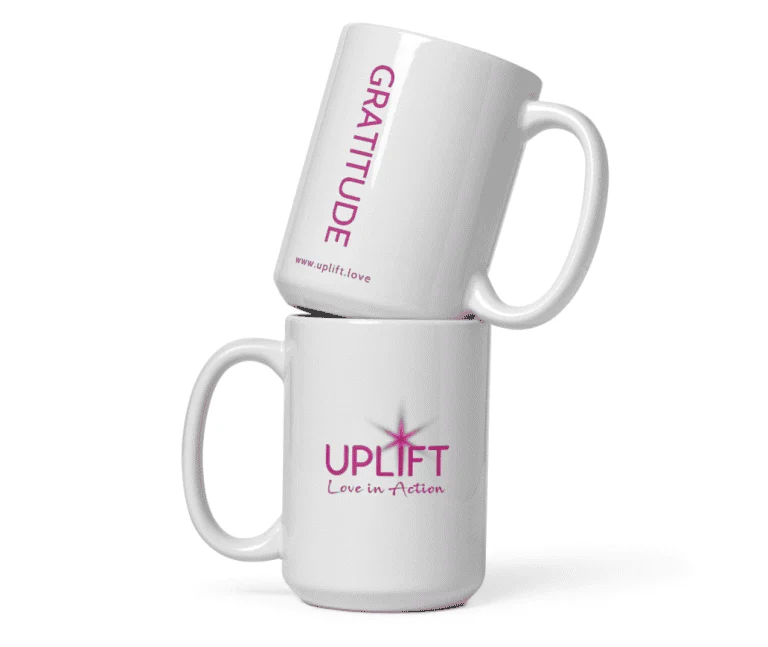
To help participants integrate the spirit of gratitude and authenticity into their daily routines, UPLIFT offers a range of purposeful products. The "UPLIFT Mugs" are highlighted as a tangible way to keep the program’s intentions alive. Available in various sizes, colors, and with different affirmations, these mugs serve as daily reminders to pause, reflect, and engage with one’s chosen intention. The current "Special Offer for 7 DAYS OF GRATITUDE" provides "20% OFF on any 2 or more MUGS* & FREE SHIPPING," making it accessible for individuals to share these intentional items with others or to maintain multiple reminders throughout their day. This initiative aligns with the program’s philosophy, transforming everyday objects into tools for mindfulness and gratitude.
Engaging with the UPLIFT Community
Beyond structured programs and products, UPLIFT provides several platforms for ongoing engagement and collective action, embodying its "Love in Action" ethos:
- "Take 5 Deep Breaths": This simple yet powerful invitation encourages individuals to "Pause and take 5 deep breaths to honor yourself and impact the world." It’s a universal practice for mindfulness and self-regulation, promoting inner peace that can radiate outwards.
- "Financial Contribution": UPLIFT emphasizes transparency, stating, "100% of your contributions go towards supporting our Love in Action projects." This allows individuals to directly support initiatives that spread kindness, connection, and positive change in the world, embodying the spirit of generosity central to the program.
- "Send a Blessing": This unique portal offers a way to "Send a message of love through our blessings portal," enabling participants to extend their gratitude and positive intentions to others, even those they may not know personally. It creates a collective reservoir of goodwill and positive energy.
Conclusion
The "7 Days of Gratitude" program, developed by UPLIFT, represents a thoughtful and comprehensive approach to personal well-being. By meticulously interweaving the daily practice of gratitude with a courageous journey into authenticity, the program offers a roadmap for profound inner transformation. It challenges participants to look beyond superficial positivity, embracing the full spectrum of human emotion as a fertile ground for genuine appreciation. Supported by scientific research and enriched by practical exercises like anonymous gifting and mindful meditation, the program empowers individuals to shed societal conditioning and embrace the invaluable gift of simply "being myself." As the ripple effects of individual transformation begin to manifest in communities, the UPLIFT vision of a world imbued with conscious living, connection, and authentic gratitude moves closer to realization. The invitation remains open: to embark on this journey, to discover the "greatest treasure" within, and perhaps, to "dance to it."