The Atomic Shadow Lengthens: Takashi Yamazaki’s ‘Godzilla Minus Zero’ and the Evolution of Post-War Kaiju Cinema
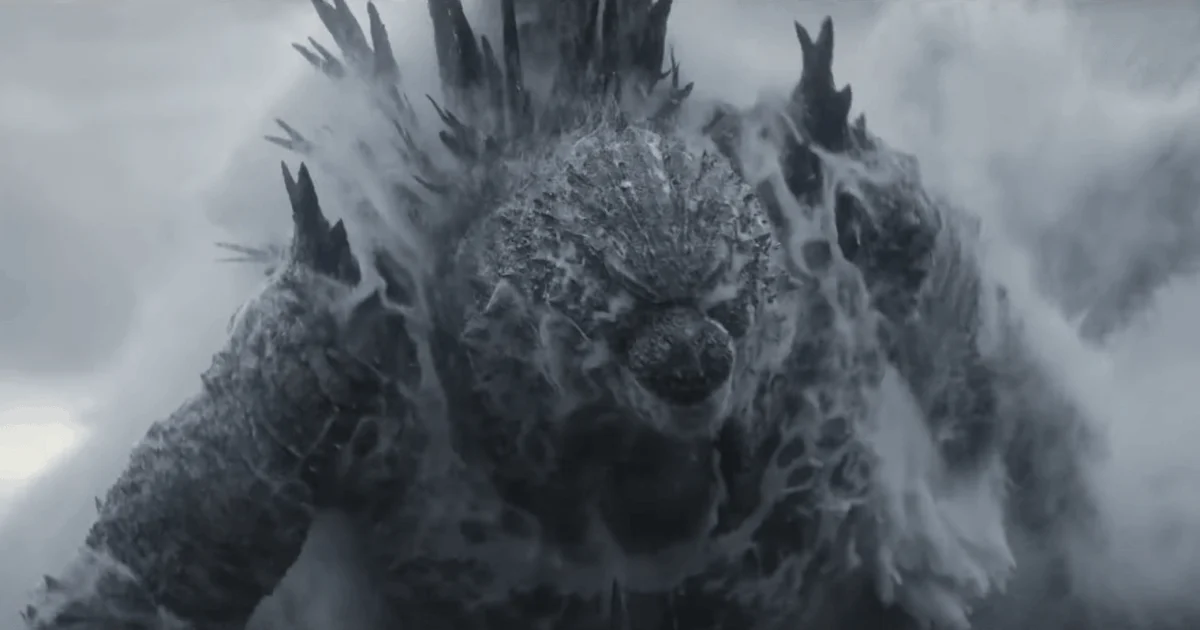
The 2023 release of Godzilla Minus One was more than a cinematic success; it was a cultural phenomenon that recalibrated the global perception of the kaiju genre. By stripping away the camp of previous decades and returning to the somber, trauma-inflected roots of Ishirō Honda’s 1954 original, writer-director Takashi Yamazaki achieved the unthinkable: an Academy Award-winning monster movie that resonated as deeply with historians as it did with genre enthusiasts. Now, following its high-profile premiere at the 2026 New York Film Festival, the highly anticipated sequel, Godzilla Minus Zero, arrives to expand this burgeoning "Yamazaki-verse."
Distributed by GKIDS and slated for a North American theatrical release on November 6, 2026, Godzilla Minus Zero represents a daring escalation in both scale and thematic complexity. While the title has raised eyebrows for its mathematical eccentricity, the film itself is a thunderous, emotionally resonant exploration of a nation struggling to maintain a fragile peace while the scars of the past refuse to heal.
Main Facts: A New Chapter in the Post-War Mythos
Godzilla Minus Zero picks up the narrative threads of its predecessor, moving the timeline forward to 1949—four years after the end of World War II and two years after the cataclysmic events of Ginza. The film returns the core ensemble cast, including Ryunosuke Kamiki as the haunted ex-kamikaze pilot Kōichi Shikishima and Minami Hamabe as Noriko, whose miraculous survival at the end of the first film is expanded upon with significant narrative consequences.
The film’s most striking departure is the introduction of King Ghidorah, the three-headed dragon who serves as the primary antagonist for much of the runtime. Unlike the more heroic or "force of nature" interpretations of the character in Hollywood’s "MonsterVerse," Yamazaki’s Ghidorah is a malevolent, extraterrestrial horror—a "scaly destroyer of worlds" that arrives via meteorite to terrorize a Japan that is only just beginning to see the light of economic and social recovery.
Crucially, Godzilla Minus Zero has earned the franchise’s first "R" rating. This distinction is not born of gratuitous gore, but rather a visceral, "Darwinian" intensity in its monster sequences and a harrowing depiction of the human cost of kaiju attacks. The film’s technical prowess is further bolstered by an IMAX-optimized presentation and a score by Naoki Satō that blends Wagnerian grandeur with the terrifying mechanical dissonance of modern warfare.

Chronology: From "Minus One" to the Brink of "Zero"
To understand the weight of Godzilla Minus Zero, one must understand the specific historical and mathematical logic Yamazaki has applied to the series.
- The Concept of "Minus One" (1945–1947): As Yamazaki explained during the press circuit for the first film, "Minus One" referred to Japan’s state after the war. Having been reduced to "zero" by the atomic bombings and total defeat, the arrival of Godzilla pushed the country into the negatives—a "minus" state where survival was the only objective.
- The Transition to "Minus Zero" (1949): The sequel finds Japan in a state of "zero"—a hard-won equilibrium where the population has begun to rebuild. However, the title Minus Zero suggests a paradox. In mathematical terms, -0 is functionally zero, but in the context of the film, it represents the precariousness of that status. It is the story of a people fighting to keep their "zero" from slipping back into the "minus."
- The Arrival of the Meteorite (1949): The film begins in Matsumoto, 1949. Two weeks prior to the opening scene, a meteorite crashes into the Nagano hills, bringing with it the dormant King Ghidorah. This occurs while the world still believes Godzilla to be dead, having been disintegrated at the bottom of the ocean at the conclusion of the 1947 conflict.
- The Re-emergence: As Ghidorah begins a systematic destruction of the Japanese countryside, the vacuum left by Godzilla’s absence is filled with a new kind of dread, eventually leading to a climactic confrontation that suggests the "King of the Monsters" was never truly gone.
Supporting Data: Technical Evolution and Character Depth
The production of Godzilla Minus Zero reflects a significant increase in budget and ambition following the global box office receipts of its predecessor.
Visual Effects and Soundscape
While Minus One was praised for its resourceful use of CGI (winning the Oscar for Best Visual Effects), critics at the New York Film Festival have noted that Minus Zero features "exponentially improved" digital work. The weightlessness that occasionally plagued the first film’s effects has been replaced by a sense of crushing mass and realistic lighting. The aerial sequences involving Ghidorah in the skies above Matsumoto are described as some of the most gripping setpieces in modern cinema, specifically designed for the IMAX format to maximize the "razzle-dazzle" of the three-headed monster’s lightning-based attacks.
The Human Element
The film’s emotional core remains the "mid-century melodrama" that distinguished the first entry. Ryunosuke Kamiki’s Shikishima is no longer a man seeking a place to die, but a man desperately trying to learn how to live. His relationship with Noriko (now sporting an eyepatch and harboring secrets regarding her survival) and his adoptive daughter Akiko provides the stakes.
The film also introduces new perspectives through:

- Makoto Aoyama (Masami Nagasawa): A meteorologist whose scientific approach to kaiju movement adds a layer of procedural realism.
- Kanji Murakami (Min Tanaka): A biologist and survivor of Hiroshima, Ginza, and Matsumoto. His character serves as a bridge to the "Triple Survivor" story of Tsutomu Yamaguchi, embodying the collective trauma of a generation that cannot escape the shadow of the bomb.
Official Responses: Toho and Yamazaki on the Franchise’s Direction
In statements following the NYFF premiere, Takashi Yamazaki has been vocal about the "grassroots nationalism" depicted in the film. Unlike the Hollywood iterations where the military is often the hero, Yamazaki’s films focus on civilian self-reliance.
"The government is often absent when the people need them most," Yamazaki remarked in a post-screening Q&A. "In Minus Zero, we wanted to explore how survivors—not victims—organize. It is a story about the responsibility of living."
Toho International has also addressed the film’s portrayal of the United States. In Minus Zero, the U.S. Army is depicted not as a savior, but as an occupying force of "square-jawed, power-hungry jerks" who view the kaiju as a geopolitical opportunity rather than a humanitarian crisis. This shift has been described by Toho executives as a "historically grounded" approach to the 1949 setting, reflecting the complexities of the Allied occupation of Japan.
GKIDS, the North American distributor, has leaned into the film’s critical acclaim, positioning it as a prestige drama that happens to feature giant monsters. Their marketing campaign emphasizes the "B+" grade from early reviews, highlighting the film’s balance of "florid tear-jerker" elements and "elegantly choreographed monster mash."
Implications: The Future of the "Yamazaki-verse"
The arrival of Godzilla Minus Zero carries significant implications for the future of the franchise and the broader landscape of international cinema.

A New Standard for Kaiju Storytelling
By securing an "R" rating and focusing on the psychological toll of survival, Yamazaki has effectively bifurcated the Godzilla brand. On one side stands the colorful, action-oriented "MonsterVerse" produced by Legendary Pictures; on the other stands the "Yamazaki-verse," a somber, historically-minded series that treats Godzilla as a "recurring weather phenomenon" and a metaphor for nuclear anxiety. This dual-track approach allows the franchise to appeal to disparate audiences without diluting the brand.
The Middle Chapter of a Trilogy?
Critics and fans alike have noted that Minus Zero feels like the "middle chapter of a trilogy." The ending leaves several narrative threads dangling, particularly regarding the nature of Godzilla’s regeneration and the true origin of the meteorite that brought Ghidorah to Earth. If a third film is greenlit, it is expected to move into the early 1950s, potentially converging with the timeline of the original 1954 film.
The "R" Rating Gamble
The decision to pursue a more mature rating is a gamble that appears to have paid off. By moving away from the "all-ages" constraint, Yamazaki was able to explore more provocative themes, such as Kanji Murakami’s "provocative" anger and the moral ambiguity of the American occupation. This move suggests that Toho is confident in the "adult" audience for Godzilla, recognizing that the children who grew up with the monster are now looking for stories that reflect the complexities of the real world.
In conclusion, Godzilla Minus Zero is a testament to the enduring power of the King of the Monsters. It is a film that respects its history while boldly carving out a new path, proving that even after 70 years, Godzilla can still surprise, terrify, and—most importantly—make us feel the weight of our own humanity. As the series’ numbers "start to add up," the world watches with bated breath to see where this atomic odyssey will lead next.