Gotham’s Digital Bricks: How Unreal Engine 5 is Redefining Lego’s Open World
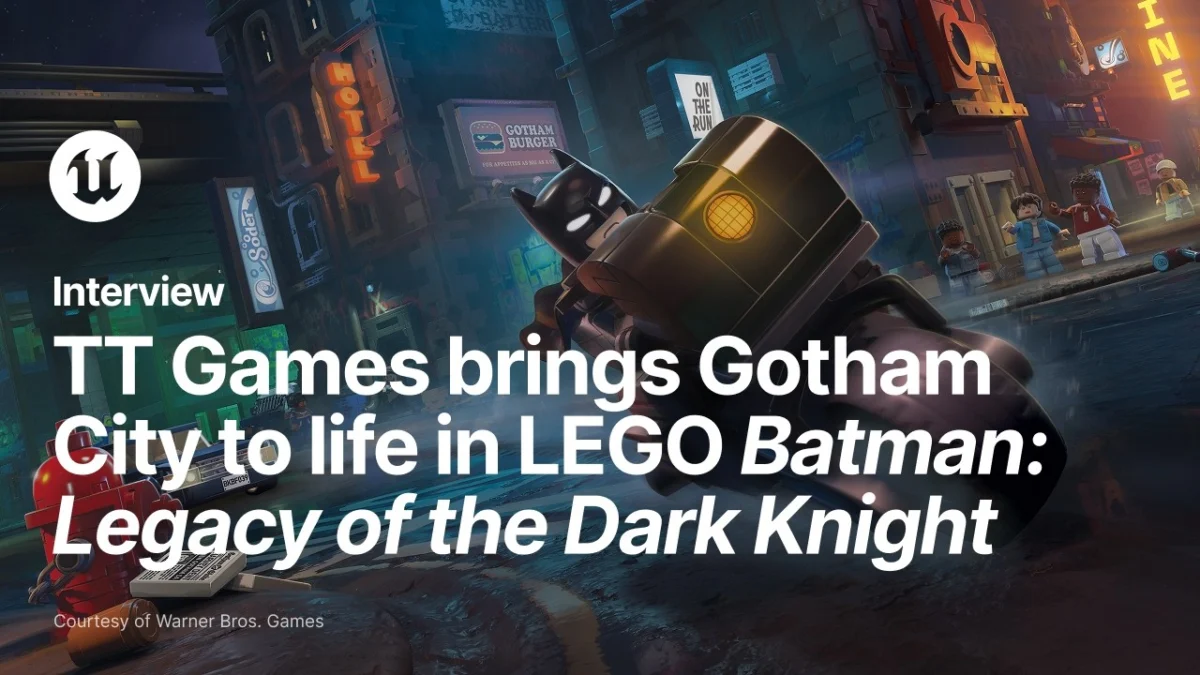
In the ever-evolving landscape of video game development, the adoption of cutting-edge engines often marks a significant leap forward, promising enhanced visual fidelity and deeper immersive experiences. For fans of the beloved Lego franchise, the recent release of Lego Batman: Legacy of the Dark Knight represents such a leap, powered by the formidable Unreal Engine 5. While the game has been lauded for its stunning, realistic cartoon aesthetic, its transition to Epic Games’ powerful platform has also ignited discussions surrounding its performance demands and the strategic choices made by developer TT Games.
This article delves into the intricacies of this transition, exploring the reasons behind TT Games’ decision to embrace Unreal Engine 5, the specific technologies that have enabled the creation of a vibrant Gotham City, and the broader implications for the future of Lego game development.
The Dawn of a New Era for Lego Gaming
Unreal Engine 5 has rapidly ascended to prominence as the industry benchmark for achieving breathtaking 3D realism in video games. Its advanced features, including Nanite for highly detailed geometry and Lumen for dynamic global illumination, have empowered developers to push the boundaries of visual fidelity. This has led to a notable trend of studios migrating from their proprietary in-house engines to Epic’s robust and versatile platform. However, such transitions are rarely seamless and can sometimes be met with apprehension from the gaming community, particularly when the perceived technical demands appear to outstrip the typical audience for a game.
Lego Batman: Legacy of the Dark Knight stands as a compelling case study in this evolving paradigm. The game showcases a remarkably polished graphical presentation, striking a balance between the iconic Lego aesthetic and a surprising level of realism. The textures are crisp, the lighting is dynamic, and the overall visual presentation is a testament to the capabilities of Unreal Engine 5. Yet, this graphical prowess comes with an inherent cost: increased processing power and resource utilization. Consequently, some players have voiced concerns about the game’s minimum hardware requirements, suggesting they are substantial for what is, at its core, a family-friendly title.
Unpacking the Development Journey: Insights from TT Games
To understand the strategic rationale behind TT Games’ adoption of Unreal Engine 5 for Lego Batman: Legacy of the Dark Knight, we turn to insights shared by the development team. Earlier in the year, at the Develop: Brighton conference, TT Games offered a glimpse into the creation of this critically acclaimed Lego title. More recently, Jonathan Smith, Vice President of Product at TT Games, elaborated on the studio’s decision-making process in an interview featured on the Unreal Engine blog. His insights provide valuable context for the technical and creative choices that shaped the game.
Smith highlighted that the decision to move to Unreal Engine 5 was driven by a confluence of factors, chief among them being the engine’s developer-friendly nature and its capacity to facilitate a swift and efficient migration. This suggests that beyond the raw graphical power, the engine’s robust toolset and established workflows were instrumental in TT Games’ strategic alignment. The prospect of leveraging a widely adopted and continuously supported engine like Unreal Engine 5 offered significant advantages in terms of development speed, access to a vast ecosystem of resources, and the potential for future scalability.
The transition wasn’t merely about adopting a new tool; it was about reimagining the possibilities for the Lego gaming experience. Smith’s commentary underscores a proactive approach to embracing technological advancements, aiming to deliver an unparalleled level of immersion and interactivity within the familiar and cherished Lego universe.
The Architectural Marvels of Gotham City: Key Unreal Engine 5 Features
The vibrant and expansive open world of Gotham City in Lego Batman: Legacy of the Dark Knight is a direct beneficiary of several powerful Unreal Engine 5 features. TT Games strategically employed these tools to construct a dynamic and interactive environment that lives up to the game’s ambitious scope.

World Partition: Building a Seamless Gotham
One of the most significant technological cornerstones of the game’s open-world design is Unreal Engine 5’s World Partition system. This innovative feature allows for the seamless streaming of large game worlds by dividing them into a grid of smaller, manageable cells. For Lego Batman, this meant that a large team of developers could simultaneously work on different sections of Gotham City’s vast map without stepping on each other’s toes.
"Building on this system, we have been able to create a living, breathing Gotham City—alive, with pedestrians, traffic, and fun gameplay," Jonathan Smith stated. This highlights how World Partition not only facilitated development but also directly contributed to the game’s immersive quality. By enabling the team to focus on specific areas while minimizing the content active at any given moment, they could achieve a densely populated and detailed open world, populated with dynamic elements like bustling pedestrian traffic and active vehicle routes, all contributing to a believable and engaging Gotham.
Gameplay Ability System (GAS): Empowering the Caped Crusader
The intricate abilities and mechanics that define the gameplay experience in Lego Batman are largely powered by Unreal Engine 5’s Gameplay Ability System (GAS). GAS is a robust framework designed to handle complex character abilities, attribute management, and gameplay effects. TT Games utilized GAS as the foundational architecture for the player abilities system, encompassing everything from Batman’s iconic gadgets to the traversal mechanics that allow players to navigate the city.
While GAS provided a powerful and efficient starting point, TT Games implemented a degree of customization to align with the unique needs and playful spirit of Lego games. This tailored approach ensured that the abilities felt authentic to the Lego Batman universe while benefiting from the underlying efficiency and extensibility of GAS. The adoption of GAS significantly accelerated the development process, allowing the team to focus on refining the player experience rather than building core mechanics from scratch.
Animation Framework: Bringing Lego Characters to Life
The animation framework within Unreal Engine 5 also played a crucial role in the development of Lego Batman: Legacy of the Dark Knight. Smith noted that this framework offered enhanced creative power and freedom to technical animators. Crucially, it maintained a consistent and intuitive interface for coders, fostering seamless collaboration between different disciplines within the development team.
To further refine the game’s combat and environmental interactions, TT Games leveraged a customized version of Unreal Engine’s Sequencer, a powerful tool for creating cinematics and complex animation sequences. Complementing this was the implementation of motion warping, a technique that allows characters to dynamically adjust their animations to align with their environment and actions, resulting in more fluid and natural movements. These advancements in animation tooling contributed significantly to the game’s polished presentation and engaging character interactions.
The Performance Debate: A Consequence of Ambition?
The striking visual fidelity of Lego Batman: Legacy of the Dark Knight, a direct result of its utilization of Unreal Engine 5’s advanced rendering capabilities, has inevitably led to discussions about its performance footprint. The game’s realistic cartoon aesthetic, while visually impressive, demands significant computational resources for processing textures, lighting, and complex geometry.
This has resulted in some players encountering higher minimum hardware requirements than they might have anticipated for a game within the Lego franchise. While the appeal of Lego games often extends to a younger audience with potentially less powerful gaming setups, the graphical advancements brought by Unreal Engine 5 necessitate a more robust hardware configuration to ensure a smooth and enjoyable gameplay experience.

This situation is not unique to Lego Batman. As game engines become more sophisticated, developers face the perennial challenge of balancing visual ambition with accessibility. The decision to push graphical boundaries often means that older or less powerful hardware may struggle to keep pace. For TT Games, the choice to leverage Unreal Engine 5’s capabilities was likely a deliberate one, aimed at elevating the Lego gaming experience to new heights of visual immersion, even if it meant raising the technical bar for players.
Looking Ahead: The Future of Lego Game Development
The successful implementation of Unreal Engine 5 in Lego Batman: Legacy of the Dark Knight signals a promising future for the Lego gaming franchise. The insights shared by TT Games underscore a commitment to embracing cutting-edge technology to deliver increasingly sophisticated and immersive experiences.
The adoption of powerful tools like World Partition and the Gameplay Ability System not only enhances the current generation of Lego games but also lays a strong foundation for future titles. These technologies enable developers to create larger, more dynamic, and more interactive game worlds, pushing the boundaries of what players have come to expect from the Lego universe.
Furthermore, the collaborative nature of Unreal Engine 5’s ecosystem, with its extensive documentation, community support, and readily available resources, can significantly streamline future development cycles. This allows studios like TT Games to focus on innovation and creative expression, knowing that the underlying technological infrastructure is robust and adaptable.
The recent release of the Mayhem Collection DLC, featuring new playable characters like The Joker and Harley Quinn, a new story mission, and an engaging Mayhem Mode, further demonstrates the ongoing commitment to expanding and enriching the Lego Batman experience. This continuous content development, facilitated by the engine’s flexibility, ensures that players have compelling reasons to return to Gotham City.
As Unreal Engine 5 continues to evolve, we can anticipate even more visually stunning and technically advanced Lego games. The partnership between TT Games and Epic Games, exemplified by Lego Batman: Legacy of the Dark Knight, serves as a compelling testament to the transformative power of modern game development engines and their potential to redefine beloved franchises for a new era of digital entertainment. The future of Lego gaming is undoubtedly being built, brick by digital brick, on the robust foundations of Unreal Engine 5.