The Stop-Motion Renaissance: Analyzing the High Stakes of Laika’s ‘Wildwood’ Debut
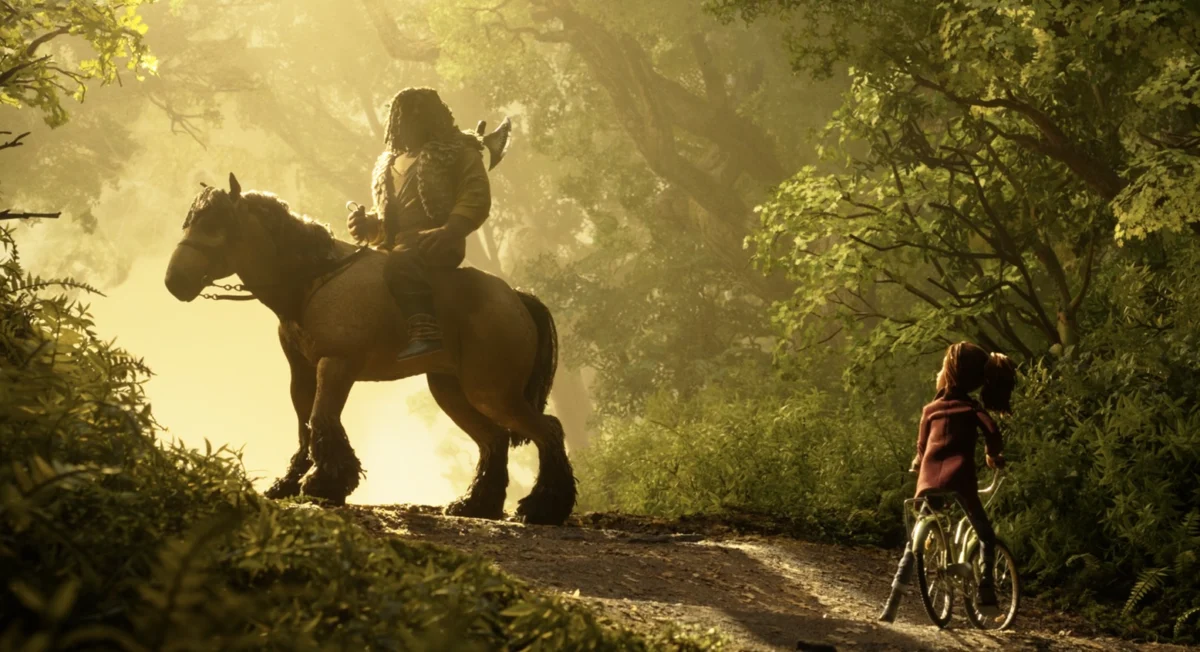
The release of Wildwood this past weekend was far more than a routine addition to the autumn box office calendar. For Laika, the Portland-based studio that has become synonymous with the painstaking art of stop-motion animation, the film’s performance represents a critical inflection point. As the studio’s sixth feature film and its first theatrical release in seven years, Wildwood is being viewed by industry analysts not merely as a single production, but as a referendum on the future of high-budget, hand-crafted cinema in an era increasingly dominated by generative AI and standardized CG animation.
Directed by Laika President and CEO Travis Knight, Wildwood arrived with the weight of immense expectation. With a reported budget of approximately $100 million and a production cycle that spanned nearly a decade, the film is Knight’s most ambitious undertaking to date. While its opening weekend numbers—$12.2 million domestically—may not seem like a blockbuster triumph on the surface, a deeper look at the data, the studio’s history, and the evolving theatrical landscape suggests a more nuanced story of survival and brand endurance.
Main Facts: A Solid Start in a Crowded Field
Wildwood entered the domestic market and secured the No. 3 spot, grossing $12.2 million across 2,940 screens. It trailed behind the DC Studios reboot Clayface, which led the pack with $24 million, and the holdover hit You Can See Everything. Internationally, the film collected an additional $2.9 million from a limited number of early markets, bringing its global start to roughly $15.1 million.
The film’s critical and audience reception has been nothing short of stellar. It currently holds a 99% "Certified Fresh" rating on Rotten Tomatoes and earned a coveted "A" CinemaScore from opening-day audiences. PostTrak surveys also indicated near-universal "recommend" grades, particularly among its target demographics.
Marketing for Wildwood took a calculated risk by leaning into a PG-13 rating, a rarity for mainstream animation. Based on the middle-grade novel by Colin Meloy (lead singer of The Decemberists), the film was positioned as a sophisticated "general audience" epic rather than a traditional children’s movie. This strategy appears to have paid off, with strong turnout among the under-34 demographic and families with older children (tweens).
Chronology: The Seven-Year Journey to the Screen
To understand the significance of Wildwood, one must look at the timeline of Laika’s output and the shifting fortunes of the studio over the last fifteen years.
2009–2014: The Golden Era
Laika burst onto the scene in 2009 with Coraline, directed by Henry Selick. The film was a cultural phenomenon, grossing $124 million worldwide and establishing Laika’s signature "dark but whimsical" aesthetic. This was followed by ParaNorman (2012) and The Boxtrolls (2014), both of which solidified the studio’s reputation for technical innovation and narrative depth. During this period, Laika was seen as the primary challenger to the CG hegemony of Pixar and DreamWorks.
2016–2019: The Pivot and the Slump
In 2016, Travis Knight made his directorial debut with Kubo and the Two Strings. While the film was a critical darling and received two Oscar nominations, its $12.6 million opening and $77 million global finish signaled that stop-motion was becoming a harder sell in a crowded marketplace. The situation grew more dire in 2019 with the release of Missing Link. Despite winning the Golden Globe for Best Animated Feature, the film was a commercial disaster, opening to just $5.9 million and finishing with a domestic total of $17 million against a $100 million budget.

2019–2026: The Long Hiatus
Following the financial disappointment of Missing Link, Laika retreated from the theatrical cycle for seven years. This period was spent refining the technology behind Wildwood, which features the most complex puppet work and largest-scale sequences in the studio’s history. The "Lord of the Rings-esque" third-act battle required years of choreography and thousands of 3D-printed faces. The delay was also extended by the global pandemic and a strategic decision to wait for a theatrical window that allowed for a wide release through Fathom Entertainment.
Supporting Data: Analyzing the Multiples and Long-Term Viability
While the $12.2 million opening has led some outlets to label Wildwood a "money loser" due to its $100 million price tag, Laika’s business model has always prioritized "the long tail" over the opening weekend. Stop-motion films historically exhibit much stronger "legs" (multiples) than traditional action films.
Historical Multiples
- Coraline: 4.5x multiple (Finished with $75M domestic from a $16.8M opening).
- ParaNorman: 4.1x multiple.
- Kubo and the Two Strings: 3.8x multiple.
If Wildwood follows the trajectory of Kubo (a 3.8x multiple), it is projected to finish its domestic run at approximately $46.3 million. If word-of-mouth pushes it toward a Coraline-level 4.5x multiple, it could exceed $55 million.
Comparative Performance
Wildwood’s opening is almost identical to Kubo and the Two Strings ($12.6M) and significantly higher than Missing Link ($5.9M). It also compares favorably to DreamWorks’ Forgotten Island, which opened to $13 million earlier this year. The key difference is that Wildwood is an original IP in a market currently dominated by sequels and reboots.
Premium Format Success
The film performed exceptionally well in Premium Large Format (PLF) screenings and Dolby Cinemas. Across 395 PLF screens, the per-screen average was significantly higher than the national average, suggesting that the "event" nature of the film’s craft is drawing audiences who are willing to pay a premium for the visual experience.
Official Responses: Laika’s Strategic Outlook
In the wake of the opening weekend, Laika’s leadership has remained bullish on the film’s prospects. Dave Burke, Laika’s Chief Marketing Officer and an Executive Producer on Wildwood, spoke with IndieWire about the internal perception of these numbers.
"I think we needed to prove ourselves as the new kid on the block again," Burke stated. "The data points to the fact that there’s a really compelling business case for exhibition to get on even more robustly and support the film in the coming weeks."
Burke highlighted the partnership with Fathom Entertainment as a cornerstone of their strategy. Wildwood represents one of Fathom’s first ventures into a truly wide release for an original feature, following their successful theatrical re-releases of Coraline. According to Burke, the performance in cities like Portland—where the film is set—was particularly encouraging, with many screenings sold out throughout the weekend.

"People have recognized from the get-go that this is an extraordinary undertaking," Burke added. "We have a responsibility to make sure this film gets seen by the widest possible audience. I’m focused on the next couple of weeks, but also its afterlife and what its legacy looks like."
The studio also noted the "5-star" rating from Common Sense Media, a critical metric for parents of tweens and teens who may be wary of the film’s PG-13 rating. By securing the approval of parent advocacy groups, Laika hopes to sustain the film’s momentum through the upcoming holiday season.
Implications: The Future of the Laika Brand
The performance of Wildwood has implications that reach far beyond the accounting department. It serves as a litmus test for several new directions the studio is taking.
1. The PG-13 Animation Frontier
Wildwood’s success or failure will influence whether other studios feel comfortable greenlighting high-budget animation for older audiences. By eschewing the "kiddie movie" label, Laika is attempting to carve out a space similar to that of Studio Ghibli—films that are respected as high art and enjoyed by adults as much as children.
2. Diversification into Live-Action
The "reset" provided by Wildwood is essential as Laika prepares to expand its horizons. The studio has already announced a move into live-action filmmaking, with a project currently in development from director Lulu Wang (The Farewell), starring Lucy Liu and Charles Melton. A stable performance from Wildwood provides the financial and reputational bedrock needed to transition from a "stop-motion house" to a "multimedia studio."
3. The "Patronage" Model vs. Market Realities
It is no secret that Laika is funded in large part by the wealth of Nike co-founder Phil Knight, Travis Knight’s father. This has allowed the studio to pursue "unprofitable masterpieces" that other studios would never touch. However, for the studio to be sustainable in the long term, it must eventually find a way to bridge the gap between artistic purity and commercial viability. Wildwood is the closest they have come in a decade to finding that balance.
4. Technological Legacy
The innovations developed for Wildwood—including advanced rapid prototyping for facial expressions and integrated CG backgrounds—will likely become industry standards. Even if the film does not recoup its $100 million budget in its initial theatrical run, the intellectual property and the technological advancements remain high-value assets for the company.
In conclusion, while Wildwood did not shatter box office records, it has successfully re-established Laika as a formidable player in the theatrical landscape. In an industry that often feels increasingly hollow, the "A" CinemaScore and the 99% Rotten Tomatoes rating serve as a reminder that there is still a significant, hungry audience for stories told with human hands. The coming weeks will determine if Wildwood is a modest hit or a cult classic in the making, but for now, the "Forest of Wildwood" has provided Laika with the breath of life it so desperately needed.