
The Red Planet’s Box Office Curse: How Andy Weir’s ‘The Martian’ Defied Decades of Cinematic Failure
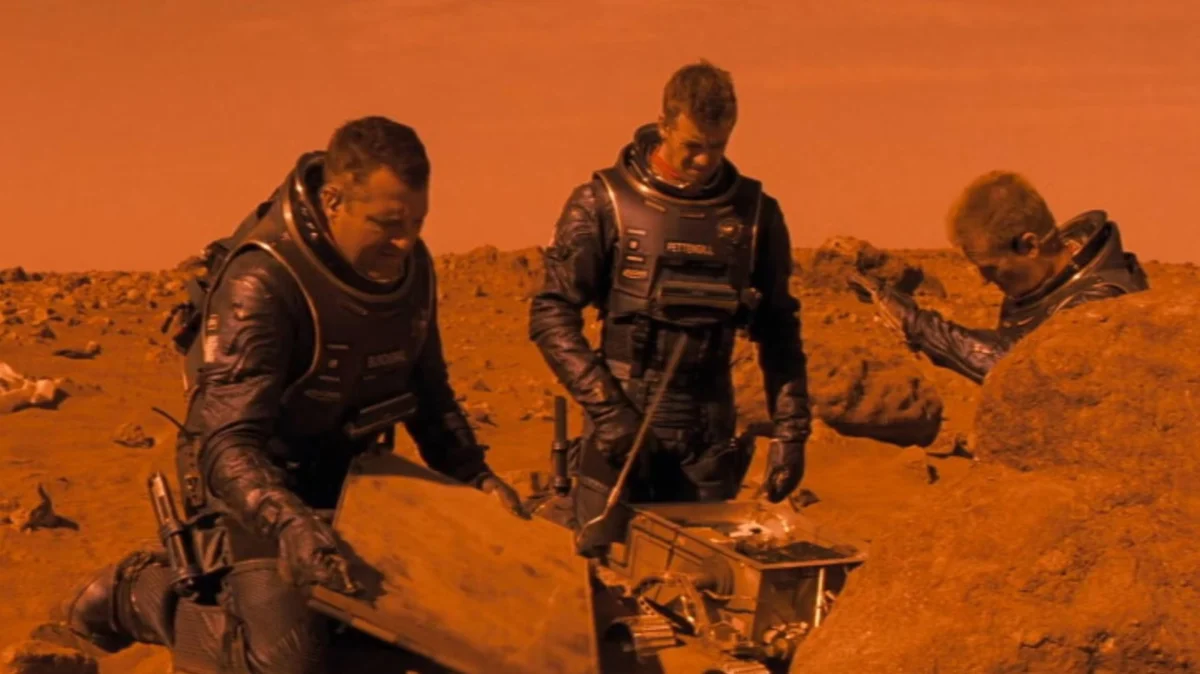
For decades, the fourth rock from the sun was considered a graveyard for Hollywood ambitions. Despite the public’s enduring fascination with space exploration, the planet Mars had become synonymous with "box office poison." From high-concept sci-fi dramas to big-budget Disney epics, the cinematic landscape was littered with the wreckage of Martian expeditions that failed to launch.
When Andy Weir’s self-published novel The Martian began its journey toward a big-screen adaptation, the author was acutely aware of this history. In a candid retrospective, Weir revealed that the industry’s "Mars Curse" nearly derailed the project before Ridley Scott ever stepped behind the camera. This is the story of how one film managed to break a twenty-five-year losing streak and redefine the parameters of hard science fiction.
Main Facts: The Resilience of a Scientific Phenomenon
In 2015, The Martian, directed by Ridley Scott and starring Matt Damon, became a global juggernaut. It grossed over $630 million worldwide and secured seven Academy Award nominations, including Best Picture. On the surface, it seemed like a standard blockbuster success. However, in the context of Hollywood history, it was a statistical anomaly.
For a quarter of a century prior, movies set on Mars had consistently hemorrhaged money. The "Mars Curse" was not merely a superstition among studio executives; it was a financial reality supported by a string of high-profile disasters. Andy Weir, speaking with Lightspeed Magazine, noted that the last significant commercial success set on the Red Planet before his story arrived was 1990’s Total Recall. Between Arnold Schwarzenegger’s trip to Mars and Matt Damon’s survival story, the planet had become a "no-go zone" for risk-averse producers.
The success of The Martian didn’t just break the curse; it proved that audiences weren’t tired of Mars—they were tired of how Mars was being sold to them.
Chronology: A Timeline of Martian Missteps (1996–2012)
To understand Weir’s trepidation, one must look at the wreckage of the films that preceded him. Each decade brought a new wave of optimism, followed by a crushing financial blow.
The Experimental Failure: Mars Attacks! (1996)
Directed by Tim Burton and boasting an ensemble cast including Jack Nicholson and Glenn Close, Mars Attacks! was a satirical homage to 1950s B-movies. While it has since gained a cult following, its initial release was a stumble. With a production budget of roughly $100 million, it barely recouped its costs, bringing in $101 million globally. Critics were divided by its mean-spirited humor, and the film served as an early warning that Mars-themed projects were difficult to market.
The Double-Feature Disaster: Mission to Mars and Red Planet (2000)
The year 2000 saw Hollywood go "all in" on Mars with two massive productions released months apart. Both were catastrophic.
- Mission to Mars: Directed by Brian De Palma and based on a Disney theme park attraction, the film was a meditative, quasi-spiritual take on alien contact. It cost $100 million and returned only $111 million, failing to turn a profit after marketing costs.
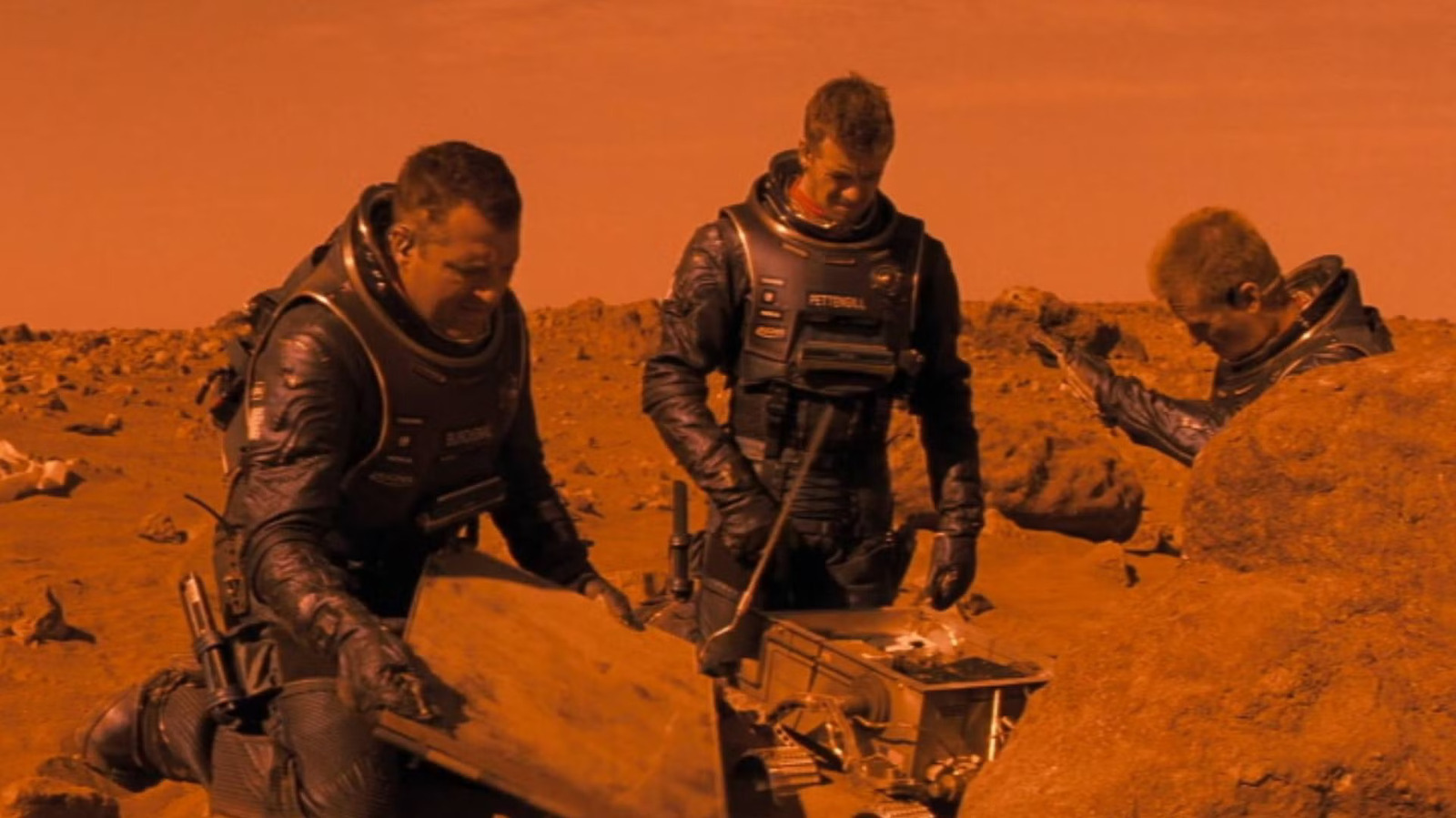
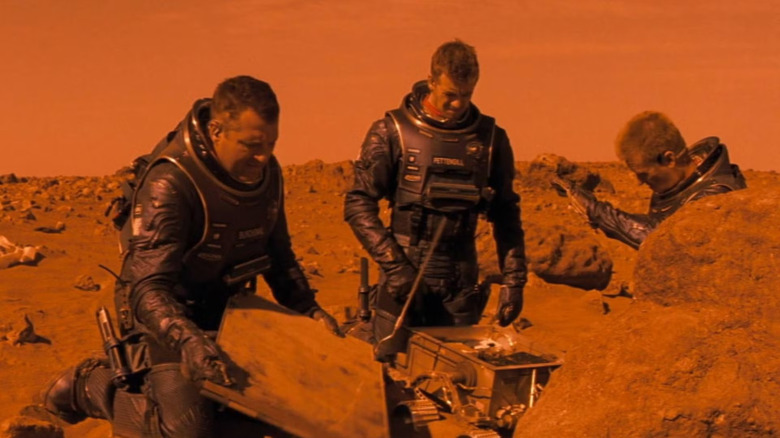
- Red Planet: Released the same year, this Val Kilmer-led action-horror film was an even deeper failure. It grossed a paltry $33 million against an $80 million budget. The industry took note: the public was seemingly allergic to the Red Planet.
The Disney "Death Blow": Mars Needs Moms and John Carter (2011–2012)
If the early 2000s were a warning, the early 2010s were a funeral. Disney released back-to-back Martian flops that remain among the biggest losses in cinema history.
- Mars Needs Moms (2011): An eerie motion-capture animation that fell deep into the "uncanny valley," the film lost the studio an estimated $100 million to $150 million.
- John Carter (2012): Originally titled John Carter of Mars, Disney famously dropped "of Mars" from the title in a desperate attempt to avoid the curse. The tactic failed. Despite being a faithful adaptation of Edgar Rice Burroughs’ seminal work, the film’s $250 million budget resulted in a massive write-down for the studio.
Supporting Data: The Financial Chasm
The disparity between The Martian and its predecessors is stark when viewed through the lens of Return on Investment (ROI).
| Movie Title | Release Year | Budget (Est.) | Global Box Office | Outcome |
|---|---|---|---|---|
| Total Recall | 1990 | $60M | $261M | Success |
| Mars Attacks! | 1996 | $100M | $101M | Flop |
| Mission to Mars | 2000 | $100M | $111M | Flop |
| Red Planet | 2000 | $80M | $33M | Bomb |
| Ghosts of Mars | 2001 | $28M | $14M | Bomb |
| Mars Needs Moms | 2011 | $150M | $39M | Historic Bomb |
| John Carter | 2012 | $250M | $284M | Major Loss |
| The Martian | 2015 | $108M | $630M | Blockbuster |
The data suggests that for 25 years, the "average" Mars movie could expect to lose money. The Martian broke this trend by earning nearly six times its production budget, a feat unseen for the setting since the Reagan era.
Official Responses: Andy Weir on the "Mars Curse"
In his interview with Lightspeed Magazine, Andy Weir reflected on the anxiety of bringing his book to the screen. He acknowledged that the "Mars Curse" was a legitimate talking point during the greenlighting process.
"When you talk about Mars movies, there’s what they call ‘The Mars Curse’ in the movie industry; that was actually something that was going to, potentially, be a problem in getting The Martian greenlighted," Weir explained.
However, Weir also offered a nuanced critique of why those previous films failed. He argued that the setting—Mars itself—wasn’t the problem. Rather, it was the narrative choices made by the filmmakers. Specifically, he pointed to the lack of realism in how "astronauts" were portrayed.
"I actually liked Mission to Mars… didn’t like the one with Val Kilmer [Red Planet] as much," Weir said. He noted that in Red Planet, the characters behaved like typical action-movie archetypes rather than trained professionals. They screamed at each other, engaged in physical brawls, and sabotaged one another.
"Real astronauts don’t get into screaming matches," Weir noted. "They have to work as a team to survive in space. Astronauts are psychologically vetted… fighting is a movie thing."
Weir’s perspective suggests that the "curse" was actually a symptom of bad writing. By treating Mars as a backdrop for generic horror or action tropes, filmmakers alienated audiences who wanted a genuine sense of wonder and scientific authenticity.
Implications: The Shift Toward "Hard" Science Fiction
The success of The Martian has had profound implications for the science fiction genre and the way Hollywood approaches scientific accuracy.
1. The "Competence Porn" Genre
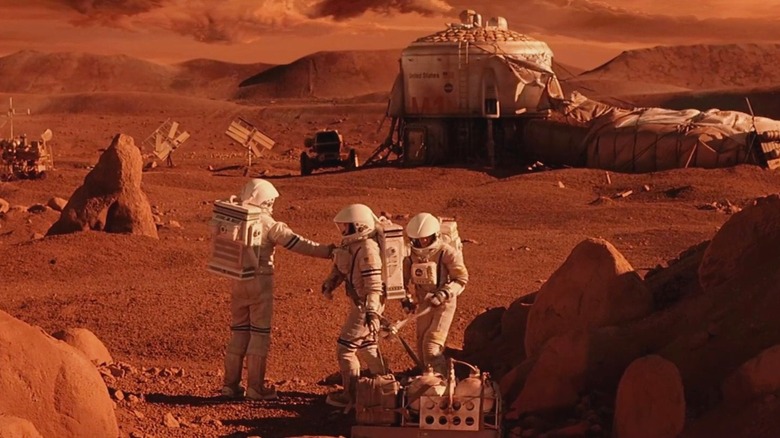
The Martian popularized what critics often call "competence porn"—the joy of watching highly skilled people solve complex problems using logic and math. By moving away from "movie things" like fistfights and alien monsters, and toward "astronaut things" like botany and orbital mechanics, Weir and Scott found a fresh way to engage audiences.
2. Scientific Realism as a Marketing Tool
Before 2015, studios feared that "too much science" would bore the average viewer. The Martian proved the opposite. Its commitment to (mostly) accurate physics and chemistry became its primary selling point. This paved the way for other scientifically grounded projects, proving that the public has a high appetite for intelligence in their blockbusters.
3. Rehabilitating the Red Planet
The success of the film effectively ended the "Mars Curse." While it didn’t guarantee that every future Mars movie would be a hit, it removed the automatic stigma attached to the setting. It allowed studios to view Mars as a viable location for storytelling again, provided the story was grounded in human ingenuity rather than tired tropes.
4. Impact on Real-World Exploration
The film’s popularity also provided a "soft power" boost for NASA and private space agencies like SpaceX. By making Mars exploration feel tangible and "solvable," it reinvigorated public interest in actual missions to the Red Planet.
Conclusion
Andy Weir’s The Martian stands as a testament to the idea that no setting is inherently "cursed." The failure of previous Mars movies wasn’t due to the planet’s lack of appeal, but rather a failure to respect the unique challenges and awe-inspiring reality of space travel. By choosing "astronaut things" over "movie things," Weir didn’t just save Mark Watney; he saved the Red Planet from Hollywood’s scrap heap. As Weir himself suggested, the lesson for future filmmakers is simple: if you want to go to Mars, leave the action-movie clichés on Earth.



Leave a Comment