The Evolution of Spatial Computing: Analyzing the Leak of Pico’s ‘Project Swan’ and ByteDance’s High-End Pivot
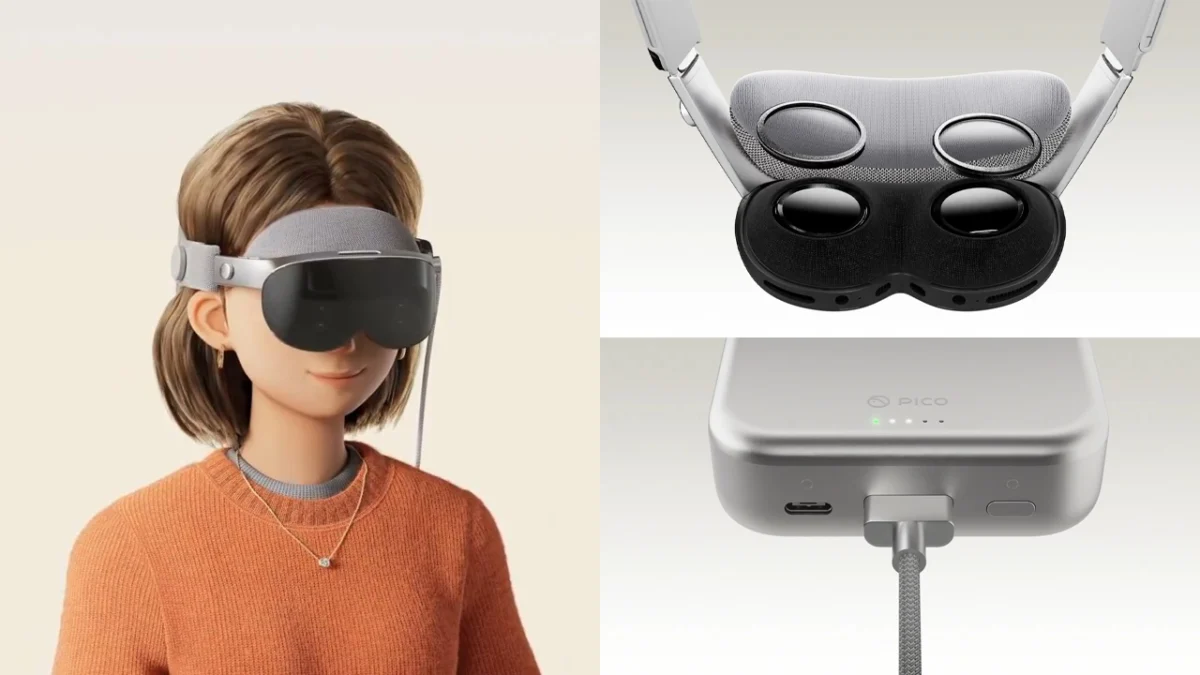
The landscape of extended reality (XR) is currently undergoing a seismic shift, moving away from affordable consumer-grade gaming peripherals toward sophisticated, high-fidelity "spatial computers." Leading this charge is Pico, the hardware subsidiary of TikTok’s parent company, ByteDance. Recent unauthorized disclosures sourced from a public Software Development Kit (SDK) have provided the most detailed look yet at Pico’s next-generation headset, internally codenamed "Project Swan."
The leaked footage and data indicate a device that serves as a visual and technological bridge between the Apple Vision Pro and Samsung’s upcoming Galaxy XR. This development signals a definitive departure from Pico’s previous strategy of competing directly with Meta’s budget-friendly Quest line, positioning ByteDance as a premium contender in the high-stakes race for the future of computing.
Main Facts: The Anatomy of a Leak
The recent discovery, first brought to light by prominent XR analyst and enthusiast Luna, involves instructional videos embedded within a publicly accessible Pico SDK. These videos, intended to guide developers through the headset’s interface and setup processes, inadvertently reveal the complete industrial design of the device.
Design and Aesthetics
The "Project Swan" headset features a striking hybrid design. The rear strap appears to be a direct nod to the Apple Vision Pro’s "Solo Knit Band," utilizing a ribbed, breathable fabric designed for ergonomic comfort and weight distribution. Conversely, the front visor and integrated forehead pad—designed to alleviate pressure on the bridge of the nose—strongly resemble the leaked prototypes of Samsung’s upcoming XR collaboration with Google and Qualcomm.
The Tethered Architecture
One of the most significant revelations is the inclusion of an external tethered puck. While the SDK does not explicitly define the puck’s internal components, industry standards suggest two possibilities: it acts as a dedicated battery pack to reduce the headset’s on-face weight, or it houses the primary compute units (CPU/GPU) to prevent thermal throttling within the visor itself. This design choice mirrors Meta’s rumored "Phoenix" project and Apple’s existing power solution, highlighting a growing industry trend toward modular XR hardware.
Controller Integration
Despite the industry-wide push toward hand-tracking, the leaked videos depict the use of physical, tracked controllers. These peripherals bear a strong resemblance to the Pico 4 Ultra controllers, featuring a ringless design and advanced haptics. Their inclusion suggests that while Pico is chasing the "spatial computing" aesthetic of Apple, it remains committed to providing the tactile precision required for gaming and professional productivity.
Chronology: From Pico 4 to Project Swan
To understand the significance of Project Swan, one must examine the turbulent but rapid evolution of Pico under ByteDance’s ownership.
- September 2022: Pico launches the Pico 4, a direct competitor to the Meta Quest 2. It is praised for its pancake lenses and balanced design but struggles to gain a foothold in the US market due to geopolitical tensions and Meta’s dominant content library.
- Late 2023: Reports surface of significant restructuring within ByteDance’s VR division. Rumors circulate that the "Pico 5" has been canceled in favor of a more ambitious, high-end project designed to compete with the Apple Vision Pro.
- March 2024: Pico officially breaks its silence, teasing "Project Swan." The company confirms key display and compute specifications, moving away from the "consumer VR" branding toward "Spatial Computing."
- June 2024: The discovery of instructional videos in the Pico SDK provides the first unstylized look at the hardware, confirming the design direction and the move toward a tethered architecture.
Supporting Data: Technical Specifications and Performance
While the visual leak is the primary focus of current discussions, the technical specifications previously confirmed by Pico provide the necessary context for why this headset is being labeled a "Vision Pro killer" in some circles.

Display Prowess
Project Swan will utilize Micro-OLED panels boasting a staggering 4,000 pixels per inch (PPI). For comparison, the Meta Quest 3 utilizes LCD panels with roughly 1,218 PPI. This jump in pixel density is intended to eliminate the "screen door effect" entirely, allowing for retina-level clarity that is essential for reading small text and performing professional-grade design work in a virtual environment.
Dual-Chip Architecture
The device will employ a dual-chip system. A self-developed coprocessor will be dedicated exclusively to computer vision, image processing, and sensor fusion, minimizing latency for passthrough and tracking. The main processor is slated to deliver twice the CPU and GPU performance of the Snapdragon XR2 Gen 2 currently found in the Meta Quest 3. This suggests Pico may be using the Snapdragon XR2+ Gen 2 or a customized silicon solution tailored for high-resolution multitasking.
Software Ecosystem: Pico OS 6
The hardware is only half the story. Pico has detailed "Pico OS 6," a revamped operating system that draws heavy inspiration from Apple’s visionOS. It includes the "Pico Spatial Engine," a framework similar to Apple’s RealityKit, designed to help developers create 3D interfaces that interact realistically with the user’s physical environment.
| Feature | Pico 4 Ultra | Project Swan (Leaked/Confirmed) | Apple Vision Pro |
|---|---|---|---|
| Display Type | LCD | Micro-OLED | Micro-OLED |
| Resolution/PPI | 1,200 PPI | 4,000 PPI | ~3,380 PPI |
| Processor | Snapdragon XR2 Gen 2 | Next-Gen (2x Performance) | Apple M2 + R1 |
| Form Factor | All-in-one | Tethered Puck | Tethered Battery |
| Primary Input | Controllers | Controllers + Hand Tracking | Hand + Eye Tracking |
Official Responses and Strategic Silence
As is standard with major hardware leaks, ByteDance and Pico have declined to comment on the specific videos found in the SDK. However, their official communications since March 2024 have been uncharacteristically transparent regarding the device’s internal goals.
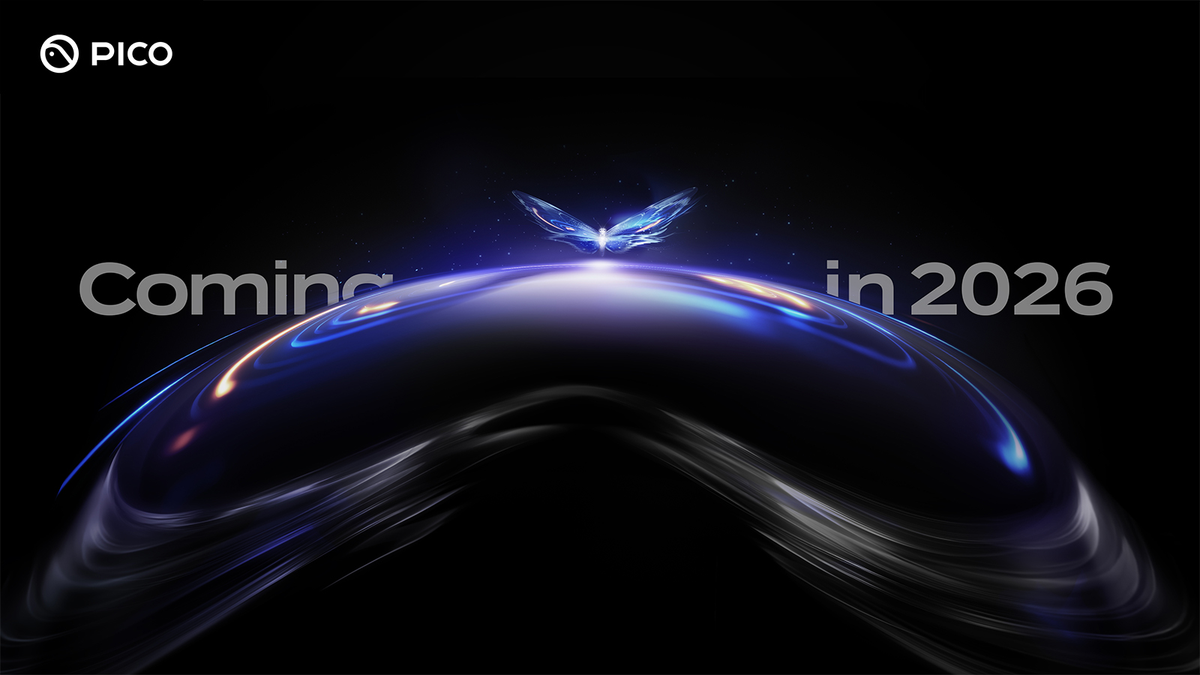
In various developer forums, Pico representatives have emphasized that the company is no longer interested in a "race to the bottom" on pricing. The official stance is that to push XR adoption forward, the industry needs a "no-compromise" hardware platform. This pivot aligns with ByteDance’s broader corporate strategy of moving away from low-margin hardware sales and focusing on high-value ecosystems where they can leverage their strengths in AI and content delivery.
Market analysts suggest that the SDK leak might not be entirely accidental. By allowing high-end specs and a premium design to circulate, Pico builds anticipation among enterprise clients and "prosumers" who may be hesitant to invest $3,499 in an Apple Vision Pro but are looking for a more capable alternative than the Quest 3.
Implications: The High-End XR Battlefield
The leak of Project Swan carries profound implications for the VR/AR industry and the competitive dynamics between the US, South Korea, and China.
1. The Death of the Mid-Range?
Pico’s shift suggests that the "mid-range" VR market (the $600–$900 bracket) is becoming a "no-man’s land." Companies are either targeting the entry-level consumer (Meta) or the high-end professional (Apple, Samsung, Pico). By opting for 4,000 PPI Micro-OLEDs and a dual-chip setup, Pico is signaling that Project Swan will likely carry a price tag north of $1,500, placing it firmly in the luxury electronics category.

2. The Standardization of "Spatial Computing"
The similarities between Project Swan, Vision Pro, and Galaxy XR indicate a convergence in industrial design. The "tethered puck" and the "forehead pad" are becoming the standard solutions for the "comfort vs. power" dilemma. As these designs stabilize, the competition will shift from who has the best hardware to who has the best software ecosystem and developer support.
3. Geopolitical and Market Access
For ByteDance, Project Swan is a high-stakes gamble. While the hardware is world-class, the company faces ongoing scrutiny in Western markets. A high-end headset could be ByteDance’s way of establishing a "professional" image that transcends the controversies surrounding TikTok. However, without a robust Western content library to rival Meta’s Horizon or Apple’s App Store, Pico will have to rely heavily on the enterprise sector and the Asian market.
4. Pressure on Meta
While Pico is not competing with the Quest 3 on price, Project Swan puts immense pressure on Meta to deliver a "Quest Pro 2." If Pico successfully launches a headset with double the performance of the Quest 3 and superior Micro-OLED displays, Meta risks losing the high-end enthusiast market entirely.
Conclusion
The "Project Swan" leak reveals a ByteDance that is no longer content to follow in Meta’s footsteps. By synthesizing the ergonomic innovations of Apple and the design language of Samsung, Pico is carving out a unique identity in the spatial computing era. While the tethered puck and high-end specs suggest a premium price point, they also promise a level of immersion that was previously unavailable outside of ultra-expensive enterprise headsets. As we move into the latter half of the year, the industry awaits Pico’s official unveiling, which will likely set the stage for a three-way battle between Cupertino, Seoul, and Beijing for the future of the digital interface.