
Unveiling the Midnight Mystery: Laura Sampson’s "Enchanted Tales" Reimagines "The Twelve Dancing Princesses"
FOR IMMEDIATE RELEASE
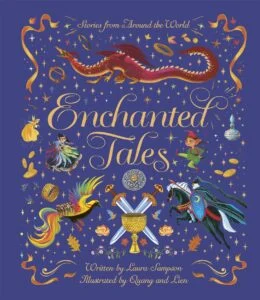
LONDON, UK – The timeless allure of folklore receives a vibrant contemporary reimagining with the release of Laura Sampson’s latest literary offering, Enchanted Tales, published by Templar Books. Among its captivating collection, Sampson breathes new life into "The Twelve Dancing Princesses," a beloved European narrative traced back to French writer Charles Deulin. This particular retelling, steeped in rich regional detail, invites readers into a world where secret dances, royal mysteries, and the unwavering heart of a commoner converge to challenge fate.
The enduring popularity of "The Twelve Dancing Princesses" across myriad European cultures attests to its potent blend of mystery, romance, and the universal yearning for hidden realms. Sampson’s rendition, illustrated by the talented Phung Nguyen Quang & Huynh Thi Kim Lien, not only preserves the narrative’s core enchantment but also enriches it with a depth of character and setting that promises to captivate both new audiences and seasoned lovers of fairy tales. The story, originally documented by Deulin, draws heavily on the cultural tapestry of the French-Belgian border region, infusing the magical escapade with tangible elements of food, fashion, and distinctive place names that ground the fantasy in a relatable, historical context.
Main Facts: A Glimpse into the Enchanted World
Laura Sampson, a celebrated storyteller and author, has once again delved into the rich wellspring of global folklore to present a captivating retelling within her new book, Enchanted Tales. Central to this collection is her interpretation of "The Twelve Dancing Princesses," a narrative whose origins are often attributed to Charles Deulin, a 19th-century French author and folklorist. Deulin’s version of the tale is particularly notable for its integration of specific cultural and geographical details from his native region near the French-Belgian border, lending an authentic flavour to the classic mystery.
The story revolves around a persistent enigma at the opulent Château of Beloeil, where twelve beautiful princesses retire to a triple-bolted suite each night, only for their satin slippers to be found inexplicably worn through by morning. Their father, the Duke, desperate for a resolution, offers the hand of one of his daughters to any man capable of uncovering the princesses’ secret. However, this enticing decree comes with a perilous caveat: previous suitors, primarily princes from across the land, have mysteriously vanished after failing to solve the riddle.
Enter Michel, a humble yet imaginative cowherd from the nearby village of Montignies-sur-Roc, affectionately known as "Stargazer" for his dreamy disposition and yearning for adventure. Guided by a benevolent fairy, Michel embarks on a quest that transcends his humble origins. Armed with magical laurel trees and an accidental gift of invisibility, he covertly follows the princesses into their clandestine nocturnal world: a fantastical journey through shimmering woodlands of silver, gold, and diamonds, across a glass-clear lake, to an enchanted castle where they dance until dawn with magically ensnared princes.
Sampson’s narrative meticulously follows Michel’s investigative efforts, his collection of irrefutable evidence in the form of sprigs from the enchanted woods, and the eventual confrontation with the princesses, particularly the youngest, Lina, with whom he shares a burgeoning, unspoken connection. The tale culminates in a dramatic climax where true love’s sacrifice breaks the ancient spell, freeing the enchanted princes and revealing the secret to the Duke, ultimately leading to Michel’s marriage to Lina and his ascension to princely status. The book, Enchanted Tales, is further enhanced by the evocative illustrations of Phung Nguyen Quang & Huynh Thi Kim Lien, adding a visual layer to Sampson’s enchanting prose.
Chronology: The Stargazer’s Journey to Unravel a Royal Secret
The narrative unfolds with an immediate plunge into the mystical, introducing Michel, the "Stargazer," a young cowherd from Montignies-sur-Roc, whose aspirations reach far beyond his pastoral duties. His destiny is set in motion when a fairy, resplendent in gold, appears to him, instructing him to seek his fortune at the Château of Beloeil, promising him a princess bride. This divine intervention serves as the catalyst for Michel’s transformative journey.
Upon his arrival at the grand château, Michel finds himself amidst a court consumed by a baffling mystery. The Duke’s twelve daughters, renowned for their beauty, are inexplicably wearing out their dancing shoes nightly, despite their chambers being securely locked. The Duke’s desperate proclamation – offering a royal marriage to anyone who could solve the puzzle – has drawn a procession of noble princes, all of whom have mysteriously disappeared after their failed attempts, adding a layer of danger to the already perplexing situation.
Michel, a commoner, initially harbours doubts about his suitability to confront royalty. He adopts a strategic approach, securing work within the château gardens, where he tends to the delicate task of preparing daily bouquets for the princesses. For a time, his presence goes largely unnoticed, until a fleeting glance and a warm smile from Lina, the youngest princess, ignite a spark of hope and determination within him. This subtle interaction transforms his motivation from a general quest for adventure into a more personal yearning to uncover the truth for Lina’s sake.
The fairy reappears, bestowing upon Michel two magical laurel saplings – one rose, one cherry – along with a golden bucket and rake, advising him to cultivate them to grant his wishes. Michel diligently follows these instructions. The cherry laurel soon produces a miraculous white flower. Plucking it and placing it in his shirt button, Michel discovers an unforeseen power: complete invisibility. This magical boon provides him with the perfect means to infiltrate the princesses’ closely guarded secret.
That very evening, rendered unseen, Michel conceals himself beneath a bed in the princesses’ suite. As soon as the three bolts secure the door, the room transforms into a hub of activity – rustling silks, hushed giggles, and then, a series of distinct claps. A hidden trapdoor in the floor creaks open, revealing a secret passage. Michel, seizing his opportunity, slips out and follows the procession of princesses, so closely that he inadvertently steps on Lina’s dress. Her momentary alarm, attributed to tripping, confirms his successful concealment.
The princesses lead Michel down a winding staircase, along a mysterious corridor, and through a succession of enchanting woodlands: first of shimmering silver, then of lustrous gold, and finally, of dazzling diamonds. Their journey culminates at a glass-clear lake, where twelve waiting princes in shining boats ferry each princess to a luminous castle shimmering in the twilight. Michel, invisible, finds himself sharing a boat with Lina, who expresses mild confusion over its unusual heaviness – a subtle detail underscoring Michel’s presence.
Inside the castle ballroom, a whirlwind of music, mirrors, and sparkling lights greets them. Michel, a silent observer, watches the princesses dance with abandon, particularly Lina, whose velvet-black eyes radiate joy. He discerns, however, that the princes are the very suitors who had previously vanished, now ensnared by an enchanted potion that has erased their memories of the world above. As the princesses’ shoes wear through from their tireless dancing, the ball concludes with a feast of sugar cookies, waffles, and cakes.
On their return journey, Michel begins his meticulous evidence collection. In the silver woodland, he breaks off a tiny sprig, the sharp clang echoing through the enchanted forest, momentarily alarming the princesses before they dismiss it as a bird. He then races ahead, escaping through an open window and down a vine to resume his gardening duties, his invisibility flower removed. Later, Lina discovers the silver sprig nestled within her bouquet, a silent testament to Michel’s presence.
Over the next two nights, Michel repeats his covert surveillance, each time collecting a sprig – first from the golden woodland, then from the diamond – and secretly placing it in Lina’s bouquet. The discovery of the diamond sprig finally compels Lina to confront Michel. She challenges him, acknowledging his unique ability to follow them and pressing him on his intentions to reveal their secret to the Duke. Michel, with a longing gaze that meets Lina’s, steadfastly refuses to betray them for the Duke’s reward.
This unspoken declaration of affection is not lost on the other princesses, who mock Lina for her apparent interest in a "gardener’s wife" future. Humiliated, Lina vehemently denies their taunts and casts her bouquet at Michel in a fit of disdain. Later that day, the sisters conspire, inviting Michel to join them openly that night, intending to subject him to the same fate as the previous suitors.
Undeterred, Michel accepts. Remembering the rose laurel, he whispers a wish into its petals, instantly transforming his humble attire into the magnificent black velvet of a prince, adorned with a diamond feather brooch. Thus attired, he joins the princesses for their final journey to the enchanted castle. Lina, initially embarrassed by his princely appearance, is met with Michel’s poignant reminder of his true identity.
They dance together all night. As the ball draws to a close, the eldest princess offers Michel a golden cup, ostensibly a toast, but in reality, containing the forgetting potion. Michel, aware of their plot, raises the cup to his lips, his gaze fixed on Lina. In a pivotal moment of true affection, Lina cries out, seizing the cup before he can drink. Her heartfelt declaration – "Gardener or not, the thought of you trapped here forever breaks my heart!" – shatters the enchantment for all.
The spell broken, they return to the world above, the trapdoor sealing behind them forever. Michel, now free to speak, reveals the entire truth to the Duke of Beloeil and, emboldened by Lina’s love, requests her hand in marriage. The tale concludes with a grand, joyous wedding, Michel’s transformation into a prince, and the ultimate fulfillment of his wishes, no longer needing the magic of the laurels, for he now possesses everything he truly desired.
Supporting Data: The Enduring Legacy of a Timeless Tale
Laura Sampson’s Enchanted Tales is more than just a collection of stories; it’s a testament to the enduring power and adaptability of folklore. Her retelling of "The Twelve Dancing Princesses" specifically highlights several crucial aspects of traditional narrative. The tale itself, categorized as ATU 306 in the Aarne-Thompson-Uther Index, is a globally recognized motif, appearing in various forms across cultures, from the Brothers Grimm’s "The Worn-Out Dancing Shoes" to lesser-known variants in Scandinavian and Eastern European traditions. This widespread prevalence underscores its universal appeal, tapping into themes of curiosity, forbidden pleasures, social boundaries, and the transformative power of love.
Sampson’s choice to base her retelling on Charles Deulin’s version is particularly insightful. Deulin, a 19th-century French writer and folklorist, was renowned for his efforts to collect and publish regional folktales, particularly from his native Hainaut region, which straddles the French-Belgian border. Unlike some more generalized versions, Deulin’s narratives are rich with specific, localized details – the names of villages like Montignies-sur-Roc, descriptions of regional foods (waffles, sugar cookies), clothing, and even architectural nuances (the Château of Beloeil, a real historical landmark in Belgium). Sampson meticulously preserves these details, lending her retelling an authentic sense of place and time that elevates it beyond a generic fairy tale. This attention to detail not only grounds the fantastical elements but also serves an important cultural preservation function, introducing readers to the specific heritage of a particular European region.
The character of Michel, the "Stargazer," embodies the classic archetype of the underdog hero. His humble origins as a cowherd contrast sharply with the royal setting, emphasizing that true virtue, perseverance, and a kind heart can triumph over social standing. His nickname, "Stargazer," is symbolic of his imaginative spirit and his capacity for dreaming beyond his immediate circumstances, a quality that makes him receptive to the fairy’s guidance and capable of navigating a world of magic. His journey is one of self-discovery and growth, mirroring the coming-of-age themes often found in folklore.
The symbolism within the story is equally potent. The secret underground world represents a realm of hidden desires and forbidden freedom, a space where the princesses can escape the strictures of royal life. The progressive enchantment of the woodlands – silver, gold, and diamond – can be interpreted as a deepening dive into the magical realm, each more precious and dangerous than the last. The worn-out shoes are a physical manifestation of their nightly revelry and the mystery itself, while the magical laurels symbolize growth, hope, and the power of wishes, granted through diligent care. The invisibility flower and the forgetting potion represent forces that obscure truth and memory, which Michel and Lina must overcome with their clarity and genuine affection.
The illustrations by Phung Nguyen Quang & Huynh Thi Kim Lien are integral to the book’s success. Their artistic style likely blends traditional folkloric aesthetics with a contemporary sensibility, bringing the fantastical elements to life while maintaining the story’s emotional core. Visual storytelling is crucial in children’s literature and folklore retellings, helping to immerse readers in the narrative and enhance their understanding of the characters’ emotions and the magical environments. The interplay between Sampson’s evocative prose and the illustrators’ captivating imagery creates a cohesive and deeply engaging reading experience, reinforcing the themes of enchantment and discovery.
Furthermore, Sampson’s retelling subtly explores the complexities of female agency within historical and fantastical contexts. The princesses, despite their royal status, are initially confined by societal expectations and their father’s decree. Their nightly dances represent a rebellion, a pursuit of freedom, albeit one that inadvertently traps the enchanted princes. Lina’s ultimate decision to save Michel, defying her sisters and the spell, signifies a powerful act of self-determination and the triumph of true affection over superficial grandeur or imposed duty. This nuanced portrayal adds a modern resonance to an ancient tale.
Official Responses: Voices on the Revival of "The Twelve Dancing Princesses"
Laura Sampson’s Enchanted Tales has been met with enthusiasm from various quarters, particularly for its meticulous and vibrant retelling of "The Twelve Dancing Princesses."
"Bringing a tale like ‘The Twelve Dancing Princesses’ to a new generation requires a delicate balance of respect for the original and a fresh perspective," commented Laura Sampson during a recent interview. "Charles Deulin’s version, with its incredible regional specificity, offered a unique opportunity to ground the magic in something tangible. I wanted to evoke the scent of the local fields, the feel of the clothes, the taste of the regional sweets, making the journey of Michel and Lina as vivid and immersive as possible. It’s about showing that even the most fantastical stories can have deep roots in real places and cultures, connecting us across time."
A spokesperson for Templar Books, the publisher of Enchanted Tales, highlighted the book’s contribution to contemporary children’s literature. "We are immensely proud to publish Laura Sampson’s Enchanted Tales. Her rendition of ‘The Twelve Dancing Princesses’ is a standout, perfectly illustrating the enduring power of classic narratives. It’s a story that speaks to mystery, courage, and the pure strength of true love, themes that resonate with readers of all ages. The artistic collaboration with Phung Nguyen Quang & Huynh Thi Kim Lien has resulted in a truly beautiful volume that will undoubtedly become a cherished addition to many bookshelves, further solidifying Templar Books’ commitment to quality storytelling and artistic excellence."
Literary critics have also lauded Sampson’s work. Dr. Eleanor Vance, a folklorist and literary scholar, remarked, "Sampson’s retelling is a masterclass in narrative enrichment. By drawing upon Deulin’s regionally specific account, she doesn’t just retell a story; she reconstructs a cultural moment. The details of Montignies-sur-Roc and the Château of Beloeil are not merely backdrop; they become characters themselves, informing the motivations and experiences of Michel and the princesses. This approach ensures the tale remains relevant and engaging, while simultaneously educating readers about the diverse tapestry of European folklore."
Implications: The Lasting Resonance of Enchanted Narratives
The publication of Laura Sampson’s "The Twelve Dancing Princesses" within Enchanted Tales carries significant implications for the landscape of modern storytelling and cultural preservation. Firstly, it underscores the continued relevance and appeal of traditional folklore in an increasingly digital world. Such retellings serve as vital bridges, connecting contemporary audiences with the wisdom, wonder, and moral complexities embedded in ancient narratives. Sampson’s particular focus on Deulin’s regional variant highlights the importance of preserving specific cultural nuances that might otherwise be lost in more generalized adaptations.
Secondly, the book’s success revitalizes interest in the field of folklore studies itself. By showcasing a meticulously researched and beautifully executed retelling, Enchanted Tales encourages readers, particularly younger ones, to explore the origins and diverse interpretations of the stories they love. This can foster a deeper appreciation for cultural heritage and the rich oral traditions that have shaped human civilization. The inclusion of specific details like Montignies-sur-Roc and the Château of Beloeil might even inspire a new wave of literary tourism or regional historical interest, linking literature directly to geographical and cultural exploration.
Furthermore, the narrative’s themes – perseverance, true love overcoming societal barriers, the pursuit of freedom, and the breaking of enchantments – offer powerful moral and ethical lessons for young readers. Michel’s journey from humble cowherd to prince, driven by integrity and genuine affection, provides a compelling model of character development. Lina’s decisive action to save Michel, defying her family and the magical spell, speaks to the strength of individual agency and the redemptive power of selfless love. These are timeless messages that resonate across generations and cultures.
Finally, Enchanted Tales solidifies Laura Sampson’s position as a significant voice in contemporary folklore retelling. Her ability to weave intricate details with compelling narrative arcs ensures that her work is not merely a reproduction but a genuine re-creation, offering fresh perspectives while honoring the source material. This contributes to the ongoing evolution of storytelling, demonstrating that classic tales are not static relics but living entities, capable of inspiring and enchanting audiences anew through thoughtful and artistic interpretation. The enduring appeal of "The Twelve Dancing Princesses," through Sampson’s lens, reaffirms the universal human need for magic, mystery, and the belief that even the humblest heart can change the course of destiny.



Leave a Comment