
Unearthing Ancient Wisdom: A Time-Travelling Journey with Amanda Edmiston’s "The Time Traveller’s Herbal"
FOR IMMEDIATE RELEASE
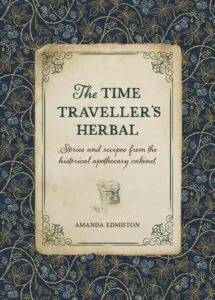
SCOTLAND – Step into a captivating exploration of history, folklore, and botanical science with Amanda Edmiston, the acclaimed herbal storyteller behind Botanica Fabula, as she invites readers into the enchanting world of her latest work, The Time Traveller’s Herbal: Stories and recipes from the historical apothecary cabinet. This eagerly anticipated book is more than a guide; it’s an immersive journey that redefines our understanding of herbalism, positioning its practitioners not as mystical figures, but as the pioneering scientists and custodians of ancient knowledge they truly were.
Edmiston, known for her unique blend of botanical expertise and captivating narrative, challenges contemporary perceptions of historical herbalists – often relegated to monikers like "cunning woman," "wise woman," or even "witch." Through her meticulous research and evocative storytelling, she unveils the profound truth: these individuals were early pioneers of scientific observation, possessing a deep, intuitive understanding of the natural world and serving as vital fountains of traditional ecological knowledge. The Time Traveller’s Herbal is an earnest invitation to embark on a spiralling descent through history, uncovering the rich tapestry of stories, enduring folklore, and powerful herbal remedies that are inextricably woven into the very fabric of human civilization.
The Unsung Pioneers of Science: A Historical Perspective
The history of herbal medicine is as old as humanity itself, a testament to our innate connection with the natural world. For millennia, plants have been our primary source of sustenance, shelter, and, critically, healing. Before the advent of modern pharmaceuticals, every culture relied on its local flora for remedies, and the knowledge of these plants was often concentrated within specific individuals or communities. These practitioners – the cunning folk, wise women, and healers – were not merely dispensing potions; they were astute observers, experimentalists, and communicators of generations of accumulated wisdom.
Their methods, though lacking the rigorous controls of modern scientific trials, were rooted in empirical observation. They noted which plants alleviated pain, reduced fever, staunched bleeding, or aided digestion. They understood dosages, preparation methods, and the subtle interactions of different plant compounds. In essence, they were proto-scientists, meticulously cataloguing the effects of various botanicals and passing this invaluable data down through oral traditions, often encoded within stories and rituals to ensure its preservation.
However, as societal structures shifted, particularly with the rise of organized religion and later, institutionalized medicine, these figures often found themselves marginalized, their practices demonized. The term "witch" became a dangerous label, designed to strip them of their authority and knowledge. Edmiston’s work seeks to reclaim and re-contextualize this history, celebrating these individuals as intellectual ancestors whose contributions laid foundational groundwork for botany, pharmacology, and medicine. Their methods, far from being primitive, represent a sophisticated system of traditional knowledge that is increasingly being recognized and studied by contemporary science.
A Chronological Descent: Stepping into 200 AD Scotland
Edmiston’s book, and the journey she shares with us, begins far earlier than 200 AD, delving into the primordial roots of human-plant interaction. However, for this particular narrative excerpt, we are transported to a precise moment within this vast historical spiral: the year 200 AD, a time shrouded in the mists of ancient Scotland, a world of "meadow phantoms" and untamed landscapes.
The author’s immersive approach is deeply rooted in her own practice. Many of the tales, accompanying recipes, and sensory experiences detailed in The Time Traveller’s Herbal originate from the very places she walks. "I stop, take a moment, sit and look around me," Edmiston explains. "I start to notice the plants and the changes afforded by time, both seasonal change and historical. I think about the history of the place, the changes that have occurred and the folklore associated with the plants that grow there." This meditative observation allows her to truly "feel the ground beneath her feet," connecting with the unchanging elements of the landscape – the relentless flow of rivers, the enduring contours of geography – and allowing them to draw her into a deep historical spiral.
One such profoundly inspiring location, central to many of her stories, is a wild floodplain meadow. This ecologically vital site lies nestled behind a historic castle, at the confluence of two rivers, near Edmiston’s Scottish home. It is here, in this potent landscape, that she invites us to join her on an imaginative expedition into its past. We are asked to visualise this vibrant ecosystem, to step across the chasm of centuries and explore the unique flora it nurtured, and the ancient stories it silently held within its verdant embrace.
As we traverse this imagined landscape of 200 AD, the familiar architectural constructs of our own time — the castle, the well-trodden paths — are strikingly absent. The treeline, while present, is sculpted differently; where modern larches might stand, ancient oaks dominate. The tunnel of blackthorn, a perennial feature, stretches further, its young saplings replacing the gnarled, ancient forms we know, their branches untamed by mechanical pruning. Yet, some constants provide a reassuring anchor: the graceful arc of the rivers, the immutable contours of the hills and mountains. These geological titans, their pace of change imperceptible to human timescales, offer a sense of enduring geographical certainty, a profound sense of place that transcends the ages.
We find ourselves on a rocky outcrop, poised above the meeting point of the two rivers, a natural landmark that defines the expansive meadow. The nascent shadow of the future castle lies behind us, while on the opposite bank, a bustling Pictish village thrives, a vibrant hub of ancient life. Our path leads us towards the flower-strewn field, a riot of colour and life.
Supporting Data: Meadowsweet – A Botanical Enigma and Mythical Muse
Before we even reach the heart of the meadow, a distinctive scent beckons – the sweet, faintly medicinal allure of salicylates, carrying notes both sweet and antiseptic. This unmistakable aroma emanates from the creamy clouds of flowers that seem to blur the view of the riverbank, creating an ethereal veil. It’s a vision so captivating that it conjures images of a hidden queen, a regal presence cloaked in the botanical splendour, reluctant to be observed in her natural form.
Drawing closer, brushing past the abundant blooms, scattering petals in our wake, we search for the elusive being. Yet, there is nothing tangible. The river shimmers with the tremble of something silvery slipping downstream, while unseen eyes might be watching from the nearby wood. A young bullock grazes peacefully on the clover across the water, but no shimmering, regal figure materializes. The imagination, clearly seduced by the "Queen of the Meadows," has conjured phantoms from the very air, or perhaps, as Edmiston muses, a slight fever has taken hold.
A quick self-check for fever is followed by a pragmatic act: a few heads of Meadowsweet (Filipendula ulmaria) are added to the flask of hot water Edmiston habitually carries. As she sips the resulting tisane, a memory stirs, a story whispers, and the penny drops. We are not merely in the presence of a beautiful wildflower; we are in the sacred domain of the Morrigan, the formidable phantom queen of Celtic mythology.
Meadowsweet, known scientifically as Filipendula ulmaria, is a native European plant prized for its beauty and medicinal properties. Its creamy-white flowers bloom in dense clusters, emitting a powerful, sweet fragrance, particularly on humid days. Historically, it has been a plant of immense significance. Its rich salicylate content (from which aspirin was originally derived) made it a natural analgesic and anti-inflammatory, invaluable in times before synthetic medicines. Beyond its medicinal uses, Meadowsweet was a popular strewing herb, used to freshen homes and churches, and its flowers were often added to mead and wine for flavour. Its traditional names, such as "bride-wort" (due to its use in bridal wreaths and confetti) and "mead-sweet," hint at its cherished place in cultural practices.
Official Responses & Expert Commentary: The Morrigan and Cu Chulainn
The revelation of the Morrigan’s presence transforms the meadow from a mere landscape into a sacred stage where ancient myths breathe. The Morrigan, a formidable and multifaceted figure in Celtic mythology, is often depicted as a goddess of war, fate, death, and sovereignty. She is a shapeshifter, capable of transforming into various animals – a crow, an eel, a wolf, a heifer – and her appearances often presage battle or significant events. She embodies the wild, untamed aspects of nature and the raw power of the feminine divine.
The story recounted by Amanda Edmiston, a version passed down through generations, beautifully illustrates the Morrigan’s power and her connection to Meadowsweet. It tells of the legendary warrior Cu Chulainn, famed for his martial prowess and fiery temper. While training with the warrior maid Sgathaich on Skye, he falls for her daughter, Uathach, to whom he becomes betrothed. However, Cu Chulainn’s life is one of constant conflict and his heroic journeys are, as Edmiston notes, "littered with dubious encounters with women."
It is during one such battle that Cu Chulainn encounters the mighty Morrigan, who appears to him as a beautiful young woman at a ford. She offers him her aid in battle in exchange for his love. His rejection, rooted in his loyalty to Uathach, provokes her wrath. She transforms, first into an eel, attempting to trip him, then into a huge grey wolf, stampeding cattle towards him, and finally into a white heifer, charging directly at him. With each transformation, Cu Chulainn retaliates, injuring her.
After the battle, weary and wounded, Cu Chulainn fears meeting the Bean nighe (the washerwoman of the ford, foretelling death) or hearing the cry of the Caointeach (the keener predicting death). Instead, he encounters an old woman milking a deer, her body bearing the very injuries he inflicted upon the eel, the wolf, and the heifer. Despite his earlier rebuffs, he asks her for a drink. As she offers him cups of milk, he blesses her, and with each blessing, her wounds heal. By the third blessing, the realization dawns upon him: this is the Morrigan. As a parting gift, she bestows upon him Meadowsweet. While some versions suggest he regretted healing her, the enduring legend states that he carried Meadowsweet on his belt from that day forth, relying on its healing properties – a handful of fresh blossoms or dried flower heads in a muslin bag, added to a bath – to soothe his wounds, reduce fevers, and temper his fiery disposition.
This myth, shared and preserved by Edmiston, is a powerful example of how ancient societies encoded vital botanical knowledge within compelling narratives. The story not only explains the origins of Meadowsweet’s healing reputation but also elevates the plant to a sacred status, intrinsically linked to a powerful deity and a legendary hero. It underscores the profound interconnectedness of nature, myth, and human experience in the Celtic world.
Implications: Reviving Ancient Remedies for Modern Wellness
The enduring legacy of Meadowsweet, solidified by such ancient tales, transcends mere folklore. Its Gaelic name, crios Chu-chulainn (Cu Chulainn’s belt), and its historical use as "bride-wort" for floral confetti, speak to its multifaceted cultural significance. Edmiston’s work not only unearths these stories but also inspires practical application, encouraging us to imagine how we, too, can harness the plant’s properties, much as the legendary hero once did.
The book provides tangible ways to integrate this ancient wisdom into modern life, beginning with simple, accessible remedies.
Soothing Meadowsweet Bath
Meadowsweet blossoms, encased in a muslin bag (or similar permeable fabric), can be added to bathwater as it runs. This traditional practice is believed to help reduce fevers and soothe the body. For enhanced skin-calming benefits, oats can also be added to the bag, known for their ability to soothe irritated or inflamed skin.
- Preparation: Place three to four fresh or dried Meadowsweet flower heads into the muslin bag. Add the bag to the bath as the water fills.
- Benefits: The gentle infusion of Meadowsweet, particularly its mild salicylate compounds, can help alleviate minor aches and pains associated with fever, while the aromatic vapours offer a calming, restorative experience. Oats contribute a colloidal property that can relieve skin irritation and dryness.
Meadowsweet Tisane
Beyond the bath, Meadowsweet is a valuable botanical for internal use as a herbal tisane.
- Preparation: Place three or four fresh or dried Meadowsweet flower heads into a cup. Pour freshly boiled water over them and steep for three to four minutes. Strain and enjoy.
- Benefits: Meadowsweet is renowned for its mildly pain-relieving properties, making it a gentle alternative for minor discomfort. It is also exceptionally effective at soothing indigestion and heartburn due to its anti-inflammatory and antacid-like qualities. The presence of natural salicylates contributes to its analgesic effects, while tannins can help calm the digestive tract.
As our imaginative journey through 200 AD concludes, and the ancient mists dissipate with the rising sun, we gather an armful of Meadowsweet, carrying its essence with us. This act of gathering is not merely for memory but for creation – to steep it in water, sweeten it with honey, and transform it into a cordial, a liquid treasure "fit for a queen."
A Cordial for a Phantom Queen: To Ease Tempers, Fevers, and Heartburn*
This recipe offers a delicious and potent way to harness Meadowsweet’s historical healing benefits, creating a delightful cordial that can soothe and refresh.
Ingredients:
- 30 heads of Meadowsweet blossoms, in full flower (ensure they are gathered from a clean, unsprayed area).
- Juice of one unwaxed, freshly squeezed lemon, and a little grated rind.
- 300 grams of blossom honey (locally produced honey offers additional unique flavour notes and potential health benefits).
- 1 litre of filtered water.
Instructions:
- Initial Infusion: Bring the filtered water to a rolling boil in a clean saucepan. Once boiling, dissolve half of the honey into the hot water, stirring until fully incorporated.
- Add Botanicals: Remove the pan from the heat. Immediately add the Meadowsweet blossoms, lemon juice, and grated rind to the hot honey-water mixture. Stir gently to ensure all ingredients are submerged.
- Simmer and Rest: Return the pan to very low heat and allow it to simmer gently for a further three minutes. This brief simmer helps to extract the essential compounds and flavours from the Meadowsweet.
- Infusion Period: Remove from heat, cover the pan, and allow the mixture to rest overnight, or for a minimum of one to two hours. This extended infusion period is crucial for the Meadowsweet to fully impart its therapeutic properties and delicate flavour profile into the liquid.
- Strain: The following day, or after the infusion period, strain the mixture thoroughly through a fine-mesh sieve or a piece of muslin cloth to remove all plant material. Press down on the solids to extract as much liquid as possible.
- Final Sweetening & Reduction: Return the strained liquid to the saucepan. Add the remaining honey. Bring the mixture back to a gentle boil, then reduce the heat and allow it to simmer for a further five minutes or so. This simmering stage allows the cordial to reduce slightly, intensifying its flavour and achieving a desirable cordial consistency. If a thicker cordial is desired, simmer for a few more minutes, stirring occasionally.
- Bottle: Carefully pour the hot cordial into sterile glass jars or Kilner-style bottles. Ensure bottles are clean and sterilised to prevent spoilage (e.g., by washing in hot soapy water, rinsing, and then heating in an oven at 130°C for 10-15 minutes, or using a sterilising solution).
- Storage: Once bottled and sealed, allow the cordial to cool completely before storing it in a cool, dark place. When kept cool, it typically lasts for up to three months.
- Serving: Mix the cordial with still or sparkling water for a refreshing drink. For a celebratory touch, it can also be mixed with sparkling wine, offering a unique flavour experience that is believed to help "feel the heat dissipate," both metaphorically and literally.
This cordial serves as an ideal starting point for anyone wishing to establish their own historical apothecary’s cabinet, igniting a passion to delve deeper into the rich world of herbal remedies and the stories they carry. The experience of crafting and consuming such a remedy fosters a visceral connection to the past, a tangible link to the "twist in time, the feeling of being pulled into a tide of years ebbing and flowing, the shift is visceral…"
The Enduring Legacy: Why Traditional Herbalism Matters Today
Amanda Edmiston’s The Time Traveller’s Herbal is more than just a collection of historical facts and recipes; it is a vital call to remember and reintegrate traditional ecological knowledge (TEK) into our modern lives. In an age dominated by synthetic solutions, the book reminds us of the profound wisdom embedded in the natural world and the historical figures who understood it intimately.
The implications of Edmiston’s work are far-reaching. By presenting herbalists as "early pioneers of science," she encourages a re-evaluation of history, prompting us to acknowledge the scientific foundations of ancient practices. This perspective bridges the perceived gap between folklore and empirical knowledge, revealing how observation, experimentation, and accumulated wisdom formed the bedrock of early healing arts.
Furthermore, the book fosters a deeper connection to place. By encouraging readers to consider the historical and ecological context of their local flora, Edmiston promotes a mindful interaction with nature. This heightened awareness can lead to greater environmental stewardship, as understanding the value of native plants naturally cultivates a desire to protect them and their habitats, such as the vital floodplain meadows she describes.
In a world increasingly seeking holistic approaches to wellness, The Time Traveller’s Herbal offers accessible, time-tested remedies that can complement modern health practices (with appropriate caution and professional advice). It empowers individuals to take an active role in their well-being, drawing upon centuries of human experience with plants. The act of making a Meadowsweet cordial or a soothing bath isn’t just about the physical benefits; it’s a ritual that connects us to a lineage of healers and storytellers, enriching our lives with a sense of continuity and meaning.
Amanda Edmiston’s unique blend of herbal expertise and compelling narrative artistry makes The Time Traveller’s Herbal an essential read for anyone interested in history, botany, folklore, or holistic health. It is an invitation to embark on an extraordinary journey through time, to rediscover the wisdom of our ancestors, and to find healing and inspiration in the natural world that surrounds us.
To continue your herbal storytelling journey with Amanda Edmiston and delve deeper into the spiral of history, The Time Traveller’s Herbal is available in all good bookshops and via the Botanica Fabula website.
### IMPORTANT DISCLAIMER ###
FolkloreThursday and Botanica Fabula take no responsibility for folklore practices listed on the website or in this article. Information is provided for entertainment and educational purposes only. This article does not offer medical advice, and we strongly recommend that you consult a qualified medical professional or healthcare provider before trying out any remedies or practices mentioned herein, especially if you have pre-existing health conditions, are pregnant, breastfeeding, or taking other medications.



Leave a Comment