
Unearthing Ancient Academia: "Schooldays" – A Sumerian Satire on Education
Introduction: A Glimpse into the First Classroom
In the annals of human history, few documents offer such a vivid and relatable glimpse into daily life as "Schooldays." Penned approximately 4,000 years ago, around 2000 BCE, this Sumerian poem stands as one of the earliest known narratives detailing the trials and tribulations of a student. Far from a dry historical artifact, "Schooldays" — also known by titles such as Sumerian School Days, Edubba A, and Diary of a Scribe — is a satirical masterpiece that chronicles the daily routine, struggles, and ultimate cunning of a young scribe in the rigorous educational institutions of ancient Mesopotamia.
Through a first-person narration infused with dialogue, the poem meticulously outlines the challenges faced by an unenthusiastic student, from tardiness and poor penmanship to a penchant for talking in class. Its enduring appeal, however, lies not just in its depiction of ancient pedagogy but in its surprisingly modern resolution: the student’s father intervenes, not with disciplinary measures, but by orchestrating a lavish dinner and presenting expensive gifts to the teacher, effectively bribing his way to academic success. This ancient tale of "apple-polishing," as scholar Samuel Noah Kramer famously described it, offers a profound reflection on human nature, education, and the timeless dynamics of influence and reward.
Main Facts: The Enduring Narrative of an Ancient Student
The Poem’s Identity and Discovery: A Widespread Ancient Best-Seller
The significance of "Schooldays" is underscored by its widespread dissemination in ancient Mesopotamia. Over 21 copies and numerous fragments have been unearthed across the region, particularly in modern-day Iraq and Syria. This substantial number of surviving texts suggests that the poem was not merely an obscure academic exercise but a popular and frequently reproduced work, perhaps even a "best-seller" of its time. The most complete tablet, providing the most coherent narrative, was discovered among the ruins of the ancient city of Nippur, a major intellectual and religious center in Sumer. Its prevalence indicates that the themes it explored resonated deeply with the populace, serving as both an educational tool and a source of entertainment.
The poem’s various titles reflect both its content and its scholarly cataloging. "Schooldays" is the most common modern designation, immediately conveying its subject matter. Sumerian School Days offers similar clarity, while Edubba A refers to its place within a classification system of Sumerian school texts, with "edubba" meaning "House of Tablets" – the Sumerian scribal school. Diary of a Scribe further emphasizes the personal, day-to-day perspective adopted by the narrator. Regardless of its name, the poem’s popularity ensured its inclusion in the curriculum of the edubba, where it was copied and memorized by students as one of the more challenging texts to master before graduation. This integral role in the scribal education system highlights its perceived value, both for its linguistic complexity and its didactic (or perhaps cautionary) content.
A Satirical Chronicle of Student Life: The First Case of "Apple-Polishing"
At its core, "Schooldays" is a brilliant piece of satire. It unfolds as a first-person account, chronicling a typical day in the life of a young scribe-in-training. The narrative details a litany of infractions and subsequent punishments: the student arrives late, his "hand" (penmanship) is not good, he talks in class, gets up without permission, and even leaves the school grounds prematurely. For each transgression, he is subjected to corporal punishment, often a caning, administered by various instructors responsible for different aspects of his education, from the master of cuneiform to the "gate" supervisor.
The turning point, and the essence of the satire, occurs midway through the poem. Overwhelmed by the constant beatings and the relentless demands of his studies, the student expresses a desire to abandon the scribal art altogether. However, instead of capitulating, he devises a plan: he suggests to his father that they invite his teacher home for a sumptuous dinner and shower him with lavish gifts. The father, seemingly concerned for his son’s academic future, agrees. The poem then details the elaborate bribery: the teacher is seated in a place of honor, served by the student (who, conveniently, recites his lessons flawlessly for the appreciative audience), flattered by the father, and presented with expensive clothing and a ring.
The irony peaks in the poem’s conclusion. The teacher, previously a stern disciplinarian, is transformed by the "gift over and above my earnings." He not only absolves the student of all past misdeeds but promises him a future of academic excellence, assuring him that he will "rank the highest of [all] the schoolboys." The stark contrast between the student’s actual performance and the teacher’s effusive praise, directly following the receipt of gifts, is the satirical punchline. As Samuel Noah Kramer aptly put it, this ancient narrative represents "the first case of apple-polishing" on record, a testament to the enduring human tendency to seek advantage through means beyond merit.
Beyond the Classroom: The Edubba’s Curriculum and Purpose
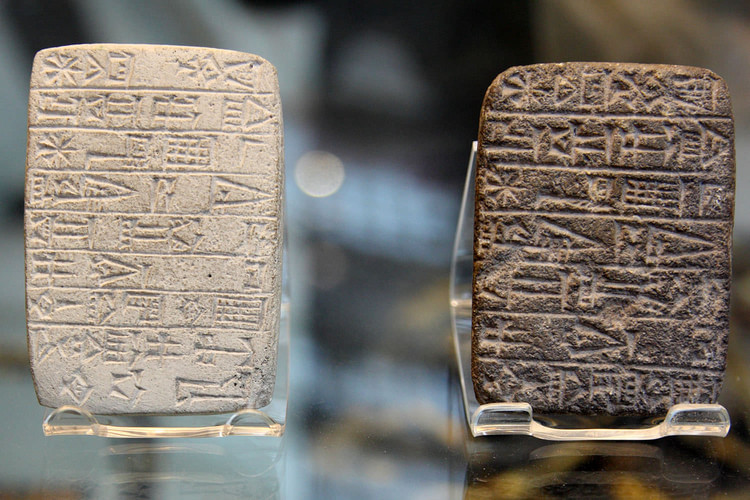
The edubba, or "House of Tablets," was the cornerstone of Sumerian intellectual life, a sophisticated institution far more comprehensive than a mere elementary school. Students, typically boys as young as eight, embarked on a demanding curriculum designed to transform them into skilled scribes, indispensable to the functioning of Sumerian society. The education began with the arduous task of mastering cuneiform script, a complex system comprising over 600 wedge-shaped characters that had to be meticulously impressed into moist clay tablets. This foundational skill was followed by a progressive series of texts, moving from simpler compositions to the more difficult "Tetrad" (groups of four compositions) and "Decad" (groups of ten), culminating in the mastery of complex literary and administrative works.
The scope of knowledge imparted in the edubba was vast and multidisciplinary. Beyond reading and writing, students delved into mathematics and accounting, essential for managing the intricate economic systems of Sumer. They studied botany, agricultural records, and tax documentation, preparing them for roles in land management and administration. Literature, religion, law, and history were also integral components, shaping not just technical proficiency but also cultural literacy and ethical understanding.
As Kramer elucidates in History Begins at Sumer, the primary objective of the Sumerian school was "professional." It was established to train the specialized scribes required to meet the economic and administrative demands of the land, particularly those emanating from the powerful institutions of the temple and the palace. These scribes were the bureaucrats, record-keepers, legal experts, and literary custodians who underpinned the entire Sumerian civilization, making the edubba a vital engine for societal stability and progress.
Chronology: From Ancient Clay to Modern Interpretation
Circa 2000 BCE: Birth of a Classic
"Schooldays" was composed around 2000 BCE, placing it firmly within the Old Babylonian period, a time following the collapse of the Neo-Sumerian Empire (Third Dynasty of Ur). Although Sumerian as a spoken language was gradually being superseded by Akkadian, it remained the language of scholarship, literature, and religious texts, similar to Latin’s role in medieval Europe. Scribes were still trained extensively in Sumerian, copying and preserving its rich literary heritage.
The poem is widely believed to have been written by a teacher within one of these very edubba institutions, perhaps in Nippur, a city renowned for its scribal schools. Its satirical tone suggests a dual purpose: to entertain fellow educators and students, and possibly to offer a lighthearted critique of the challenges inherent in both teaching and learning in such a demanding environment. The author, likely intimately familiar with the daily grind of the classroom, used humor to highlight the universal struggles of education, from student recalcitrance to teacher frustration and the pervasive influence of parental intervention.
Early 20th Century: Reawakening an Ancient Voice
The journey of "Schooldays" from forgotten clay tablets to a celebrated piece of world literature began in the early 20th century. Archaeologists, excavating sites across Mesopotamia, unearthed numerous cuneiform tablets, many of which contained fragments of the poem. The initial discoveries, while incomplete, hinted at a fascinating narrative. The largest fragment was first translated in 1909, offering tantalizing glimpses into the ancient school experience.
However, the decipherment of cuneiform itself was a monumental task, requiring dedicated scholarship and the painstaking piecing together of thousands of broken tablets. Early translations were often tentative, hampered by missing sections and the inherent complexities of the ancient language. Yet, even these early efforts sparked interest, revealing a sophistication of thought and a humanity in ancient Sumerian literature that challenged preconceived notions of primitive antiquity.
Mid-20th Century: Kramer’s Unveiling
The full impact of "Schooldays" was truly realized in 1949, when the nearly complete text was translated by the eminent Sumerologist Samuel Noah Kramer. Kramer, whose groundbreaking work brought much of Sumerian literature to light, was instrumental in assembling and interpreting the disparate fragments into a cohesive narrative. His translation, published and discussed in his seminal works such as History Begins at Sumer and The Sumerians: Their History, Culture, and Character, made the poem accessible to a broader academic and public audience.
Kramer’s contributions went beyond mere translation; he provided invaluable context and interpretation, identifying the poem’s satirical intent and highlighting its profound human resonance. It was Kramer who coined the phrase "the first case of apple-polishing," drawing a direct line between ancient Sumerian social dynamics and contemporary human behavior. His work on "Schooldays" exemplified his broader mission to demonstrate that the Sumerians, often seen as a distant and enigmatic civilization, were in fact progenitors of many aspects of human culture and thought, including literature, law, and even humor. His meticulous scholarship transformed fragmented clay into a vibrant window into the ancient world, allowing modern readers to connect with the struggles and triumphs of people living millennia ago.
Supporting Data: The Rigors of Sumerian Education
The Demands of the Scribe: A Vocation of Precision and Dedication
Life in the edubba was anything but easy. The mastery of cuneiform script was a monumental undertaking. With over 600 distinct characters, each requiring precise execution to form clear wedge-shaped impressions in moist clay, students had to develop extraordinary manual dexterity and meticulous attention to detail. This was not simply about learning an alphabet; it was about mastering a complex logographic and syllabic system that served as the backbone of all written communication.
The daily schedule was grueling. Students, some as young as eight, were expected to arrive at school early, spend the entire day engaged in intensive study, and then return home to continue their practice. Homework was a nightly ritual, and the expectation was absolute perfection. A "good hand" – legible, consistent, and accurate cuneiform – was paramount. Any deviation from this standard, any smudged character or poorly formed wedge, could result in immediate punishment. The sheer volume of material to be memorized and copied, combined with the technical demands of the script, ensured that only the most dedicated and capable students would succeed in becoming full-fledged scribes.
Discipline and Punishment in the Edubba: The School Father and the Cane
The edubba operated under a strict disciplinary regime designed to instill personal discipline and maintain order, reflecting the hierarchical and rule-bound nature of Sumerian society. At the head of the institution was the "school father" (or headmaster), who oversaw the entire student body and curriculum. Under him were various specialized teachers, each responsible for specific aspects of the students’ education and conduct. These included the "master of cuneiform" (focused on drawing and script), the "master of the Sumerian language," and even a "master of the gate" (perhaps akin to a truant officer or grounds supervisor).
Corporal punishment was a ubiquitous and accepted method of enforcing these rules, and "Schooldays" provides vivid, if satirical, evidence of its prevalence. The poem’s protagonist is caned repeatedly throughout the day for a range of infractions: tardiness, submitting shoddy work, talking in class, getting up from his seat without permission, and leaving the school grounds. The description of being "caned" most likely refers to a beating across the backside and legs with a stout stick, a painful and humiliating experience designed to ensure compliance. This system of strict discipline, while harsh by modern standards, was considered essential for training the precision and obedience required of future scribes, who would hold positions of significant responsibility in the Sumerian state.
Social Dynamics of Education: Voluntary Pursuit and Parental Investment
Unlike modern compulsory education, schooling in Sumer was a voluntary endeavor, typically pursued by boys from affluent or aspiring families. The decision to send a child to the edubba rested with the father, who bore the full financial responsibility for tuition fees and school supplies, including the precious clay tablets. This substantial investment meant that fathers had a vested interest in their sons’ academic progress.
The poem illustrates this parental involvement: upon returning home, the student is expected to recite his day’s lessons to his father, seeking approval and praise. This nightly ritual served not only as reinforcement for the student but also as a way for the father to monitor his investment and ensure his money was well spent. The anxiety expressed by the student about being late for school and facing the cane reflects not just fear of physical punishment but also the pressure to meet his father’s expectations and justify the family’s financial outlay.
While the edubba was overwhelmingly male, the article notes that girls from prestigious families were occasionally permitted to attend. These exceptions were typically for those destined for specific high-status professions such as doctors, priestesses, or key roles in the family business. This suggests that while education was primarily geared towards male scribes, Sumerian society was not entirely rigid in its gender roles, allowing for female literacy and professional advancement in certain elite contexts.
The Teacher’s Plight: Low Wages and the Allure of "Gifts"
"Schooldays" offers a poignant, albeit indirect, commentary on the economic realities of the teaching profession in ancient Mesopotamia. The teacher’s effusive gratitude for the "gift over and above my earnings" strongly implies that his regular salary was meager. This detail, corroborated by other historical sources, suggests that Sumerian teachers, despite their crucial role in society, were not highly compensated financially.
This economic vulnerability made them susceptible to additional remuneration, whether in the form of direct payments or, as depicted in the poem, lavish gifts. The satirical portrayal of the teacher’s sudden shift in attitude after receiving expensive clothing and a ring underscores a critical aspect of ancient Mesopotamian social dynamics: personal relationships and patronage could significantly influence outcomes, even in formal institutions. The poem, therefore, not only lampoons student laziness but also subtly critiques the systemic issues that could compromise academic integrity, highlighting the human element in a system that strove for strict adherence to rules and merit.
Official Responses and Scholarly Interpretations
The Satirical Lens: Critiquing the Edubba System
The satirical nature of "Schooldays" is a cornerstone of its scholarly interpretation. It is frequently compared to another Sumerian work, A Supervisor’s Advice to a Young Scribe (also known as Edubba C), which similarly employs humor to comment on scribal life. These texts are not merely humorous anecdotes; they are sophisticated literary pieces that offer a nuanced critique of the edubba system. While seemingly targeting the wayward student, the satire extends to the institutions themselves. The poem subtly questions the efficacy of brutal corporal punishment as the sole disciplinary tool and, more significantly, exposes the potential for corruption or undue influence when teachers are underpaid.
By exaggerating the teacher’s sudden and complete change of heart after receiving gifts, the poem highlights a potential flaw in the system: that merit could be overridden by material considerations. This satirical approach, rather than being purely comedic, serves as a form of social commentary, allowing the Sumerians to reflect on and perhaps even implicitly challenge the realities of their own educational and social structures.
Historical Accuracy vs. Artistic License: A Reliable Ancient Mirror
Despite its satirical tone, scholars widely regard "Schooldays" as a remarkably accurate representation of Sumerian student and teacher life in the 2nd millennium BCE. The details of the poem, from the intense focus on cuneiform mastery to the prevalence of corporal punishment and the implied low wages of teachers, align with archaeological and textual evidence concerning the edubba.
The lines describing caning for various infractions, the difficulty of mastering the intricate scribal art, and the teacher’s appreciation for "a gift over and above my earnings" are not seen as exaggerations designed purely for humor but as reflections of actual conditions. This blend of humor and realism makes "Schooldays" an invaluable historical document, providing insights into the daily grind of education, the social pressures on students and teachers, and the accepted disciplinary practices of the era. It demonstrates that even in ancient satire, there was a strong grounding in lived experience.
Kramer’s Legacy: Humanizing the Ancient World
Samuel Noah Kramer’s assessment of "Schooldays" as "one of the most human documents ever excavated in the Near East" and his observation that it reveals "how little human nature has really changed throughout the millenniums" underscore the poem’s enduring significance. Kramer, more than any other scholar, championed the idea that Sumerian literature was not just about myths and epics but also contained deeply personal and universally relatable stories.
His interpretation helped to bridge the vast temporal and cultural gap between ancient Sumer and the modern world. By highlighting the poem’s themes of student anxiety, parental ambition, teacher frustration, and the desire for social advancement, Kramer demonstrated that the human experiences depicted on these ancient clay tablets are remarkably similar to those of people today. This humanization of the ancient Sumerians has been a profound contribution, allowing contemporary audiences to connect with a civilization often perceived as distant and alien, making their stories resonate across millennia.
Implications: Enduring Lessons from the House of Tablets
Universal Themes of Education: Echoes in Modern Classrooms
"Schooldays" resonates with a striking universality, demonstrating that many aspects of the educational experience have remained constant across millennia. The poem touches upon themes that are immediately recognizable: the struggle of students with demanding coursework, the desire to avoid punishment, the complexities of teacher-student relationships, and the involvement (and sometimes interference) of parents. The student’s procrastination, the teacher’s attempts at discipline, and the father’s desire for his son’s success are all enduring elements of the educational journey.
This ancient text reminds us that human impulses – the desire for recognition, the avoidance of unpleasant tasks, the influence of incentives, and the occasional bending of rules – are not new phenomena. It invites reflection on contemporary educational systems, prompting questions about motivation, discipline, and the role of external factors in academic achievement. The poem, therefore, serves as a powerful reminder of the timeless nature of learning and the human condition within that process.
The Power of Narrative: Preserving a Civilization’s Daily Life
Beyond its immediate comedic and didactic value, "Schooldays" holds immense importance as a narrative that preserves the mundane yet crucial details of Sumerian daily life. While grand epics like Gilgamesh illuminate heroic deeds and cosmic struggles, "Schooldays" offers a precious window into the ordinary: what a student ate for lunch, the anxiety of a father over his son’s progress, the types of punishments meted out, and the social etiquette of inviting a respected figure to dinner.
This rich detail brings the Sumerian civilization to life in a way that monumental architecture or king lists cannot. It reveals a society with structured institutions, clear social hierarchies, and a nuanced understanding of human behavior. The poem’s continued popularity, from its ancient hand-copying to its frequent anthologization today, attests to the enduring power of narrative to connect generations and provide insights into shared human experiences.
A Window into Sumerian Society: Values, Economy, and Hierarchy
"Schooldays" offers more than just educational insights; it provides a valuable glimpse into broader Sumerian societal values and structures. The father’s willingness to invest heavily in his son’s education and then resort to bribery underscores the immense value placed on scribal literacy. Becoming a scribe was a pathway to status, wealth, and influence, making it a highly coveted profession. The poem reveals the importance of familial honor and the father’s role as the head of the household, responsible for his son’s upbringing and future.
The economic reality of the teacher’s low pay reflects aspects of the Sumerian economy and social hierarchy. While scribes were esteemed, the lower echelons of the profession, including many teachers, might not have commanded high salaries, illustrating a complex stratification within the intellectual class. The presence of elaborate gifts also speaks to the nature of wealth and exchange in ancient Mesopotamia, where tangible assets like fine clothing and jewelry held significant value and could be used as tools of patronage and influence.
Nisaba’s Enduring Influence: The Spiritual Dimension of Learning
The poem concludes with a traditional praise of Nisaba (also known as Nidaba), the Sumerian goddess of writing, accounts, and wisdom. Her invocation at the end of scribal compositions was customary, signifying the spiritual dimension embedded within the seemingly secular act of writing and learning. Nisaba was revered as the divine patroness of scribes, overseeing their craft and ensuring their success.
Her presence in "Schooldays" serves as a reminder that for the Sumerians, the act of mastering cuneiform and becoming literate was not merely a technical skill but a sacred endeavor, blessed and guided by the deities. The student’s "success" – albeit achieved through questionable means – is ultimately placed under Nisaba’s divine protection, highlighting the profound integration of religion into all aspects of Sumerian life, including education and professional advancement.
Conclusion: Echoes Across Millennia
"Schooldays" stands as a monumental achievement of ancient literature, a document that transcends its historical context to speak to universal human experiences. As a satirical poem, it offers a humorous yet incisive look into the rigors of Sumerian scribal education, exposing both the challenges faced by students and teachers, and the timeless human impulses that shape our interactions. Its detailed portrayal of the edubba, its disciplinary practices, and the societal value placed on literacy provides invaluable data for understanding one of the world’s earliest and most sophisticated civilizations.
From its original composition around 2000 BCE to its rediscovery and translation by scholars like Samuel Noah Kramer, "Schooldays" has consistently resonated with audiences. Its themes of ambition, struggle, influence, and the pursuit of success, even through unconventional means, remain profoundly relatable. Whether copied by hand on clay tablets in ancient Nippur or read in modern anthologies, this ancient Sumerian poem continues to serve as a vibrant testament to the enduring nature of human character and the educational journey, bridging the vast expanse of four millennia with a story that feels remarkably contemporary.

Leave a Comment