
Unveiling Nanna: The Enduring Luminary of Ancient Mesopotamia
UR, Mesopotamia – From the nascent whispers of civilization in Sumer around 3500 BCE, a powerful celestial deity emerged, casting his gentle light across the vast Mesopotamian landscape. Nanna, also known by myriad names such as Sin, Nanna-Suen, Asimbabbar, Namrasit, and Inbu, was the revered god of the moon and wisdom, a central figure whose influence spanned millennia, persisting in varying degrees until the 3rd century CE. His story is not merely one of divine power but a profound reflection of humanity’s evolving understanding of the cosmos, governance, and the very fabric of life.
Main Facts: The Celestial Architect of Wisdom and Time
Nanna, the Mesopotamian moon god, stands as one of the oldest and most consistently worshipped deities in the ancient Near East. His veneration began at the very dawn of writing in Sumer, predating many other prominent gods. Primarily known as Nanna in Sumerian and Sin to the Akkadians, Assyrians, and Babylonians, he embodied the rhythmic cycle of the moon, wisdom, and the guardianship of time.
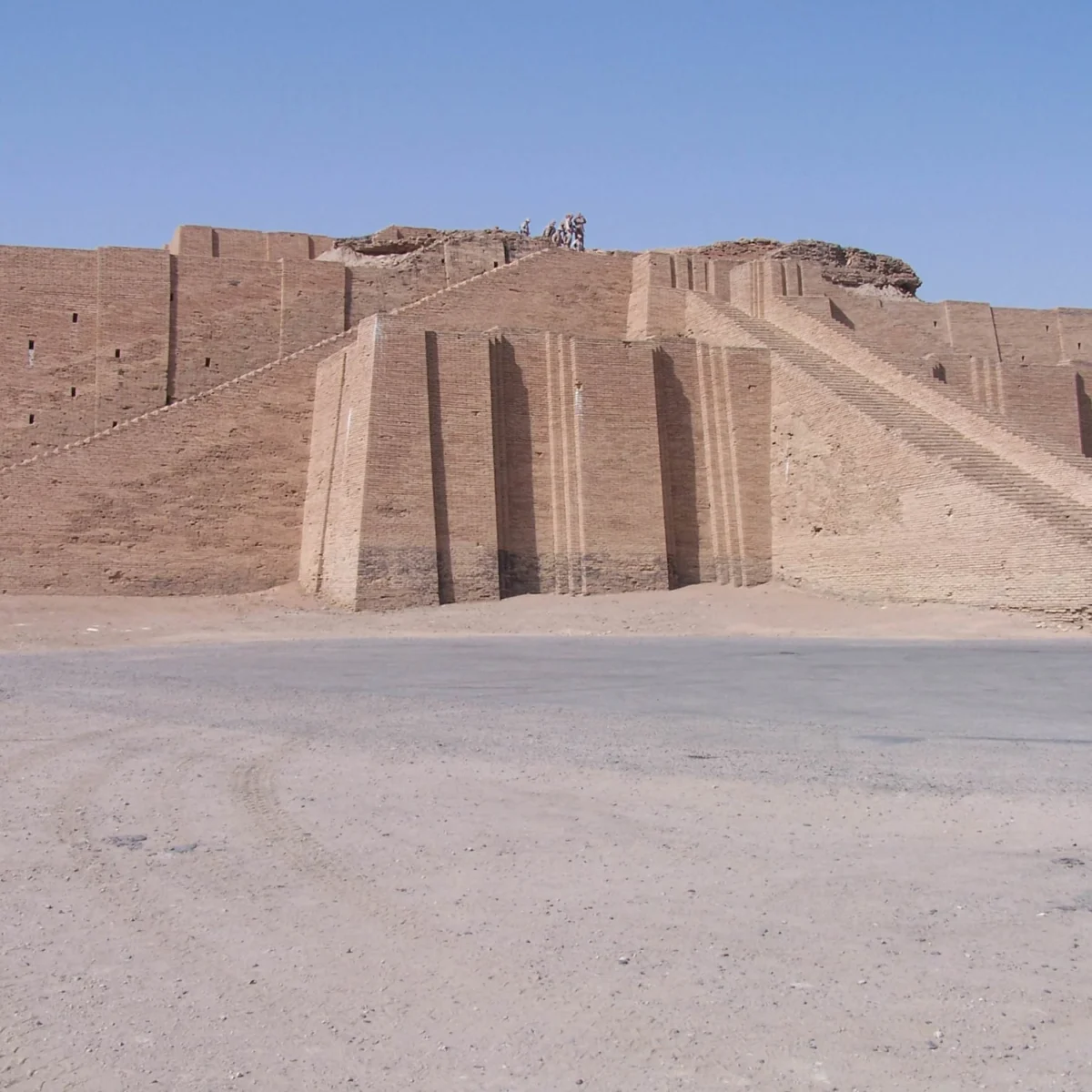
His principal cult center was the magnificent city of Ur, a bustling Sumerian metropolis adorned with a grand temple and towering ziggurat dedicated to his celestial presence. Within these sacred precincts, Nanna was revered as the chief god during periods such as the Ur III period (circa 2112-2004 BCE), earning the epithet Enzu, "lord of wisdom." His enduring importance is etched into countless hymns, inscriptions, and myths that narrate his divine interventions, benevolence, and pivotal role within the pantheon.
Nanna’s divine lineage placed him as the firstborn son of Enlil, the powerful god of wind, air, earth, and storms, and the serene goddess Ninlil. He was husband to Ningal, a significant fertility goddess, and father to prominent deities including Utu-Shamash, the sun god, and in some traditions, the formidable Inanna/Ishtar, goddess of love and sexuality, Ereshkigal, Queen of the Dead, and Ishkur/Adad, god of storms. This celestial family, particularly the father-son relationship between the moon and the sun, offers a unique insight into the Mesopotamian worldview and the cultural shifts that shaped their religious beliefs.
Chronology: A Divine Presence Across Epochs
Nanna’s journey through Mesopotamian history is a testament to his enduring relevance.
Early Sumerian Origins (circa 3500 BCE): The earliest mentions of Nanna appear in the very first written records of Sumer. Even in these nascent stages, his significance as a deity linked to the moon and its cycles was apparent, laying the groundwork for a cult that would thrive for thousands of years.
The Akkadian Era (circa 2334-2218 BCE): As the Akkadian Empire rose under Sargon, Nanna, now often referred to as Sin/Suen, continued to be a deity of immense stature. Sargon himself, and later his grandson Naram-Sin, recognized the strategic importance of Nanna’s cult. Naram-Sin, arguably the greatest of the Akkadian kings, even incorporated the god’s name into his own, becoming "Naram-Sin," demonstrating the deity’s pervasive influence on royal legitimacy and power. During this period, Nanna was hailed as "The Illuminator," a title that underscored his celestial role.

The Ur III Renaissance (circa 2112-2004 BCE): This period marked the zenith of Nanna’s worship, particularly in his cult city of Ur. The kings of the Ur III dynasty, who saw themselves as direct inheritors of Sumerian traditions, heavily promoted Nanna. The iconic ziggurat of Ur, still a monumental ruin today, was a testament to his glory. It was during this time that the legendary High Priestess Enheduanna, daughter of Sargon, served Nanna, crafting hymns that remain literary masterpieces and cementing the interconnectedness of royal power and divine favor.
Old Babylonian and Assyrian Periods (circa 2000-612 BCE): Nanna’s worship continued, adapting to the changing political and cultural landscapes. While new deities like Marduk rose to prominence in Babylon, Nanna retained his position, often integrated into their pantheon. In Babylonian cosmology, he was sometimes reimagined as Marduk’s son, placed in the sky by his father. His importance also extended to the Assyrian Empire, where his temples, notably in Harran (modern-day Syria), remained significant centers of veneration.
Neo-Babylonian Era (circa 626-539 BCE): Even as Mesopotamia entered its twilight, Nanna’s cult experienced a brief resurgence under rulers like Nabonidus. This king, famed for his interest in ancient religious practices, strategically placed his mother as high priestess at Harran and his daughter in the same esteemed role at Nanna’s temple in Ur. This act underscored Nanna’s enduring symbolic power as a unifying force, a quality that shrewd rulers leveraged to consolidate authority.
Post-Mesopotamian Era (3rd Century CE): Remarkably, Nanna’s worship persisted in certain regions, particularly around Harran, long after the fall of the major Mesopotamian empires. His cult continued to hold sway until as late as the 3rd century CE, eventually yielding to the rising tide of Christianity, marking the final chapter of a divine legacy spanning nearly four millennia.
Supporting Data: The Multifaceted God
Nanna’s identity was rich with symbolism, epithets, and mythologies that painted a comprehensive picture of his divine character.
Names and Epithets:
Beyond Nanna and Sin, the moon god accumulated a plethora of names, each reflecting a specific aspect of his divine nature. Asimbabbar or Ashgirbabbar likely connoted "Embellisher" or "He Who Embellishes," highlighting his role in adorning the night sky. Namrasit meant "Who Shines Forth," a direct reference to his luminosity. Inbu, meaning "The Fruit," possibly alluded to the moon’s cyclical changing shapes, akin to the ripening of fruit. These epithets underscore a dynamic deity, constantly active and visually impactful.
Family and Iconography:
The myth of Enlil and Ninlil details Nanna’s conception, born from Enlil’s seduction of Ninlil by the riverbank. This origin story imbues Nanna with a certain earthly connection despite his celestial domain. His wife, Ningal, the "Great Lady," was a fertility goddess, linking the moon’s cycles to the fecundity of the earth. Their children, particularly Utu-Shamash, the radiant sun god, presented a fascinating cosmological inversion: the moon as the father of the sun. Scholar Stephen Bertman elucidates this cultural nuance:
"The Mesopotamians thus conceived of day, illuminated by the sun, as emanating from the darkness of night and the lesser light of the moon. As the time of lovemaking, the night and the moon were linked to the goddess of the erotic." (122)
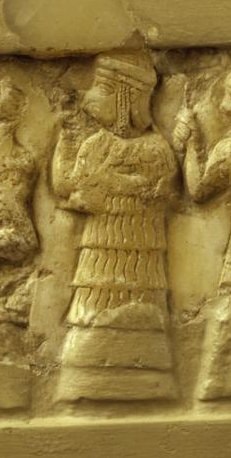
This belief likely stemmed from early hunter-gatherer societies, where the moon’s light was crucial for nocturnal travel and timekeeping, preceding the agricultural era where the sun’s importance for crops became paramount. Nanna’s iconography was equally rich: he was often depicted as a recumbent crescent moon, associated with the powerful bull (symbolizing strength and fertility) and the fierce lion-dragon. He could also appear as a seated man with a long beard of lapis lazuli, crowned by a crescent moon, or even riding a winged bull. The number 30 symbolically represented him, corresponding to the days in a lunar month, and the crescent moon was often seen as his celestial barge, sailing across the night sky.
Cult Centers: Ur and Harran:
Ur, with its towering ziggurat, was the spiritual heart of Nanna’s cult. This monumental structure, a "stairway to heaven," symbolized humanity’s aspiration to connect with the divine. The city’s prosperity was deeply intertwined with Nanna’s favor, and its kings derived significant legitimacy from their association with him.
Harran, located in modern-day Syria, served as another vital center for Nanna’s worship, especially in later periods. Here, Nanna, Ningal, and their son Nusku (god of fire and light) were revered as a triad. The prominence of Harran as a cult center, particularly under Nabonidus, highlights the widespread and enduring appeal of Nanna beyond Sumerian heartlands.
Role in Mesopotamian Thought:
Nanna was far more than a celestial body; he was a dynamic force in the daily lives and spiritual beliefs of Mesopotamians:
- Wisdom and Foresight: As Enzu, lord of wisdom, Nanna was a source of profound insight. His understanding of past, present, and future made him a divine counselor. Those seeking divination turned to him, believing his counsel could alter their destiny for the better.
- Keeper of Time: The moon’s regular cycles made Nanna the ultimate timekeeper, regulating the agricultural calendar and human activities.
- Protector and Guardian: Nanna was consistently seen as a benevolent protector of humanity, both in life and in the afterlife. Bertman notes: "As a source of light, the moon was also viewed as humanity’s protector against acts of criminality undertaken under the cover of darkness even as the illuminating and all-seeing sun was looked upon as a guardian of justice." (122)
- Fertility and Abundance: Through his association with Ningal and his blessings upon harvests and rivers, Nanna was intrinsically linked to the fertility of the land and the prosperity of its people.
- Judge of the Dead: A significant evolution in his role, particularly during the Ur III period, saw Nanna elevated to the judge of the dead. This departed from the traditional bleak Mesopotamian underworld, suggesting a more nuanced afterlife where divine judgment played a role. Scholar Samuel Noah Kramer observes:
"The moon god Nanna decreed the fate of the dead. In the nether world…were to be found ‘bread-eating heroes’ and ‘[beer] drinkers’ who satisfy the thirst of the dead with fresh water. We learn, too, that the gods of the nether world can be called upon to utter prayers for the dead, that the personal god of the deceased and his city’s god were invoked in his behalf, and that the welfare of the family of the deceased was by no means overlooked in the funerary prayers." (132)
This suggests a more active and hopeful role for Nanna in the fate of souls, acting as a bridge between the living and the departed.
Nanna in Literature:
Nanna’s pervasive influence is vividly captured in Mesopotamian literature:
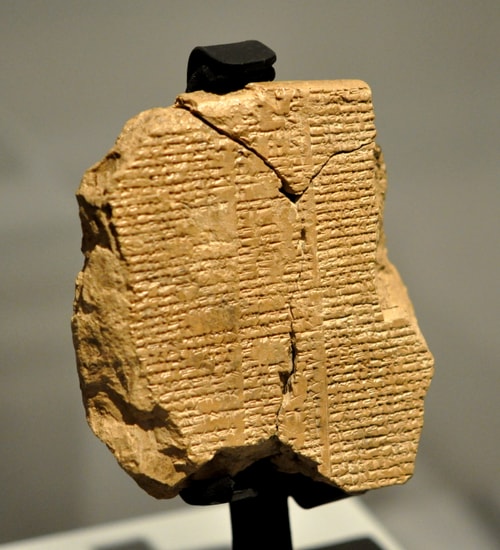
- The Epic of Gilgamesh: The world’s oldest epic frequently references Nanna/Sin as the father of Shamash and Ishtar. Gilgamesh himself composes a hymn to Nanna, praising the transformative power of life’s changes that inspire heroic deeds, linking the moon god to human aspiration and achievement.
- The Journey of Nanna to Nippur: This poetic masterpiece portrays Nanna as a generous provider. He loads his boat in Ur with an abundance of natural blessings – trees, plants, animals – and journeys upriver to present them to his father Enlil in Nippur. Along the way, he blesses cities and their gods. Upon reaching Enlil, Nanna requests and is granted boons of sweet water, abundant harvests, successful honey and wine production, and a long life to enjoy these gifts. This narrative powerfully underscores Nanna’s association with fertility and the benevolent distribution of divine blessings.
- The Herds of Nanna: In this hymn, Nanna is celebrated as the "god of living creatures, leader of the land," and a great father figure to humanity. He is depicted illuminating the night sky like the noon sun and is portrayed as Enlil’s closest confidant, discussing human destiny with his father day and night. The poem details the counting of Nanna’s vast herds by Nisaba, the goddess of writing, and praises Nanna as the source of abundance, even attributing the provision of alcoholic drink (typically associated with Ninkasi) to him, thereby emphasizing his supreme importance in sustaining life and joy.
- The Descent of Inanna and The Curse of Agade: Nanna appears in these significant myths, too. In the Descent of Inanna, he is among the deities appealed to for Inanna’s return from the underworld, showcasing his protective role. In The Curse of Agade, Nanna is depicted as a mediator, attempting to temper Enlil’s wrath against Naram-Sin, further cementing his image as a compassionate guardian of humanity.
Nanna & Ningal: The "Eyes of Ningal":
The discovery of "eyes of Ningal" artifacts, particularly from sites like Tell Brak (ancient Nagar), offers a fascinating glimpse into popular devotional practices. These crafted eye models, made from precious stones or clay, sometimes depicted as standalone eyes or incorporated into figures with enlarged, accentuated eyes (some even featuring a lemniscate, a symbol for infinity), are thought to be protective talismans. While their exact meaning remains debated, it is plausible they served as a constant reminder to the owner that the vigilant eyes of the gods, especially the "Great Lady" Ningal and her divine husband Nanna, were always observing, prompting righteous conduct and offering divine protection. King Nabonidus dedicated a notable pair of onyx eyes to Ningal, emphasizing the continuation of such practices even in later periods. At Harran, the triad of Nanna, Ningal, and Nusku was invoked in trials, with Nusku overseeing the fiery execution of those found guilty of dark arts after his parents had presided over their judgment.
Official Responses: Divine Authority and Political Strategy
The reverence for Nanna was not merely a spiritual phenomenon; it was deeply interwoven with the political and social fabric of Mesopotamian civilizations. Rulers across different eras understood and strategically utilized Nanna’s cult to legitimize their power and unify their realms.
Sargon of Akkad and Naram-Sin: The Akkadian kings were masters of integrating religion with statecraft. Sargon’s appointment of his daughter Enheduanna as Nanna’s High Priestess in Ur was a stroke of genius. This move not only placed a trusted family member in a position of immense spiritual authority in a critical Sumerian city but also forged a powerful symbolic link between the Akkadian ruling dynasty and the venerable Sumerian deity. Naram-Sin, by adopting Nanna’s name into his own, further solidified this connection, presenting himself not just as a mighty warrior but as a king favored and empowered by the moon god himself. Such acts were "official responses" to the enduring power of Nanna’s cult, transforming spiritual devotion into political capital.
Ur III Dynasty: The kings of Ur III, who saw themselves as a renaissance of Sumerian culture, extensively promoted Nanna’s worship. The construction and maintenance of his grand ziggurat and temple were not just acts of piety but massive public works projects that demonstrated the king’s wealth, power, and divine favor. The regular mention of Nanna in royal inscriptions and hymns served as a constant affirmation of the king’s legitimacy, portraying him as the earthly steward of the moon god’s benevolent rule.
Nabonidus’s Revival: Even in the late Neo-Babylonian period, Nabonidus’s actions regarding Nanna’s cult were a deliberate political maneuver. By appointing his mother and daughter to the highest priestly offices in Nanna’s temples at Harran and Ur, respectively, he sought to consolidate his authority across different regions and appeal to traditional religious sentiments. This strategic placement of female relatives in powerful religious roles echoed Sargon’s earlier actions, demonstrating a long-standing "official response" to Nanna’s unifying and legitimizing potential. These rulers understood that a god "who provides and unifies" was an invaluable asset in governing diverse and often fractious populations.
Implications: Legacy of the Lunar Luminary
Nanna’s enduring worship for nearly four millennia carries profound implications for our understanding of ancient Mesopotamian civilization, its spiritual landscape, and the evolution of human thought.
Religious Continuity and Adaptation: Nanna’s sustained presence, from early Sumerian city-states through various empires, demonstrates the remarkable continuity of certain religious beliefs in Mesopotamia. His ability to adapt and be incorporated into different pantheons (Sumerian, Akkadian, Babylonian, Assyrian) speaks to the flexibility and syncretic nature of ancient religions. Even as new gods rose and fell, Nanna retained a core identity, reflecting deeply held cosmological beliefs.
The Role of Religion in Governance: The strategic use of Nanna’s cult by rulers like Sargon, Naram-Sin, and Nabonidus underscores the inextricable link between religion and political power in ancient Mesopotamia. Control over major cult centers and the appointment of high priests/priestesses were vital tools for consolidating authority, legitimizing rule, and fostering social cohesion. Nanna’s perceived role as a unifier and provider was a powerful ideological asset for any monarch.
Evolution of Afterlife Beliefs: The shift in Nanna’s role to a "judge of the dead" during the Ur III period is a significant development in Mesopotamian eschatology. While the general view of the afterlife remained somewhat bleak, Nanna’s involvement introduced a degree of divine intervention and potential for intercession that was previously uncommon. This suggests an evolving theological understanding of individual accountability and the gods’ continued interest in human fate beyond mortal life.
Cosmological Insights: The unique depiction of the moon (Nanna) as the father of the sun (Utu-Shamash) offers a rare glimpse into how early societies perceived their celestial environment. This inversion of perceived luminosity (moon less bright than sun) likely reflects a deeper cultural importance tied to the moon’s role in early hunter-gatherer societies, before the advent of large-scale agriculture elevated the sun’s daily necessity. This theological mirroring of cultural development provides a window into the dynamic interplay between human society and religious belief.
A Protector of Humanity: Throughout his long history, Nanna remained a benevolent figure: a devoted son, a wise counselor, a generous provider, and a steadfast protector. His unwavering commitment to humanity, whether granting abundant harvests or mediating divine wrath, solidified his place in the hearts and minds of Mesopotamians. His worship, which eventually yielded to the monotheistic Christian God in the 3rd century CE, leaves behind a rich tapestry of myths, hymns, and archaeological wonders that continue to illuminate the profound spiritual world of one of history’s earliest civilizations. Nanna, the enduring luminary, remains a testament to humanity’s ancient quest for wisdom, order, and divine connection under the watchful eye of the crescent moon.



Leave a Comment