
The 128GB Paradigm Shift: A Comprehensive Analysis of the Asus ProArt PX13 GoPro Edition
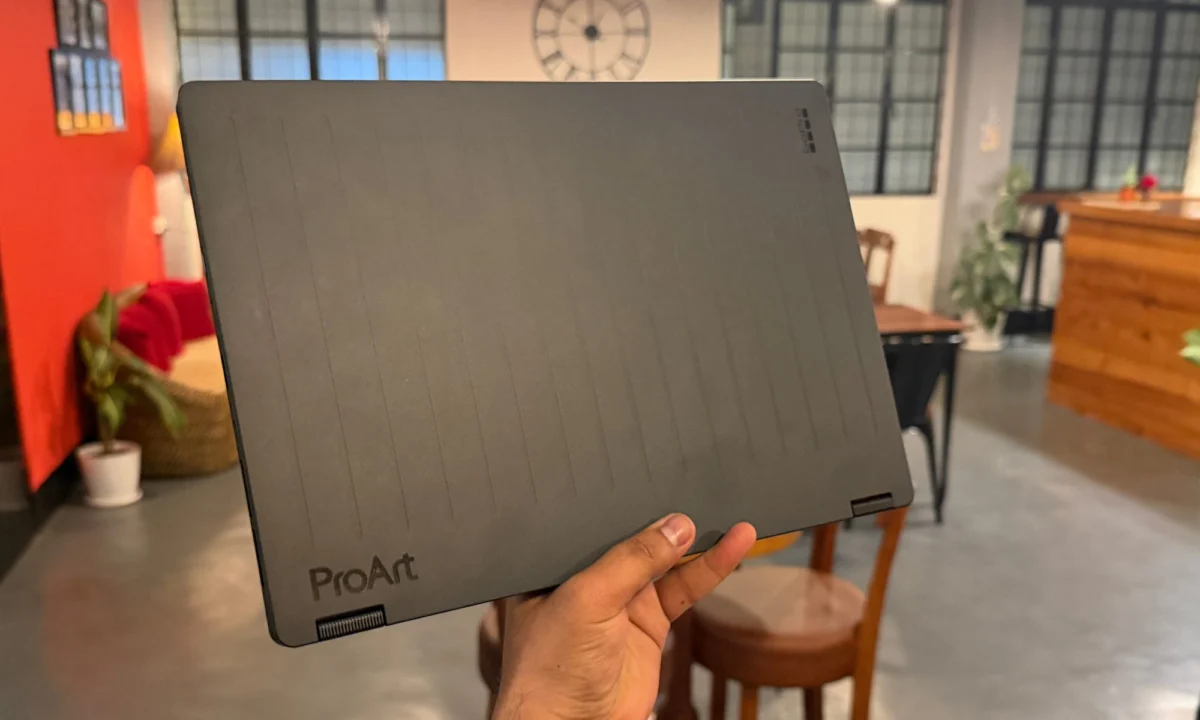
In the rapidly evolving landscape of mobile workstations, the year 2026 has marked a significant turning point in the "power-to-portability" ratio. Leading this charge is the Asus ProArt PX13 GoPro Edition, a device that challenges the long-standing hegemony of Apple’s MacBook Pro lineup. Priced at a premium MSRP of $2,999.99, this 13-inch convertible is not merely a laptop; it is a specialized engineering feat designed to bridge the gap between field-deployable ruggedness and desktop-class computational power.
By integrating AMD’s high-end Strix Halo architecture with a staggering 128GB of unified memory, Asus has created a "Mac antidote" that targets a very specific, high-demand niche: on-location video professionals and AI researchers. However, as with any device pushing the boundaries of physics, the PX13 is a study in paradoxes, balancing world-class performance against contentious design limitations.

Main Facts: A Workstation in a Sling Bag
The Asus ProArt PX13 GoPro Edition represents the pinnacle of the ProArt creative ecosystem. While co-branded laptops often suffer from "sticker-deep" engineering—where a logo is slapped onto an existing chassis—the PX13 GoPro Edition was built with a tactical philosophy.
Key Specifications and Features:
- Processor: AMD Ryzen AI Max+ 395, featuring a 16-core architecture optimized for multi-threaded creative workloads.
- Memory: A revolutionary 128GB of LPDDR5X unified RAM. This allows for up to 96GB to be allocated as VRAM for the integrated Radeon 8060S graphics.
- Display: A 13.3-inch 3K (2880 x 1800) OLED touchscreen with 100% DCI-P3 coverage and Pantone validation.
- Build: MIL-STD-810H military-grade durability with a 360-degree "convertible" hinge.
- Connectivity: Dual USB-4 Type-C (40Gbps), HDMI 2.1, and a dedicated microSD card reader.
- Branding: Specialized GoPro integration, including a dedicated hotkey and a ribbed chassis texture mimicking action camera aesthetics.
Despite these "beast-mode" specs, the device maintains a compact footprint, weighing approximately 3.06 lbs (1.39kg). This makes it one of the few machines capable of running local Large Language Models (LLMs) or complex 4K timelines that can literally fit inside a standard sling bag.

Chronology: From Gimmick to Professional Tool
The journey of the PX13 GoPro Edition reflects a broader shift in how hardware manufacturers approach creative partnerships. In the early 2020s, co-branded laptops were frequently dismissed as marketing gimmicks. However, as the demand for "on-the-go" high-fidelity content exploded, the need for a unified ecosystem became apparent.
Asus began the development of the ProArt series to distance its creative tools from its "Republic of Gamers" (ROG) branding. By 2024, the ProArt line had established itself as a sober, professional alternative. The decision to partner with GoPro for the 2026 PX13 model was a strategic move to capture the "extreme creator" market—individuals who transition from drone piloting and action-cam filming to immediate field editing.

Throughout its three-week intensive testing phase, the PX13 proved that its design was more than aesthetic. The evolution of the 360-degree hinge and the refinement of the Asus Pen 3.0 suggest a multi-year development cycle focused on creating a hybrid device that does not compromise on structural integrity. The result is a machine that feels like a piece of tactical equipment rather than a fragile piece of consumer electronics.
Supporting Data: Performance Benchmarks and Thermal Realities
To understand the PX13’s value proposition, one must look at the data provided by its unique internal configuration. The "Strix Halo" silicon from AMD is the star of the show, but it is the memory ceiling that changes the game.

Graphics and Compute Power
In synthetic benchmarks such as 3DMark TimeSpy, the integrated Radeon 8060S GPU performed within striking distance of discrete mobile Nvidia RTX 4060 and 4070 units. This is an unprecedented achievement for integrated graphics. In real-world gaming tests, Cyberpunk 2077 and Elden Ring maintained stable frame rates above 60 FPS at 1080p—a metric usually reserved for much thicker, dedicated gaming rigs.
The 128GB Unified Memory Advantage
The most significant data point is the 128GB LPDDR5X RAM. In a market where Apple’s "Pro" baseline often starts at 16GB, Asus’s decision to offer 128GB in a 13-inch form factor is a direct challenge to the status quo.

- Video Editing: During 4K video scrubbing in DaVinci Resolve, the massive memory pool allowed for three layers of effects and color grading without the need for proxy files.
- AI Inference: The ability to allocate 96GB of VRAM enables the laptop to run complex local LLMs that would typically require a desktop workstation with multiple high-end GPUs.
Thermal and Acoustic Trade-offs
However, the data also reveals the cost of this power. Under maximum load in "Performance Mode," the internal fans produce a high-pitched whir that necessitates the use of noise-canceling headphones. Thermally, the device manages to avoid throttling, but at the expense of a chassis that becomes noticeably warm to the touch.
Battery Longevity
The 73Wh battery provides a polarized experience:

- Productivity Use: ~12 hours (web browsing, document editing).
- Workstation Use: ~2.5 to 3 hours (4K rendering, 3D modeling).
Official Responses and Market Positioning
Asus has positioned the ProArt PX13 GoPro Edition as a "specialized tool for specialized people." By leaning into the GoPro branding, the company is signaling a move away from the "all-purpose" laptop market.
Industry analysts suggest that Asus is intentionally ignoring the student and casual user segments with this model. The inclusion of a 60Hz refresh rate on a $2,999 OLED panel has been the most criticized "official" design choice. While Asus argues that 60Hz is sufficient for color-accurate photo and video work, the professional community has noted that in 2026, where even mid-range phones feature 90Hz or 120Hz displays, the lack of a high refresh rate is a significant oversight.

The GoPro integration includes a dedicated F8 hotkey that launches the GoPro Player and facilitates seamless footage transfer. This software-hardware synergy suggests that Asus is attempting to build a "closed-loop" workflow for action-oriented creators, similar to the ecosystem benefits long touted by Apple.
Implications: The Future of the Mobile Workstation
The arrival of the Asus ProArt PX13 GoPro Edition has several long-term implications for the tech industry:

1. The End of the "Integrated Graphics" Stigma
The performance of the Radeon 8060S proves that integrated graphics are no longer a death sentence for creative professionals. If a 13-inch laptop can outperform discrete mid-range GPUs, the necessity for bulky, heat-generating dedicated graphics cards in ultraportables may be coming to an end.
2. The Rise of the "AI-Ready" Field Tool
With 128GB of RAM, the PX13 is one of the few truly "future-proof" mobile devices for the AI era. As more creative tools move toward local AI processing rather than cloud-based solutions, the high memory ceiling of the PX13 will become a benchmark for other manufacturers to follow.

3. The Durability Requirement
By achieving MIL-STD-810H certification in a convertible form factor, Asus is raising the bar for build quality. The implication is that "Pro" should no longer just mean fast; it should mean "survivable."
Final Verdict
The Asus ProArt PX13 GoPro Edition is an unapologetically niche device. It is too expensive for the average consumer and perhaps too "loud" (both visually and acoustically) for the corporate boardroom. However, for the video professional working on a mountaintop or the engineer running local neural networks in a cafe, it is a revelation.

It is a machine of extremes: extremely powerful, extremely rugged, and yet hampered by an extremely outdated refresh rate. For those who require 128GB of RAM in their backpack, there is simply no other laptop on the planet that offers this specific cocktail of capabilities. At $2,999, it is not just a purchase; it is a multi-year investment in a very specific way of working.
Comparative Landscape: Why Not Try?
- HP ZBook Ultra G1a 14: A more traditional workstation. It offers the same AMD silicon and enterprise-grade security but lacks the rugged, convertible soul of the PX13.
- MacBook Pro 14 (M5 Pro): The efficiency king. It offers superior battery life and a stunning 120Hz display but falls short on memory capacity and lacks the versatility of a touchscreen and 360-degree hinge.
- Razer Blade 14 (2026): The gamer’s choice. With a 240Hz OLED and an RTX 50-series GPU, it wins on visual fluidity but cannot match the PX13’s 128GB memory ceiling for professional data-heavy tasks.




Leave a Comment