
The Final Curtain: Rex Reed, the Acerbic Architect of Modern Film Criticism, Dies at 87
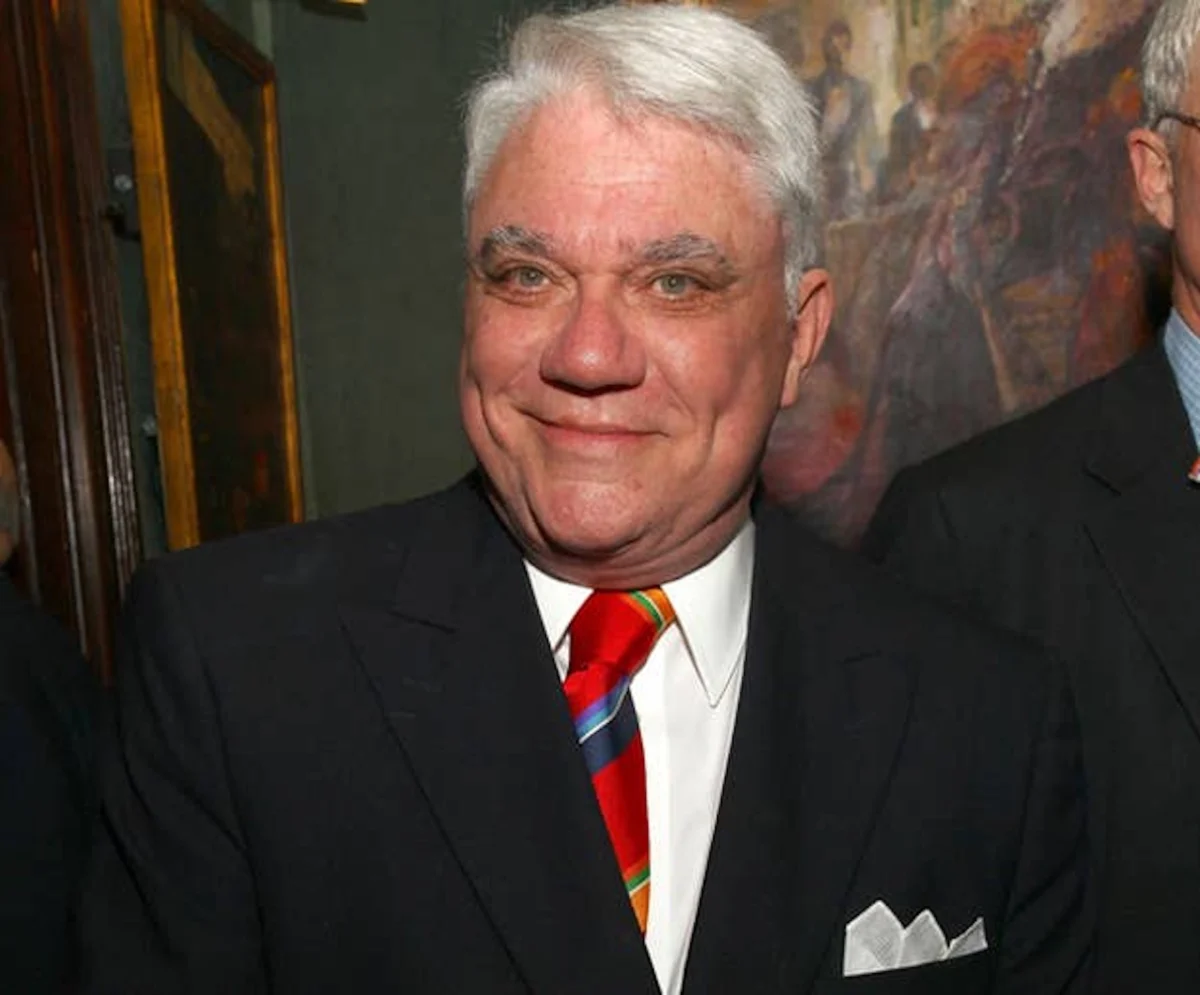
Rex Reed, the prolific and often polarizing film critic whose sharp-tongued prose and "New Journalism" sensibilities helped redefine the relationship between Hollywood and the press, died on Tuesday at his home in Manhattan. He was 87.
The news of his passing was confirmed by his longtime friend William Kapfer. While no specific cause of death was disclosed, Reed’s departure marks the end of a singular era in American letters—an era where critics were as much celebrities as the stars they skewered, and where a single review could ignite a national conversation or a lifelong feud.
I. Main Facts: The Passing of a Cultural Provocateur
Rex Reed was more than a reviewer; he was a fixture of the New York cultural landscape for over half a century. Known for his impeccably tailored suits, a penchant for high-society galas, and a vocabulary that could swing from effusive praise to surgical cruelty in the span of a semicolon, Reed occupied a unique space in the media ecosystem.
Throughout his career, Reed served as a bridge between the waning days of the Hollywood studio system and the "New Hollywood" explosion of the 1970s. He was a contributor to the world’s most prestigious mastheads, including The New York Times, GQ, Esquire, and Vogue. However, it was his long-standing tenure at the New York Observer, beginning in the late 1980s, that solidified his reputation as an unapologetic contrarian in an increasingly homogenized media world.
To his admirers, Reed was a guardian of high standards and a master of the celebrity profile. To his detractors, he was a relic of a less sensitive age, prone to outbursts that many deemed xenophobic, sexist, or unnecessarily personal. Regardless of one’s stance, his influence on the art of the interview and the tone of the modern movie review remains undeniable.
II. Chronology: From the South to the Center of the Cinema Universe
The Early Years and the Rise of New Journalism (1938–1965)
Born in Fort Worth, Texas, in 1938, Reed moved frequently during his youth before eventually finding his way to the University of Louisiana at Baton Rouge. However, the allure of Manhattan was irresistible. Arriving in New York City in the early 1960s, Reed entered a journalism landscape that was undergoing a radical transformation.
Along with contemporaries like Pauline Kael, Tom Wolfe, and Andrew Sarris, Reed helped pioneer "New Journalism"—a style that emphasized the writer’s subjective experience and used literary techniques to bring non-fiction to life. He didn’t just report on movies; he reported on the experience of the movies and the eccentricities of the people who made them.
The Golden Age of Profiles (1966–1975)
In 1968, Reed published his first collection of interviews, titled Do You Sleep in the Nude? The book became a sensation, showcasing his ability to disarm the most guarded icons of the silver screen. His profiles of Ava Gardner, Buster Keaton, and a young Barbra Streisand were hailed for their intimacy and lack of artifice.
In an era before "media training" and the iron grip of public relations firms, Reed managed to capture stars in moments of startling vulnerability or arrogance. He once famously described the atmosphere of a star-studded party with such precision that it felt like an autopsy of fame itself.
The Foray into Acting and Television (1970–1985)
Reed was one of the few critics to successfully—or at least memorably—cross the line from the audience to the screen. In 1970, he starred in the film adaptation of Gore Vidal’s Myra Breckinridge. Playing the character of Myron, Reed found himself at the center of a production that was widely panned by his fellow critics.
Despite the "savage notices" he received for his acting, Reed leaned into his status as a public personality. He became a staple of late-night television, appearing frequently on The Dick Cavett Show and The Tonight Show Starring Johnny Carson. His televised presence—witty, dismissive, and fiercely intelligent—made him a household name even among those who didn’t read the New York Observer.
The Observer Years and Late-Career Controversy (1987–2024)
As the 20th century drew to a close, Reed found a permanent home at the New York Observer. It was here that his writing became increasingly "acidic," as he grappled with a film industry he felt was descending into "mediocrity." He continued to write his column with a typewriter well into the digital age, a symbol of his commitment to a traditionalist worldview.
III. Supporting Data: A Bibliography of Wit and Bile
Reed’s body of work is staggering in its volume. Beyond his thousands of columns, his books serve as a historical record of 20th-century entertainment. Key titles include:
- Do You Sleep in the Nude? (1968)
- Conversations in the Raw (1969)
- Valentines & Vitriol (1977)
- Personal Effects (1986)
His filmography, while smaller, is equally notable for its eccentricity. In addition to Myra Breckinridge, he appeared as himself in Superman (1978) and played a role in the 1984 comedy-drama Irreconcilable Differences.
Reed’s presence on the social scene was also quantifiable. He was a regular at Elaine’s and the 21 Club, often seen holding court with the very socialites and power brokers he might criticize in print the following morning. This proximity to power was a hallmark of his era, a time when the "critic-about-town" was a vital component of a city’s social fabric.
IV. Official Responses and Industry Impact: A Polarizing Legacy
The reaction to Reed’s passing has reflected the duality of his career. While many in the industry celebrate his contributions to the craft of writing, others point to the controversies that defined his later years.
The "Kimchi" Controversy
In 2005, Reed’s review of the South Korean masterpiece Oldboy sparked international outrage. His dismissal of the film—and the nation of South Korea—based on his distaste for kimchi was widely condemned as xenophobic. The New York Observer faced significant pressure to address the comments, which many saw as a departure from professional criticism into blatant prejudice.
The Melissa McCarthy Incident
In 2013, Reed’s review of Identity Thief became a flashpoint for modern discussions on body shaming. He referred to actress Melissa McCarthy as "tractor-sized" and a "gimmick comedian who has devoted her short career to being obese and obnoxious." The backlash was swift, with figures like Paul Feig and Eric Stonestreet publicly defending McCarthy. Reed, however, remained largely unrepentant, arguing that his job was to be honest about what he saw on screen.
The Academy Award Rumors
Reed was also a significant figure in the "lore" of Hollywood. He was instrumental in perpetuating the unsubstantiated rumor that Jack Palance had mistakenly read Marisa Tomei’s name when she won the Best Supporting Actress Oscar for My Cousin Vinny. Despite the Academy’s repeated denials, the story persisted for decades, fueled in part by Reed’s insistence on its validity.
V. Implications: The End of the "Star Critic"
The death of Rex Reed signifies more than the loss of a single writer; it signals the final sunset of a specific type of cultural authority. In the contemporary landscape, film criticism has been democratized by the internet. Sites like Rotten Tomatoes and Letterboxd have shifted the power from the "Great Critic" to the "Aggregate Score."
Reed belonged to a generation—alongside Gene Siskel and Roger Ebert—where the critic was a gatekeeper. When Rex Reed spoke, the industry listened, even if it was only to prepare for a rebuttal. His insistence that he was "trying to raise the level of consciousness" speaks to a belief in the critic as an educator and a defender of taste, rather than a mere consumer guide.
The Legacy of "Acidic" Prose
Reed’s style—often referred to as "acidic"—paved the way for the "snark" culture of the early 2000s internet. However, unlike many modern bloggers, Reed possessed a deep, encyclopedic knowledge of cinema history. He could compare a contemporary actress to a 1940s starlet with a precision that required decades of study.
A Final Word on Mediocrity
In a 2018 profile with The New York Times, Reed defended his reputation as a "crank," stating: "I like just as many films as I dislike… But I think we’re drowning in mediocrity. It’s so hard to get people to see good films."
As Hollywood continues to lean into franchises and "content" over "cinema," Reed’s lifelong crusade against the mediocre remains a poignant, if controversial, chapter in the history of the arts. He lived through the death of the studio system, the birth of the blockbuster, and the rise of the streaming era, documenting it all with a typewriter and a sharp tongue.
Rex Reed leaves behind a legacy that is as complicated as the films he reviewed—stylish, abrasive, deeply knowledgeable, and impossible to ignore. In the end, he was the ultimate "Main Character" in the story of American film criticism, a man who refused to go quietly into the night, preferring instead to leave us with one last, stinging review.




Leave a Comment