
The Volumetric Frontier: How Braindance VR is Leveraging Gaussian Splatting to Disrupt the Adult XR Industry
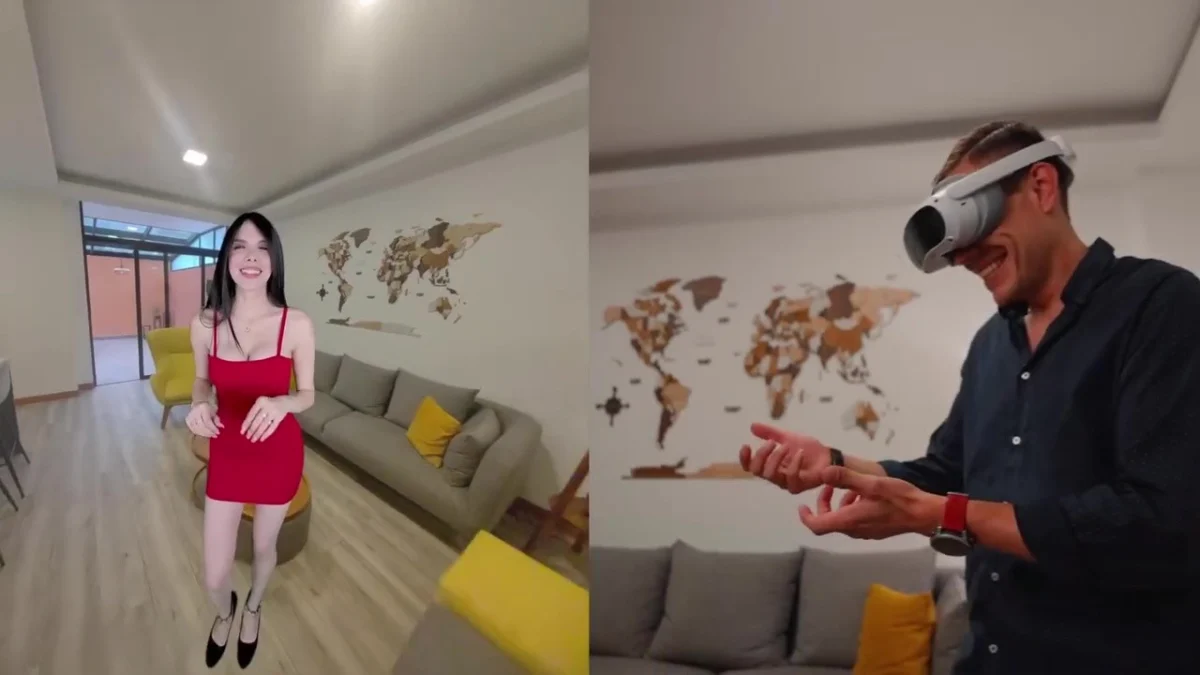
The intersection of adult entertainment and emerging technology has historically served as a primary catalyst for mainstream hardware adoption. From the home video format wars of the 1970s to the early days of internet streaming, the adult industry has consistently been a "first mover." In the current era of spatial computing, a new startup named Braindance VR is attempting to repeat this history by moving beyond traditional video formats and embracing the cutting-edge science of 4-Dimensional Gaussian Splatting (4DGS).
By shifting away from the industry-standard 180-degree stereoscopic video and toward fully volumetric, photorealistic reconstructions, Braindance VR is not merely offering a new product; it is defining a new language for human connection in digital spaces.
Main Facts: Redefining "Immersion" Through Volumetric Capture
Braindance VR distinguishes itself from competitors like SLR or DeoVR by abandoning the "fixed-camera" perspective. In traditional VR adult content, the user is restricted to a single point of view (POV). While stereoscopic 180-degree video provides depth, any movement of the user’s head—leaning in, looking around an object, or standing up—breaks the illusion, as the video remains "plastered" to the user’s face.

Braindance VR utilizes volumetric video, allowing performers to exist as 3D entities within a virtual or augmented space. This is achieved through Gaussian Splatting, a rasterization technique that represents 3D scenes as a collection of "splats" or points with specific colors, opacities, and shapes.
Key Features of the Braindance Ecosystem:
- 4D Gaussian Splatting: Unlike static 3D models, 4DGS captures movement and light reflections in real-time, allowing for the realistic rendering of hair, skin textures, and transparent materials.
- Platform Versatility: The service supports high-fidelity PCVR (requiring an NVIDIA RTX 2060 or higher) and standalone Meta Quest headsets via a proprietary streaming browser technology.
- Passthrough AR Integration: Users can project performers into their actual physical environment using Mixed Reality (MR) passthrough, creating a sense of "co-presence" that traditional video cannot replicate.
- Cyberpunk-Inspired UX: Drawing heavy inspiration from CD Projekt Red’s Cyberpunk 2077, the app refers to its experiences as "memories" and represents them as digital cartridges.
Chronology: From Static Environments to Dynamic Realism
The evolution of Braindance VR’s library mirrors the broader development of Gaussian Splatting in the XR industry.
The Rise of Static Splats (2023–2024)
Before dynamic human capture became viable, Gaussian Splatting was primarily used for environmental reconstruction. Meta’s Horizon Hyperscape demonstrated how static rooms could be digitized with such high fidelity that they were indistinguishable from photographs. However, these environments were "ghost towns"—realistic but lifeless.

The Early Experimental Phase (Late 2024)
Braindance VR’s early "memories" were rudimentary. The first iterations were essentially high-resolution 3D stills with spatial audio overlays. As the team refined their capture rigs—reportedly utilizing an array of up to 165 synchronized cameras—they moved into short-duration volumetric clips. These early videos often suffered from low resolution and significant "noise" or artifacts.
The 4DGS Breakthrough (2025–Present)
The current state of the platform represents a significant leap in data processing. By optimizing the "splat" count and leveraging AI-assisted denoising, Braindance has transitioned into providing multi-segment "memories." These are typically composed of 5–7 short volumetric sequences, totaling 10–15 minutes of content. This modular approach allows for high-fidelity playback without overwhelming current-gen GPU VRAM.
Supporting Data: Technical Benchmarks and Performance Analysis
To understand why Braindance VR is considered a technical "game-changer," one must look at the data requirements and hardware demands of volumetric video compared to traditional formats.

1. Hardware Utilization and PCVR vs. Quest Standalone
The fidelity of Gaussian Splats is directly proportional to the compute power of the GPU.
- PCVR: On a desktop rig, the splats are rendered with high density. This allows for details such as legible tattoos and skin pores. The depth cues provided by parallax (the way objects move relative to each other when the viewer moves) are near-perfect.
- Standalone Quest: Standalone headsets lack the raw power to render millions of splats locally. Braindance has solved this through a "hybrid streaming" model. While this allows for portability, it introduces a "screen door" effect and "brush stroke" artifacts where the edges of the performer may appear frayed or transparent.
2. The Data Problem
Volumetric video is notoriously data-heavy. A single 2-minute "memory" in Braindance VR can exceed several gigabytes, with full experiences often reaching 20GB. This necessitates high-speed internet for streaming or significant local storage for downloads. In comparison, a standard 4K 180-degree VR video is significantly more compressed, though it lacks the 6-Degrees-of-Freedom (6DoF) movement that makes Braindance immersive.
3. Spatial Audio Integration
Immersion is not purely visual. Braindance utilizes HRTF (Head-Related Transfer Function) spatial audio. As a user walks around a virtual performer, the sound of their voice shifts dynamically in the 360-degree soundscape, reinforcing the brain’s perception that a physical entity is present in the room.

Official Responses and Industry Context: The Visionary Legacy
While Braindance VR is currently the leader in this niche, they are standing on the shoulders of early XR pioneers. Industry analysts often point to Ela Darling, an adult performer and tech entrepreneur who, nearly a decade ago, attempted to use Microsoft Kinect sensors to create volumetric VR content for the Oculus Rift DK2.
At the time, Darling’s vision was limited by the "Uncanny Valley"—the point where digital humans look almost real but evoke a sense of revulsion due to slight imperfections. Braindance VR appears to have finally crossed this valley. By using photogrammetry and Gaussian Splatting instead of traditional 3D meshes, they avoid the "plastic" look of avatars.
When questioned about the lack of male performers or interactive elements, the startup has remained focused on the technical refinement of the female-led "solo" experience. However, the technology’s trajectory suggests that "Remote Strip Clubs" or "Holographic Cam-Performers" are the logical next steps for the platform.

Implications: Beyond Adult Entertainment
The success of Braindance VR has profound implications for the broader XR ecosystem and human socialization.
1. The Director of One
In traditional filmmaking, the director chooses the shot. In a Braindance "memory," the user is the director. They can sit on the floor, stand on a chair, or walk around the performer. This shift from "watching" to "experiencing" changes the fundamental nature of media consumption.
2. The Preservation of Presence
The technology used by Braindance VR—4DGS capture—has applications far beyond the NSFW sector.

- Digital Legacies: Families could record immersive "memories" of elderly relatives, allowing future generations to "sit in a room" with a great-grandparent long after they have passed.
- Education and Training: Volumetric capture could allow students to observe a master surgeon or a world-class athlete from any angle, providing a level of detail that 2D video cannot match.
- Celebrity Connection: The music industry is already eyeing this for "private concerts," where a K-pop star or a solo artist can appear to perform on a fan’s coffee table.
3. Ethical and Psychological Considerations
As volumetric realism increases, the "clicking" of the brain—the moment it accepts a digital entity as a real person—becomes more frequent. This raises questions about digital intimacy and the potential for parasocial relationships. If a user can have a photorealistic performer in their room who appears to make eye contact (even if simulated), the lines between reality and simulation become dangerously thin.
Conclusion: A Glimpse into the Future of Spatial Media
Braindance VR is currently a high-priced, experimental service tailored to early adopters with powerful hardware. However, it serves as a crucial proof of concept. It demonstrates that the future of XR is not found in flat videos or low-poly avatars, but in the volumetric reconstruction of reality.
As Gaussian Splatting technology matures and 5G/6G networks make streaming 20GB "memories" instantaneous, the "Braindance" model will likely become the standard for all forms of human-centric media. For now, it remains a fascinating, albeit controversial, frontier of the spatial computing revolution.

Leave a Comment