
Into the Abyss: Assessing the Ambition and Mechanics of "One More Delve"
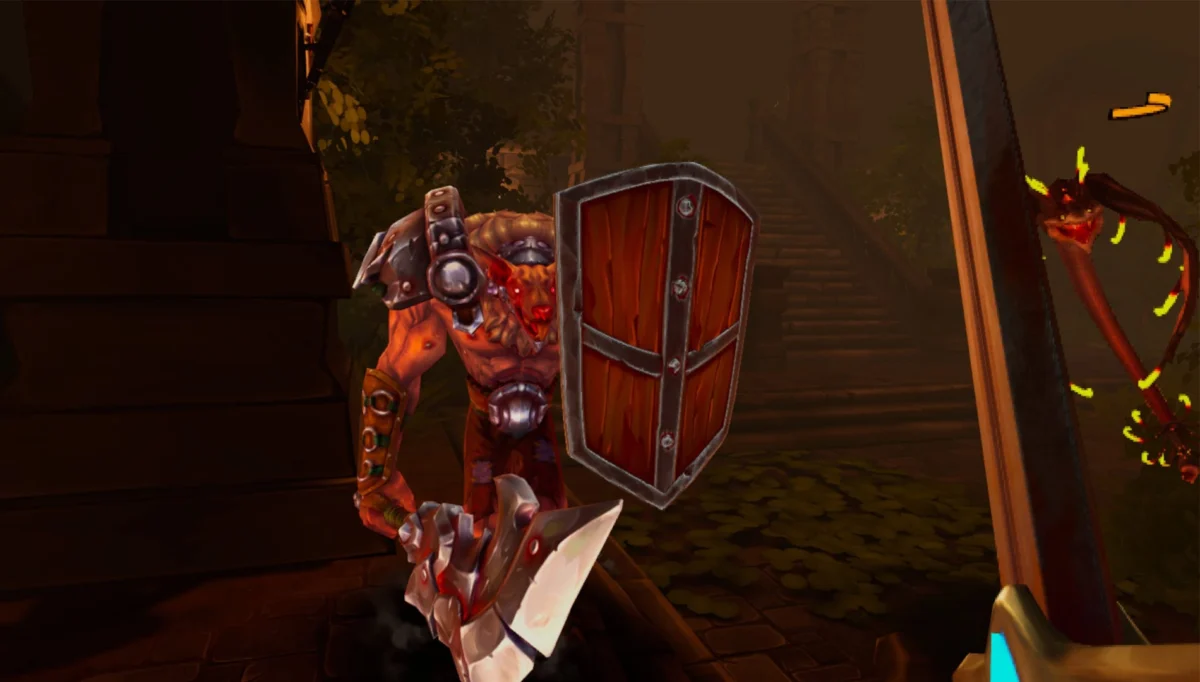
The virtual reality landscape has long been a fertile ground for the "dungeon crawler" genre, a space where the tactile nature of VR can breathe new life into age-old tropes of swords, sorcery, and subterranean exploration. However, few titles in recent memory have generated as much grassroots interest as One More Delve. Developed by ATVR—a studio moniker representing the work of a single student developer—this physics-based action RPG has transitioned from a standout indie project at the Spring 2026 VR Games Showcase to a tangible Early Access title on Meta Quest and Steam.
With a modest price point of $13.99 and a focus on three-player cooperative play, One More Delve seeks to bridge the gap between casual arcade experiences and deep, physics-driven combat simulators. As the title prepares for its full release in the summer of 2026, it stands as a testament to the evolving capabilities of solo developers in the high-stakes world of VR production.
Main Facts: The Blueprint of a Modern Dungeon Crawler
At its core, One More Delve is a hack-and-slash adventure that prioritizes physical presence. Unlike traditional RPGs where combat is determined by stat-checks and button prompts, One More Delve utilizes a comprehensive physics engine to dictate the outcome of every encounter. The game’s primary features include:
- Platform Availability: Cross-platform support for Meta Quest and Steam (PCVR).
- Pricing Structure: An accessible $13.99 entry point, positioning it as a "must-try" for budget-conscious VR enthusiasts.
- Combat Diversity: A multi-class approach allowing players to switch between melee (swords, axes, hammers), ranged (bows), and magic (fire and lightning) on the fly.
- Social Architecture: A dedicated social hub for crafting, trading, and party formation, supporting up to three players in cooperative sessions.
- Visual Style: A high-contrast, cel-shaded aesthetic that minimizes hardware strain while maximizing atmospheric depth.
The game’s release strategy—launching in Early Access on April 27, 2026—allows the developer to refine the experience based on community feedback, specifically regarding the complex collision physics and multiplayer stability that are often the "make-or-break" elements of VR gaming.
Chronology: From Showcase Sensation to Early Access
The trajectory of One More Delve began in earnest during the Spring 2026 VR Games Showcase. In an event often dominated by well-funded studios, the project captured headlines due to its polished cel-shaded visuals and the revelation that it was the work of a single student. Critics and attendees noted that the game’s "gameplay-first" philosophy seemed to address the stagnation often felt in the VR dungeon-crawling genre.
Following the showcase, the developer, ATVR, entered a period of rapid iteration. On April 27, 2026, the game officially entered Early Access. This phase was designed not as a finished product, but as a "live laboratory" where the fundamental mechanics—specifically the three-player networking and the physics-based collision—could be tested at scale.
As of May 2026, the game is currently in the midpoint of its Early Access journey. The roadmap provided by ATVR points toward a Summer 2026 Full Release, which is expected to include expanded dungeon biomes, additional enemy types (beyond the current roster of skeletons and wizards), and a more robust questing system.
Supporting Data: A Deep Dive into Physics and Mechanics
The defining characteristic of One More Delve is its rejection of "canned animations." In many VR titles, swinging a sword results in a pre-set animation once a hitbox is triggered. In One More Delve, the game calculates the velocity, angle, and force of the player’s real-world movement.
Melee Combat and Weight Simulation
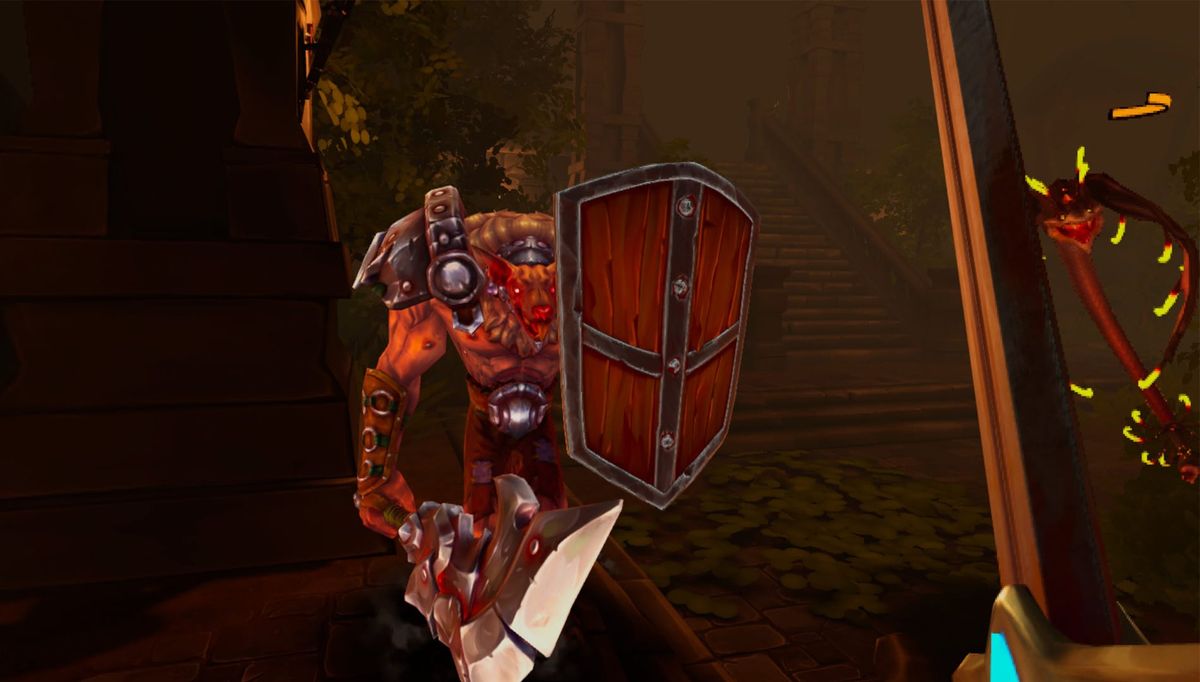
The game utilizes a three-slot inventory system: two hip slots and one shoulder slot. This encourages players to think tactically about their loadout. Two-handed weapons, such as heavy warhammers, require the player to hold both grip triggers. The physics engine simulates "weight" by introducing a slight delay between the player’s controller movement and the in-game weapon’s movement, forcing players to commit to heavy swings rather than "wiggling" their controllers for easy damage.
The Complexity of Ranged and Magic Systems
While melee is the most intuitive aspect, the ranged systems offer a higher skill ceiling:
- Archery: Eschewing the traditional "laser-sight" crosshair, the bow requires a manual nock-and-draw motion. Players must grab an arrow from their back, align it with the bowstring, and use physical intuition to aim.
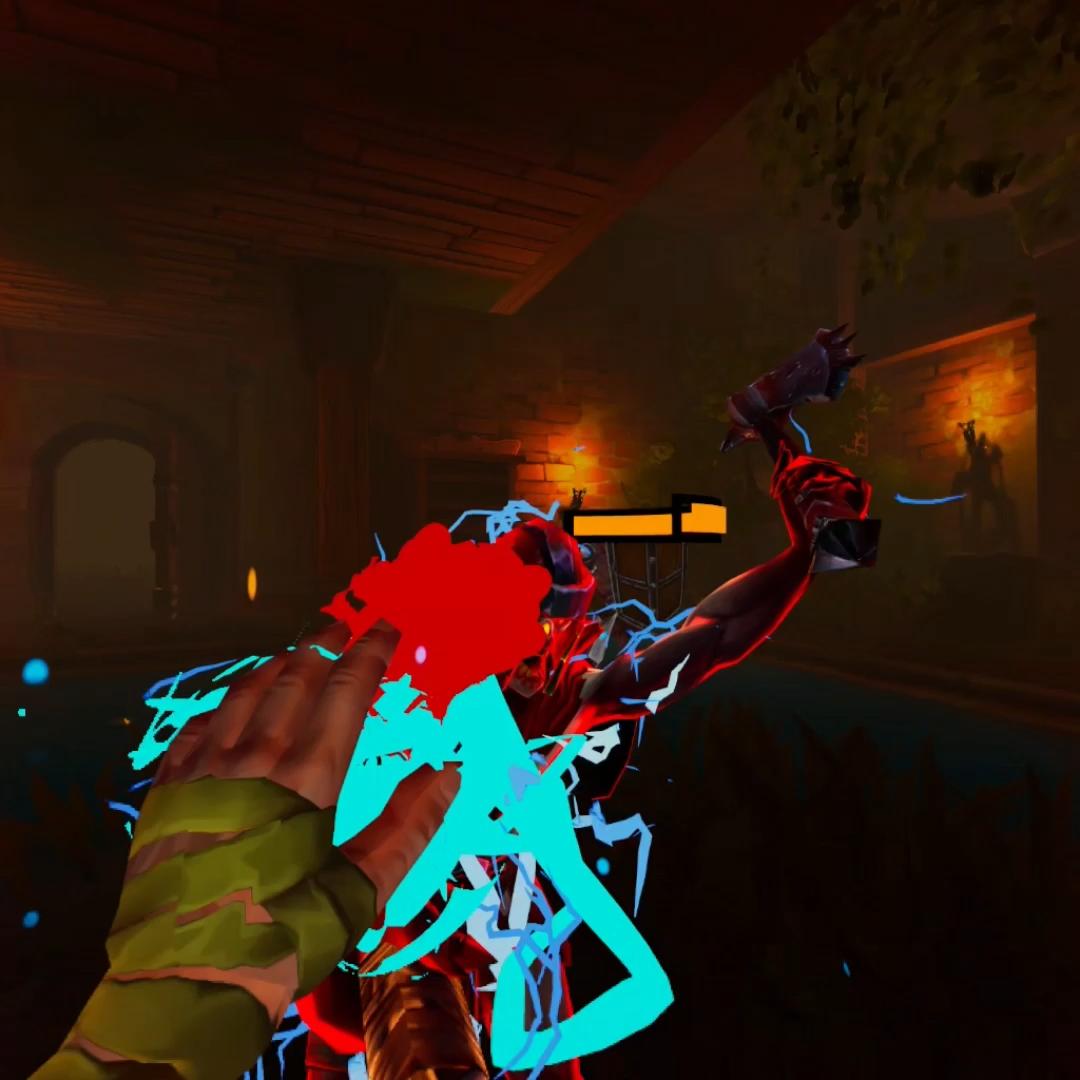
- Magic: Magic is mapped to the upper triggers. Mana is a finite resource, requiring players to balance their "spell-slinging" with physical defense. The visual feedback—vibrant arcs of lightning and blooming fireballs—serves as a sharp contrast to the dark, dreary dungeon environments.
The Social Hub and Crafting Economy
The gameplay loop is anchored by a social hub. Here, the "student developer" influence is most apparent in the tactile nature of the crafting system. Players do not simply click a "Craft" button in a menu. Instead, they must:
- Collect crystals and materials from dungeon runs.
- Select a blueprint at the forge.
- Physically hammer the item into existence using VR motion controls.
This level of immersion extends to the armory, where players must physically walk to equipment stations to swap their gear, reinforcing the "lived-in" feel of the fantasy world.
Official Responses and Developer Philosophy
While ATVR is a solo endeavor, the developer has been active on community forums and Discord, providing what serves as the "official word" on the game’s current shortcomings and future goals.
In response to early feedback regarding collision detection, the developer acknowledged that the "clipping" of enemies—where monsters move too close to the player, causing the physics engine to struggle with weapon placement—is the top priority for the next patch. The developer stated that the goal is to implement a "physical body" for the player that prevents enemies from occupying the same 3D space, a common challenge in VR development known as "Inverse Kinematics (IK) stabilization."
Regarding the visual glitches reported in the Early Access build—such as defeated enemies failing to despawn or "ragdolling" into the geometry—ATVR has clarified that these are byproducts of the game’s aggressive physics calculations. The developer’s official stance is one of transparency: "As a solo developer, the focus is on the ‘feel’ of the combat first. The visual polish and bug-fixing are a continuous process that will define the transition from Early Access to the 1.0 release this summer."
Implications: The Future of Solo VR Development
The emergence of One More Delve carries significant implications for the broader VR industry.
1. The "Democratization" of VR Development
The fact that a single student could produce a functional, multiplayer-capable physics-driven RPG for the Meta Quest and PCVR platforms highlights how accessible development tools (like Unity and Unreal Engine) have become. It suggests that the next "killer app" for VR may not come from a multi-million dollar studio, but from an individual with a clear mechanical vision.
2. The Move Toward Physical Realism
One More Delve joins the ranks of titles like Blade & Sorcery and Boneworks in pushing the "Physics-First" paradigm. This trend indicates that the VR audience is moving away from "stationary wave shooters" and toward complex simulations that reward physical skill and coordination.
3. The Quest-PCVR Parity Challenge
By launching simultaneously on Steam and Meta Quest, One More Delve is navigating the difficult waters of hardware parity. The Quest’s mobile processor often struggles with the heavy CPU load required for physics calculations. If ATVR can successfully optimize these mechanics for a standalone headset, it could provide a blueprint for other indie developers looking to maximize their reach without sacrificing gameplay depth.
4. Community-Driven Iteration
The $13.99 price point suggests a shift in the Early Access model. Rather than charging full price for an unfinished product, ATVR is inviting the community to "fund" the final months of development in exchange for a seat at the table. This builds a loyal player base that feels a sense of ownership over the game’s final form.
Conclusion
One More Delve is more than just another entry in the crowded dungeon-crawler market; it is a bold experiment in physics-driven storytelling and solo-developer ambition. While the "rough edges"—the collision issues, the cumbersome bow mechanics, and the occasional visual hiccup—are present, they are overshadowed by the visceral satisfaction of a well-timed parry or a perfectly cast lightning bolt.
As the game marches toward its Summer 2026 full release, the VR community will be watching closely. If ATVR can smooth out the technical hurdles of its Early Access phase, One More Delve may very well become the gold standard for what a single, dedicated mind can achieve in the virtual realm. For now, it remains a compelling, high-stakes invitation to pick up a sword, grab a friend, and head back into the dark for "just one more delve."



Leave a Comment