
The Genesis of a Master: Archiving Alan Moore’s Formative Years at 2000 AD
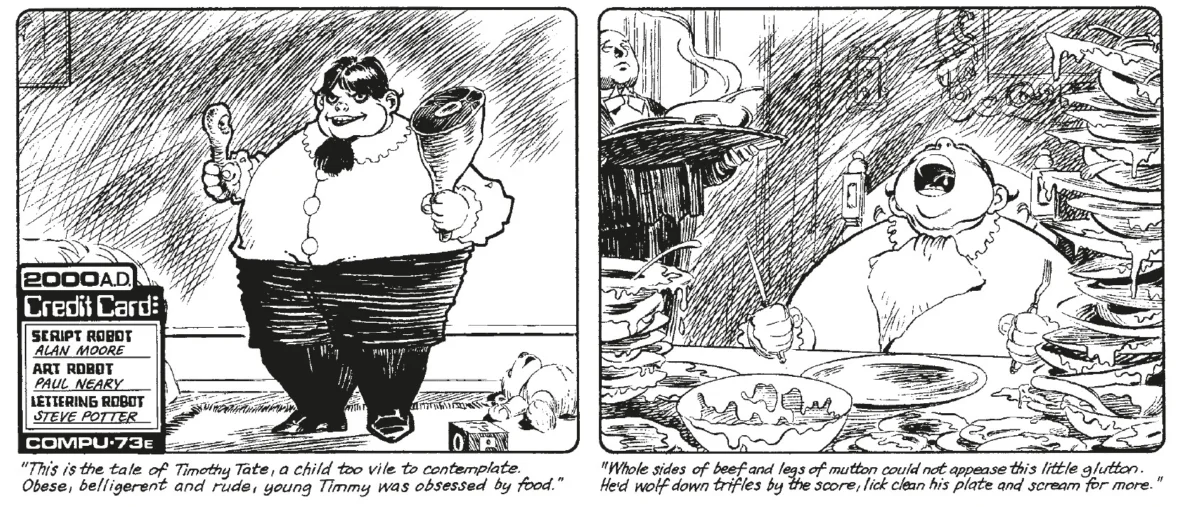
The history of sequential art is often divided into "before" and "after" the mid-1980s, a pivot point largely defined by the emergence of Alan Moore. However, before the Northampton-based scribe deconstructed the superhero genre with Watchmen or explored the depths of historical horror in From Hell, he was a prolific contributor to the "Galaxy’s Greatest Comic," the British weekly anthology 2000 AD.
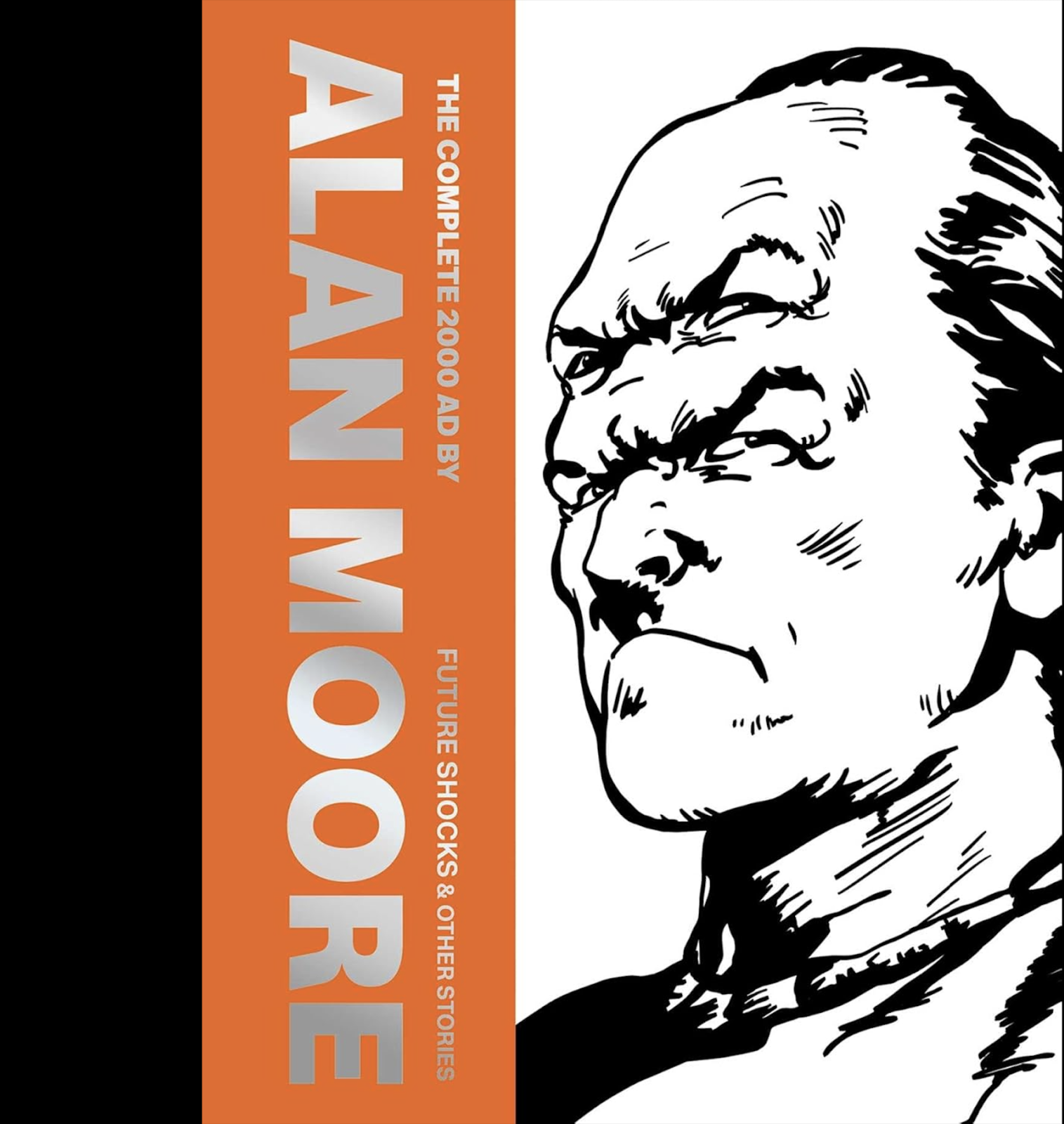
In April 2026, the release of The Complete 2000 AD By Alan Moore: Future Shocks & Other Stories (Volume 1) marks a significant milestone in comic book preservation. This 256-page hardcover collection, retailing for $53.99, serves as both a nostalgic retrospective for veteran readers and a vital educational tool for new fans seeking to understand the architectural foundations of Moore’s storytelling prowess.
Main Facts: A Comprehensive Collection of Early Brilliance
The Complete 2000 AD By Alan Moore Volume 1 is the first in a series of planned high-end hardcovers dedicated to consolidating Moore’s disparate contributions to the magazine. Published by Rebellion (the current owners of 2000 AD), the volume collects short stories and serials produced between 1980 and 1985.
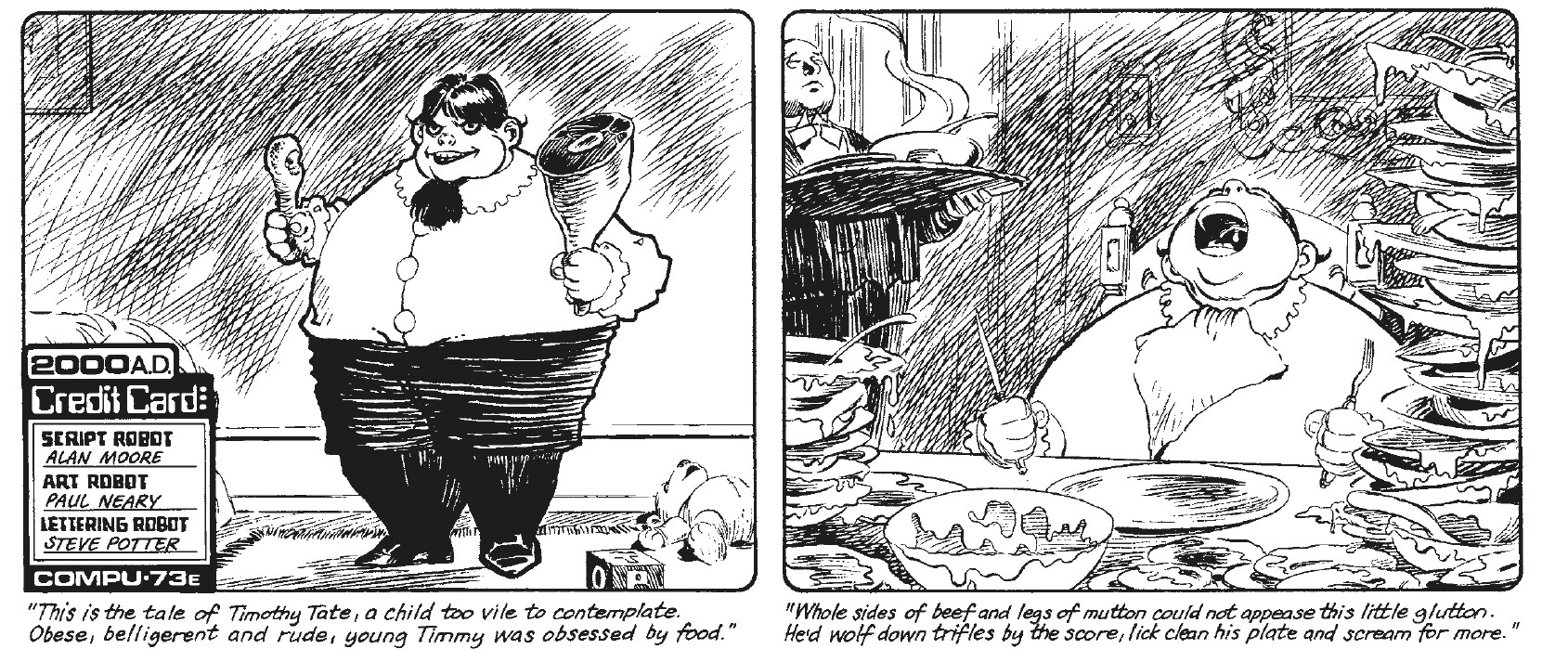
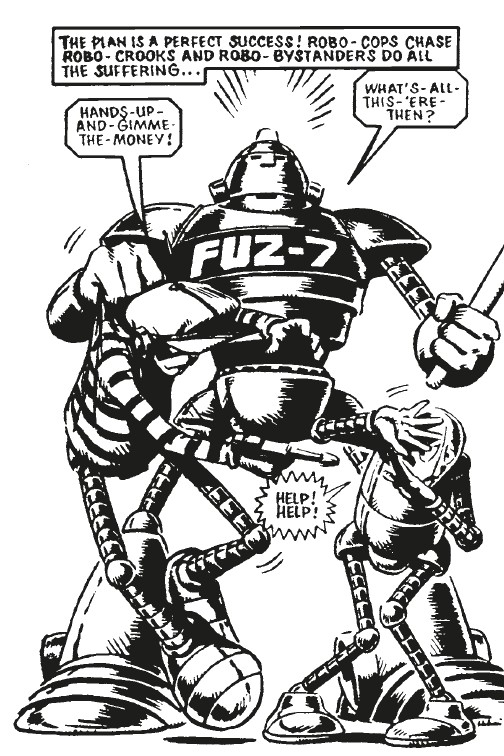
The collection is anchored by Moore’s "Future Shocks"—short, self-contained science fiction stories known for their mandatory twist endings. These stories, often only two to five pages long, served as a "boot camp" for writers in the British industry. Alongside these, the volume features the complete adventures of Abelard Snazz, the "man with the double-decker brain," a character whose catastrophic over-intelligence provided Moore with a vehicle for cynical, high-concept satire.
The artistic roster included in the book reads like a "Who’s Who" of the industry’s eventual legends. Readers are treated to early collaborations between Moore and Dave Gibbons (years before Watchmen), Steve Dillon (Preacher), Alan Davis (Excalibur), and Bryan Talbot (The Adventures of Luther Arkwright). The volume also includes a rare short story from 1980 that has remained out of print for nearly half a century, inspired by the 1973 film Westworld.
Chronology: From "Future Shocks" to Global Stardom (1980–1985)
The timeline covered in this volume represents the critical "learning years" of Moore’s career. Understanding the sequence of these works is essential to recognizing his evolution from a clever gag-writer to a sophisticated dramatist.
1980–1981: The Entry Point
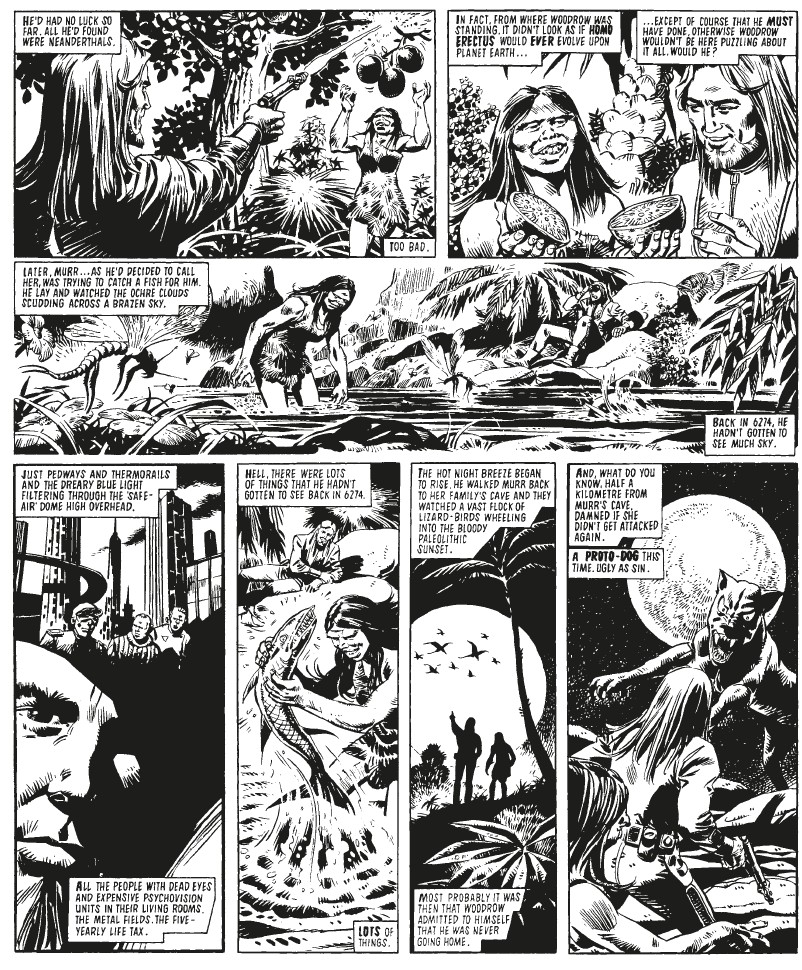
Moore entered the 2000 AD stable during a period of transition for the magazine. His earliest "Future Shocks" were characterized by a manic energy and a reliance on the "O. Henry" style twist. In these early years, Moore was largely adhering to the house style established by editors like Steve MacManus, but even then, his scripts began to display a density of information that surpassed his peers.
1982–1983: Refining the Satire
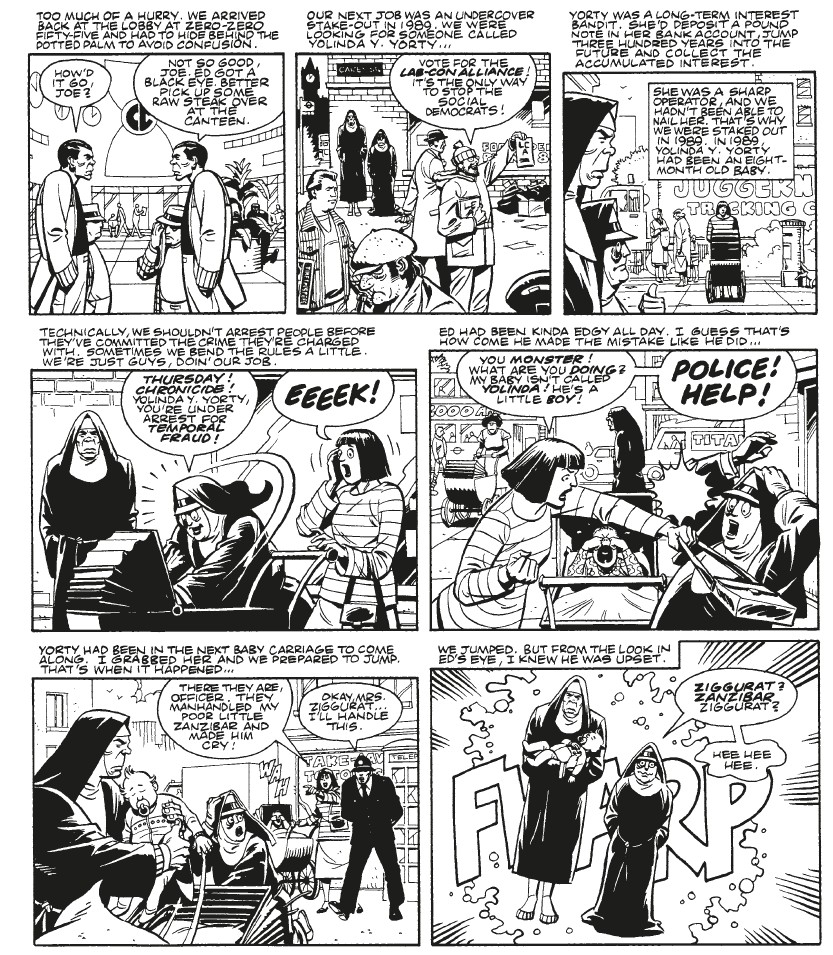
By 1982, Moore began to flex his satirical muscles with Abelard Snazz. This period saw him moving away from simple irony toward more complex social and logical paradoxes. It was during these years that he began his most fruitful early collaborations, specifically with Dave Gibbons on stories like "Chronocops."
1984–1985: The Transition to Depth
Toward the end of the period covered in Volume 1, Moore’s stories began to exhibit the emotional resonance that would define his later masterpieces. Stories like "The Time Machine" and "Red Planet Blues" (with Steve Dillon) showed a writer who was no longer satisfied with just a "punchline" ending, seeking instead to leave the reader with a sense of existential dread or profound melancholy.
Supporting Data: The Technical Mastery of the Page
Critics and historians often point to Moore’s scripts from this era as a masterclass in economy. In a traditional 2000 AD "Future Shock," a writer had roughly 1,000 words and 15 to 20 panels to establish a world, introduce a conflict, and resolve it with a surprise.
Visual Information Density:
One of the standout features highlighted in this new collection is Moore’s uncanny ability to manage layout. While many 1970s and early 80s British comics felt cluttered or "busy," Moore’s collaborations—particularly with Dave Gibbons—showcase a revolutionary clarity. In "Chronocops," a parody of time-travel procedurals, Moore and Gibbons utilize a rigid grid to manage a narrative that loops back on itself. Every panel is a cog in a larger machine, providing clues for a second reading that reveals the "twist" was hidden in plain sight from page one.
Literary Influence vs. Comic Tradition:
Data suggests that Moore’s success in this period was driven by his diet of "New Wave" science fiction. While his contemporaries were often recycling tropes from 1950s pulp magazines, Moore was injecting the sensibilities of Philip K. Dick, Samuel R. Delany, and Thomas Disch into the pages of a weekly boys’ adventure comic. This elevated the "Future Shock" from a simple juvenile diversion to a sophisticated short-form narrative.
Official Responses and Critical Reception
The release of this consolidated volume has sparked a renewed dialogue among comic scholars and the editorial staff at 2000 AD.
The Publisher’s Perspective:
Rebellion’s editorial team has framed this collection as a "correction of the record." For years, Moore’s 2000 AD work was scattered across various "best of" trades or theme-based collections (e.g., The Complete Future Shocks). By centering the collection on the author rather than the brand, Rebellion acknowledges Moore’s singular impact on the magazine’s identity. "These stories are the DNA of modern comics," noted a promotional statement from the publisher. "Seeing them in one sequence allows the reader to witness the birth of a genius."
Critical Consensus:
Contemporary reviews, such as those featured in The Comics Journal, maintain a balanced view. While acknowledging that these stories are "good, even great," critics like Tom Shapira argue against the "wrong-headed" notion that this early work surpasses Moore’s later magnum opuses. The consensus is that while From Hell or Promethea represent Moore’s "Mount Everest," the 2000 AD years represent the essential "Mean Streets" phase—raw, energetic, and brimming with the technical innovations that would later be refined into high art.
Implications: The Legacy of the "British Invasion"
The release of The Complete 2000 AD By Alan Moore Volume 1 has several implications for the current comic book market and the study of the medium.
1. The Archival Trend
This volume is part of a broader industry trend toward high-quality, archival-grade preservation of 20th-century comics. As the original newsprint copies of 2000 AD from the early 80s begin to degrade, these hardcovers ensure that the foundational works of the "British Invasion" remain accessible to future generations of scholars and creators.
2. The Educational Value
For aspiring comic book writers, this collection serves as a textbook on "writing for the artist." Moore’s early scripts were famous for their descriptive detail, providing artists with a clear roadmap while still allowing for visual flourish. By studying these two-page stories, students of the medium can learn how to maximize narrative impact within severe space constraints—a skill often lost in the modern era of "decompressed" storytelling.
3. Redefining Moore’s Persona
In recent years, Alan Moore has become known for his "hermetic" lifestyle and his public critiques of the modern comic industry. This collection serves as a reminder of a younger, more playful Moore—a writer who was deeply in love with the "gag," the "gimmick," and the sheer fun of science fiction. It humanizes a figure who has become almost mythic in the industry, showing him as a working professional honing his craft under the pressure of weekly deadlines.
4. The Steve Dillon and Dave Gibbons Factor
Finally, the volume serves as a poignant tribute to the artists involved, particularly the late Steve Dillon. His work on "Red Planet Blues" and Abelard Snazz showcases a burgeoning talent that would eventually change the face of American comics in the 1990s. The collection reinforces the idea that Moore’s "genius" was never a solitary endeavor; it was the result of a perfect storm of writing talent and world-class British illustration.
In conclusion, The Complete 2000 AD By Alan Moore Volume 1 is more than just a reprint of old stories. It is a curated journey through the formative years of the medium’s most influential writer. It proves that even when he was "only" writing five-page gags for a weekly anthology, Alan Moore was already operating on a level that few have reached since.




Leave a Comment