
A Desert in Bloom: The Extraordinary 2026 Superbloom of Death Valley National Park
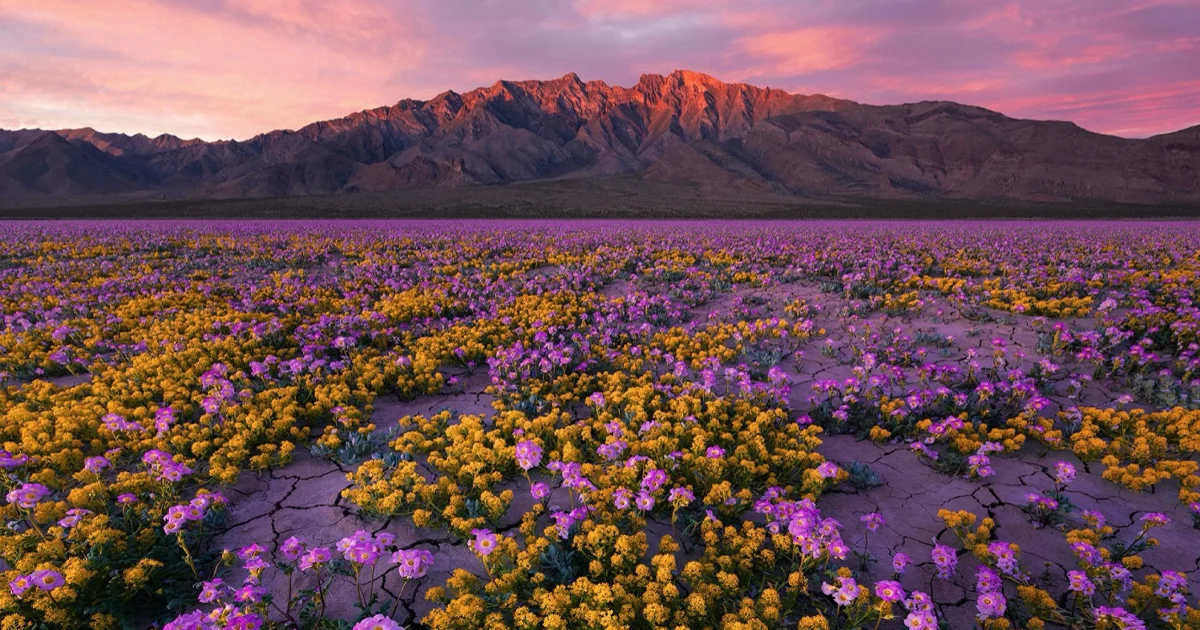
DEATH VALLEY, CA — In a landscape defined by its hostility to life, a rare and breathtaking transformation has just concluded. Death Valley National Park, a place where the ground often cracks under the weight of record-breaking heat and a perpetual lack of moisture, recently hosted its first "superbloom" in a decade. From early February through May 2026, the scorched earth of the Mojave Desert was hidden beneath a carpet of vibrant purples, golds, and whites, marking a historic botanical event that has captivated scientists, photographers, and nature enthusiasts alike.
The 2026 superbloom was the result of a "perfect storm" of meteorological conditions that broke a ten-year dormancy for millions of wildflower seeds buried beneath the desert floor. As the flowers now fade back into the dust, researchers are beginning to analyze the data from this event, which provided a critical boost to the local ecosystem and offered a rare glimpse into the resilience of desert life.
Main Facts: The Anatomy of a Superbloom
A "superbloom" is a colloquial term, not a strictly scientific one, used to describe an explosion of desert wildflowers that exceeds all normal spring expectations. In Death Valley, the hottest and driest place in North America, such events are exceptionally rare. For a superbloom to occur, several precise conditions must be met: significant rainfall in the autumn and early winter, followed by a lack of drying winds and a steady rise in spring temperatures.
The 2026 event was characterized by an incredible density of flora. The primary species involved included the iconic Desert Gold (Geraea canescens), which created vast seas of yellow across the valley floor. Interspersed were the delicate purple hues of Notch-leaf Phacelia (Phacelia crenulata) and the striking white blossoms of Gravel Ghost (Atrichoseris platyphylla).
Geographically, the bloom began at the lower elevations, such as the Badwater Basin area—which sits at 282 feet below sea level—and gradually migrated up the canyon slopes and into the higher elevations of the Panamint Range as the season progressed. At its peak in late March, the park, which usually resembles a monochrome moonscape, was a kaleidoscope of color visible even from satellite imagery.
Chronology: From Torrential Rains to Floral Carpets
The journey toward the 2026 superbloom began nearly six months before the first petal opened. To understand the timeline of this event, one must look back to the unusual weather patterns of late 2025.
Phase 1: The Incubation (November 2025 – January 2026)
Death Valley typically receives an average of just 2 inches of rain per year. However, between November 2025 and January 2026, a series of low-pressure systems and "atmospheric rivers" funneled an unprecedented 2.5 inches of rain into the basin in just three months. This moisture was critical because it soaked deep into the parched soil, reaching the "seed bank"—a layer of dormant seeds that can survive for decades in a state of suspended animation, protected by thick, waxy coatings.
Phase 2: The Emergence (February 2026)
By early February, the first green shoots began to pierce the desert pavement. These early pioneers were primarily found in the southern end of the park. By mid-February, the first "Desert Gold" sunflowers began to open, turning the alluvial fans into golden rivers. The absence of the harsh, drying winds that often plague the valley in late winter allowed these fragile seedlings to take firm root.
Phase 3: The Peak (March – April 2026)
This period represented the height of the superbloom. As temperatures stabilized in the 70s and 80s Fahrenheit, the variety of species exploded. In addition to the yellow carpets, visitors began to see Desert Five-Spot, Golden Evening Primrose, and Sand Verbena. During these eight weeks, the park experienced a record-breaking influx of visitors, all eager to witness a phenomenon that had not occurred since 2016.
Phase 4: The Recession (May 2026)
As May arrived, the quintessential Death Valley heat returned. With temperatures climbing back toward the 100°F mark, the flowers began to wither. This drying process is a vital part of the cycle; as the plants die, they drop a new generation of seeds into the soil, replenishing the seed bank for the next superbloom, which may not occur for another decade or more.
Supporting Data: Climate and Historical Context
The rarity of the 2026 event is best understood through a historical and statistical lens. Superblooms are decadal events in Death Valley. Prior to 2026, the most significant blooms occurred in:
- 1998: Triggered by a massive El Niño event.
- 2005: Resulting from a winter of record-breaking precipitation.
- 2016: A bloom that drew international attention and redefined the "superbloom" concept for the social media era.
Rainfall Comparison
The 2.5 inches of rain recorded between November and January represents 125% of the park’s annual average in just a 90-day window. National Weather Service data indicates that the timing was just as important as the volume. Had that rain fallen in the heat of August, it likely would have evaporated before germinating the seeds. Falling in the cool winter months allowed for deep soil penetration.
Temperature Stability
One often-overlooked factor in the 2026 bloom was the lack of extreme heat spikes in March. Data from the Furnace Creek weather station showed that daytime highs remained remarkably consistent, preventing the "scorching" effect that can kill off young wildflowers before they have a chance to seed.
Official Responses: Management and Conservation
The National Park Service (NPS) faced significant logistical challenges during the four-month event. Death Valley National Park officials had to balance the protection of the fragile ecosystem with the demands of tens of thousands of daily visitors.
"A superbloom is a double-edged sword for a National Park," stated a senior NPS spokesperson. "On one hand, it is the greatest educational tool we have to show the public that the desert is a living, breathing landscape. On the other hand, the sheer volume of foot traffic poses a risk to the very flowers people are coming to see."
The "Don’t Crush the Bloom" Campaign
In response to the 2026 event, the NPS intensified its "Don’t Crush the Bloom" initiative. Rangers were stationed at popular trailheads to prevent "social trailing"—the practice of walking off-path into the flowers for photographs. Officials emphasized that when a flower is stepped on, it cannot drop its seeds, which directly impacts the scale of future superblooms.
Scientific Research
Botanists from several California universities used the 2026 event as a living laboratory. Research teams were seen mapping the density of various species to determine how the "seed bank" has shifted over the last decade. Preliminary findings suggest that certain rare species, which had not been seen in significant numbers since 2005, made a surprise reappearance this year, suggesting that the seeds’ longevity may be even greater than previously estimated.
Implications: Ecology, Economy, and Climate Change
The conclusion of the 2026 superbloom leaves behind more than just dried stalks; it has lasting implications for the region.
Ecological Windfall
The most immediate beneficiaries of the bloom are the desert’s pollinators. The sudden abundance of nectar provided a feast for bees, butterflies, and the White-lined Sphinx Moth. This "pulse" of energy moves up the food chain, benefiting birds and small mammals that prey on the insects. Biologists expect to see a localized "baby boom" among desert fauna over the next year due to this temporary nutritional surplus.
Economic Impact
The 2026 superbloom was a significant boon for the local economy. Nearby gateway communities like Beatty, Nevada, and Lone Pine, California, saw record-breaking occupancy rates in hotels and increased revenue for local businesses. For many small-town vendors, the four-month bloom provided a financial cushion that will last for years.
The Shadow of Climate Change
While the 2026 superbloom was a celebratory event, it also raises questions about the future of the Mojave Desert. Climatologists are studying whether the increasing frequency of extreme weather events—such as the intense rainfall that triggered this bloom—will lead to more frequent superblooms or if rising baseline temperatures will eventually make it impossible for these delicate flowers to survive the spring.
As the last of the Desert Gold petals turn to dust and the temperatures in Death Valley climb toward their summer peaks, the park returns to its quiet, scorched state. The 2026 superbloom serves as a powerful reminder that even in the most inhospitable environments on Earth, life is not absent; it is simply waiting for the right moment to arrive. For those lucky enough to have witnessed it, the memory of a purple and gold desert will remain until the rains return once more, perhaps in another ten years.


Leave a Comment