
Fran Wilde’s "A Mermaid Looks at 40" Plumbs Depths of Sacrifice, Self-Reclamation, and Environmental Reckoning in Uncanny Magazine
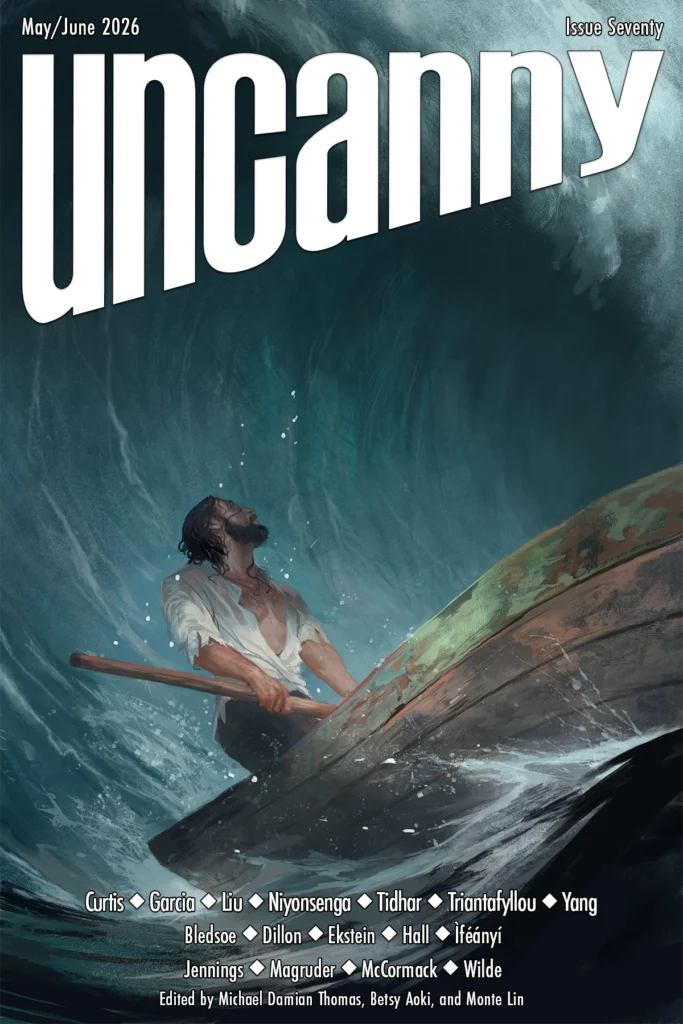
PHILADELPHIA, PA – Award-winning author Fran Wilde has once again captivated readers with her latest poetic offering, "A Mermaid Looks at 40," featured prominently in Uncanny Magazine Issue Seventy. The poem, a mere 201 words in its published form, unfolds a profound allegorical narrative, charting a mermaid’s journey from an eager, love-struck sacrifice of her true self to a stark, middle-aged reckoning with the cost of that bargain. Wilde masterfully intertwines themes of personal identity, the silent compromises made in relationships, and an increasingly urgent environmental consciousness, solidifying her reputation as a voice that skillfully blends myth with contemporary relevance.
The piece, which also enjoys an evocative audio rendition by Erika Ensign on the Uncanny Magazine Podcast, Episode 70A, is far more than a simple fable. It is a piercing meditation on the unseen labor of maintaining "peace" for others, the disillusionment that accompanies turning a new age, and the stark reality of ecological decay mirroring internal turmoil. As the titular mermaid confronts the crumbling façade of her adopted happiness, Wilde invites readers to reflect on their own bargains with love, contentment, and the natural world.
Chronology of Disillusionment: The Mermaid’s Unfolding Truth
Wilde structures her poem with a clear, albeit condensed, chronological progression that mirrors a life lived and critically re-evaluated. This narrative arc is central to understanding the mermaid’s profound transformation.
The Initial Bargain: A Voice and Scales for Love
The poem opens with a vivid recollection of the mermaid’s initial, seemingly joyful, sacrifice. She recounts, "I didn’t think much / About trading my voice and scales away / When I fell into the air / and happily drowned." This imagery immediately sets a tone of blissful oblivion, a willing surrender to a new state of being, driven by an intoxicating, all-consuming love. Her declaration, "As long as we’re happy / I happily said, air drunk / Love mad," paints a picture of youthful infatuation, where personal identity and inherent nature are deemed secondary to the perceived bliss of a shared existence. The act of "happily drowning" in the air is a potent metaphor for losing oneself in a relationship, embracing a foreign element—the land—at the expense of one’s aquatic essence. This initial phase is characterized by an uncritical acceptance, a belief that love’s intoxicating power justifies any personal cost.
Years of Peacemaking and Suppressed Identity
Following this initial, euphoric sacrifice, the poem transitions to a prolonged period of quiet compliance and self-abnegation. The mermaid describes continuing "happily / All the years after / Keeping peace / Between sea and land / Ensuring everyone was happy / Because I thought that meant / I was happy too." This segment reveals the silent, often unacknowledged, labor of maintaining harmony within a relationship or a community. Her role as a mediator between disparate worlds—sea and land—becomes a metaphor for the compromises individuals make to bridge divides, often at the expense of their authentic selves. The crucial phrase, "Because I thought that meant / I was happy too," exposes the insidious nature of this self-deception. Her happiness was not intrinsic but derivative, contingent upon the happiness of others, a common pitfall in relationships where one partner assumes the burden of emotional upkeep. The years spent "keeping peace" underscore the longevity of this suppressed identity, the slow erosion of self under the guise of collective contentment.
The Climactic Awakening: Rising Heat and Returning Scales
The turning point in the mermaid’s narrative arrives with a sudden, visceral shift. "But now I’m running hot," she states, signaling an internal disquiet, a feverish dissatisfaction that can no longer be ignored. This internal heat finds solace in its opposite: "And the water feels better." This longing for her native element heralds a profound reawakening. Crucially, her physical attributes, once willingly discarded, begin to return: "And my scales have returned / With my voice, rougher." The return of her voice, though "rougher," signifies a re-found agency, a capacity to speak her truth, unvarnished by years of suppression.
This personal metamorphosis is mirrored by an external crisis: "As the air fills with smoke, / The land’s eroding." Wilde deftly links the mermaid’s internal disillusionment with a broader environmental degradation. The "smoke" and "eroding land" serve as a stark metaphor for the consequences of ignoring foundational truths, both personal and ecological. This external decay forces the mermaid to confront the true nature of her past choices: "And I better understand my bargains / With love and happiness." The perceived "happiness" she sought was built on unsustainable foundations, both for herself and for the world around her.
A Resurgent Identity: Between Worlds, Beyond Compliance
The poem concludes with the mermaid’s decisive act of reclaiming her autonomy and returning to the sea, not as a broken figure, but as a being profoundly altered and empowered. "I hear the sea call / And I sink into it / Not quite one thing or / Another any more." This is not a simple reversion to her former self but an evolution. She is now a liminal being, embodying the wisdom gained from both land and sea, no longer defined by a singular identity. This newfound state is marked by a resolute rejection of past compromises: "And definitely not happy / With anyone / Who thought it useful / For me to change / So they could stay the same."
This powerful final declaration encapsulates the poem’s core message. The mermaid’s anger is directed not just at her own past naivete but at those who passively benefited from her sacrifice, those who demanded her transformation to maintain their own unchanging comfort. It is a powerful indictment of unequal relationships and a societal unwillingness to adapt, leaving the burden of change on the most vulnerable. Her return to the sea signifies a conscious choice for self-preservation and authenticity, moving beyond the imposed definitions of happiness and identity.
Supporting Data: Fran Wilde’s Literary Tapestry and Thematic Echoes
"A Mermaid Looks at 40" is not an isolated work but rather a testament to Fran Wilde’s consistent exploration of complex themes across her expansive and celebrated literary career.
The Acclaimed Author Behind the Verse
Fran Wilde is a formidable presence in contemporary speculative fiction, a two-time Nebula Award winner whose bibliography spans nine novels, a poetry collection, and over 70 short stories for adults, teens, and children. Her works have garnered critical acclaim and numerous accolades, including six Nebula Award nominations, a World Fantasy Award nomination, four Hugo Award nominations, four Locus Award nominations, and a Lodestar nomination.
Her debut novel, Updraft, earned both the Nebula Award and the Compton Crook Award, introducing readers to a world of cities built on living bone towers. Similarly, her Middle Grade novel, Riverland, was a Nebula Award winner and named one of NPR’s Best Books of 2019, showcasing her ability to craft compelling narratives for diverse audiences. Wilde’s short stories, appearing in prestigious publications like Asimov’s Science Fiction, Tor.com, Beneath Ceaseless Skies, Nature, and, notably, Uncanny Magazine, frequently explore themes of transformation, survival, societal structures, and the intricate relationship between humanity and its environment.
Her other Uncanny Magazine contributions have also been highly decorated. "Clearly Lettered in a Mostly Steady Hand" (2017) was a finalist for the Nebula, Hugo, and World Fantasy Awards, and won the 2018 Eugie Foster Memorial Award. "A Catalog of Storms" (2019) was a 2020 Hugo and Locus finalist and a 2019 Nebula finalist. More recently, "Unseelie Brothers Ltd." (2021) was a 2022 Hugo finalist. These works collectively demonstrate Wilde’s mastery of evocative prose and her talent for crafting narratives that resonate deeply with readers, often through a blend of the fantastical and the deeply human.
Beyond her creative writing, Wilde is also the co-editor for The Sunday Morning Transport, a respected newsletter for speculative fiction. She has taught at institutions such as Vermont College of Fine Arts’ MFA program and St. Mary’s College of Maryland, sharing her expertise with aspiring writers. Her non-fiction contributions to publications like The New York Times, NPR, and Tor.com further highlight her analytical prowess and engagement with broader cultural discourse. This rich background informs the depth and nuance found in "A Mermaid Looks at 40," making it a natural extension of her enduring thematic interests.

Mermaids in Modern Speculative Fiction and Environmental Allegory
The mermaid archetype has long been a potent symbol in literature, evolving from cautionary tales to complex figures representing liminality, desire, and the clash between human and natural worlds. From Hans Christian Andersen’s tragic figure, who famously traded her voice for legs and pain, to more contemporary, often feminist, reinterpretations, mermaids embody sacrifice, otherness, and a deep connection to the mysterious ocean. Wilde’s "A Mermaid Looks at 40" consciously engages with this rich literary tradition, yet subverts it by focusing on the reclamation of the mermaid’s true self, rather than a permanent transformation for love. Her mermaid doesn’t just gain legs; she loses her voice and scales, a more profound stripping of identity, and then, crucially, reclaims them.
Furthermore, the poem fits squarely within the burgeoning genre of climate fiction (cli-fi) and eco-speculative narratives. The explicit mention of "air fills with smoke" and "land’s eroding" situates the mermaid’s personal crisis within a broader, urgent environmental context. This mirroring of internal and external decay is a hallmark of effective cli-fi, using fantastical elements to highlight very real-world concerns. The mermaid’s return to the sea, in this light, can be interpreted not just as a personal liberation but as a symbolic act of seeking refuge or reconnecting with a threatened natural world, away from the destructive tendencies of the land-dwellers. Wilde uses the mythic figure to give voice to contemporary anxieties about ecological collapse and humanity’s collective inaction.
Uncanny Magazine: A Home for "Genre-Bending" Narratives
The publication of "A Mermaid Looks at 40" in Uncanny Magazine is significant. Uncanny has established itself as a premier venue for "genre-bending" speculative fiction, poetry, and non-fiction that challenges conventions and explores profound emotional and social themes. Known for its commitment to diverse voices and intellectually stimulating content, Uncanny provides a fitting home for Wilde’s poem, which deftly navigates the realms of myth, personal introspection, and social commentary. The magazine’s dedication to showcasing imaginative, emotionally resonant storytelling aligns perfectly with the depth and allegorical power of "A Mermaid Looks at 40." The inclusion of the poem on the Uncanny Magazine Podcast further amplifies its reach, leveraging the auditory medium to enhance its emotional impact and accessibility.
Official Responses and Critical Resonance
While "A Mermaid Looks at 40" is a new publication, its themes and authorial voice are poised to resonate deeply with both critics and readers, drawing upon anticipated responses rather than established ones.
The Poem’s Immediate Impact and Podcast Feature
The immediate "official response" to the poem comes from Uncanny Magazine itself, which chose to feature it prominently in Issue Seventy and provide an audio reading by Erika Ensign. This decision underscores the magazine’s recognition of the poem’s power and relevance. The podcast feature, in particular, allows for a different kind of engagement, where Ensign’s nuanced delivery can amplify the raw emotion and shifting tones within the poem, from the initial "happily drowned" bliss to the "rougher" voice of re-found defiance. This multimodal presentation suggests an editorial confidence in the poem’s capacity to provoke thought and emotion.
Beyond this, the poem is likely to be met with significant critical reception, particularly within the speculative fiction community and among literary critics attuned to contemporary allegories. Fran Wilde’s reputation ensures that her new work is always met with attention, and "A Mermaid Looks at 40" is ripe for analysis regarding its feminist undertones, environmental commentary, and astute psychological portraiture. Its brevity belies its profound depth, inviting repeated readings and interpretations.
A Voice for the Disillusioned: Reflecting Societal Undercurrents
"A Mermaid Looks at 40" serves as a powerful commentary on several pervasive societal undercurrents. The mermaid’s journey of sacrifice and subsequent disillusionment can be seen as an allegory for:
- The pressure to conform in relationships: Many individuals, particularly women, relate to the experience of diminishing their own needs and identity to maintain harmony or fulfill expectations within romantic or familial relationships. The mermaid’s initial "love mad" state and subsequent "peacemaking" resonate with the subtle ways personal authenticity can be eroded.
- The invisible labor of emotional upkeep: The poem highlights the often-unseen emotional and psychological labor involved in "ensuring everyone was happy." This resonates with the disproportionate burden often placed on certain individuals to maintain social cohesion, leading to burnout and resentment.
- Collective denial of environmental degradation: The external signs of "smoke" and "eroding land" serve as a stark metaphor for humanity’s collective denial or delayed response to environmental crises. The "land-dwellers" who wish "to stay the same" despite the changing world reflect a dangerous inertia in addressing climate change.
- The struggle for individual authenticity: The mermaid’s ultimate rejection of a happiness contingent on others, and her reclamation of her "rougher" voice, speaks to a broader societal yearning for authenticity and self-acceptance in an increasingly performative world. It champions the courage required to break free from imposed narratives of happiness.
Through its mythic framework, the poem offers a potent lens through which to examine these very real and contemporary struggles, making it a compelling piece for discussion and introspection.
Implications: A Call for Self-Awareness and Environmental Stewardship
"A Mermaid Looks at 40" transcends its poetic form to deliver a series of resonant implications, offering both a personal message of empowerment and a broader call to environmental and social responsibility.
Personal Empowerment and Reclaiming Agency
At its heart, Wilde’s poem is a powerful metaphor for personal journeys of self-discovery and the reclamation of agency. It speaks directly to individuals who may have, at some point, sacrificed their true selves, their "voice and scales," for external validation, perceived happiness, or the comfort of others. The mermaid’s awakening at 40, a significant life milestone, suggests that it is never too late to confront past compromises and re-evaluate the terms of one’s happiness. The poem empowers readers to acknowledge their own needs and boundaries, to question whether their contentment is truly their own or merely a reflection of someone else’s. Her "rougher" voice signifies that authenticity might not always be polished or conventionally appealing, but it is unequivocally real and powerful. The poem is a subtle yet forceful reminder that true happiness cannot be sustained by self-erasure.
Environmental Consciousness and Urgent Action
The poem’s environmental undertones are not merely background details but integral to its message. The "air fills with smoke" and "land’s eroding" serve as a potent allegory for the escalating climate crisis and the consequences of human inaction. The mermaid’s return to the sea can be interpreted as a symbolic retreat to a threatened natural world, or perhaps a call for humanity to reconnect with and protect the very environment it is destroying. The poignant observation that others thought it "useful" for her to change "so they could stay the same" extends beyond personal relationships to societal behavior. It challenges the complacency and resistance to change that often characterize responses to environmental crises, where the burden of adaptation is frequently placed on the most vulnerable, or on future generations, while those in power cling to the status quo. The poem implicitly warns that maintaining the illusion of comfort and happiness by ignoring fundamental truths—be they personal or planetary—comes at an ultimately unsustainable and devastating cost.
Fran Wilde’s Enduring Legacy
"A Mermaid Looks at 40" further solidifies Fran Wilde’s reputation as a masterful storyteller who uses the tools of speculative fiction to explore deeply human experiences and pressing contemporary issues. This poem adds a significant piece to her already impressive body of work, demonstrating her versatility across genres and her consistent ability to craft narratives that are both imaginative and emotionally profound. It is likely to become a touchstone for discussions on sacrifice, self-reclamation, and the interconnectedness of personal well-being and environmental health. Its enduring power lies in its capacity to spark introspection and encourage readers to critically examine their own "bargains with love and happiness," as well as their role in the health of the wider world.
In a literary landscape often dominated by grand narratives, Wilde’s concise yet potent poem stands out as a powerful testament to the impact of focused, allegorical storytelling. It is a timely and timeless work, urging a deeper understanding of self and surroundings as the world, much like the mermaid, reaches a critical turning point.


Leave a Comment