
The Iron Heart of Power: Unpacking Germanic Warfare and Society
Main Facts
In the tumultuous centuries leading up to and during the decline of the Western Roman Empire, Germanic societies forged their identities and power structures in the crucible of conflict. For these diverse tribal groups, encompassing a vast swathe of ancient Europe, military prowess was not merely a desirable trait but the fundamental pillar of wealth, status, and political authority. At the core of this martial ethos lay the comitatus, or war band – a highly personal and fiercely loyal retinue of elite warriors that every aspiring king or chieftain endeavored to assemble. This institution was far more than just a fighting force; it was the engine of social mobility, the guarantor of leadership, and often the primary determinant of a chiefdom’s or kingdom’s political trajectory. The perpetual demand to maintain and reward these war bands dictated much of the early Germanic political landscape, ensuring that periods of prolonged peace were not only rare but fundamentally unsustainable.
Chronology & Supporting Data
The evolution of Germanic warfare is intrinsically linked to the broader historical currents of the Roman Empire and the subsequent migrations that reshaped the continent. From the early interactions across the Rhine to the cataclysmic events of the 4th and 5th centuries, the comitatus and its associated warrior culture remained a constant, adapting and influencing the course of history.
The Comitatus: A Bond Forged in Battle
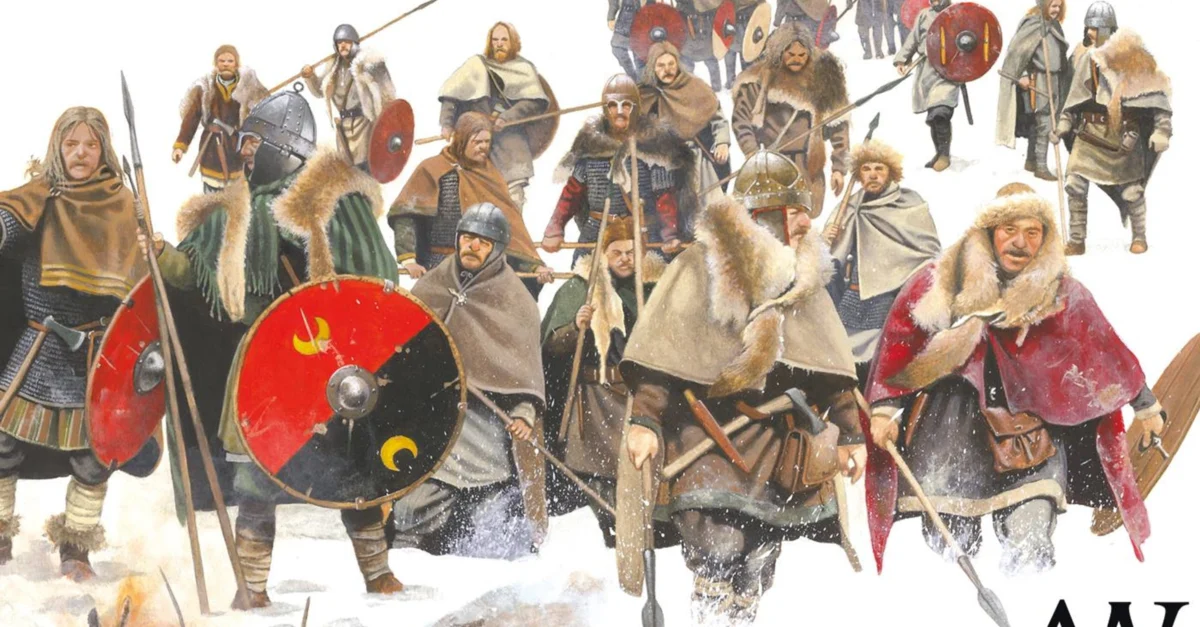
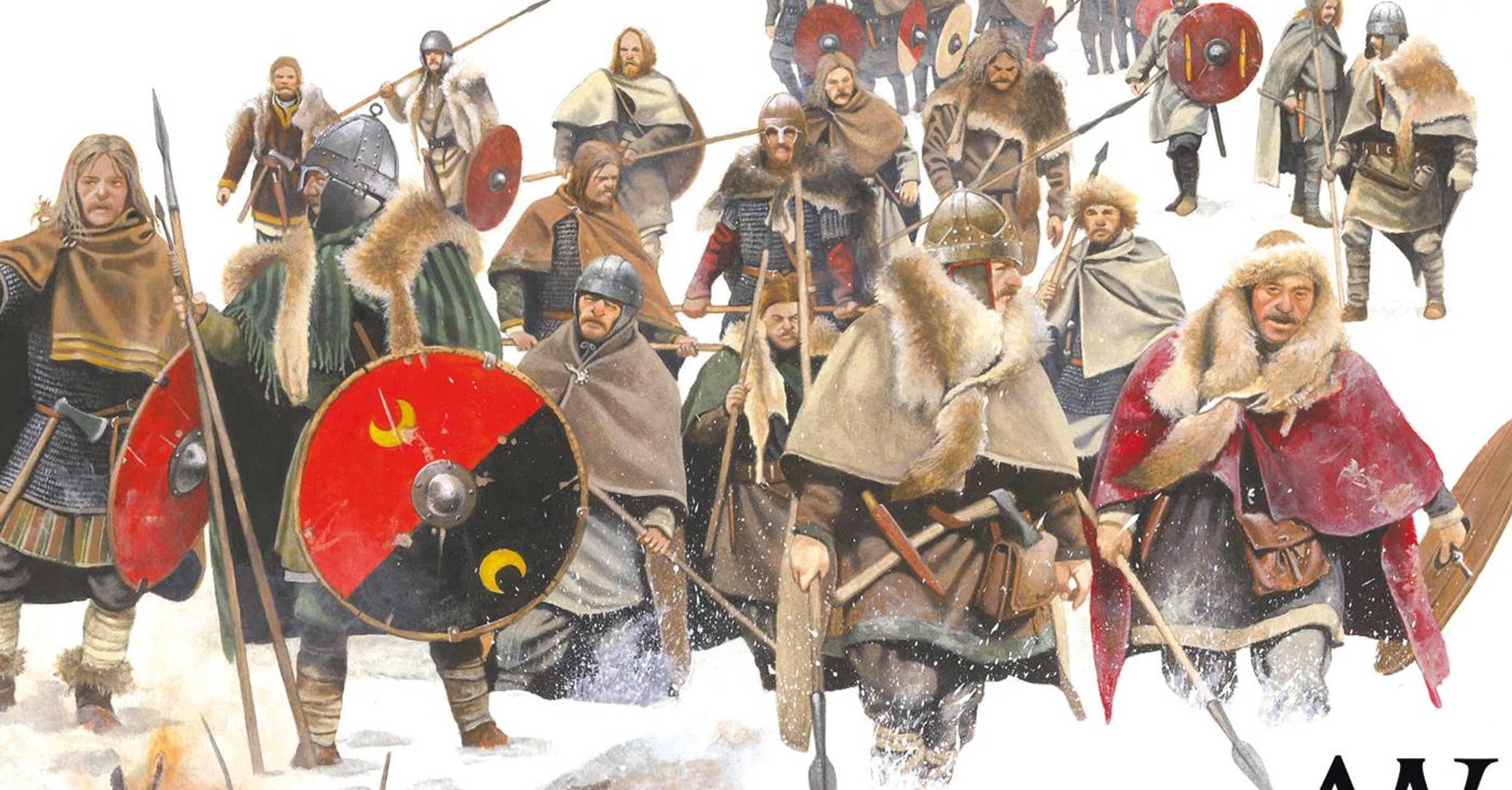
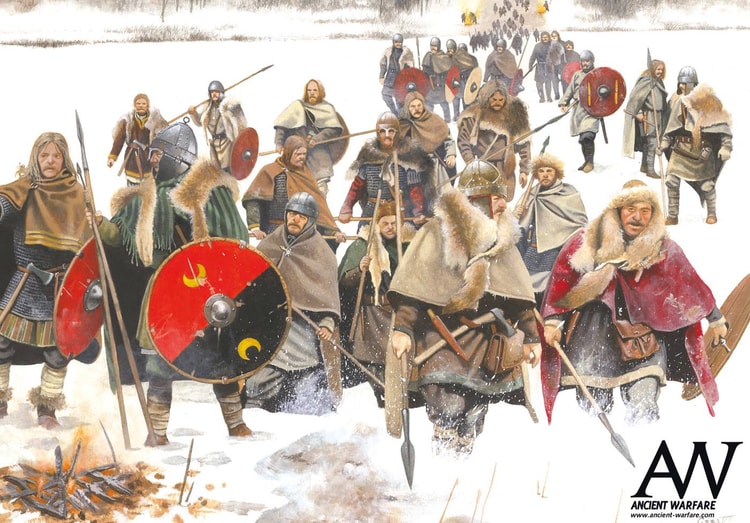
The comitatus was not a formalized, state-funded army in the Roman sense, but rather a voluntary association bound by personal loyalty and mutual benefit. Warriors pledged their fealty, often unto death, to a chosen leader, who in turn was obligated to provide for them, share the spoils of war, and demonstrate exceptional courage and leadership. This symbiotic relationship was the bedrock of Germanic power. A successful leader attracted more warriors, growing his comitatus, which in turn increased his capacity for raiding, conquest, and the acquisition of more wealth. This positive feedback loop was instrumental in the political centralization observed in the 3rd and 4th centuries, where particularly successful war bands and their leaders formed larger confederations, consolidating disparate tribes under a single, dominant martial figure. The iconic image of Germanic forces crossing the Rhine in 406 CE, a pivotal moment in the fall of the Western Roman Empire, illustrates the scale and ambition of these war bands, driven by the imperative to seek new lands and new spoils.
The Warrior’s Ethos: Loyalty Unto Death
The cultural emphasis on military success fostered a profound warrior ethos. For individual warriors, battle was the ultimate arena for demonstrating prowess, earning personal glory, and acquiring tangible wealth—be it land, plunder, or valuable equipment. This pursuit of honor and material gain was inextricably linked to unwavering loyalty to their leader. The concept of formal military discipline, as practiced by the Roman legions, was largely absent. Instead, a deep-seated fear of dishonor served as the primary deterrent against desertion or cowardice. To abandon one’s comrades or leader in battle was to invite social ostracization and a fate worse than death itself.
This intense personal loyalty transcended tribal or ethnic affiliations, a fact strikingly demonstrated by Germanic mercenaries serving in the Roman army. These auxiliaries, often fighting far from their homelands, exhibited remarkable fidelity to their Roman commanders, even when pitted against their own kin. Their commitment was to the individual leader who offered them opportunity and reward, rather than an abstract national identity—a concept largely anachronistic to the early medieval period. This adaptability and transferability of loyalty made them both invaluable assets and, paradoxically, potential threats, depending on the fortunes and charisma of their commanders. In this society, all able-bodied free men were expected to bear arms, blurring the lines between civilian and soldier, and reinforcing the pervasive martial character of Germanic life.
Weapons & Armour: The Tools of Conflict
The armaments of Germanic warriors reflected both their ingenuity and their economic realities. The pinnacle of offensive weaponry was the long, two-edged sword. The finest examples, often acquired through trade or plunder from the Romans, or crafted using sophisticated pattern-welding (sometimes called damascening) techniques, were symbols of status and devastatingly effective in combat. However, such swords were exceptionally expensive and therefore the preserve of the elite.
The vast majority of warriors entered battle equipped more modestly, typically wielding a spear as their primary offensive weapon, complemented by a large, single-bladed knife (often referred to as a scramasax or seax) for close-quarters fighting. The spear, versatile for both throwing and thrusting, remained a staple throughout the period. Other projectile weapons included the bow and arrow, utilized for skirmishing and harassment. The throwing axe, particularly favored by the Franks, also gained prominence, offering a potent ranged attack before closing to melee.
Defensive gear revealed an even starker disparity. While Roman legionaries were uniformly equipped with mail or scale armor and helmets, most Germanic warriors went into battle protected only by a sturdy wooden shield, often covered in leather and sometimes reinforced with a metal boss and rim. A toughened leather cap might offer minimal head protection for some.
Only the highest-ranking and wealthiest warriors could afford the comprehensive protection of a well-equipped Roman soldier. This typically included a coat of chainmail (lorica hamata) or scale armor (lorica squamata), a conical iron helmet often adorned with cheek plates and a mail neck guard, and a large, round wooden shield. The cost of such protection was prohibitive; Frankish laws, for example, valued a chainmail coat at two horses or six oxen, and a helmet at one horse. This economic barrier meant that only the most affluent and influential members of society could afford such vital protection, creating a distinct visual and tactical difference between the elite and the rank-and-file.
As the Germanic migrations progressed and their interactions with the Roman Empire intensified, the acquisition of Roman equipment became increasingly common. Plunder from battlefields, trade, and even the hiring of Roman armorers led to a gradual improvement in the defensive capabilities of Germanic armies, partially offsetting their initial disadvantage against the well-armored Roman legions.
Fighting Techniques & Tactics: From Footmen to Cavalry Dominance
Germanic battle tactics, while effective within their cultural context, were generally less sophisticated than those of their Roman adversaries. The vast majority of Germanic warriors fought on foot. Their martial tradition emphasized individual bravery and the shock of a massed charge.
A notable exception to this infantry dominance were the Goths. Influenced by their prolonged contact with steppe nomads like the Huns and Sarmatians, the Goths developed highly effective cavalry. This adoption of cavalry tactics proved decisive in their monumental victory over the Romans at the Battle of Adrianople in 378 CE, a turning point that sent shockwaves through the Roman world and demonstrated the vulnerability of the seemingly invincible legions. Although stirrups, which revolutionized cavalry warfare, did not arrive in Europe until the 6th or 7th century, Gothic saddles were designed to provide sufficient stability, allowing warriors to fight effectively from horseback without being easily dismounted by the impact of combat.
For other Germanic groups, cavalry played a more limited, albeit important, role. Horsemen were primarily employed for skirmishing, raiding, reconnaissance, and rapid pursuit. In a pitched defensive engagement, even those warriors who possessed horses often dismounted to fight on foot. This practice was not merely tactical; it was a powerful display of leadership and solidarity. By relinquishing their means of easy escape, war leaders signaled their unwavering commitment to share the same fate as their less well-equipped foot soldiers, further cementing the bonds of the comitatus.
Germanic armies largely eschewed complex battle formations or intricate maneuvers. Their attacks typically involved deep formations, with the most elite and best-equipped warriors positioned in the vanguard, leading the charge, while the humbler, less-protected fighters brought up the rear. Their favored defensive formation was the shield wall, a tightly packed phalanx of warriors whose overlapping shields created a formidable barrier. This formation, likely inspired by observations of Roman legionary tactics, was effective in absorbing charges and presenting a solid front. However, unlike the highly drilled Roman legions, Germanic warriors lacked the extensive training for reforming if their lines were broken. Once a shield wall fractured, the cohesion of the army often disintegrated, leading to a rout.
Furthermore, Germanic armies generally lacked sophisticated siege warfare capabilities. Their strength lay in open battle and raiding, not in protracted sieges of fortified cities. The Visigothic leader Fritigern famously expressed his disdain for such endeavors, stating he "had no quarrel with stone walls" – a sentiment that underscored the practical limitations of Germanic military strategy against well-defended urban centers.
Official Responses / Historical Perspectives
Modern historical scholarship largely confirms the centrality of the warrior ethos and the comitatus to Germanic society. Historians like Tacitus, though writing centuries earlier, provided early insights into the fierce loyalty and martial values of these groups. Contemporary Roman observers, often in awe or fear of Germanic prowess, frequently commented on their ferocity in battle and the personal bonds within their war bands.
Scholars today emphasize that the migratory movements of the 4th and 5th centuries were not simply mass migrations of entire peoples, but rather the movements of large, successful war bands and their followers. These war bands, needing constant resources to maintain their loyalty and grow their numbers, were a driving force behind the pressure exerted on the Roman frontiers. The economic imperative to reward warriors with plunder, land, and prestige meant that conquest and expansion were not just options, but necessities for the survival and growth of a chieftain’s power. The "official response" from the historical record, therefore, points to a society where the military was not a separate branch of government but the very fabric of governance itself.
Implications
The enduring legacy of Germanic warrior culture and the comitatus had profound implications for the shaping of early medieval Europe. The relentless pursuit of wealth and status through warfare fueled the migrations that ultimately led to the collapse of the Western Roman Empire. As Germanic war bands established new kingdoms within former Roman territories—Visigothic Spain, Vandal North Africa, Ostrogothic Italy, and Frankish Gaul—their military traditions profoundly influenced the new political and social structures.
The comitatus laid the groundwork for later feudal systems, where personal loyalty and military service remained paramount. The emphasis on individual valor, the importance of a leader’s charisma, and the spoils of war as a primary economic driver continued to resonate for centuries. While Roman administrative structures often provided a framework, the ultimate power in these nascent kingdoms frequently rested with the king’s ability to command the loyalty of his warriors.
The military strategies of these groups, particularly their cavalry innovations (as seen with the Goths), forced the Roman Empire to adapt and ultimately contributed to its downfall. Their tactical limitations, however, also meant that the transition from a highly centralized Roman state to decentralized Germanic kingdoms was often characterized by instability and continuous internal and external conflict.
In essence, the Germanic warrior, bound by honor and loyalty to his chieftain, and equipped with a mix of traditional and increasingly Roman arms, was the architect of a new European order. His battlefield prowess, his relentless drive for status and wealth, and the unique societal structure of the comitatus irrevocably altered the course of history, laying the foundation for the kingdoms and cultures that would define the Middle Ages. The iron heart of power in Germanic society beat to the rhythm of battle, shaping not just their own destiny but the destiny of an entire continent.



Leave a Comment