
The Weight of Drift: Joana Mosi’s Physical Education and the Cartography of Contemporary Malaise
Main Facts: A Postmodern Portrait of Stasis
In the landscape of contemporary graphic literature, few works capture the quiet, suffocating humidity of early-thirties aimlessness as poignantly as Physical Education. Authored by the prolific Portuguese creator Joana Mosi and brought to the English-speaking world by Pow Pow Press, the graphic novel serves as both a character study of a drifting woman and a socio-economic critique of modern Lisbon.
The narrative centers on Laura, a protagonist who embodies the "liminal" generation—those caught between the analog ghosts of their childhood and the digital saturation of their adulthood. At thirty-odd years old, Laura lives in her mother’s home in Odivelas, a peripheral suburb of Lisbon. Despite having secured a prestigious grant to write her debut novel, she finds herself paralyzed by a lack of motivation, her creative output stifled by the very "freedom" the grant was supposed to provide.
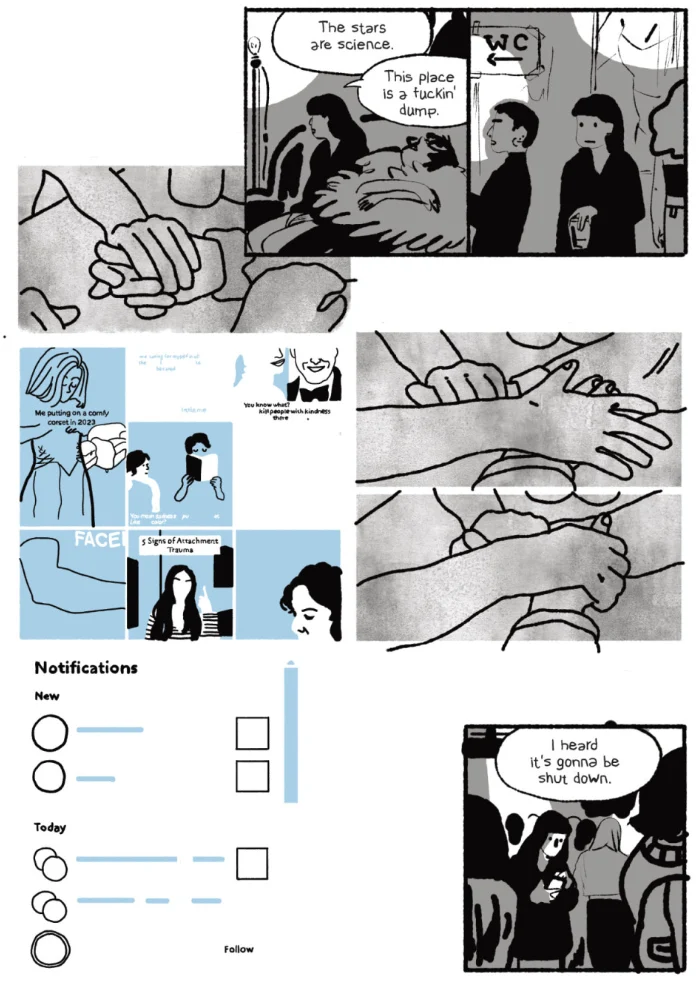
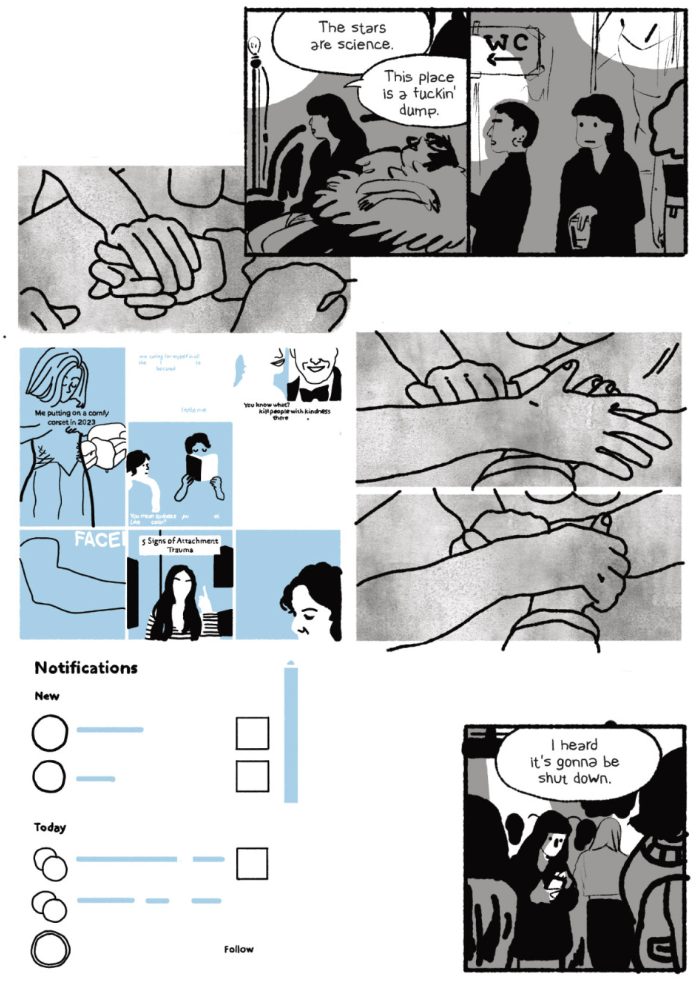
Mosi’s work is not a traditional linear narrative; it is an elliptical, postmodern exploration of what it means to be "stuck." Through a singular visual style that utilizes collage and digital layering, Mosi maps the internal topography of a woman who is physically present but emotionally absent, disconnected from her mother, her peers, and even her own body. The English release, debuted at the Toronto Comic Arts Festival (TCAF), marks a significant milestone for Mosi, introducing her "singular postmodern style" to a global audience hungry for stories that reflect the precarity of the 21st century.
Chronology: From Lisbon Streets to International Acclaim
The journey of Physical Education from a localized Portuguese project to an international release is a testament to the universal resonance of its themes. Joana Mosi, a mainstay in the Portuguese comics scene, developed the work during a period of intense creative output in Lisbon, a city undergoing a radical and often painful transformation.
The book’s path to an English audience began several years ago at TCAF. In a moment of professional serendipity, Mosi engaged in a spontaneous portfolio review with Pow Pow Press. The publishers were immediately struck by her "moxy" and the unique aesthetic of her work, which eschewed traditional comic tropes in favor of a more fragmented, avant-garde approach.
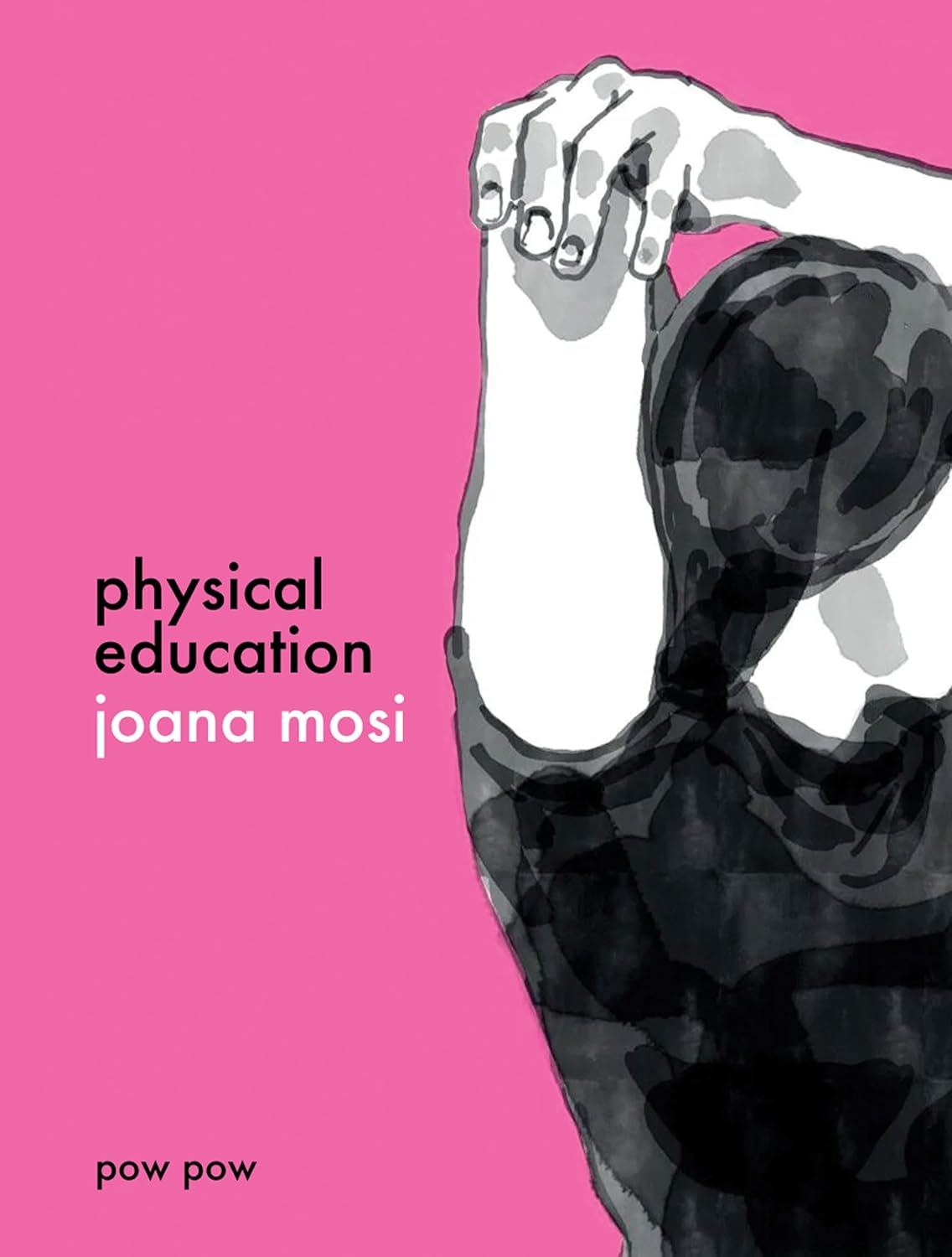
Following this encounter, the process of translation and adaptation began, culminating in the May 2026 release. The timeline of the book’s production is also a story of technological evolution—and subsequent regret. Mosi composed the entirety of Physical Education digitally, utilizing a complex system of layers to mimic the look of hand-drawn art. However, in a move that mirrors the transient nature of the digital world she critiques, Mosi deleted many of her original sketch files to save memory space, leaving no physical archive of the book’s evolution. This chronological gap in her own creative history has led her to return to traditional paper and ink for her subsequent projects.
Supporting Data: The Anatomy of Digital and Economic Paralysis
To understand Laura’s paralysis, one must look at the data of her environment. Physical Education is deeply rooted in the specificities of the Lisbon housing crisis. Lisbon has recently become one of the most expensive cities in Europe relative to local wages, driven by a surge in tourism and foreign investment.
The Gentrification of Identity
Mosi litters the background of her panels with the markers of this shift: hipster dance clubs and trendy cafes with English names like "Dear Brunch." For foreign visitors, these are signs of a "vibrant" city; for Laura and her cohort, they are markers of alienation. The contrast between the "cool" center of Lisbon and Laura’s "uncool" existence in Odivelas serves as a physical manifestation of her low self-esteem. She tells herself and others that her living situation is "temporary," yet she lacks the economic mobility to change it.
The Digital Burden
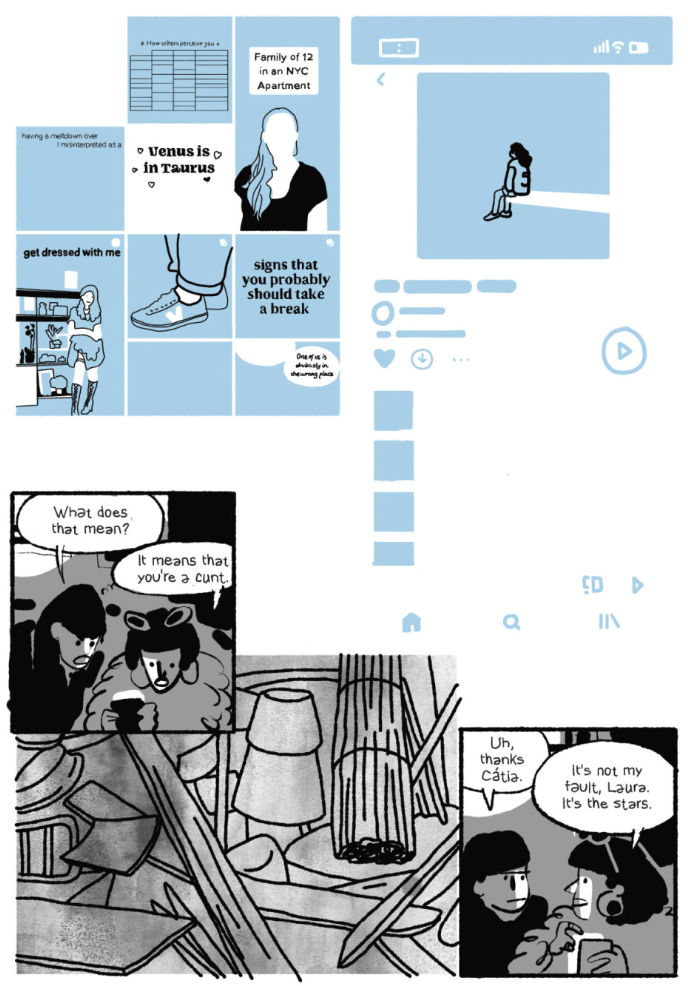
Beyond the economic, the "data" of Laura’s daily life is composed of digital noise. Mosi portrays Laura as "besieged" by:
- Social media notifications and "unread" messages.
- Performative listicles and algorithmic horoscopes.
- The paradox of choice presented by online quizzes (deciding everything from sweaters to romantic partners).
Drawing parallels to Jillian Tamaki’s Boundless, Mosi illustrates how digital culture functions as an "overwhelming emotional burden." The sheer volume of choices available to Laura doesn’t empower her; it reduces every significant life decision to a triviality, leading to a state of profound decision fatigue.
Author’s Perspective: The Art of the "Unsaid"
Joana Mosi’s creative philosophy for Physical Education centers on the concept of "hyper-awareness" versus "detachment." In various interviews and through her stylistic choices, Mosi reveals a fascination with how we experience the physical world when our minds are elsewhere.
The Collage Process
The book’s structure is heavily influenced by a collage-based digital process. Similar to the techniques used by Chester Brown in his seminal 1994 work I Never Liked You, Mosi worked with multiple digital layers simultaneously. This allowed her to rearrange elements to modify the pacing and rhythm of the story. The result is a series of "fragmented pages" that act like dissonant musical phrases, reflecting Laura’s tenuous connection to her surroundings.
The Visual Code of Connection
One of the most striking "official" artistic choices in the book is the varying level of detail in facial features. Mosi uses this as a narrative tool:
- Detailed Faces: Reserved for characters with whom Laura has a deep emotional or historical connection, such as those in her memories.
- Silhouettes and Faceless Voices: Used for characters Laura perceives as peripheral or alienating. In one scene, a gym employee examines her injured ankle—a moment of physical intimacy—yet the employee remains a faceless voice, highlighting Laura’s total dissociation from the event.
Mosi has expressed a certain irony regarding the book’s production. While the final pages look as though they were "lavishly painted with a wide brush," the lack of a physical record due to her digital-only workflow is something she now regrets. She notes that she has trouble even remembering the evolution of certain panels because the digital "sketches" no longer exist.
Implications: Precarity as the New Permanent
The implications of Physical Education extend far beyond the borders of Portugal. The graphic novel serves as a diagnostic tool for a global generation grappling with "precarity"—the state of being perpetually on the edge of economic and emotional collapse.
The Illusion of Privilege
A key theme in the book is the guilt associated with "privilege." Laura’s friends are baffled by her inability to write her novel despite having a grant. This reflects a broader societal misunderstanding of creative paralysis; the "privilege" of time and money often becomes a cage of expectation that further stifles those already struggling with mental health or existential dread. Laura’s guilt doesn’t spur action; it merely fuels more guilt, creating a feedback loop of stasis.
The Physicality of Resistance
The title Physical Education refers to Laura’s regular visits to a downtown gym. In a world of digital overload, the gym is one of the few places where the body is centered. However, Mosi suggests that even this "respite" is hollow. Laura’s dislike of physical education as a child carries over into her adulthood; she attends the gym not for self-improvement, but as a passive follower of her social group.
The book implies that true "physical education"—the process of learning to inhabit one’s own body and life—is a much more difficult task than simply lifting weights. It requires breaking through the "cliff-edge" perception of reality. This is illustrated in a poignant scene where Laura looks at a painting of a pond and can only see two people teetering on a cliff. Even when the reality (a reflection in water) is pointed out to her, her brain refuses to see the safety, only the danger.
Conclusion
Physical Education is a challenging, essential read that demands multiple sittings. It asks the reader to pay attention to the "silences, interruptions, and featureless faces" that define modern existence. By documenting the "ragged lines and splotchy fills" of a life in limbo, Joana Mosi has created a definitive work on the exhaustion of the contemporary soul. As she moves forward to create her next work by hand, on paper, she leaves behind a digital monument to a generation trying—and often failing—to find its footing in a world that feels increasingly like a cliff’s edge.

Leave a Comment