
The Great Dunder Mifflin Debate: Why "Stress Relief" Surpasses the "Finale" as the Definitive Episode of The Office
The enduring legacy of the American version of The Office is a phenomenon rarely seen in the landscape of modern television. Over a decade after its conclusion on NBC, the mockumentary series continues to dominate streaming charts, inspire endless internet memes, and serve as a cultural touchstone for multiple generations. However, within its dedicated fanbase, a persistent debate remains: which episode stands as the series’ crowning achievement?
While public consensus, as measured by IMDb’s crowdsourced ratings, places the series finale at the top of the mountain, a deeper journalistic analysis of the show’s structure, comedic timing, and cultural impact suggests a different victor. While "Finale" provides the emotional closure audiences craved, the Season 5 two-part masterpiece "Stress Relief" represents the absolute zenith of the show’s creative powers.
Main Facts: The Ratings Discrepancy
On the surface, the data seems to settle the argument. On IMDb, "Finale" (Season 9, Episode 23) sits at a near-perfect 9.8/10, shared only by "Goodbye, Michael" (Season 7, Episode 21). In contrast, "Stress Relief" (Season 5, Episodes 14 and 15) holds a 9.7/10.
However, ratings for series finales are often inflated by "emotional resonance"—a phenomenon where viewers reward a show for the satisfaction of its conclusion rather than the objective quality of its comedy. "Finale" is a victory lap; it is a sentimental, lore-heavy hour of television designed to reward long-term investment. "Stress Relief," conversely, was designed as a high-octane entry point for the largest possible audience, airing immediately following Super Bowl XLIII in 2009. It captured nearly 23 million viewers, making it the most-watched episode in the show’s history.
Chronology: The Evolution of a Sitcom Giant
To understand why these two episodes represent the "best" of the series, one must look at the show’s chronological trajectory.
The Peak Era (Season 2–5)
During this period, The Office transitioned from a cynical adaptation of its British predecessor into a unique American ensemble comedy. This era was defined by "cringe comedy" balanced with absurdism. "Stress Relief" arrived at the very end of this peak, representing a moment where the writers had mastered the characters’ voices and were willing to push the boundaries of the mockumentary format.
The Transition (Season 6–7)
The show began to lean more heavily into the romance between Jim and Pam and the impending departure of Steve Carell. Episodes like "Niagara" and "Goodbye, Michael" shifted the tone toward the "dramedy" territory that would eventually define the series finale.
The Final Push (Season 8–9)
Following Carell’s departure, the show struggled with its identity, introducing polarizing characters like Robert California and Nellie Bertram. The final season was a concerted effort to return to form, leading to a conclusion that sought to forgive the inconsistencies of the later years by focusing on the "family" dynamic of Dunder Mifflin.

Supporting Data: Analyzing the "Stress Relief" Masterclass
The argument for "Stress Relief" as the superior episode lies in its density of iconic moments. In the span of 60 minutes (including commercials), the episode delivers three distinct sequences that have become synonymous with the series.
1. The Fire Drill Cold Open
Widely considered the greatest cold open in sitcom history, the scene features Dwight Schrute staging a simulated fire to test the office’s safety preparedness. The sequence is a masterclass in chaotic choreography: Angela attempting to save her cat Bandit (only for him to fall through the ceiling), Kevin looting the vending machine, and Michael’s panicked advice to "stay calm" while he himself hurls a projector through a window. It is pure, unadulterated slapstick that requires no prior knowledge of the show to appreciate.
2. The CPR Training
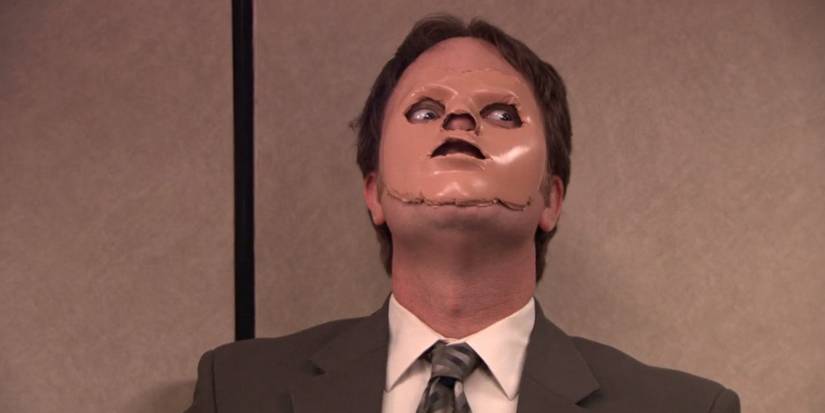
The second act features the office attending a CPR seminar that quickly devolves into a rendition of the Bee Gees’ "Stayin’ Alive." This scene showcases the ensemble’s perfect chemistry, culminating in Dwight cutting the face off a $3,500 dummy to mimic The Silence of the Lambs. This moment alone has had real-world implications; several news outlets have reported on individuals who saved lives using CPR techniques they remembered specifically from this episode.
3. The Roast of Michael Scott
The episode’s emotional core is found in Michael’s desire to be roasted by his employees to alleviate their stress. It highlights the central tragedy and comedy of Michael Scott: his desperate need for approval and his complete lack of self-awareness. When the roast becomes too personal, Michael’s eventual "counter-roast" provides a rare moment where he bests his staff, proving that even the "world’s best boss" has a breaking point.
Official Responses: The Creators’ Perspective
Reflecting on the production of these episodes, the creators have often noted the different pressures involved.
Greg Daniels, the developer of the American series, spoke extensively during the "Office Ladies" podcast and in various interviews about the "Finale." He noted that the goal was "to give the characters a sense of a future beyond the cameras." The return of Steve Carell for a brief cameo was a closely guarded secret, intended to be a "gift to the fans" rather than a plot-heavy return.
Conversely, Paul Lieberstein (who played Toby Flenderson and served as showrunner during Season 5) described "Stress Relief" as an episode built for the "Super Bowl pressure." The writers knew they would have millions of new eyes on the show, so they intentionally stripped away complex B-plots and long-running romantic arcs to focus on "big, broad comedy." This "broadness" is exactly why the episode remains the most accessible and re-watchable installment in the catalog.
Implications: Sentiment vs. Quintessence
The debate between "Finale" and "Stress Relief" ultimately comes down to what a viewer values in a sitcom.
If the goal of The Office is to tell a story about growth, the "Finale" is the superior choice. We see Dwight Schrute finally achieve his dream of becoming Regional Manager while gaining the emotional maturity to marry Angela. We see Jim and Pam choose their relationship over the stagnation of Scranton. It is a masterful piece of narrative television that provides a "happy ending" to a show that began in the grey, dismal cubicles of a failing paper company.
However, if the goal of The Office is to serve as a "situational comedy," then "Stress Relief" is the objective winner. A sitcom, at its core, is about the friction between disparate personalities trapped in a mundane environment. "Stress Relief" takes that friction and turns it into a diamond.
The "New Viewer" Test
Journalistically, the "best" episode of a series can often be identified by the "New Viewer Test": which episode could you show someone who has never seen the series to make them an instant fan?
- The "Finale" would leave them confused; they wouldn’t understand the weight of Michael’s return or the nuance of Dwight and Jim’s friendship.
- "Stress Relief" would make them laugh within thirty seconds. It encapsulates Michael’s incompetence, Dwight’s intensity, Jim’s pranks, and the collective exhaustion of the supporting cast in one airtight package.
Conclusion
While the IMDb ratings favor the emotional closure of the "Finale," "Stress Relief" remains the quintessential episode of The Office. It represents the series at its most confident, most chaotic, and most hilarious. It is an episode that doesn’t just rely on the audience’s love for the characters, but rather earns that love through relentless comedic execution. As The Office continues to live on through digital syndication, "Stress Relief" stands as the definitive proof of why Dunder Mifflin became the world’s most famous fictional workplace.


Leave a Comment