
The State of XR 2026: Hardware Triumphs Amidst Ecosystem Turbulence
The first week of May 2026 has proven to be a pivotal, albeit contradictory, period for the Extended Reality (XR) industry. While the "May the 4th" celebrations brought with them a long-awaited hardware release from Valve, the broader landscape remains overshadowed by reports of project cancellations, corporate restructuring, and significant layoffs. This report examines the launch of the Steam Controller, the leaked specifications of Samsung’s upcoming smartglasses, the existential debate surrounding the Apple Vision Pro, and the unfortunate downsizing of one of the industry’s most venerable game studios.
Main Facts: A Week of High-Stakes Transitions
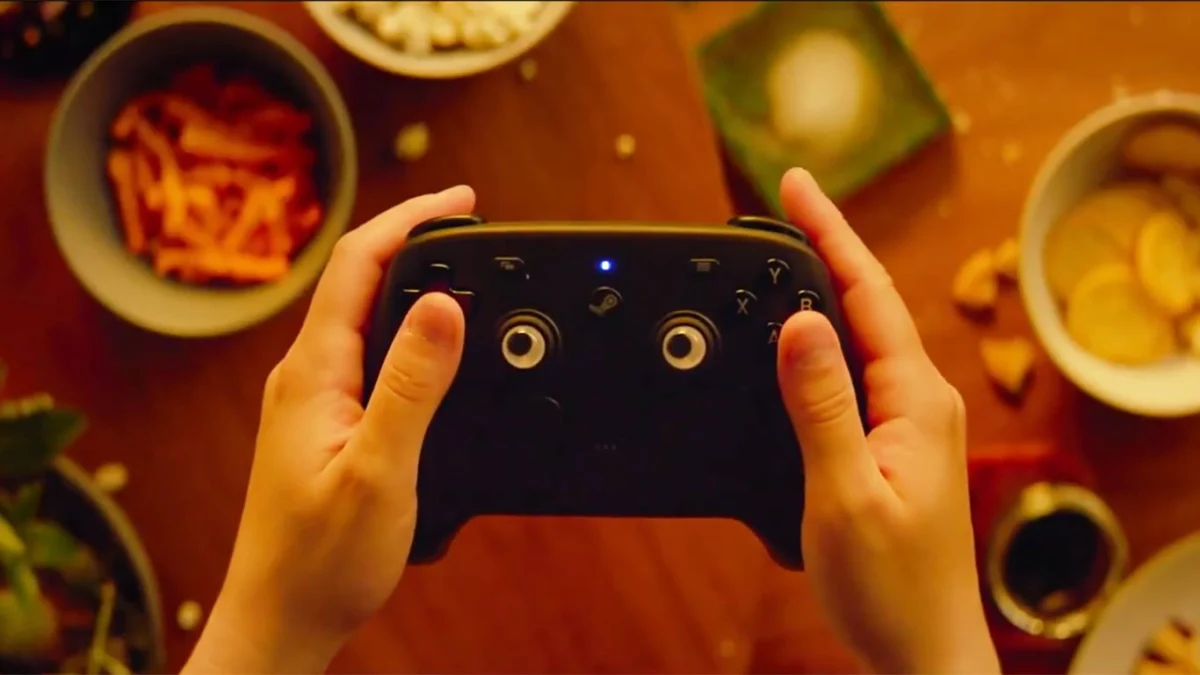
The headline news of the week is the official launch of the Valve Steam Controller, the first component of a three-part hardware ecosystem designed to revitalize PC-based XR. Priced at $99, the controller features integrated Infrared (IR) LEDs designed for seamless tracking with the upcoming "Steam Frame." Despite the excitement, the launch was solitary; Valve’s anticipated Steam Frame and Steam Machine were conspicuously absent due to a global shortage of high-performance RAM modules.
Simultaneously, the industry is buzzing over leaked renders of Samsung’s new smartglasses. Developed in partnership with Google and powered by Android XR, the device aims to challenge Meta’s dominance in the wearable space. However, early impressions of the hardware design suggest a utilitarian aesthetic that may struggle to compete with the fashion-forward approach of the Ray-Ban Meta collection.
The week also saw a surge in "doom-scrolling" within the XR community following reports that Apple may be pivoting away from the Vision Pro. Internal leaks suggest the dedicated Vision Pro hardware team has been reorganized, shifting focus toward lightweight smartglasses. While Apple continues to hire for visionOS roles, the narrative of the Vision Pro as a "flop" has gained significant traction in financial and tech circles.
Finally, the human cost of the industry’s current contraction was felt with reports of mass layoffs at Survios, the studio behind VR staples like Raw Data and Creed: Rise to Glory. This move signals a troubling trend for high-end VR content development as studios struggle to find sustainable margins in a fragmented market.

Chronology of Events: April 29 – May 4, 2026
- April 29-30, 2026: Reports begin to surface via MacRumors and Bloomberg’s Mark Gurman suggesting that Apple has significantly scaled back production of the Vision Pro. Rumors circulate that the M5-powered successor has been shelved in favor of a "smartglasses" form factor.
- May 1, 2026: News breaks via LinkedIn and industry insiders regarding Survios. Former employees report that the "majority" of the development team has been let go, casting doubt on the future of several unannounced projects and the long-term support for Alien: Rogue Incursion.
- May 2, 2026: Leaked renders and specifications for Samsung’s Android XR glasses appear on Android Headlines. The leak details a device heavily integrated with Google’s Gemini AI.
- May 4, 2026 (Star Wars Day): Valve officially releases the Steam Controller. The device sells out within hours despite payment processing hurdles. Valve issues a statement acknowledging the delay of the Steam Frame and Steam Machine.
- May 4, 2026: VITURE announces the immediate availability of the "VITURE Beast," its third-generation XR glasses, via Amazon and Best Buy, targeting the media consumption market.
Supporting Data and Technical Specifications
Valve’s New Entry: The Steam Controller
The Steam Controller is more than a standard gamepad; it is a bridge between traditional gaming and spatial computing.
- Price: $99 USD.
- Key Feature: Integrated IR LED array for 6-DOF (Degrees of Freedom) tracking via the Steam Frame’s sensors.
- Market Performance: Sold out in the first four hours of availability.
- Supply Chain Impact: Valve confirmed that the $99 price point was maintained by excluding onboard RAM, a component currently experiencing a 30% price surge due to server-side AI demand.
Samsung Smartglasses (Leaked)
The leaked data provides a clear picture of how Samsung intends to leverage the Google ecosystem:
- Processor: Qualcomm Snapdragon AR2 platform.
- Camera: 12MP sensor for environmental awareness and photography.
- Battery: 155mAh (estimated 2–4 hours of active use).
- Weight: Approximately 50 grams.
- Software: Android XR with deep Gemini AI integration for real-time multimodal assistance (visual search, translation, and proactive notifications).
VITURE Beast: The Consumer Choice
While Samsung and Apple aim for general-purpose computing, VITURE is doubling down on display quality:
- Field of View (FOV): 57 degrees (a significant jump from the industry standard of 45–50 degrees).
- Brightness: 1250 nits (optimized for outdoor use).
- Virtual Screen: Equivalent to a 174-inch display at 4 meters.
- Price: $549 USD.
Official Responses and Industry Rumors
Valve’s Strategic Pivot
In a rare move, Valve representatives expressed public disappointment regarding the staggered launch of their hardware suite. A spokesperson noted, "Obviously, we’re bummed that this is the state of things. We want the full ecosystem in the hands of users, but the volatility in the memory market forced our hand. The Controller is ready; the rest must wait until the pricing is sustainable for the consumer."
The Apple Debate: Disbandment vs. Relocation
The Apple story has created a rift among top analysts. Mark Gurman maintains that the Vision Pro team as a standalone entity is effectively "disbanded," with software engineers moving to the Siri/AI division and hardware leads moving to the "N421" smartglasses project.

However, counter-evidence suggests that Apple is still actively recruiting for specialized Vision Pro hardware roles. The prevailing theory among balanced observers, such as Daring Fireball, is that Apple is entering a "maintenance and refinement" phase for the headset—focusing on visionOS as a platform that will eventually span both headsets and glasses—rather than abandoning the category entirely.
Snap’s Impending Move
Amidst the uncertainty, Snap Inc. has confirmed that CEO Evan Spiegel will headline the Augmented World Expo (AWE) on June 16, 2026. Industry insiders believe this will be the venue for the official reveal of the next-generation AR Spectacles, which are rumored to be the first true consumer-grade AR glasses with integrated waveguide displays.
Implications for the XR Ecosystem
The events of this week suggest three major shifts in the immersive technology landscape:
1. The "Smartglasses" Hegemony
There is a clear industry-wide pivot away from bulky VR headsets toward "smart" eyewear. Meta, Samsung, Google, and now potentially Apple are all reallocating resources toward devices that look like traditional glasses but offer AI-driven overlays. The success of the Ray-Ban Meta glasses has proven that consumers value style and social acceptability over high-end immersion. Samsung’s "average" design, however, raises questions about whether a purely spec-driven device can succeed in a fashion-sensitive market.
2. Supply Chain Vulnerability
Valve’s inability to launch the Steam Frame due to RAM shortages highlights the fragility of the XR hardware market. As XR devices become more sophisticated, they compete directly with the AI and automotive industries for high-end semiconductors. This competition will likely keep hardware prices high and launch windows unpredictable for the foreseeable future.

3. The Content Crisis
The downsizing of Survios is a "canary in the coal mine" for VR content. If top-tier studios cannot sustain themselves, the "killer app" for high-end VR may never materialize. The industry is seeing a shift toward "lite" AR experiences—such as the Pixi greeting cards or media-consumption glasses like the VITURE Beast—which require less development capital than AAA VR titles but offer narrower utility.
4. AI as the "New Reality"
The integration of Gemini in Samsung’s glasses and the rumored shift of Apple’s software team to AI roles indicate that XR is no longer being viewed as a visual medium alone. It is becoming the primary interface for Artificial Intelligence. The "spatial" element of spatial computing is increasingly taking a backseat to the "computing" element—specifically, how AI can interpret the user’s world in real-time.
Conclusion
The first week of May 2026 has been a microcosm of the current XR era: characterized by brilliant hardware engineering (Valve), high-stakes corporate gambles (Apple), and the sobering reality of a tightening economy (Survios). While the sell-out of the Steam Controller proves that there is still a hungry enthusiast market, the broader industry is clearly in a state of metamorphosis. Whether this transition leads to the "death of VR" or the "birth of the AR era" will likely depend on the successes of the upcoming AWE announcements and the ability of giants like Samsung to deliver a device that consumers actually want to wear on their faces.


Leave a Comment