
The Bible, Unpacked: A Visual Journey Through Sacred Texts
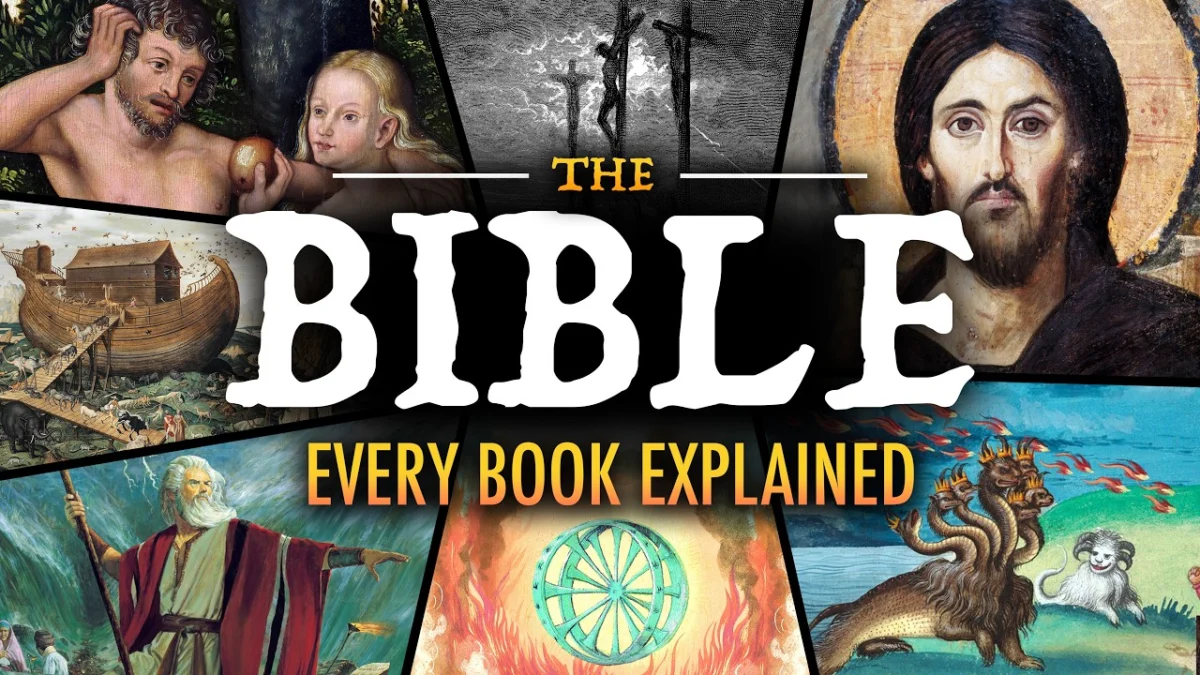
A New Two-Hour Video Offers a Comprehensive Overview of Scripture, Blending History, Art, and Narrative for a Modern Audience.
[City, State] – May 19, 2026 – For millennia, the Bible has served as a foundational text for billions worldwide, shaping cultures, inspiring art, and guiding moral frameworks. Yet, for many, its sheer volume and intricate narratives present a daunting obstacle to comprehension. A groundbreaking new video, released on the YouTube channel Hoch-el-aga, promises to demystify this monumental work, offering a comprehensive yet accessible overview of all 66 books within a digestible two-hour format.
Titled "Every Book of the Bible Explained in One Video," this ambitious project by creator Tommie Trelawny endeavors to provide viewers with a sweeping panorama of scripture, from the creation accounts of Genesis to the apocalyptic visions of Revelation. By weaving together historical context, theological concepts, and a rich tapestry of Western art, Trelawny aims to illuminate the often-obscure corners of the biblical narrative, making it engaging for both seasoned scholars and those encountering these texts for the first time.
The Scope of the Sacred: More Than Just a Book
The Bible, a collection revered by many as divinely inspired, is in reality a library unto itself. Comprising 39 books in the Old Testament and 27 in the New, its sheer scale has historically necessitated extensive study. While certain narratives, such as the parting of the Red Sea, the parables of Jesus, or the story of Adam and Eve, have permeated popular culture, many other books and their specific contributions to the overarching message remain less familiar.
"Whether we’re religious or not, we can all agree that the Bible isn’t just a book," states the original article. "In fact, it’s at least 66 of them… Even if you’ve never read a single page of the Bible, you may well have a decent idea of what quite a few of those books contain…" This sentiment underscores the challenge that Trelawny’s video seeks to address: bridging the gap between the popular recognition of biblical stories and a deeper understanding of the entire scriptural canon.
The video’s creator, Tommie Trelawny, has opted for a unique approach, leveraging the power of visual storytelling. By drawing upon the vast and intricate history of Western art, Trelawny connects the theological narratives of the Bible with centuries of artistic interpretation. This method not only adds a layer of aesthetic appeal but also provides a tangible link to how these stories have been understood and depicted across different eras, offering a visual primer for figures and events that might otherwise remain abstract.
A Chronological and Thematic Journey Through Scripture
The video’s structure is designed to provide a cohesive understanding of the Bible’s progression. While the exact chronological breakdown of the video is not detailed, it’s implied that Trelawny navigates the biblical timeline, offering insights into the historical and cultural contexts that shaped each book. This approach is crucial for understanding the development of religious thought and the evolving relationship between God and humanity as depicted in scripture.
The Old Testament, often characterized by its historical narratives, law, prophecy, and poetry, lays the groundwork for the New Testament’s focus on the life, teachings, death, and resurrection of Jesus Christ. The video likely moves through these distinct phases, highlighting key figures like Abraham, Moses, David, and the prophets, before transitioning to the Gospels, the Acts of the Apostles, the Epistles, and the prophetic conclusion of Revelation.
For viewers unfamiliar with the intricacies of biblical scholarship, this comprehensive overview is particularly valuable. It offers a "big picture" perspective, enabling individuals to contextualize isolated biblical references they may have encountered throughout their lives. The challenge, as the original article suggests, lies in synthesizing these diverse narratives into a coherent whole. The Bible, composed over centuries by numerous authors in various genres and languages, does not always present a seamlessly unified narrative. Trelawny’s work aims to facilitate this synthesis, allowing viewers to appreciate the "linguistic richness, surprising contradictions, and moral grandeur" of the text.
Supporting Data: The Power of Visual Interpretation
The decision to utilize Western art as a primary visual medium is a stroke of genius. Art history offers a rich repository of imagery that has been directly inspired by biblical narratives. From Michelangelo’s Sistine Chapel ceiling depicting the creation of Adam to Rembrandt’s portrayal of the Prodigal Son, these artworks serve as powerful mnemonic devices and interpretive lenses.
For instance, the video likely showcases how artists have depicted figures like Jonah, Job, or even the less commonly discussed characters like Lot’s wife. While many might recall the iconic imagery of Jonah being swallowed by a whale, or Job’s enduring suffering, the visual representations of other biblical figures might be less familiar. The use of art can bring these characters to life, imbuing them with emotional depth and historical context that might be absent in a purely textual explanation.
Furthermore, the video’s reliance on visual aids can cater to a modern audience accustomed to dynamic and engaging content. The juxtaposition of artistic masterpieces with Trelawny’s narrative commentary can create a compelling learning experience, transforming what might otherwise be a dry academic exercise into an immersive exploration. The two-hour runtime, comparable to a feature film, suggests a deliberate effort to maintain viewer engagement throughout the extensive coverage.
Implications: Accessibility and Critical Engagement
The release of this video has significant implications for how individuals engage with the Bible. In an era where information is readily available but often fragmented, a single, comprehensive resource can be invaluable. The video democratizes access to biblical knowledge, making it available to anyone with an internet connection, regardless of their educational background or religious affiliation.
For secular audiences, the video offers a window into a text that has profoundly influenced Western civilization. Understanding biblical narratives is crucial for comprehending literature, art, philosophy, and even political discourse throughout history. For religious individuals, it provides an opportunity to deepen their understanding of their faith, to revisit familiar stories with fresh perspectives, and to grapple with the complexities of scripture.
The original article touches upon a critical aspect of this engagement: the potential for viewers to question the coherence of the biblical text. "Whether or not you believe it contains the word of God, you could well feel ready, after Hoch-el-aga’s overview, to grapple with its text in all its linguistic richness, its surprising contradictions, and its moral grandeur – as well as its more-than-occasional strangeness." This highlights the video’s potential not just for edification but also for fostering critical thinking. By presenting the Bible in its historical and textual context, Trelawny’s work may encourage viewers to engage with its complexities and to form their own informed interpretations.
The video’s existence also speaks to the evolving landscape of educational content. YouTube, once primarily an entertainment platform, has become a powerful tool for learning, hosting lectures, documentaries, and educational series from institutions and independent creators alike. Hoch-el-aga’s "Every Book of the Bible Explained in One Video" stands as a testament to this trend, demonstrating how digital media can be harnessed to explore complex subjects in innovative and engaging ways.
Conclusion: A Modern Gateway to Ancient Wisdom
In a world saturated with information, Tommie Trelawny’s ambitious video project offers a much-needed anchor for understanding one of humanity’s most influential texts. By blending historical context, artistic interpretation, and clear narrative, "Every Book of the Bible Explained in One Video" promises to be an invaluable resource for anyone seeking to explore the depths of the Bible, regardless of their prior knowledge or beliefs. It represents a modern gateway to ancient wisdom, making the profound narratives and enduring messages of scripture accessible to a global audience in the 21st century.


Leave a Comment