
The $1.1 Billion Night: Christie’s Shatters Records with Newhouse and Gund Masterpieces
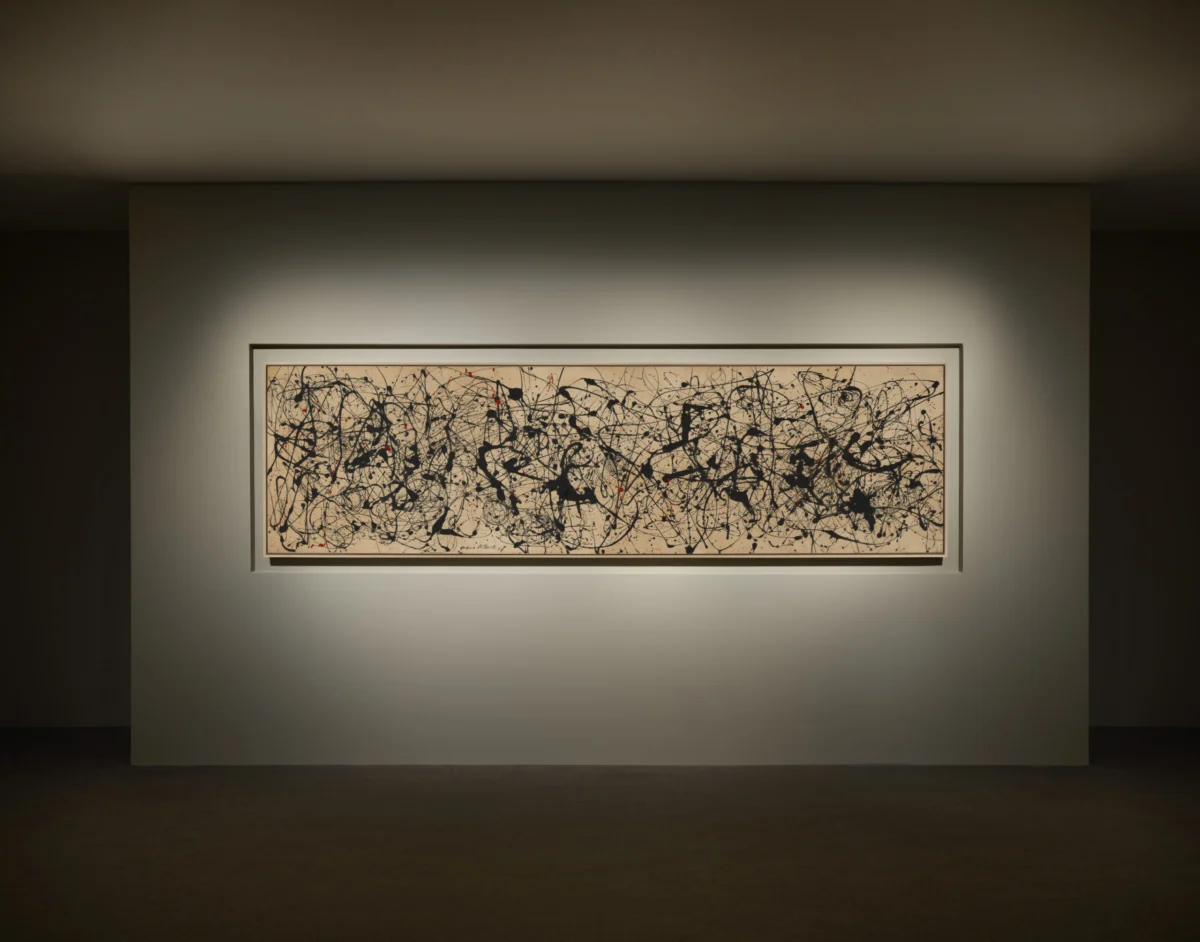
The global art market witnessed a historic recalibration on the evening of May 18, as Christie’s New York facilitated a staggering $1.1 billion in sales across two back-to-back auctions. The evening, characterized by "gasp-inducing" bidding wars and the dispersal of two of the most prestigious private collections in modern history, solidified the resilience of the blue-chip art market. From the rhythmic drips of Jackson Pollock to the ethereal bronze curves of Constantin Brâncuși, the night was less a standard auction and more a coronation of 20th-century mastery.
Main Facts: A Landmark Achievement in Auction History
The cumulative total of $1.1 billion was driven by a rare confluence of museum-quality provenance and "once-in-a-generation" availability. The evening was split into two distinct segments: a dedicated sale of the S.I. Newhouse collection and a broader Twentieth-Century Evening Sale featuring works from the estate of philanthropist Agnes Gund.
Key highlights from the evening include:
- Total Revenue: $1.1 billion, marking one of the highest-grossing single evenings in Christie’s history.
- Top Lot: Jackson Pollock’s Number 7A (1948), which sold for $181.2 million, nearly tripling the artist’s previous auction record.
- Sculpture Record: Constantin Brâncuși’s Danaïde (ca. 1913) achieved $107.6 million, setting a new benchmark for the Romanian modernist.
- Rothko’s Dominance: Mark Rothko’s No. 15 (Two Greens and Red Stripe) fetched $98.4 million.
- Alice Neel Record: A significant moment for female portraiture saw Neel’s Mother and Child (Nancy and Olivia) hammer at $5.7 million.
The success of the evening was underpinned by a heavy use of third-party guarantees, ensuring that the most valuable lots would sell regardless of the room’s temperature. However, the final prices far exceeded those safety nets, signaling a deep, competitive hunger among the world’s elite collectors.
Chronology of the Evening: From Newhouse to Gund
The S.I. Newhouse Collection (6:00 PM – 7:30 PM)
The night began with the highly anticipated "trove" of S.I. Newhouse, the legendary Condé Nast chairman who passed away in 2017. Known for his uncompromising eye and "all-killer, no-filler" approach to collecting, the Newhouse segment set an electric tone.
The centerpiece was Jackson Pollock’s Number 7A. The work entered the room with a $100 million guarantee. Bidding opened with immediate intensity, moving in swift $1 million increments. As the price crossed the $150 million mark, only two primary bidders remained—one in the room and one on the phone via a Christie’s specialist. When the hammer finally fell at $181.2 million (including fees), the room erupted in applause, acknowledging the birth of a new Pollock price floor.
Immediately following the Pollock, the focus shifted to Brâncuși’s Danaïde. The bronze-and-gold-leaf sculpture, an icon of early 20th-century minimalism, saw a five-minute battle between European and Asian collectors before settling at $107.6 million.
The Twentieth-Century Evening Sale (7:45 PM – 9:30 PM)
As the Newhouse white-glove momentum carried over, the second half of the evening focused on the estate of Agnes Gund, the beloved MoMA President Emerita who died in 2025. While the Newhouse sale was defined by power and scale, the Gund lots were defined by intellectual rigor and historical sensitivity.

Mark Rothko’s No. 15 (Two Greens and Red Stripe) (1964) served as the anchor for this segment. The painting, a somber yet luminous example of Rothko’s late-period mastery, climbed steadily to $98.4 million. This was followed by Alice Neel’s Mother and Child (Nancy and Olivia), which broke the artist’s previous record, proving that the market for female artists of the 20th century is undergoing a long-overdue correction.
Supporting Data: Analyzing the Record-Breakers
To understand the magnitude of the May 18 sales, one must look at the data relative to historical performance and inflation.
The Pollock Paradigm Shift
Prior to this sale, Jackson Pollock’s auction record stood at $61.2 million, set in 2021 for a five-foot-square canvas. Even when adjusted for inflation (approximately $73 million), the $181.2 million achieved for Number 7A represents a 148% increase in value. The difference lies in the scale and period: Number 7A is an eleven-foot-wide "drip" painting from 1948, the artist’s most coveted year.
Brâncuși’s Ascent
Constantin Brâncuși’s market has always been constrained by extreme scarcity. His previous record of $71.2 million (set in 2018) was considered a ceiling for the artist. The $107.6 million price tag for Danaïde (approximately $94 million in inflation-adjusted 2018 dollars) shows a genuine appreciation in value beyond currency fluctuations, confirming Brâncuși’s status alongside Picasso and Giacometti in the "nine-figure club."
Provenance Premium
The "Newhouse Effect" and the "Gund Factor" added an estimated 15-20% premium to the hammer prices. Statistical analysis of the evening showed that lots with "celebrity" provenance saw 3.5 times more bidding activity than standard consignments.
Official Responses: Expert Commentary
The reaction from the art advisory community was one of unified astonishment mixed with a sense of "market vindication."
Stephanie Armstrong, managing partner of the art advisory Beaumont Nathan, summarized the Newhouse portion of the evening to the New York Times with succinct praise: “The sale was all killer with not much filler.” Her comment reflected a sentiment that the market had grown weary of "filler" lots and was now pivoting exclusively toward works with unimpeachable quality.
Philip Hoffman, CEO of the Fine Art Group, provided a broader market perspective in an interview with Artnet News. “Tonight reinforced everything we believe about the enduring power of iconic, museum-quality works at the top of the market,” Hoffman stated. He emphasized that the "depth of demand" remains extraordinary when the "right work comes to auction with the right conditions."

Christie’s executives, meanwhile, pointed to the global nature of the bidding. While the works were physically in New York, the bidding data indicated significant participation from the Middle East and East Asia, suggesting that the $1.1 billion total was a product of truly globalized capital.
Implications: What This Means for the Future Art Market
The results of the May 18 sales offer several critical insights into the trajectory of the high-end art market for the remainder of the decade.
1. The Flight to Quality
The $1.1 billion total suggests that the "middle market" may be struggling, but the "trophy market" is stronger than ever. Investors and ultra-high-net-worth individuals (UHNWIs) are increasingly viewing 20th-century masterpieces as "safe-haven assets," comparable to gold or prime real estate, particularly in volatile economic climates.
2. The Power of the "Single-Owner" Sale
The success of the Newhouse and Gund estates confirms that single-owner sales remain the most effective vehicle for achieving record prices. The narrative of a collector’s life and their personal "eye" creates a brand value that a standard mixed-consignment auction cannot replicate. We can expect auction houses to compete even more aggressively for these estates in the coming years.
3. Record-Setting as the New Normal
With Jackson Pollock now firmly in the $180 million range, the psychological barrier for 20th-century American art has been moved. This will likely embolden other collectors to consign works that were previously "too valuable to sell," potentially leading to a new wave of masterpieces entering the market.
4. Philanthropic Legacy and Market Value
The sale of the Agnes Gund collection also highlighted the intersection of the market and social justice. As Gund’s estate proceeds often support her "Art for Justice" fund and other initiatives, the high prices achieved for Rothko and Neel serve a dual purpose: validating the artist’s market and fueling philanthropic endeavors. This "ethical provenance" is becoming an increasingly attractive feature for a new generation of socially conscious collectors.
Conclusion
The May 18 sales at Christie’s will be remembered as the night the $1 billion ceiling was not just reached, but shattered with room to spare. By successfully placing works by Pollock, Brâncuși, and Rothko into the hands of new stewards, Christie’s has demonstrated that while the broader economy may fluctuate, the appetite for the "sublime" remains insatiable. As the art world looks toward the next major season, the $181.2 million Pollock stands as a towering monument to the enduring—and appreciating—value of human creativity.


Leave a Comment