
The First Anglo-Boer War: A Precursor to a Century of Conflict in Southern Africa
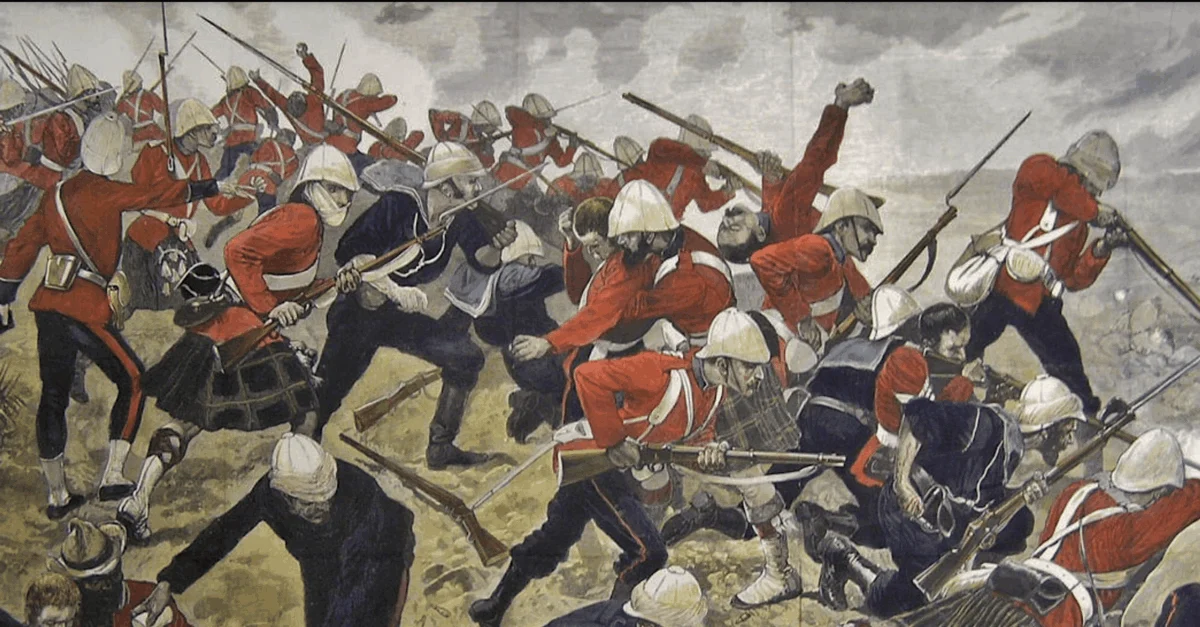
Pretoria, South Africa – March 23, 1881 – In a surprising turn of events, provisional peace terms were signed today between Great Britain and the Boer Republic of Transvaal, effectively ending the First Anglo-Boer War, also known as the Transvaal War (1880-1881). The conflict, which pitted the mighty British Empire against determined Boer settlers fighting for their independence, concluded with a decisive Boer victory on the battlefield, largely attributed to their superior marksmanship and intimate knowledge of the rugged South African terrain, contrasted with what many observers have called poor British generalship.
This short but impactful war saw the Boers reclaim their autonomy after Britain’s unilateral annexation of Transvaal in 1877. However, the peace settlement, characterized by contentious ambiguities regarding British suzerainty, merely postponed the inevitable. The underlying rivalries over land, resources, and sovereignty in Southern Africa would continue to fester, ultimately erupting into the far larger and more devastating Second Boer War less than two decades later (1899-1902).
The Genesis of Rivalry: British and Boer Competition in Southern Africa
The strategic importance of Southern Africa first drew European powers to its shores. Great Britain established its Cape Colony in 1806, seizing the crucial Cape of Good Hope – a vital maritime waypoint for ships traversing between Britain and its burgeoning Asian possessions, particularly British India. By 1843, another British outpost, Natal, had been founded, further solidifying the Empire’s presence. Yet, British ambitions in the region faced formidable competition, not only from indigenous African communities but also from the Boers.
The Boers, a distinct community of White settlers primarily of Dutch, German, and French Huguenot ancestry, had first arrived in the Cape in the 17th century under the aegis of the Dutch East India Company. The name "Boer" itself, meaning "farmer," aptly reflected their agrarian lifestyle. They also came to be known as Afrikaners, speaking their unique language, Afrikaans, a derivative of Dutch. These settlers cultivated a rugged, independent-minded, and deeply Calvinist identity, which, over generations, developed into a trenchant anti-British sentiment. Their worldview was starkly defined by a belief in absolute racial superiority over Africans, whom they viewed primarily as a source of cheap labor. Historical accounts frequently describe their frontier interactions as "uncompromising," ruling "by the whip and the gun" (Pakenham, 45).
The Great Trek and the Formation of Boer Republics
The 1830s marked a pivotal period, witnessing the "Great Trek" – an epic migration of over 14,000 Boers away from the British-controlled Cape Colony. This exodus was fueled by a confluence of factors: the British outlawing of slavery in 1833, a practice extensively used on Boer farms, and mounting pressure on land and resources due to significant population growth around the Cape. Seeking new territories where they could preserve their way of life and maintain their independence, these Voortrekkers ("pioneers") ventured inland. From these newly settled lands, two independent Boer republics emerged: the Transvaal, founded in 1852, and the Orange Free State, established in 1854.
The British government, initially wary, officially recognized these Boer states through two key agreements: the 1852 Sand River Convention for Transvaal and the 1854 Bloemfontein Convention for the Orange Free State. This recognition, however, did little to quell the underlying tensions, as the Boers fiercely valued their hard-won independence and harbored no desire to be absorbed into the expanding British Empire.
The Diamond Rush and Escalating Imperial Ambitions
Southern Africa, largely rural and sustained by modest agricultural trade, underwent a dramatic transformation following the 1867 discovery of vast diamond deposits at Kimberley in Griqualand. This sudden wealth ignited a fresh wave of British imperial expansion. Griqualand was swiftly annexed and renamed West Griqualand, becoming a crown colony in 1871. The dream of many senior British colonialists, particularly figures like Lord Carnarvon, the Colonial Secretary, was to consolidate the various disparate colonies and independent states into a single, powerful federation of South Africa. This vision, however, directly clashed with the Boers’ unwavering commitment to their sovereign republics.
Beyond the formal boundaries, thousands of Boers resided within the British Cape Colony and Natal, creating a complex web of allegiance and identity. A significant point of contention was the starkly differing policies towards native Africans. While the British, at least ostensibly, sought to maintain peaceful relations with African chiefs (though not hesitating to seize land and resources when convenient), the Boers openly regarded Africans as a disposable labor force and were constantly pushing their frontiers, leading to frequent conflicts and cattle raids against indigenous peoples. London viewed Boer actions as a destabilizing force in the region, while the Boers deeply resented imperial interference in what they considered their internal affairs. Adding to this resentment was the increasing influence of Anglo-Saxon culture on their republics, both of which hosted substantial British populations.
The British Takeover of Transvaal: A Strategic Maneuver
By the mid-1870s, Lord Carnarvon, a fervent proponent of imperial federation, began to actively pursue a more aggressive expansionist policy in Southern Africa. He articulated his belief that a federal South Africa would yield substantial benefits, stating: "Federation would greatly improve and cheapen the administration of affairs in almost every branch and greatly lessen the probability of a demand for aid in the shape of Imperial money or troops" (quoted in Smith, 87). For Carnarvon, a unified South Africa represented administrative efficiency and reduced imperial expenditure.
A critical juncture arrived in 1877. The most significant impediment to Britain’s federal dream was the powerful Zulu Kingdom, a formidable state boasting a large and highly effective army. The Zulus posed a considerable threat to the neighboring Transvaal, which was itself in a precarious state. On April 12, 1877, capitalizing on Transvaal’s vulnerability, the British unilaterally annexed the Boer state. The Boers, facing imminent threats from both the Zulus and the Pedi tribe, and with their state teetering on the brink of financial collapse, found themselves in a position of forced compliance. Transvaal had effectively bankrupted itself through incessant frontier wars and a failed railway project intended to connect Pretoria, its capital, to Mozambique, leaving its treasury with a paltry balance of 12 shillings and 6 pence.
The British takeover was surprisingly swift and relatively bloodless, executed by a mere handful of officials and 25 police officers. A month later, a British battalion arrived, serving as a clear deterrent to any Boer attempts to resist. The British immediately injected £100,000 into the depleted Transvaal treasury, established a telegraph line, and ceremoniously raised their flag over the Volksraad (parliament) building, signaling the end of Boer independence.
Simmering Resentment and the Road to Rebellion
The British victory over the Zulu Kingdom in 1879, which led to Zululand becoming a crown colony in 1887, inadvertently strengthened the Boers’ position. With the formidable Zulu threat neutralized by their imperial overlords, the Boer republics could now focus their energies entirely on their struggle against the British. By 1880, the Transvaal Boers were unequivocally demanding the restoration of their independence, a plea met with a firm refusal from the British government.
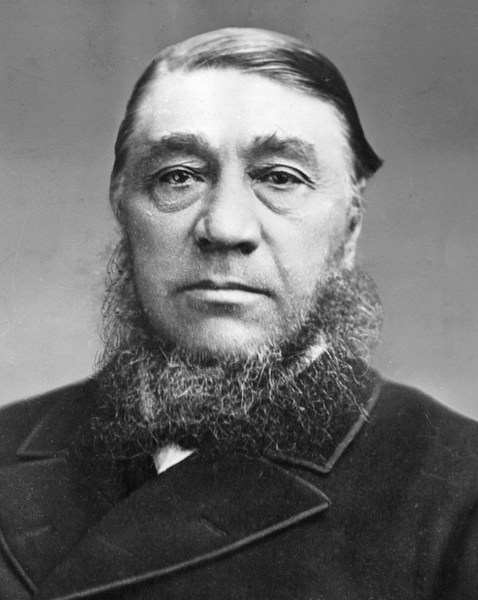
Despite the initial annexation’s relative ease, Boer resentment had been steadily building. They viewed British rule as an oppressive burden, particularly the obligation to pay taxes to the very power that had stripped them of their sovereignty. A delegation, led by the influential vice president of Transvaal, Paul Kruger (1825-1904), traveled to London to formally plead for political autonomy. Bearing a petition signed by an impressive 6,591 Boer farmers, the mission was politely but firmly rebuffed, their pleas for independence falling on deaf ears.
Back in Transvaal, discontent mounted. Boers were dismayed that the bulk of British investment in their "new colony" had been channeled into the telegraph network, with little to no funds allocated for essential infrastructure such as roads, bridges, or hospitals. The legislative council, governing the state from Pretoria, was conspicuously packed with British officials and conspicuously devoid of Boer delegates, further alienating the local population. In response, many Boer farmers threatened to boycott British-owned businesses and openly withhold their tax obligations, signaling a brewing storm.
An early act of defiance saw a gathering of 1,000 armed Boers at Wonderfontein, threatening to escalate the situation. The British general in charge of Transvaal, the seasoned veteran Garnet Wolseley (1833-1913), swiftly had the leaders arrested. However, in an epic misreading of the volatile local situation, Wolseley, prior to his return to England, recommended reducing the British military presence in Natal and Transvaal from six battalions to four, a decision that would prove strategically disastrous.
War Breaks Out: Boer Marksmanship and Strategic Acumen
The spark that ignited the full-scale rebellion came in November 1880, from what seemed like a minor colonial incident: the arrest of a Boer farmer named Bezuidenhout for non-payment of taxes. When the local sheriff attempted to seize Bezuidenhout’s farm wagons in lieu of the outstanding dues, a group of armed Boers, led by the future military commander Piet Cronjé (1836-1911), intervened to defend him. The confrontation quickly escalated.
On December 16, 1880, shots were exchanged between a Boer commando and the British garrison at Potchefstroom, marking the formal commencement of hostilities. Later that month, approximately 5,000 armed Boers convened at Paardekraal. The assembly was galvanized by impassioned speeches of defiance delivered by Paul Kruger and the fiery clergyman-lawyer Edward Jorissen. A unanimous decision was reached: a formal declaration of independence would be issued, and the old Boer parliament would be immediately restored.
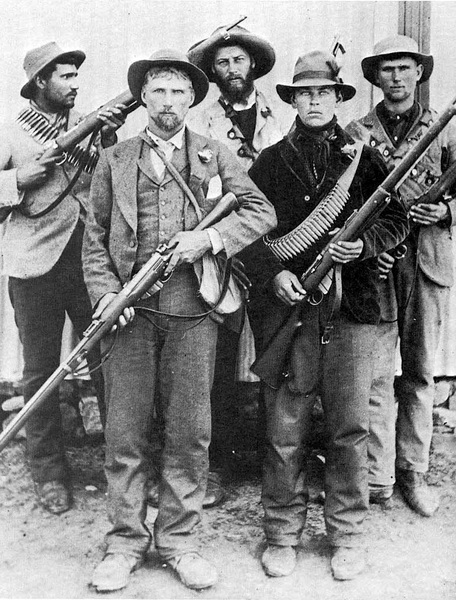
The Boer strategy was simple yet effective: small, agile groups of armed Boers would engage and pin down the various isolated British garrisons scattered across Transvaal, while a larger, more concentrated force would move to the border with Natal to intercept and prevent any British reinforcements from entering the territory. The Boers were not professional soldiers in the traditional sense; they lacked formal military training and artillery. However, they possessed excellent rifles, were highly proficient marksmen, and crucially, had an unparalleled knowledge of the local terrain, which they leveraged to their immense advantage. Their numerical superiority, if deployed rapidly, was also a key asset.
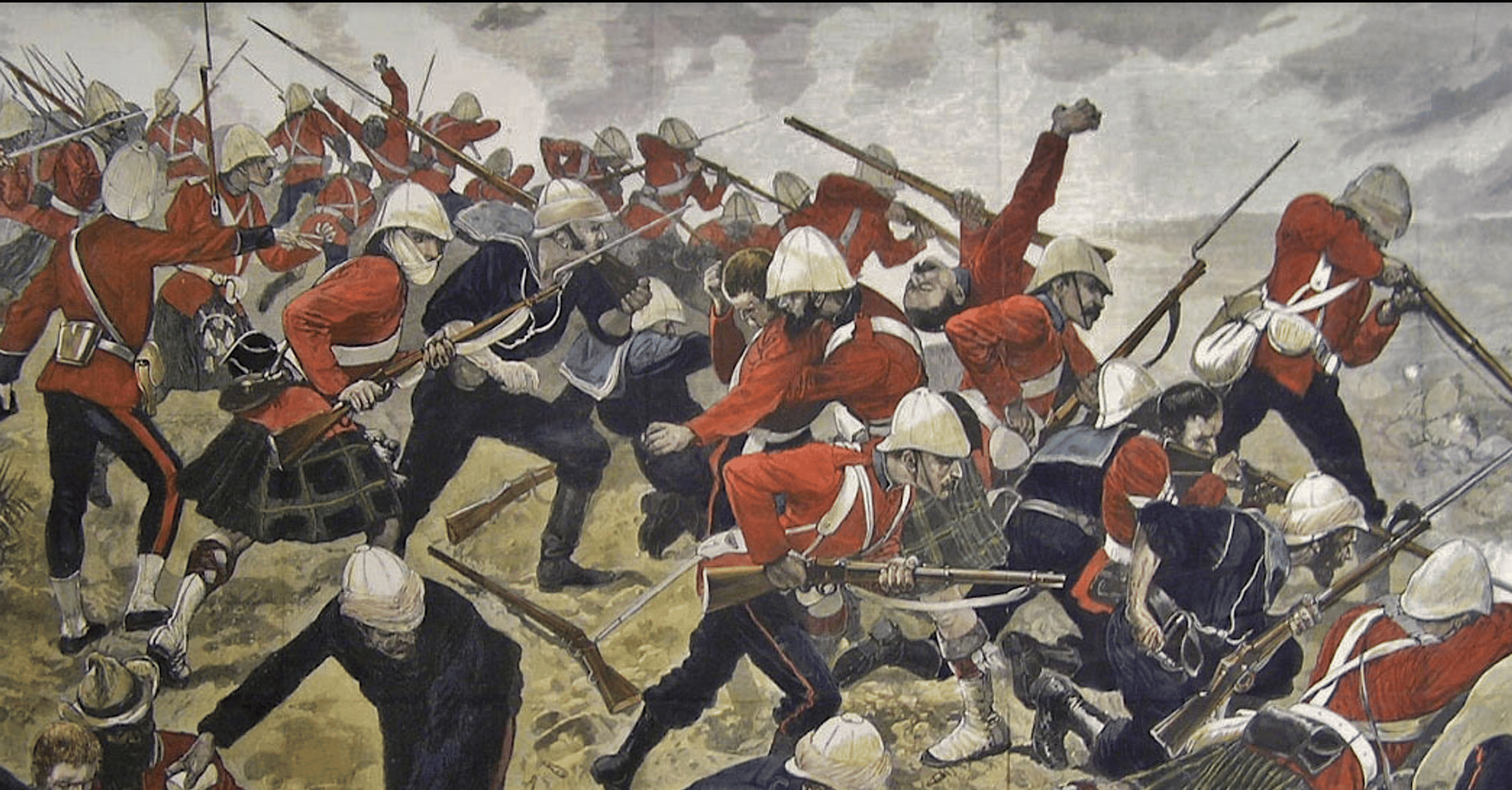
The first significant engagement occurred on December 20, 1880, at Bronkhorst Spruit. A British column of approximately 250 soldiers, advancing towards Pretoria, was warned by Boer commandos to turn back. Upon the commanding officer’s refusal, the column was ambushed. The Boers, utilizing the natural contours of the landscape, positioned themselves so effectively that the British could not even discern the source of the incoming fire. Within a short, brutal engagement, the British sustained devastating casualties, with one-third of their force dead and another third wounded. The column was forced to surrender, yielding a valuable cache of guns and ammunition to the Boers. A second decisive Boer victory followed at Laing’s Nek on January 28, 1881, further demoralizing the British forces.
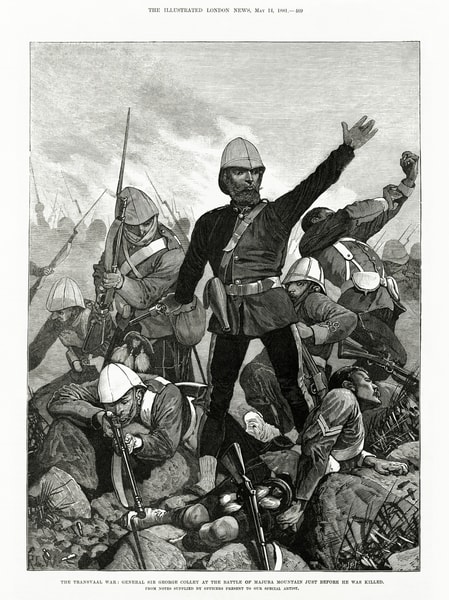
The nadir of British military fortunes arrived on February 27, 1881, at the Battle of Majuba Hill in northern Natal. Major-General George Colley led a 600-man British column in an attempt to ascend Majuba Hill with the intention of attacking a Boer camp situated on the other side. However, the Boers, displaying remarkable tactical prowess, turned the tables. They launched an audacious uphill assault, effectively sniping at the British troops who had failed to prepare any trench defenses. The British forces suffered heavy casualties and retreated in disarray and panic. General Colley himself remained on the hill, where he was tragically shot in the forehead as he walked towards the enemy, a profound symbol of the British defeat.
Armistice and the Ambiguities of Peace
The Battle of Majuba Hill was not merely a tactical defeat; it sent shockwaves through the British government. Compounding the military setback were widespread rumors that Boers in the Orange Free State and even within the Cape Colony were prepared to join the Transvaal rebellion, threatening a much larger, uncontrollable conflict. A purely military solution now seemed increasingly untenable and unlikely to address the root causes of the war. Crucially, Paul Kruger, recognizing the opportunity, expressed willingness to accept an armistice.
The newly elected British Prime Minister, William Gladstone (1809-1898), held a political philosophy that eschewed entanglement in colonial wars where vital strategic interests were not unequivocally at stake. Furthermore, his government was deeply preoccupied with significant political unrest and troubles ongoing in Ireland. Consequently, despite impassioned calls from some quarters for revenge for the humiliation at Majuba Hill, Gladstone made the pragmatic decision not to dispatch a larger British army to South Africa. Instead, he opted for peace, signing provisional terms with the Transvaal Boers on March 23, 1881. As the historian I. Knight succinctly notes, "The Transvaal War achieved none of Britain’s aims, either militarily or politically, and it was the only consistently unsuccessful campaign waged by the British army during the Victorian period" (39).
The formal peace process culminated in two conventions: the Pretoria Convention in August 1881 and the London Convention in February 1884. These agreements ostensibly restored Boer independence. However, the peace was fraught with ambiguity, a "recipe for a future disaster." The 1881 Convention’s preamble explicitly asserted British suzerainty, particularly over foreign policy, a point the British interpreted as retaining ultimate control. Additionally, a clause prevented Transvaal from undertaking any actions that might economically harm other British colonies in Southern Africa. While the Boers believed they had regained their full independence, the British viewed the concession as a limited form of autonomy, ensuring their strategic influence. This fundamental divergence in interpretation laid the groundwork for future conflict.
Aftermath and the Path to the Second Boer War
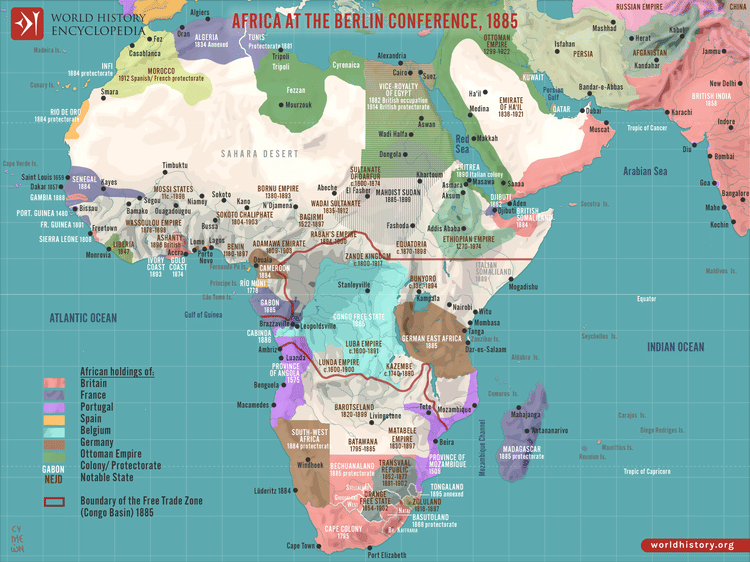
Despite the humiliating defeat in the First Anglo-Boer War, the British Empire’s expansionist drive in Southern Africa continued unabated, fueled by the broader "Scramble for Africa." Britain swiftly moved to secure more territories, acquiring the Basutoland Protectorate (modern Lesotho) in 1884 and the Bechuanaland Protectorate (modern Botswana) in 1885. Swaziland and Pondoland were subsequently added to Britain’s burgeoning collection of Southern African states in 1893 and 1894, respectively.
However, the most significant development in the region came in 1886 with the remarkable discovery of massive gold deposits at Witwatersrand, located within the very heart of the Transvaal Republic. This discovery irrevocably transformed the economic and strategic landscape, making the Transvaal an immensely valuable prize.
Perhaps inevitably, the unresolved tensions and the lure of unparalleled mineral wealth ignited another, far more brutal conflict: the Second Anglo-Boer War, which erupted in 1899. This second conflict was conducted on a vastly larger scale, drawing in tens of thousands of troops from across the British Empire. Hostilities initially centered on the political rights of non-Boer Whites (Uitlanders) in Transvaal, many of whom were British and denied suffrage by the Boer government, and the deep suspicion caused by the failed Jameson Raid of December 1895 – an unofficial, British-backed attempt at a coup d’état within the Transvaal.
The Second Boer War was a definitive struggle to determine who would ultimately control Southern Africa and its immense resources. While the British eventually won the war, their victory came at a terrible cost, both in lives and reputation. The widespread use of scorched-earth tactics and the internment of Boer civilians in concentration camps drew international condemnation and severely discredited the Empire. Ultimately, the two Boer Republics were formally annexed, and in 1910, they were united with the various British colonies to form the Union of South Africa, laying the foundation for a new, complex chapter in the region’s history. The First Anglo-Boer War, therefore, stands as a crucial early warning, a harbinger of the greater conflicts and enduring legacies of imperialism that would shape the destiny of Southern Africa for decades to come.


Leave a Comment