
The Pen as a Scalpel: Editorial Cartoonists Dissect the 2026 Political and Environmental Landscape
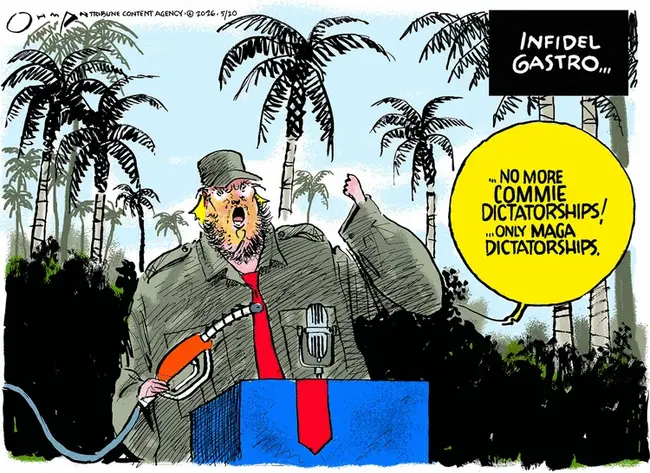
Introduction: The Intersection of Satire and Sovereignty
In the late spring of 2026, the American political landscape finds itself at a crossroads of executive overreach, environmental scarcity, and a fundamental debate over the nature of justice. As the nation grapples with a potential military conflict in the Middle East and the domestic fallout of a "weaponized" justice system, editorial cartoonists have moved beyond mere caricature to provide a visceral, often scathing critique of the current administration.
The primary narrative currently dominating the national discourse involves a perceived disconnect between the executive branch’s military ambitions and the legislative branch’s attempts to reclaim constitutional authority. Concurrently, domestic crises—ranging from the depletion of critical water resources in the West to allegations of insider trading within the highest echelons of power—have created a climate of skepticism. Through the work of veteran illustrators such as Michael Ramirez, Pat Bagley, and Jack Ohman, the underlying tensions of the 2026 election cycle are being brought into sharp, often uncomfortable focus.
Chronology of Recent Developments
The current state of affairs is the result of a series of escalations that began in late 2024 and have reached a fever pitch in the second quarter of 2026.
- January 2025 – March 2026: Following a campaign centered on a "non-interventionist" platform, the administration pivoted toward a more aggressive stance regarding Iran. Despite the existence of multinational treaties designed to monitor nuclear proliferation, the executive branch unilaterally withdrew from oversight agreements, citing unsubstantiated intelligence regarding Iranian bomb development.
- April 2026: Environmental tensions in the American West reached a breaking point as the Box Elder data center project in Utah was fast-tracked. This occurred despite record-low snowpack levels and the continued evaporation of the Great Salt Lake.
- May 19, 2026: In a rare display of bipartisan defiance, the U.S. Senate voted on a War Powers Resolution intended to "shut off the spigot" of funding for unauthorized military operations. This legislative move coincided with a flurry of editorial responses criticizing the administration for asking taxpayers to fund a "war they didn’t order."
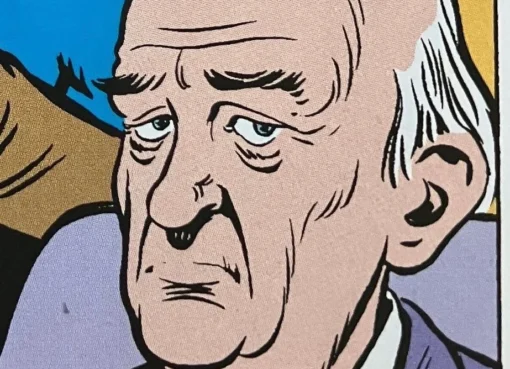
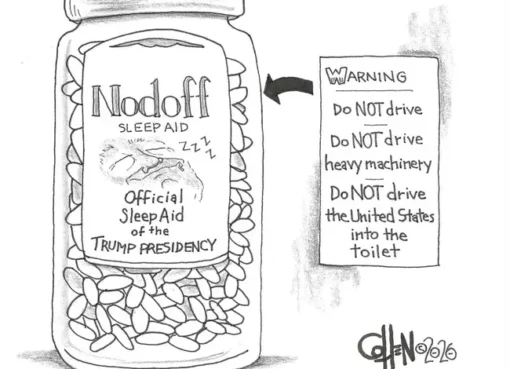
- May 20, 2026: Public discourse shifted toward the mental acuity of the President, following a series of public appearances that observers characterized as "visible sunsetting." This sparked a renewed debate over the Goldwater Rule and the ethical boundaries of psychiatric commentary on public figures.
- Late May 2026: The administration announced a controversial plan to not only pardon individuals convicted in the January 6 Capitol riot but to provide them with financial restitution, characterizing them as victims of a "weaponized justice system."
Supporting Data: Environmental and Ethical Metrics
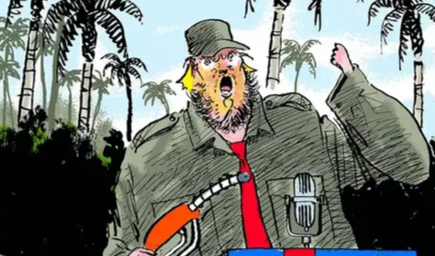
To understand the gravity of the critiques leveled by cartoonists like Pat Bagley and Scott Stantis, one must examine the underlying data driving their work.
The Western Water Crisis
The opposition to the Box Elder data center is rooted in hydrological reality. Data centers are notoriously water-intensive, requiring millions of gallons daily for evaporative cooling systems.
- The Ogallala Aquifer: Recent geological surveys indicate that this "fossil aquifer" is being depleted at a rate far exceeding its recharge capacity. Once exhausted, the agricultural backbone of the High Plains faces collapse.
- The Colorado River Compact: With the snowpack at 40% of historical averages in 2026, the states along the Colorado River are engaged in legal battles over water rights that haven’t been seen since the early 20th century.
- The Great Salt Lake: Experts warn that as the lake bed is exposed, toxic arsenic dust poses a significant health risk to the Salt Lake City metropolitan area, making water-intensive industrial projects like data centers a point of extreme local contention.
Financial Anomalies and Insider Trading
Analysis by investigative journalists, including Jud Legum, has highlighted a pattern of "astonishingly successful" proposition bets and stock trades involving companies frequently praised in executive speeches.
- The "Trump Effect" on Markets: Data shows a statistically improbable correlation between presidential endorsements of specific tech and energy firms and a surge in investment by individuals within the executive’s inner circle just 24 to 48 hours prior to the public statements.
- Historical Precedent: Comparisons are being drawn to the Teapot Dome Scandal of the 1920s. However, modern critics note that while the Harding administration’s scandals led to a sense of national shame, the 2026 landscape is characterized by a "shameless" dismissal of ethical norms.
Official Responses and Legislative Countermeasures
The response from the administration has been one of consistent deflection, often framing legal and legislative challenges as partisan "witch hunts."
The Senate’s War Powers Resolution
The Senate’s May 19th vote serves as a significant constitutional check. Legislators argued that the administration’s push toward conflict with Iran violates the spirit of the pledge to keep the United States out of foreign wars. The resolution seeks to restrict the President’s ability to commit troops or resources without a formal declaration of war, a power that has been increasingly eroded over several decades.
The Justice Department and the "Pardon Policy"
The proposal to repay January 6 convicts has met with fierce resistance from legal scholars and the Department of Justice (DOJ). Critics argue that this move undermines the "due process" afforded to the defendants, many of whom were convicted by juries of their peers or entered voluntary guilty pleas. The administration’s rhetoric suggests that the legal system itself is the transgressor, a stance that Jack Ohman and other satirists have labeled as reductio ad absurdum—taking an argument to its most absurd conclusion to highlight its fallacy.

International Comparisons
The American handling of high-profile corruption and abuse cases stands in stark contrast to recent developments in the United Kingdom. While the U.S. has seen delays in addressing the grievances of victims associated with the Jeffrey Epstein case, British authorities have moved with relative speed to hold figures like Prince Andrew and Peter Mandelson to account. This disparity has fueled the perception that the American "weaponized justice system" is selective in its targets, protecting the powerful while punishing political dissidents.
Implications: The Erosion of the Social Contract
The collective body of work produced by today’s editorial cartoonists suggests a deepening crisis of legitimacy within the American government. The implications of these ongoing conflicts are manifold:
- Constitutional Crisis: The tension between the Senate and the Executive over war powers suggests a looming showdown that could redefine the separation of powers for the mid-21st century. If the executive continues to bypass legislative "spigots," the very concept of representative democracy is at risk.
- Environmental Migration: In the West, the prioritization of corporate data centers over human water consumption may lead to significant population shifts. As the Great Salt Lake becomes a source of toxic pollution and the Ogallala Aquifer runs dry, "water refugees" may become a domestic reality.
- The 2026 Midterms and Beyond: The November elections are shaping up to be a referendum on the President’s mental fitness and ethical conduct. The "Goldwater Rule," which prevents psychiatrists from diagnosing public figures without an examination, is being tested by the sheer visibility of the President’s perceived decline.
- Moral Hazard in the Legal System: By pardoning and compensating individuals who attempted to subvert the 2020 election, the administration may be creating a "moral hazard," signaling that violent political action will be rewarded rather than punished. This has profound implications for the stability of future transitions of power.
Conclusion: The Mirror of Satire
As Mike Peterson notes in his analysis of the day’s cartoons, the current climate is one where "shut up and hand over your wallets" has become an unspoken policy. Whether it is the literal cost of an unauthorized war or the environmental cost of a data center in a desert, the American public is being asked to pay for "orders" they never placed.
The work of Ramirez, Bagley, Ohman, and others serves as a vital democratic utility. In an era of "sycophants" and "insider trading," these artists provide the "nuanced answer" that the administration avoids. As the nation moves toward November, the question remains whether the voters will respond to these warnings with the same vigor as the cartoonists who pen them. The "dismal litany" of current events may be exhausting, but as these illustrations prove, the ability to find "humorous sarcasm" in the face of a crisis remains a powerful tool for civic engagement. The lightning of public accountability has yet to strike, but the clouds gathered over the 2026 political landscape suggest a storm is inevitable.


Leave a Comment