
The Architect of Global Comics Scholarship: Remembering the Life and Legacy of John A. Lent (1936–2026)
The world of international media studies and comics scholarship has lost its most prolific and fiercely independent pioneer. John A. Lent, the man who single-handedly "bootstrapped" an entire academic discipline into existence and championed the voices of marginalized creators across the globe, died on Saturday, May 16, 2026. He was 89.
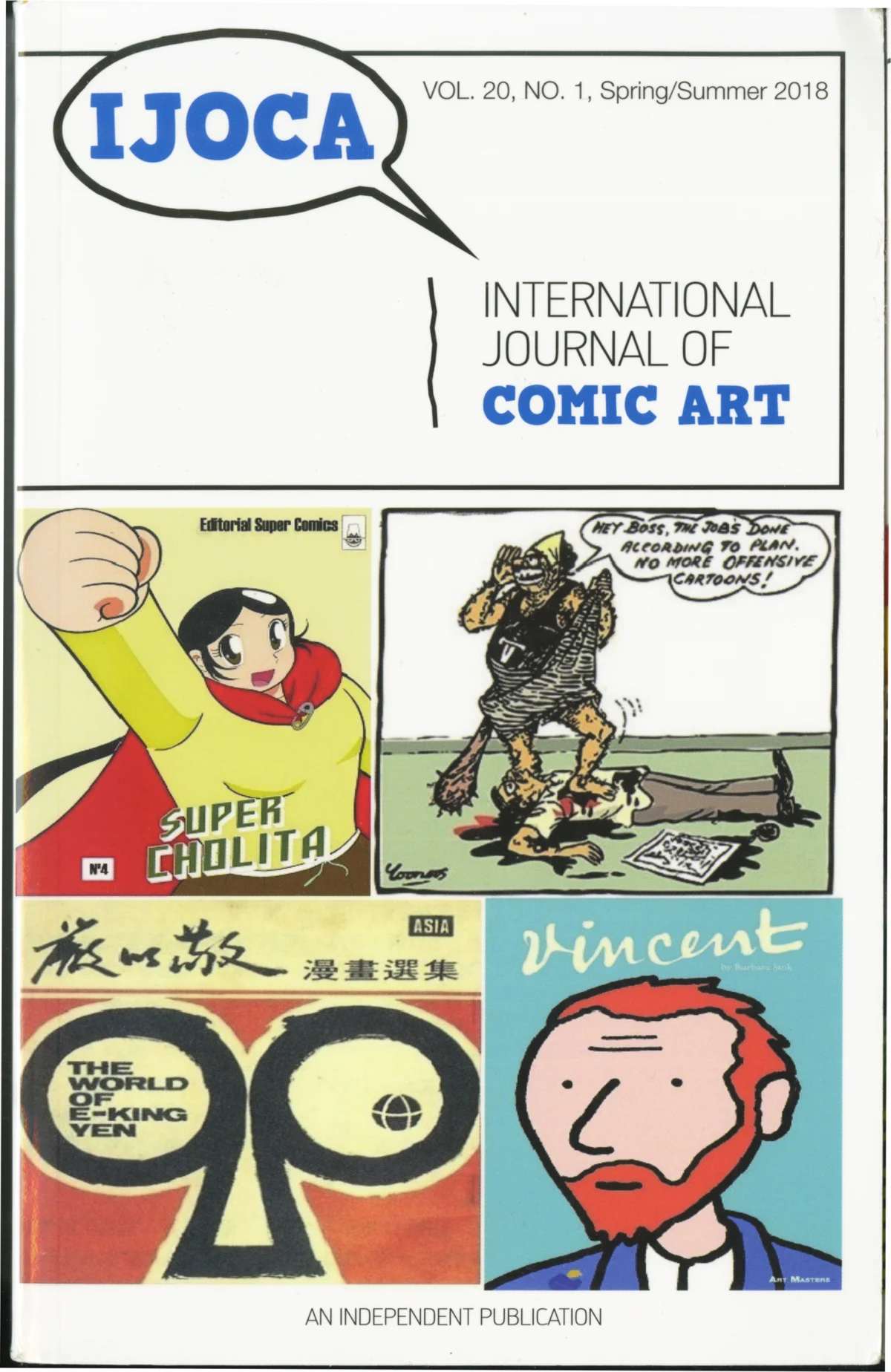
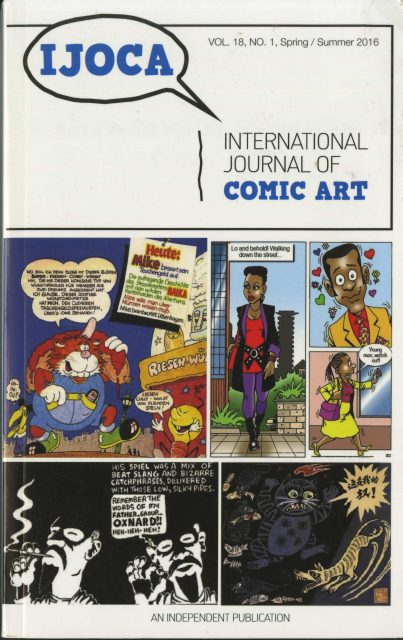
Lent’s passing, resulting from injuries sustained in a fall at his home, marks the end of an era for the International Journal of Comic Art (IJOCA) and the global community of scholars he mentored. Over a career spanning six decades, Lent authored or edited a staggering 91 books, edited the world’s most inclusive comics journal for 27 years, and served as a moral compass for academic activism. To his colleagues, he was a "mythic figure"; to his students, he was a tireless advocate; and to the academic establishment, he was a "punk rock" maverick who refused to play by the rules of institutional gatekeeping.
Main Facts: A Titan of the "Ninth Art"
John A. Lent was not merely a scholar of comics; he was the primary engine behind the globalization of comics studies. At a time when Western academia focused almost exclusively on American and European traditions, Lent turned his gaze toward Malaysia, the Philippines, Korea, China, and the Caribbean.
His contributions can be summarized through three primary pillars:
- Massive Scholarly Output: With 91 books to his name, Lent’s bibliography covers the history of animation, political cartoons, newspapers, and cinema across nearly every continent.
- The IJOCA Legacy: He founded the International Journal of Comic Art in 1999 after the collapse of other scholarly venues. He published it out of his own home for nearly three decades without external funding or the backing of a major university press.
- Global Mentorship: Lent is credited with launching the careers of more than 1,000 individual scholars. He was famous for approaching nervous graduate students at conferences to compliment their work and offer them a platform in his journal.
His influence was so profound that the International Comic Arts Forum (ICAF) named its top prize for graduate research the "John A. Lent Scholarship" in his honor.
Chronology: From the Depression to the Global Stage
Early Life and the Catalyst of Injustice (1936–1960)
Born in 1936 in East Millsboro, Pennsylvania, during the depths of the Great Depression, Lent’s path to academia was far from guaranteed. His family lacked the financial means for higher education, leading a teenage Lent to sell beer at Cleveland Indians games to make ends meet. His life changed when he secured a $400-per-year scholarship from Anchor Hocking Glass, which allowed him to attend Ohio University.
Initially a sports editor for his student newspaper, Lent entered graduate school primarily to avoid the 1958 draft. However, his first teaching job at the West Virginia University Institute of Technology in 1960 served as a political awakening. Witnessing coal miners being paid in "company scrip" rather than legal tender, Lent began to develop the anti-capitalist and anti-imperialist worldview that would define his later work in "critical communications."
The Syracuse Exile and the Manila Breakthrough (1962–1972)
Lent’s doctoral studies at Syracuse University were interrupted by his refusal to remain silent on matters of principle. When the university planned to name its communications school after publishing magnate Sam Newhouse, Lent wrote a book, Newhouse, Newspapers, Nuisances, critical of Newhouse’s labor practices. The university blocked the book’s publication, leading Lent to publish it through a vanity press—a move that resulted in libel threats and his departure from the program.
Undeterred, Lent accepted a Fulbright Fellowship to De La Salle College in Manila in 1964. This experience was transformative, sparking a lifelong obsession with Asian media systems and press freedoms. He eventually completed his PhD at the University of Iowa in 1972, focusing on Caribbean media.
The Temple Years and the Wyoming "Black 14" (1969–2011)
While Lent spent the bulk of his career at Temple University (1974–2011), his brief tenure at the University of Wyoming in 1969 remains a testament to his activism. During the "Black 14" incident, Lent was one of only four faculty members to support 14 Black football players who were kicked off the team for wanting to wear black armbands in protest of the Mormon Church’s then-exclusionary policies.
Lent’s home was targeted by football boosters who sent moving trucks to his door with orders to "move him to the Nebraska line." Following the Kent State massacre in 1970, Lent supported student protests in Wyoming and resigned when the National Guard was called in to suppress them. He stayed only long enough to ensure his students would not receive failing grades for his absence.
Supporting Data: The "DIY" Academic Empire
Lent’s greatest professional achievement was the International Journal of Comic Art (IJOCA). To understand its impact, one must look at the data of its 27-year run.
Traditional academic journals thrive on "rejection rates"—the more papers they turn away, the more prestigious they are considered. Lent rejected this model entirely. His philosophy was simple: if the work was interesting and contributed to the global conversation, it deserved a home.
- Volume of Work: By the time of his death, IJOCA issues often exceeded 600 pages each, published twice a year.
- Breadth of Content: The journal published over 1,500 articles. It was the only English-language venue where one could find a scholarly analysis of Senegalese comic strips alongside a history of Canadian manga.
- Independence: Unlike the current version of Inks or other journals tied to the Comics Studies Society, IJOCA was a "bootstrapped" operation. Lent, assisted by a small rotating staff of editorial assistants, handled the subscriptions, layout, and mailing from his private residence.
Bart Beaty, a fellow scholar and historian, notes that Lent’s "outdoor cat" status in the "indoor world" of university bureaucracy allowed him to bypass the territorial politics that often stifle niche disciplines. He didn’t wait for permission to build a field; he simply built it.
Official Responses and Tributes
The academic community has reacted with a mix of grief and profound gratitude.
Charles Hatfield, founding president of the Comics Studies Society, highlighted Lent’s unique character: "John’s cosmopolitan outlook and fierce independence, founded on love and principle, have always inspired me. His good opinion meant the world, and his unquenched curiosity and desire to connect remain, for me, awesome reminders of what is possible."
Bart Beaty, writing for The Comics Journal, reflected on Lent’s role as a gate-breaker: "As junior scholars and grad students, we were struggling to find appropriate venues for publishing our work at a time when many traditional disciplinary journals were close-minded to the notion of serious writing about comics. John did not merely open doors to us, he kicked them down."
The International Comic Arts Forum (ICAF) issued a statement mourning their namesake benefactor, noting that Lent’s presence at the back of conference rooms—always ready to encourage a newcomer—was a staple of the industry for half a century.
Implications: A Legacy of Decolonization
John A. Lent’s death leaves a significant void in the infrastructure of comics scholarship, but his life’s work has set a permanent precedent for the decolonization of media studies.
The Shift to the Global South
Before Lent, "International Comics" usually meant "Franco-Belgian" or "Japanese." Lent’s exhaustive interviews with practitioners in the Philippines, Korea, and Malaysia forced the academic world to acknowledge the rich history of the "Ninth Art" in the Global South. His work on "critical communications" remains a foundational text for understanding how mass media can either serve as a tool of cultural imperialism or a vehicle for national liberation.
The "Punk Rock" Model of Academia
In an era where academic publishing is increasingly dominated by a few massive corporations (like Elsevier or Springer) that charge exorbitant fees for access to research, Lent’s IJOCA stands as a blueprint for "DIY" scholarship. He proved that a single dedicated individual could maintain a high-quality, globally recognized journal without institutional "coin of the realm" like double-blind peer reviews or university press branding.
The Scholar as Activist
Lent’s life serves as a reminder that the study of "mass communication" cannot be divorced from social justice. Whether he was standing with the "Black 14" in Wyoming or challenging the Newhouse empire at Syracuse, Lent practiced what he preached. He viewed comics not just as aesthetic objects, but as political tools used by the oppressed to speak truth to power.
In his final years, Lent expressed a characteristic lack of regret, though he remained a restless thinker until the end. In a 2015 interview, he remarked: "I’m proud to have stayed independent, as much as anyone can… Innovating, seeing gaps and filling those gaps. Always thinking. Perhaps the only thing I would have done differently would’ve been to continue my activism—to have been in the streets for a longer period of time."
While he may have wished for more time in the streets, the "mythic" John A. Lent spent his 89 years building the roads that thousands of other scholars now walk. His 91 books and 1,500 journal articles ensure that while the man has passed, the global conversation he started will never be silenced.

Leave a Comment