
Tesseract Miniatures Brushes: A New Contender Redefining Value in Miniature Painting Tools
Leicestershire, UK – In the intricate world of miniature painting, where precision and artistry converge, the tools of the trade are as crucial as the painter’s skill. From the humble art store basic to the revered "boutique" offerings, brushes are the conduits through which vision becomes reality. Emerging from the vibrant heart of the UK’s hobby scene, Tesseract Miniatures, an established commission painting studio based in Leicestershire, has recently made a significant foray into bespoke tool manufacturing, launching its own line of quality sable round brushes and innovative drybrushes. This strategic expansion by artist and studio founder, Stu, signals a bold move to challenge the established hierarchy of premium hobby tools, offering what many are calling a compelling blend of high performance and exceptional value.
Main Facts: Unveiling Tesseract Miniatures’ Entry into the Premium Brush Market
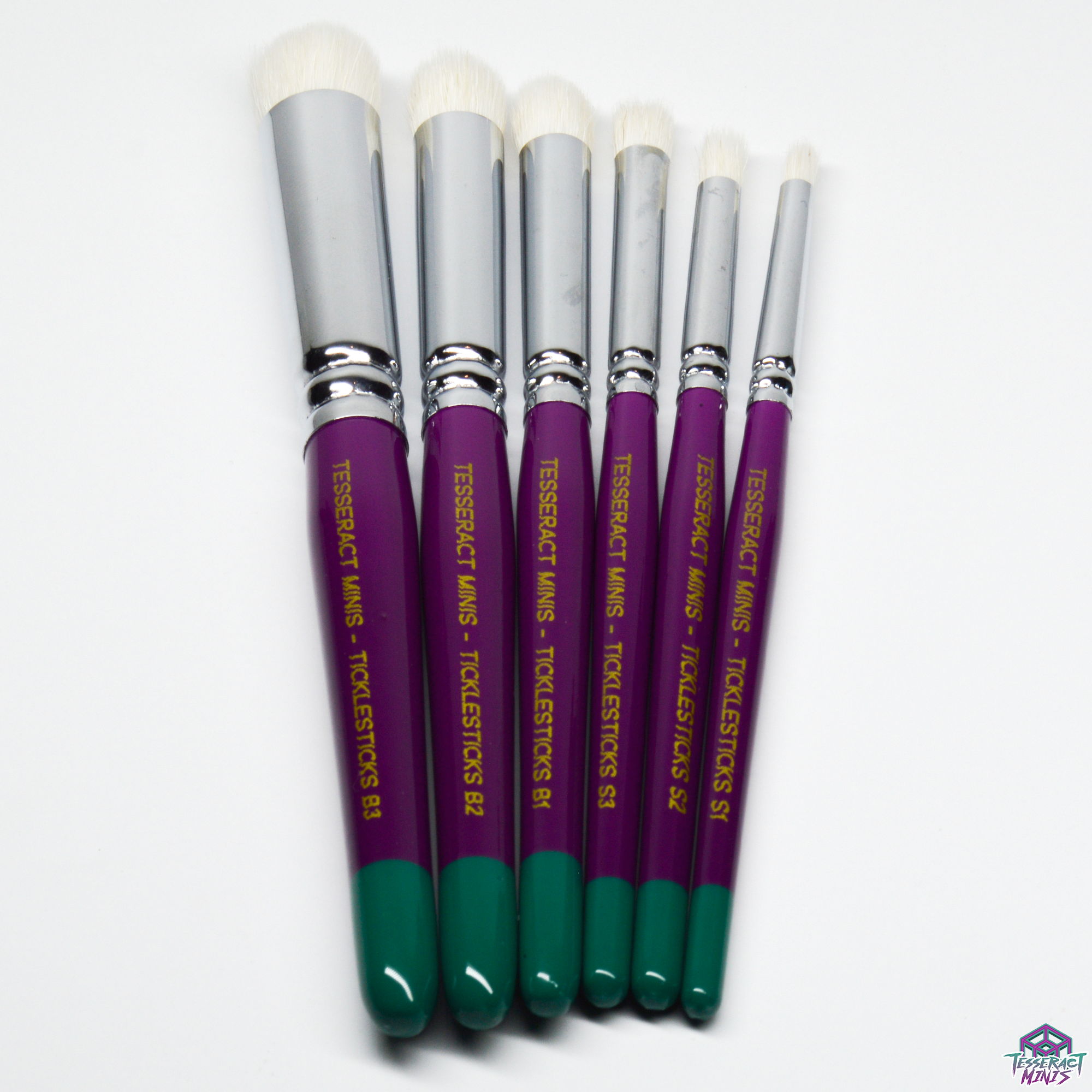
Tesseract Miniatures, previously celebrated for its exquisite commission painting services, has broadened its remit to include the production of its own proprietary range of painting brushes. This new product line features two distinct categories: a refined selection of sable round brushes and a unique series of soft drybrushes, affectionately dubbed "Ticklesticks." Both lines are presented with a distinctive magenta-teal aesthetic, reflecting a vibrant brand identity that stands out on any hobby desk.
The core proposition of Tesseract Miniatures’ brushes revolves around delivering professional-grade tools that do not carry the exorbitant price tags often associated with heritage brands. The sable rounds, available in a curated set of three sizes, are designed to meet the fundamental requirements of miniature painters, offering excellent snap, tip retention, and paint load capacity. Complementing these are the "Ticklesticks," a collection of six soft drybrushes crafted for smooth, controlled application, a notable improvement over many synthetic alternatives.
Initial reviews, particularly from respected voices within the hobby community such as "Keewa" from Tabletop Battles, suggest that Tesseract Miniatures has successfully struck a delicate balance between quality and affordability. Keewa, an experienced miniature painter known for a pragmatic approach to tools, has lauded the brushes for their performance, directly comparing them favorably to more expensive counterparts like the Raphael 8404, while noting a significant price advantage. This positioning is poised to disrupt an increasingly crowded market, appealing to both professional artists and enthusiastic hobbyists seeking premium tools without the premium expenditure.
Chronology: From Commission Studio to Brush Innovator
The journey of Tesseract Miniatures from a dedicated commission painting studio to an innovator in brush manufacturing is a testament to the vision of its founder, Stu, and a keen understanding of the miniature painting landscape.
The Genesis of Tesseract Miniatures
Stu, an artist with a profound passion for miniatures, established Tesseract Miniatures as a commission painting studio in Leicestershire some time ago. His studio quickly garnered a reputation for meticulous detail, high-quality finishes, and an unwavering commitment to bringing clients’ miniature visions to life. This success was built upon years of hands-on experience, understanding the nuances of paint application, and the critical role that quality tools play in achieving superior results. Through countless hours at the painting desk, Stu gained invaluable insight into the strengths and weaknesses of various brushes available on the market, experiencing firsthand the frustrations of tools that either underperformed or degraded too quickly, especially given their cost. This intimate knowledge of a painter’s needs and the limitations of existing products laid the groundwork for future innovation.
The Leap into Product Development
The decision to branch out into producing proprietary brushes was not made lightly. It likely stemmed from a confluence of factors: a desire to create tools that precisely met Stu’s own exacting standards, an ambition to offer fellow painters a more reliable and cost-effective alternative to established high-end brands, and perhaps identifying a gap in the market for brushes that offered uncompromising quality without an astronomical price tag. The development process would have been iterative, involving extensive testing of different hair types, ferrule designs, and handle ergonomics. Achieving the perfect "snap" for sable rounds and the ideal "swishy profile" for drybrushes requires meticulous attention to detail and a deep understanding of material science. While an exact launch date for the brushes isn’t specified, the reviewer’s mention of using them "heavily since they arrived a few months ago" indicates a relatively recent introduction to the market, likely following a period of rigorous in-house development and refinement.
The "Ticklesticks" Nomenclature
A delightful and memorable aspect of Tesseract Miniatures’ brand identity is the naming of their drybrushes as "Ticklesticks." This whimsical moniker adds a touch of personality and playfulness to what might otherwise be a purely functional tool. The reviewer muses whether the name was inspired by British comedian Ken Dodd, famous for his "tickling stick" prop. Regardless of its direct inspiration, the name effectively conveys the soft, gentle action of the brushes, perfect for dusting or subtle drybrushing effects. Such branding choices reflect a company that isn’t afraid to inject character into its products, helping them stand out in a sea of generically named tools. It suggests a brand that understands its audience’s culture and embraces a more personable approach.
Initial Market Reception and Reviewer Engagement
Upon their launch, Tesseract Miniatures strategically engaged with influential voices in the miniature painting community to introduce their new line. The review by "Keewa" from Tabletop Battles is a prime example of this outreach. Keewa’s position as "one of Tabletop Battles’ resident brethren of brush botherers" and a professional painter lends significant credibility to their assessment. The fact that Keewa, who openly admits to a "negligent brush treatment" philosophy and prioritizes value, adopted these brushes for "pretty much everything I’ve done since" their arrival, speaks volumes about their immediate impact and sustained performance. This kind of authentic, heavy-use endorsement from a respected professional is invaluable for a burgeoning brand seeking to establish its credibility in a competitive market.
Supporting Data: Performance, Pricing, and Market Positioning
The success of Tesseract Miniatures’ brushes hinges on their ability to deliver exceptional performance at a price point that challenges traditional market leaders. A closer examination of their construction, pricing structure, and comparative advantages reveals a compelling value proposition.
The Anatomy of a Tesseract Brush
Sable Rounds: Precision in Three Essential Sizes
Tesseract Miniatures offers three sizes of sable round brushes, which, while lacking explicit numerical descriptors, are equated by the reviewer to the widely accepted essential sizes of 2, 1, and 0. This focused offering is a deliberate strategy, contrasting sharply with brands like Artis Opus, which boast up to fifteen different sable rounds. The rationale is simple yet profound: for the vast majority of miniature painting tasks, these three sizes provide all the versatility and control a painter needs. A size 2 is excellent for basecoating larger areas and broader strokes, a size 1 serves as the workhorse for general detailing, and a size 0 or equivalent is indispensable for fine details, eyes, and crisp edge highlights. The reviewer rightly questions the necessity of ultra-fine 0000 sizes or overly large size 6s, unless one is specializing in micro-scale models or large-scale busts, respectively.
The bristles themselves are described as high-quality sable, a material revered in the art world for its unique properties. Sable hair offers an unparalleled combination of softness, strength, and elasticity, known as "snap" or "spring." This snap ensures that the brush returns to a sharp point after each stroke, crucial for maintaining control and achieving crisp lines. The Tesseract sable rounds excel in this regard, preventing the frustrating splaying of bristles that can ruin a detailed freehand or a precise blackline. Their ability to hold a generous amount of paint without overloading, coupled with their excellent tip retention, makes them reliable tools for a wide array of techniques, from smooth blending to sharp outlining.
Ticklesticks Drybrushes: Softness and Control
The "Ticklesticks" represent Tesseract Miniatures’ innovative approach to drybrushing. Unlike the synthetic polymer bristles commonly found in cheap makeup brushes often repurposed by hobbyists, the Ticklesticks feature much softer, natural bristles. While the specific material isn’t explicitly stated as sable for the drybrushes, their soft texture and "beautifully swishy profile" suggest a high-quality natural hair construction. This softness is paramount for effective drybrushing, allowing for smooth, gradual color transitions and subtle highlights without the abrasive, scratchy finish that synthetics can sometimes leave.
The six different sizes of Ticklesticks provide comprehensive coverage for various scales and surface areas. Smaller drybrushes are ideal for delicate transitions on individual components or character models, while larger ones can efficiently cover expansive surfaces on vehicles or terrain pieces. The "swishy profile" translates to superior control over paint application, enabling painters to precisely deposit pigment onto raised textures. Beyond their primary function, their soft bristles also make them excellent for dusting miniatures before painting, ensuring a clean surface for optimal paint adhesion. A caveat, however, is the need for diligent cleaning; as with all natural hair brushes, failure to remove dried paint can quickly harden the bristles and compromise performance, making brush soap an essential companion.
Competitive Landscape and Value Proposition
The pricing strategy of Tesseract Miniatures is perhaps its most compelling feature, positioning its brushes as a high-value alternative to established premium brands.
Pricing Breakdown:
- Sable Rounds: A set of three costs £36. Individually, the smallest is £12, and the largest is £14.50.
- Ticklesticks: A set of six is priced at £30.
- All-in Bundle: The complete collection of nine brushes (three rounds, six drybrushes) is available for £56, offering a saving of approximately £10 compared to buying them separately.
Direct Comparison:
The reviewer’s direct comparison highlights the economic advantage: a Size 2 Raphael 8404, a benchmark for premium sable brushes, typically retails around £22. An equivalent Tesseract brush costs £14.50. This significant difference in price—nearly 35% cheaper—for what the reviewer confidently asserts is comparable performance, is a game-changer. Keewa’s statement that "in a blind test, painters would have a lot of difficulty trying to discern them from one another" is a powerful endorsement of Tesseract’s quality relative to its cost. This challenges the long-held belief that one must pay top dollar for top-tier performance. Brands like Winsor & Newton Series 7, another revered but expensive option, face similar scrutiny from this new value-driven entrant.
Keewa’s Philosophy: Value as a Professional Imperative:
The reviewer’s pragmatic philosophy regarding brushes—viewing them as "consumable resources" rather than precious, indestructible tools—underscores the importance of value for money. For a professional painter like Keewa, who works with brushes daily and admits to not being "sentimental (or, sadly, gentle)," the rate of degradation is a crucial economic factor. While proper brush care can extend their life significantly, a professional workflow often prioritizes efficiency, meaning brushes will naturally wear out. In this context, investing in brushes that perform at a premium level but cost less to replace becomes an intelligent financial decision. The argument that "value for money is as important a consideration as quality itself" for a professional painter directly refutes the notion that only the most expensive tools can yield professional results.
Ergonomics and Aesthetics: The Magenta-Teal Statement
Beyond performance and price, Tesseract Miniatures also pays attention to the user experience, evidenced by the "snazzy Magenta-Teal colour" of their brush handles. While seemingly a minor detail, aesthetics and ergonomics play a subtle yet significant role in a painter’s relationship with their tools. A visually appealing brush can enhance the joy of painting, and a distinct color scheme helps establish brand recognition. For a reviewer who "loves me some magenta and teal," this personal touch resonates, demonstrating that Tesseract Miniatures understands the passion and individuality that pervade the hobby community. The handle’s feel, balance, and diameter also contribute to painting comfort and control, factors that Tesseract Miniatures has likely optimized in its design.
Official Responses and Industry Context
While the provided text does not include direct "official responses" from Tesseract Miniatures, their strategic decisions and product characteristics allow for an inference of their vision and how they fit into the broader industry.
Tesseract Miniatures’ Vision (Implied/Inferred)
Tesseract Miniatures’ venture into brush manufacturing signals a clear strategic intent: to provide high-quality, artist-designed tools that are accessible and perform at the highest level, without the inflated costs often seen in the boutique segment. Their move suggests a belief that they can either replicate or even surpass the performance of established premium brands while maintaining a more attractive price point. They appear to be targeting a segment of discerning hobbyists and professional painters who are quality-conscious but also value-aware, perhaps disillusioned by the escalating prices of traditional high-end brushes.
Their differentiation strategy seems to hinge on several pillars:
- Artist-Led Development: As a company founded by an artist (Stu) who runs a commission studio, their brushes are designed by painters, for painters, ensuring practical utility and performance.
- Focused Product Offering: By concentrating on the most essential brush sizes, they simplify choice and avoid unnecessary inventory, potentially contributing to cost efficiency.
- Unique Brand Identity: The "Ticklesticks" name and the distinctive magenta-teal handles contribute to a memorable brand image that stands out in a crowded market.
- Competitive Pricing: Directly challenging the cost of established leaders, Tesseract aims to disrupt the perception that high quality must equate to high cost.
The Broader Miniature Painting Tool Market
The miniature painting tool market is indeed "increasingly crowded," reflecting the booming popularity of tabletop gaming and miniature hobbies. This crowding has led to several trends: a proliferation of new "boutique" brush brands, often marketed with aggressive branding and premium pricing; a greater focus on specialized tools for specific techniques (like drybrushing or blending); and a general upward trend in the cost of traditional art supplies that cater to the hobby.

Tesseract Miniatures enters this landscape as a potential disruptor. By offering premium performance at a more accessible price, they challenge the status quo. Their presence could exert pressure on larger, more established companies to re-evaluate their pricing strategies and product offerings, ultimately fostering a more competitive environment that benefits consumers. The debate about brush care—whether to treat them as "precious" items or "consumable resources"—is also central to this market dynamic. Tesseract’s pricing structure effectively caters to the "consumable" philosophy without sacrificing the quality needed for professional work, making them an attractive option for heavy users.
Expert Consensus on Brush Selection
The reviewer’s assertion that "for most miniature painting, you only really need a good size 2, 1, and 0" reflects a widely accepted truism among experienced miniature painters. Many tutorials and experts advocate for mastering a few core brush sizes rather than accumulating a vast array of specialized tools. This consensus validates Tesseract Miniatures’ focused product line, suggesting that their offering is not limited but rather optimized for practical use. The universal indicators of a good brush—how it "feels in your hand," the "springiness of the bristles," and "how the tip is shaped and held"—are qualitative measures that Tesseract’s brushes appear to satisfy, reinforcing their claim to premium quality regardless of their more competitive price point.
Implications: Redefining Value in Miniature Painting Tools
The emergence of Tesseract Miniatures’ brushes carries significant implications for both individual hobbyists and the broader miniature painting industry, potentially redefining perceptions of value and accessibility in high-quality tools.
Impact on the Hobbyist
For the average miniature painter, Tesseract’s brushes present a compelling opportunity. They offer access to genuinely premium quality tools—with excellent snap, tip retention, and control—without the financial barrier often associated with heritage brands like Raphael or Winsor & Newton. This democratization of quality could empower more hobbyists to experiment with advanced techniques, such as crisp freehand, precise layering, and nuanced drybrushing, which often require reliable tools. The availability of an all-in bundle at a reasonable price (the £56 bundle) makes it easier for painters to acquire a comprehensive set of high-performing brushes, elevating the standard of their work without breaking the bank. This accessibility could foster greater skill development across the hobby community.
Challenge to Established Brands
Tesseract Miniatures represents a growing trend of smaller, artist-led companies directly challenging the dominance of older, larger manufacturers. By proving that high performance can be delivered at a more competitive price, they put pressure on established brands to justify their higher price points. The reviewer’s strong assertion that Tesseract brushes could easily pass a blind test against a Raphael 8404 is a direct challenge to the perceived supremacy of these long-standing market leaders. This increased competition is ultimately beneficial for consumers, potentially driving innovation, better value, and more diverse product offerings across the industry. It forces a re-evaluation of what constitutes "premium" in the modern hobby market.
Sustainability and Longevity
While the reviewer’s personal approach treats brushes as consumables, the inherent quality of Tesseract’s sable bristles suggests that, with proper care (as advocated by guides like those from Goonhammer), these brushes have the potential for significant longevity. This dual benefit—affordable replacement for heavy users and potential for extended life for careful users—adds another layer to their value proposition. For a brand focused on quality, encouraging responsible tool maintenance, even implicitly, aligns with a broader industry trend towards more sustainable practices and appreciation for craftsmanship.
The Future of Tesseract Miniatures
The initial success and positive reception of Tesseract Miniatures’ brushes position the company for significant growth within the niche market of miniature painting tools. Their strong brand identity, combined with a clear value proposition, could lead to future expansions—perhaps more specialized brush sizes for specific techniques, or even other types of hobby tools that adhere to their core philosophy of quality and affordability. The success of their product line could also further bolster their original commission painting studio, creating a synergistic ecosystem where their expertise in painting directly informs and validates their tool manufacturing.
In conclusion, Tesseract Miniatures has entered the competitive landscape of miniature painting tools not with a whisper, but with a confident statement. By offering high-performance, aesthetically pleasing, and economically viable brushes, they are not just selling tools; they are offering a new standard of value. Based on months of heavy professional use, the endorsement from Tabletop Battles is clear: Tesseract Miniatures’ brushes are a premium choice from a friendly small company, and at a reasonable price, they are unlikely to disappoint even the most discerning painter. They represent a refreshing blend of artistry, practicality, and entrepreneurial spirit that is set to leave a lasting mark on the miniature painting community.
Have any questions or feedback? Drop us a note in the comments below or email us at [email protected]. Want articles like this linked in your inbox every Monday morning? Sign up for our newsletter. And don’t forget that you can support us on Patreon for backer rewards like early video content, Administratum access, an ad-free experience on our website, and subscriber-only content covering competitive Warhammer 40K!


Leave a Comment