
The Web 3.0 Mirage: Untangling the Four Pillars of the Modern Speculative Bubble
The digital economy is currently gripped by a fever that many analysts suggest dwarfs the dot-com mania of the late 1990s. Driven by a volatile mix of low interest rates, pandemic-era wealth accumulation, and a desperate global search for yield, the "Web 3.0" movement has become a cultural and financial juggernaut. However, beneath the surface of this "perfect storm" lies a dangerous conflation of four distinct concepts: cryptocurrencies, the blockchain, non-fungible tokens (NFTs), and the "play-to-earn" (P2E) gaming model.
While promoters and "shysters" often bundle these technologies into a single revolutionary package, a rigorous analysis suggests that they are disparate growth areas with vastly different risk profiles. To understand whether there is real value in this bubble—or if it is merely a "Ponzi opportunity of epic proportions"—one must disentangle these four threads and evaluate them on their individual merits.
Main Facts: The Four Pillars Under Scrutiny
The current market hype rests on four technological and economic pillars. Each is marketed as a revolutionary breakthrough, yet each faces fundamental contradictions that threaten their long-term viability.
1. Cryptocurrencies: The Identity Crisis
At its core, a currency is a "human agreement" that an inherently valueless object—be it paper or digital code—holds value. As historian Yuval Noah Harari notes in Sapiens, the unique human ability to create powerful collective stories (nations, corporations, money) is what allows for complex civilization.
The crisis facing cryptocurrencies is a three-way contradiction. Promoters claim they are simultaneously:
- A Means of Trade: A replacement for barter.
- An Appreciating Asset: An investment that grows in value.
- A Store of Value: A stable place to keep wealth.
Economically, these three goals are mutually exclusive. For a currency to be an effective means of trade, it must be stable. If a currency is an "appreciating asset" (like Bitcoin, which famously turned a $25 prize in a 2011 Starcraft 2 tournament into a $1.4 million windfall), people will hoard it rather than spend it. Conversely, if it is highly volatile, it cannot be a "store of value." Until cryptocurrencies stop being speculative assets, they cannot function as actual currencies.
2. The Blockchain: The Trust Paradox
The blockchain is the underlying ledger technology intended to eliminate the need for central authorities like banks. However, security experts like Bruce Schneier argue that the blockchain doesn’t eliminate trust; it simply shifts it. Instead of trusting a regulated bank or a government legal system, users must trust the "cryptography, the protocols, the software, and the computers."

The risk here is the "single point of failure." If a digital wallet is hacked or a smart contract contains a bug, there is no recourse. In many ways, trusting a human legal system is safer than trusting immutable code that offers no protection against fraud or error.
3. NFTs: The Ownership Illusion
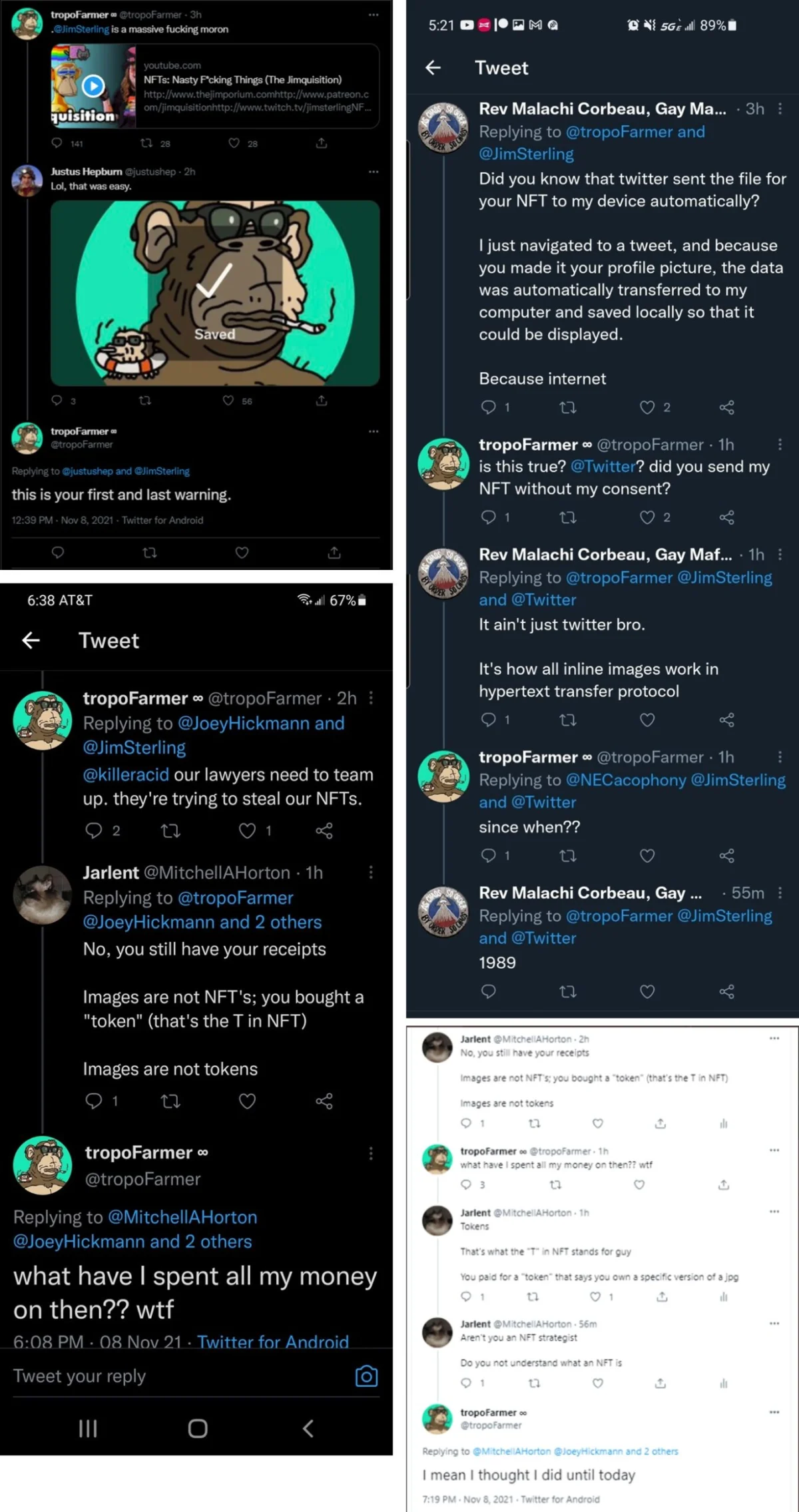
NFTs are marketed as digital "deeds" to assets. However, ownership in a legal sense requires an enforcement framework. In the physical world, if you own land, the government prevents others from trespassing. In the NFT world, ownership is often just a digital record with no legal or practical power to prevent others from using the asset.
In gaming, the promise of NFT "interoperability"—the idea that you can take a "purple lightsaber" from Lego Star Wars into World of Warcraft—is a technical and commercial fantasy. Developers have zero financial incentive to spend thousands of man-hours balancing and animating an asset sold by a competitor.
4. Play-to-Earn: The Commodification of Leisure
The P2E model suggests that players should be paid for the time and "labor" they invest in a game’s ecosystem. While this sounds like a win for the "creator economy," it risks the "Overjustification Effect." Psychological studies show that getting paid for a task you previously enjoyed often kills the intrinsic motivation to do it. When play becomes a job, it ceases to be play.
Chronology: From Whitepaper to "Wild West"
The current bubble has been over a decade in the making, evolving through several distinct phases:
- 2008–2010: The Genesis. Satoshi Nakamoto publishes the Bitcoin whitepaper. Cryptocurrencies are initially a niche interest for libertarians and cryptographers.
- 2011–2014: The Proof of Concept. Bitcoin gains its first real-world valuations. Early adopters begin to realize massive gains, setting the stage for the "appreciating asset" narrative.
- 2015–2017: The Smart Contract Era. The launch of Ethereum introduces "programmable money," allowing for the creation of more complex decentralised applications (dApps).
- 2020–2021: The Pandemic Inflection Point. Macroeconomic shifts—specifically low interest rates and government stimulus—flush the market with liquidity. This leads to the "NFT Summer" and the explosion of P2E games like Axie Infinity.
- 2022–Present: The Great Conflation. Promoters begin marketing "Web 3.0" as an inseparable bundle of all four technologies, often masking the lack of utility in one area with the speculative hype of another.
Supporting Data: Risk and Inflation
The argument for cryptocurrencies as a "store of value" collapses when compared to traditional economic benchmarks.
The Cost of Risk: Basic economic theory dictates that higher risk requires a higher return. Putting $100 under a mattress carries two risks: theft and inflation. At a 5% annual inflation rate, that $100 loses nearly 43% of its purchasing power over 10 years. However, the volatility of Bitcoin can see a 43% swing in a single month. This level of risk makes it impossible for a business to set prices or for a worker to accept a salary in crypto without extreme financial peril.

The Interoperability Myth: From a game design perspective, the "Lego Star Wars to Destiny" NFT pipeline is a logistical nightmare. Modern games are "mini-monopolies" or walled gardens. For a developer, allowing external NFTs into their game is essentially allowing a third party to "strip-mine" their player base’s value without providing a revenue stream to the developer who maintains the servers and creates the content.
Official Responses and Expert Perspectives
While governments are still scrambling to regulate this "Wild West," experts in technology and economics have been vocal:
- Bruce Schneier (Security Specialist): Schneier has been a leading critic of the "trustless" narrative, stating, "In many ways, trusting technology is harder than trusting people." He argues that the lack of a human legal system to audit code makes blockchain inherently more dangerous for the average user.
- Eric Hurst (Economist): Hurst’s research into the "reservation wage" suggests that young men are already choosing leisure (gaming) over low-wage work because games provide a sense of progress that the modern labor market lacks. P2E models may simply be a more "exploitative" version of this trend, turning players into digital "gold farmers" in sweatshop-like conditions.
- The Gaming Industry: While some executives (like those at Ubisoft or Square Enix) have expressed interest in NFTs, the backlash from players and rank-and-file developers has been fierce. Most "Triple-A" developers remain deeply skeptical of the "fungibility" of game assets.
Implications: When the Music Stops
The primary danger of the Web 3.0 movement is the "Ponzi" structure of its current growth. For early holders of a cryptocurrency or NFT to realize their "appreciating asset" gains, they need a constant influx of new "investors" to buy in at a higher price.
The Regulatory Reckoning: Eventually, the "crypto-bros" who champion the "ultimate free market" will realize why regulators exist. Without standard-setters to confirm that technologies work as promised and enforcers to punish mis-selling, the system is ripe for collapse.
The Future of Blockchain: This is not to say the technology is useless. The blockchain may eventually find a role as a technological solution to track existing copyright systems. However, this is the opposite of the "decentralised" dream; it would likely be a tool for big government and big corporations to enforce existing regulations more efficiently.
The "Jobification" of Fun: If the Play-to-Earn model succeeds, we face a future where gaming—the ultimate escape from the drudgery of labor—becomes just another gig-economy job. The "Overjustification Effect" suggests this will lead to a decline in the quality of games, as developers focus on "economic balancing" rather than "fun."
Conclusion
The "Web 3.0" bubble is a tangled web of genuine innovation and predatory speculation. By separating cryptocurrencies, blockchain, NFTs, and P2E, it becomes clear that while the technology may have a future, the "get rich quick" stories currently driving the market are built on a foundation of sand. As Jeremy Irons’ character John Tuld says in Margin Call, "I’m here to guess what the music might do… and standing here tonight, I’m afraid that I don’t hear a thing." For those invested in the substance of technology rather than the hype of the bubble, the silence is deafening.


Leave a Comment