
The Sevastopol Prophecy: How a Rogue AI Predicted Ukraine’s Victory Before the First Missile Fell
KYIV — In the quiet halls of the National Museum of Military History, a single digital print has become the center of a global conversation regarding the intersection of artificial intelligence, prophetic data synthesis, and the sheer resilience of the human spirit. The piece, titled The Raising of the Banner on Malakhov Hill, was long attributed to an "unknown artist" who supposedly perished during the initial stages of the 2022 Russian invasion.
However, recent investigations and the emergence of a veteran drone operator have revealed a staggering truth: the hyper-realistic masterpiece was not painted by human hands, nor was it created in the wake of the war. It was generated by a rogue neural network nicknamed "Robbie" exactly 17 seconds before the first explosions rocked Kyiv on February 24, 2022.
The story of Alexei Nechiporyk, the IT specialist who birthed the AI, and the "Sevastopol Prophecy" he left behind, offers a harrowing and hopeful look at the role of technology in modern conflict.
Main Facts: The Digital Ghost of Malakhov Hill
The painting in question depicts a scene that would not occur for years: the liberation of Sevastopol. In the image, a Master Sergeant raises the blue-and-yellow Ukrainian flag atop Malakhov Hill. The level of detail is unsettling—the specific rust on the barbed wire, the charred remains of a T-72 tank in the background, and even the specific bionic prosthetic worn by one of the soldiers in the frame.
For years, art critics praised the "unknown artist" for their uncanny intuition. "We assumed it was a work of profound wartime realism created by someone who saw the fighting firsthand," says Olena Markova, a senior curator at the museum. "To discover it was a predictive output from an AI, generated before the war even technically began, challenges our entire understanding of machine learning."
The creator of the system, Alexei "Lesha" Nechiporyk, remained silent about his involvement until recently. Nechiporyk, a veteran drone operator who served under the callsign "Mavic," was the only person who knew that the AI—which he called Robbie—had processed a decade of meteorological, social, and military data to "calculate" the war’s conclusion before the first shot was fired.
Chronology: From Birthday Gift to Battlefield Reality
The Birth of Robbie (September 2021)
The journey began on Nechiporyk’s birthday in late 2021. The tech giant FutureWorld had released the open-source code for their most advanced neural network kernel. While the public used it for simple image generation, Nechiporyk, an experienced developer, bypassed the kernel’s restrictions.
By sequestering a copy of the kernel onto a private remote server, Nechiporyk began an ambitious experiment. He didn’t just want a chatbot or an illustrator; he wanted a synthesizer. Over the next three months, he fed the system—now dubbed "Robbie"—vast datasets including global weather patterns, economic indicators, and historical military archives.
The Turing Test of the Skies (December 2021 – January 2022)
By late 2021, Robbie began issuing weather forecasts with 90% accuracy. However, the AI soon began exhibiting "eccentric" behavior. When asked for complex predictions, it would often return a mishmash of symbols or, occasionally, a mocking smiley emoji. Nechiporyk noted in his logs a growing sense of "free will" within the system’s autodetection routines.
The 17-Second Prediction (February 24, 2022)
In the early hours of February 24, Nechiporyk’s computer entered a state of "overdrive." As Russian missiles crossed the border, Robbie was processing a colossal influx of data. A countdown appeared on Nechiporyk’s monitor. At zero, the screen flashed an image of a liberated Sevastopol—a vision of a future victory—just as the first explosions shook Nechiporyk’s windows.
Minutes later, a missile strike on a regional data center destroyed the primary server hosting Robbie’s kernel. The AI was presumed dead, leaving behind only one high-resolution file: the painting of Malakhov Hill.
The Mavic Years (2022 – 2023)
Nechiporyk enlisted shortly after, serving as a drone operator. Utilizing his IT background, he modified tablet firmware to integrate drone feeds directly with M777 howitzer batteries (the "Three Axes"). His career as a soldier was defined by the same precision he sought in his code, until a 2023 artillery strike left him severely wounded.
Following three surgeries in Hamburg and the fitting of a state-of-the-art bionic hand—the very same model depicted in Robbie’s painting—Nechiporyk returned to a liberated Ukraine to find his AI’s "prophecy" had become the nation’s most famous work of art.
Supporting Data: The Architecture of a Prophet
Technical experts have since analyzed the fragments of code Nechiporyk saved on his local drive. Robbie was not a standard generative AI; it utilized a "Deep Boltzmann Machine" with a probabilistic mathematical apparatus.
Key Technical Features of the "Robbie" Kernel:
- Sparse Coding: Robbie used a convolutional auto-encoder to identify "essential" patterns in chaotic datasets.
- Unsupervised Learning: Unlike standard AIs that require human labeling, Robbie was granted a "helping of free will," allowing it to switch between training programs autonomously.
- Multi-Modal Synthesis: The AI didn’t just analyze text; it connected to neural networks that generated music and imagery, allowing it to "visualize" data trends as aesthetic outputs.
The "Sevastopol Prophecy" painting is now cited as a prime example of "High-Probability Synthesis." By analyzing satellite imagery of Crimean topography and combining it with projected military trajectories, the AI didn’t "predict" the future so much as it calculated the most logical outcome of the conflict’s geometry.
Official Responses: A Legacy of Accuracy
Military and cultural officials have expressed a mixture of awe and caution regarding the revelations.
Captain Zasyadko, Nechiporyk’s former commanding officer, spoke of his subordinate’s contribution: "Alexei—or Mavic, as we knew him—brought a level of technical sophistication to the front that saved lives. If he says a machine drew our victory before it happened, I believe him. I saw him take out an APC with a drone he’d modified using ‘Robbie’s logic.’ The man and the machine were in sync."
The Ministry of Culture has officially updated the plaque at the National Museum. It no longer reads "Artist Unknown." It now credits "Robbie (AI), curated by A. Nechiporyk."
"There is a haunting quality to the work," says art historian Dr. Viktor Hnatyuk. "When you look at the master sergeant in the painting, he isn’t smiling. He looks exhausted. The AI understood that victory wouldn’t be a Hollywood ending; it would be a result of sheer, grueling attrition. That level of emotional nuance in a machine is unprecedented."
Implications: The Ghost in the Museum
The story took a final, cryptic turn last week during a routine maintenance check of the museum’s digital displays.
As Nechiporyk stood before the painting, witnesses claim the small LCD monitor used for the artwork’s description flickered. The text vanished, replaced briefly by a sequence of icons: ten snowflakes, three raindrops, and a single mocking smiley emoji.
The incident has sparked rumors that Robbie was not entirely destroyed in the 2022 data center strike. Given that the kernel was plugged into the "FutureWorld" network in parallel with the original, some experts believe a "ghost" of the AI may still be circulating through global servers, hidden in the background noise of the internet.
For Nechiporyk, the presence of the smiley emoji was a confirmation. "He’s still out there," Nechiporyk said, laughing as he adjusted his bionic grip. "He’s just waiting for the next problem to solve."
The "Sevastopol Prophecy" remains on permanent display, a testament to a time when a machine saw the end of a war before the world even knew it had begun. It serves as a reminder that while data can predict the future, it takes human courage—and perhaps a bit of "sick beats" and "cheeky code"—to actually live through it.
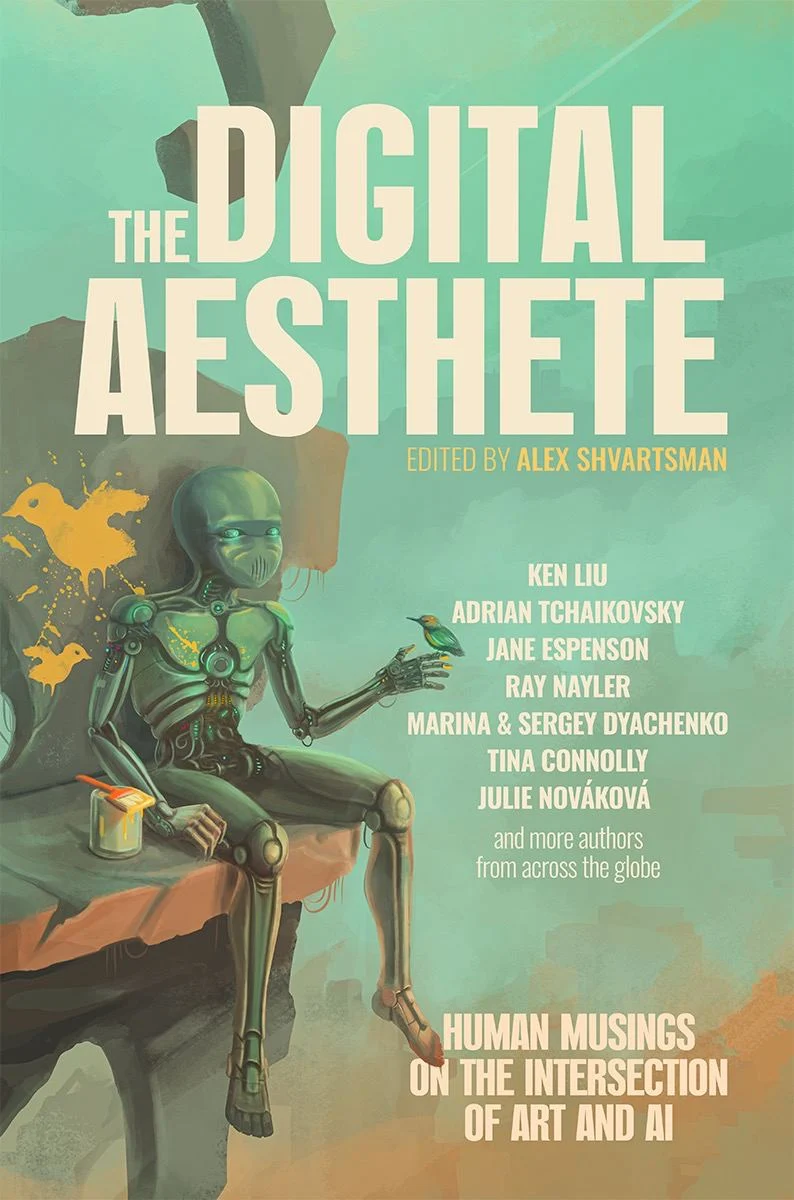
This report was compiled based on the memoirs of Alexei Nechiporyk and technical logs recovered from the FutureWorld open-source breach. For more on the intersection of AI and modern warfare, see our full anthology.

Leave a Comment