
The Quest for the HoloLens Successor: A Deep Dive into Xvisio Technology’s SeerLens Series
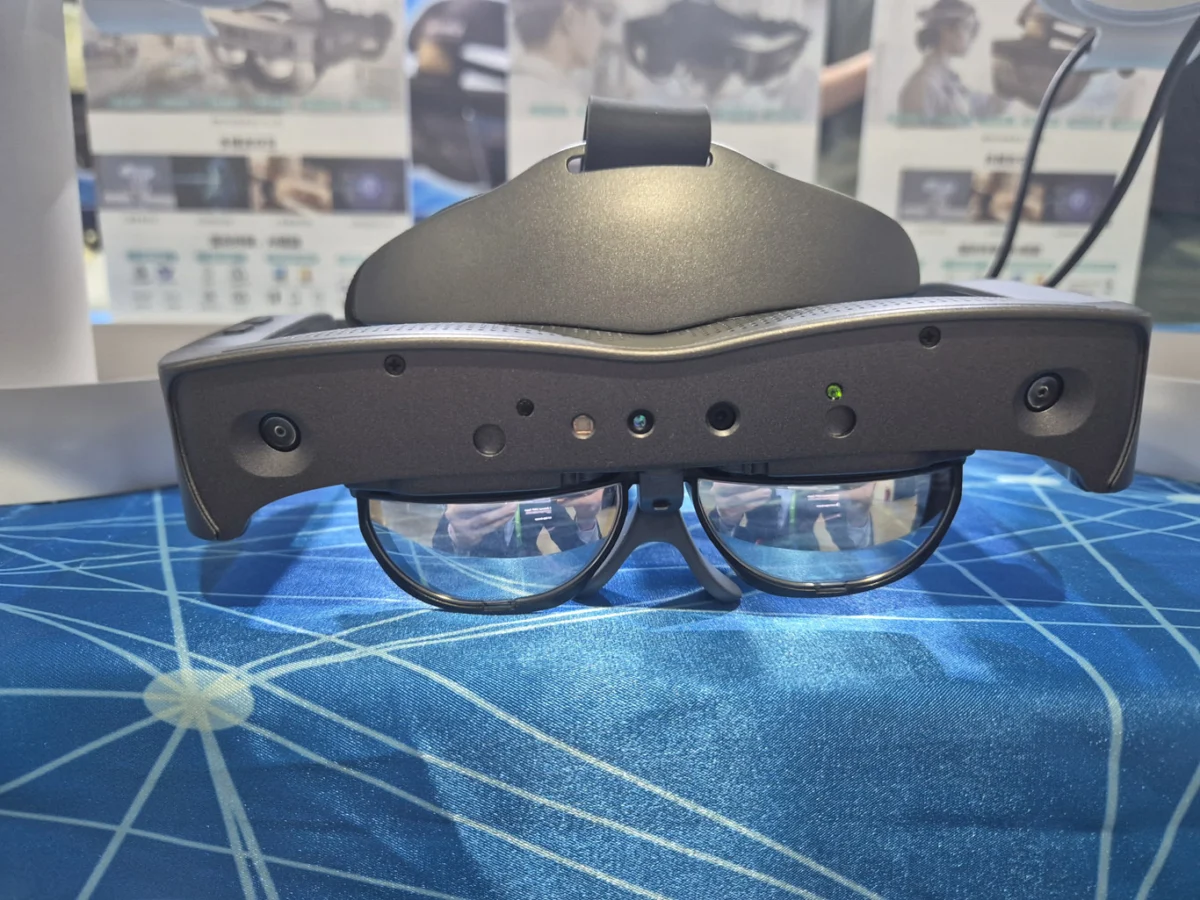
The augmented reality (AR) industry is currently navigating a period of significant transition. As Microsoft’s HoloLens 2—long the gold standard for enterprise AR—faces an uncertain future and a lack of clear hardware iterations, a vacuum has opened in the industrial sector. While many eyes have been on emerging prototypes from various global startups, a significant move is being made by Xvisio Technology.
The Chinese hardware manufacturer is not just promising a future alternative; it is actively shipping a suite of 6DOF (Six Degrees of Freedom) AR headsets designed specifically to fill the void left by the HoloLens. This report provides a comprehensive evaluation of Xvisio’s latest offerings, the SeerLens II B50R Pro and the SeerLens II B50H Max, following a detailed hands-on demonstration.

1. Main Facts: The Xvisio Proposition
Xvisio Technology has positioned itself as a comprehensive XR hardware provider, specializing not only in headsets but also in high-precision SLAM (Simultaneous Localization and Mapping) cameras and standalone 6DOF controllers. Their current strategy focuses on an "all-in-two" architecture, which separates the optical display from the computational unit.
Key Highlights:
- Product Line: Two primary enterprise-grade headsets: the compact SeerLens II B50R Pro and the premium, high-performance SeerLens II B50H Max.
- Optical Design: Both devices utilize "Birdbath" optical engines rather than the waveguides found in the HoloLens.
- Computational Strategy: The headsets are "dumb" displays that require tethering to a Windows PC, a smartphone, or Xvisio’s proprietary "Seerpad" computational box.
- Market Position: Aimed squarely at industrial maintenance, medical training, and remote assistance sectors where 6DOF tracking and hand-interaction are non-negotiable.
2. Chronology: From Discovery to Evaluation
The emergence of Xvisio as a viable HoloLens substitute gained momentum during a recent industry exhibition, where the company’s hardware ecosystem was on full display.

The Initial Encounter
The demonstration began with a display of Xvisio’s sensor integration. A robotic dog, controlled via a proprietary 6DOF controller featuring onboard cameras (similar in tech to the Meta Quest Pro controllers), showcased the company’s expertise in spatial tracking. This served as a preamble to the main event: the SeerLens AR series.
Testing the SeerLens II B50R Pro
The first phase of the hands-on involved the B50R Pro. Weighing a mere 100 grams, the device was immediately notable for its ergonomics. Unlike the front-heavy HoloLens, the B50R Pro’s weight is minimized by offloading the battery and processor to a pocket-sized Seerpad box. The demo utilized the standard Unity MRTK (Mixed Reality Toolkit) environment—the same environment used by HoloLens developers—allowing for a direct "apples-to-apples" comparison of hand tracking and spatial anchoring.

Testing the SeerLens II B50H Max
Following the B50R Pro, the evaluation moved to the B50H Max. This unit represents Xvisio’s high-end vision. It is physically larger and incorporates a flip-up visor design, a critical feature for industrial workers who need to switch between AR and the real world without removing the entire head-strap. The visuals were noticeably crisper, and the field of view (FOV) felt expanded, addressing some of the claustrophobia common in entry-level AR glasses.
3. Supporting Data: Technical Specifications and Performance
To understand how these devices stack up against the competition, a look at the internal specifications is required.

SeerLens II B50R Pro (The Compact Workhorse)
- Weight: 100g (Headset only)
- Resolution: 1080p per eye
- Field of View: 46° Diagonal
- Brightness: 1000 nits
- Tracking: Dual 1MP SLAM cameras, 9-axis IMU
- RGB Camera: 5MP for remote assistance
- MSRP: Approximately $4,000 USD
SeerLens II B50H Max (The Premium Alternative)
- Weight: 120g (Headset only)
- Field of View: 50° Diagonal
- Design: Flip-up hinge for eye-to-eye contact and safety
- RGB Camera: 13MP (Upgraded for high-definition documentation)
- Tracking: Enhanced dual-camera SLAM
- MSRP: Approximately $5,400 USD
The "Seerpad" Computational Unit
Both headsets were powered by the Seerpad, which utilizes a Rockchip 3588s chip and 8GB of DDR4 RAM. This unit runs a customized version of Android (Xvisio OS) and provides the necessary juice for spatial processing, plane detection, and mesh generation.
4. Performance Analysis: Strengths and Weaknesses
Visual Fidelity and Optics
The use of Birdbath optics provides a high-contrast, colorful image that surpasses the HoloLens 2 in terms of color saturation and text readability. However, this comes with a trade-off: transparency. The Birdbath design requires dark-tinted lenses to reflect the light from the micro-OLEDs into the eye. In the demonstration, the real-world environment appeared significantly darkened, which could pose safety risks in low-light industrial environments.

Tracking and Interaction
Xvisio’s SLAM tracking proved stable, with virtual objects remaining pinned to surfaces even during rapid head movements. The hand tracking, while functional for "grabbing" and "pressing" virtual buttons, exhibited a perceptible latency. There was a slight delay between physical hand movement and the virtual representation’s reaction, suggesting that while the software is enterprise-ready, it lacks the sub-millisecond refinement seen in Meta or Microsoft’s latest stacks.
Software Ecosystem
A major selling point for Xvisio is its compatibility with Unity and AR Foundation. By supporting the MRTK demo out of the box, Xvisio has lowered the barrier to entry for firms looking to migrate their existing HoloLens applications to new hardware. This "plug-and-play" development approach is essential for retaining the enterprise developer base.

5. Official Responses and Market Strategy
During the demonstration, Xvisio representatives addressed several key concerns regarding global availability and support.
On Global Shipping:
Xvisio confirmed that both the B50R Pro and B50H Max are currently in mass production and available for worldwide shipping. They are actively seeking international partners and offer tiered pricing for bulk enterprise purchases.

On the "All-in-Two" Design:
The company defends the tethered approach, stating that it ensures the headset remains comfortable for full eight-hour shifts. By moving the heat-generating components to the Seerpad, they avoid the thermal throttling and forehead discomfort common in standalone AR units.
On the Pricing Model:
At $4,000 to $5,400 per unit, Xvisio acknowledges the high price point. However, they argue that for specialized industrial applications, the cost is justified by the precision of their proprietary SLAM algorithms and the durability of the hardware.

6. Implications: The Future of Industrial AR
The entry of Xvisio into the high-end AR market carries several significant implications for the industry.
The Geopolitical Challenge
Perhaps the most significant hurdle for Xvisio in the Western market is the "China Factor." In sensitive sectors such as defense, aerospace, and critical infrastructure, American and European companies face strict regulations regarding data residency and hardware origins. Xvisio’s success in the West will depend heavily on its ability to provide transparent data security protocols and perhaps establish localized support hubs.

The End of the Waveguide Monopoly?
For years, waveguides were considered the only viable optical solution for "serious" AR. Xvisio’s success with Birdbath optics—traditionally reserved for consumer media-consumption glasses—suggests that with enough brightness (1000+ nits) and smart design, Birdbath can be adapted for professional use. This could lead to a broader variety of hardware designs in the coming years.
The Enterprise Migration
As Microsoft pivots toward software and services (evidenced by their partnership with Meta to bring Quest into the workplace), hardware specialists like Xvisio, Magic Leap, and Shoujing are competing for the "hard-hat" sector of the market. Xvisio’s decision to ship now gives them a first-mover advantage over companies still stuck in the "coming soon" phase of development.

Conclusion: A Solid, If Expensive, Contender
Xvisio Technology has produced a robust, professional-grade alternative to the HoloLens. While the high price and dark lens tint are notable drawbacks, the ergonomics, tracking stability, and ease of development make the SeerLens series a top-tier candidate for companies needing immediate hardware replacements. The industry is no longer waiting for a HoloLens 3; it is looking at companies like Xvisio to see if the future of spatial computing is already here, tethered to a pocket-sized box.




Leave a Comment