
Beyond Sentiment: A Solemn Meditation on Memorial Day, the Rule of Law, and the Price of Freedom
Main Facts: The Evolution of Remembrance and the Erosion of Law
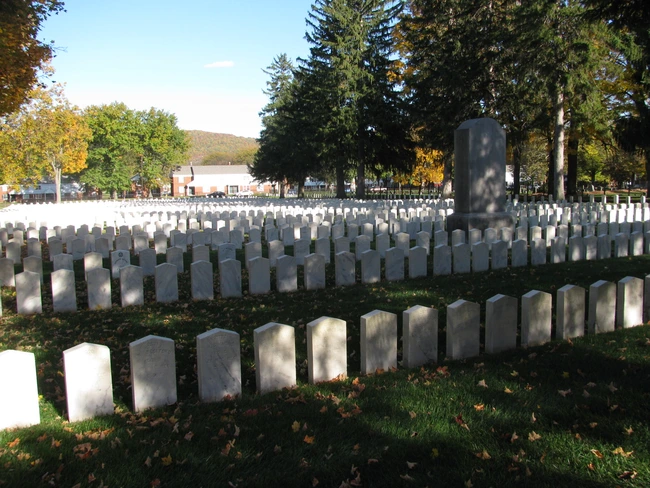
Memorial Day, often relegated to the status of a holiday weekend marking the unofficial start of summer, serves as a profound juncture for national reflection. While popular culture frequently leans toward sentimental imagery—children saluting gravestones or flags waving over parades—contemporary political discourse and historical analysis suggest a more somber imperative.
At the heart of modern Memorial Day observations is a tension between the celebration of military sacrifice and the preservation of the democratic institutions that those sacrifices were intended to protect. A recent minimalist political statement by cartoonist Bennett highlights this tension, depicting the War Powers Act buried among the graves of the fallen. This visual metaphor serves as a stark reminder that Memorial Day is not merely about mourning the dead, but about mourning the potential loss of the rule of law—a shield that once governed the transition from peace to war, now seemingly relegated to the annals of history.
This year’s observance draws a direct line from the Revolutionary War to the Civil War, and finally to the modern era, asking a fundamental question: Is the "lean freedom" fought for by the founders being traded for a "fat slavery" of complacency and executive overreach? By examining the lives of figures such as General John Stark, Justice Oliver Wendell Holmes Jr., and the compassionate gravedigger John W. Jones, we find a narrative of sacrifice that demands more than sentiment; it demands a serious reckoning with the current state of the republic.
Chronology: From the Revolutionary Frontier to the Supreme Court
The Revolutionary Standard: John Stark and the Rejection of "Fat Slavery"
The philosophical foundations of American sacrifice find their roots in the rugged landscape of New Hampshire. General John Stark, a veteran of the French and Indian Wars and a pivotal leader at the Battle of Bunker Hill and the Battle of Bennington, personified the ideal of the "citizen-soldier."
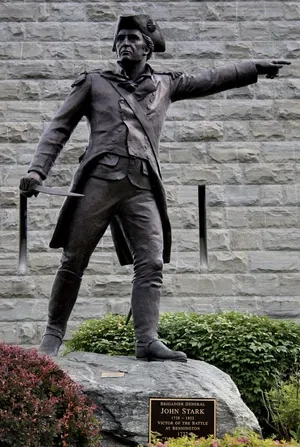
In 1809, unable to attend a reunion of Revolutionary War veterans due to failing health, Stark sent a volunteer toast that would eventually become the New Hampshire state motto: "Live free or die: Death is not the worst of evils." Far from being a mere belligerent slogan, Stark’s message was an admonition to his fellow veterans. He argued that living under "fat slavery"—a life of comfort purchased at the cost of liberty—was a fate far worse than the "lean freedom" of a self-governed, albeit difficult, life. Stark’s eventual retirement to his farm mirrored the Roman ideal of Cincinnatus, a leader who wielded power only as long as necessary to protect the state before returning to private life.
The Civil War Crucible: Oliver Wendell Holmes Jr. and the "Fire" of Youth
Nearly a century after Stark’s triumphs, the American Civil War redefined the national character. Among those who volunteered was Oliver Wendell Holmes Jr., the son of the famed poet and a product of New England’s abolitionist elite. Holmes’s military service was marked by extreme physical toll; he was seriously wounded at the battles of Ball’s Bluff, Antietam, and Chancellorsville.
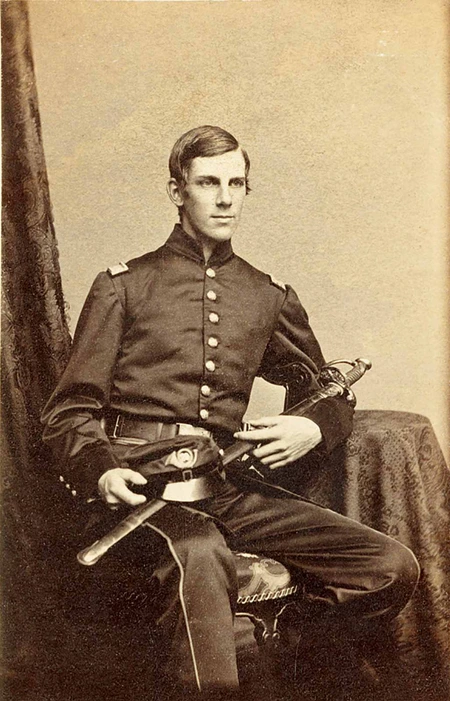
In his post-war life, Holmes did not retreat into quietude but transitioned his service to the legal realm, eventually serving as an Associate Justice of the Supreme Court. His 1884 Memorial Day speech, "Our Hearts Were Touched with Fire," remains one of the most significant reflections on war in American history. Holmes articulated that the "great good fortune" of his generation was to learn early that "life is a profound and passionate thing." His reflections moved beyond the Northern victory to acknowledge the shared sacrifice of those on both sides of the conflict, emphasizing that the "lonely pipe of death" respects no political boundary.
The Reconstruction of Memory: John W. Jones and the Dignity of the Fallen
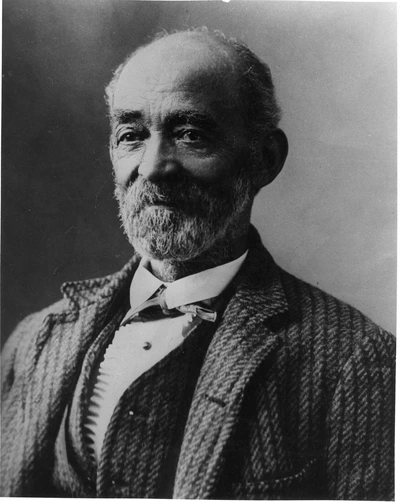
While the formal recognition of Memorial Day (originally Decoration Day) began in the late 1860s, early commemorations were often led by Black Americans in honor of the Union soldiers who died for their emancipation. A poignant example of this period is found in the work of John W. Jones, an escaped slave who became a conductor on the Underground Railroad in Elmira, New York.
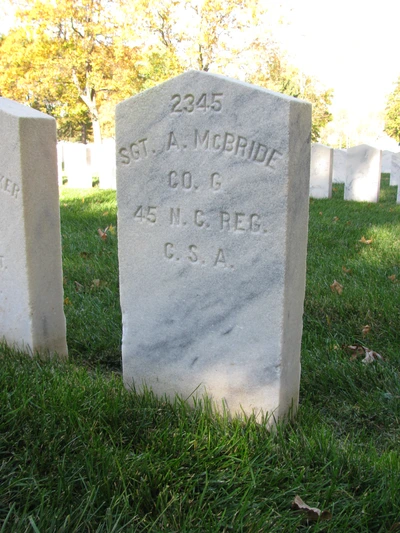
During the war, Jones served as the sexton for the city, which included the grim task of burying Confederate prisoners of war who died at the Elmira POW camp. Rather than allowing bitterness to dictate his actions, Jones meticulously documented each burial. He placed a bottle around the neck of each of the 2,973 deceased soldiers, containing a slip of paper with their name, unit, and rank. His compassion allowed for the eventual identification and dignified marking of graves at Woodlawn National Cemetery, a testament to the idea that the rule of law and human dignity must persist even in the wake of total war.
Supporting Data: The Logistics of Loss and the Bureaucracy of Bereavement
The historical record provides sobering data on the human and economic cost of maintaining the Union. During the Civil War, regiments were often recruited from single towns, meaning a single disastrous battle could decimate an entire generation of local men. This created a "flood of young widows" who were left without means of support.
- The Pension Crisis: Post-war life for many was defined by a struggle with an ill-organized, distant bureaucracy. Widows’ pensions were often trapped in red tape, leading to decades of poverty for the families of the fallen.
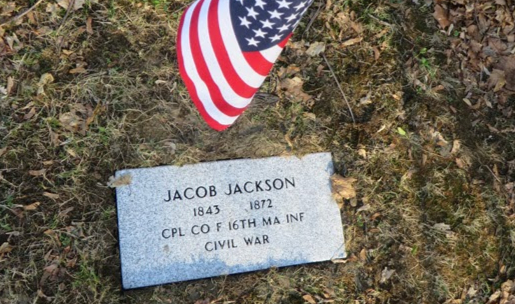
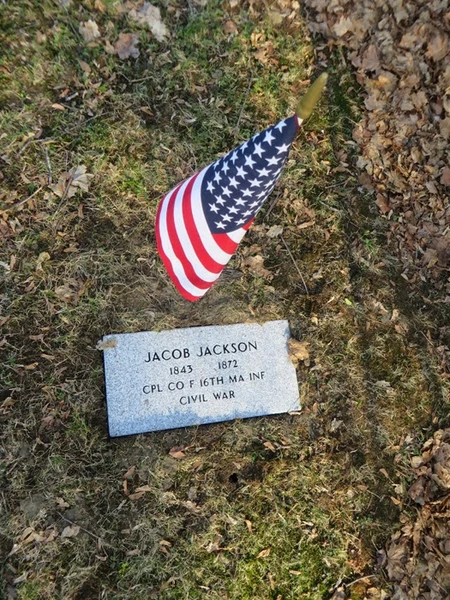
- The Pauper’s Grave: The case of Jacob Jackson in Lebanon, New Hampshire, illustrates the precarious nature of veteran life. Despite his service, Jackson died before the age of 30 and was buried in an unmarked pauper’s grave. It was only through the recent efforts of the American Legion that his grave was finally honored with a headstone—over 150 years after his death.
- The Elmira POW Statistics: Of the thousands buried by John W. Jones, only seven families chose to repatriate the remains of their loved ones after the war. The rest remained in the Woodlawn National Cemetery, their identities preserved solely because of the meticulous records kept by a man who had once been considered property by the very government those soldiers fought to defend.
Official Responses: The Society of the Cincinnati and the Grand Army of the Republic
The institutionalization of memory has historically been driven by veteran organizations that sought to translate battlefield experience into civic virtue.
- The Society of the Cincinnati: Formed by Revolutionary War officers, this group sought to preserve the ideals of the Revolution. Their namesake, Cincinnatus, served as a model for the peaceful transition of power—a concept that remains central to the American experiment.
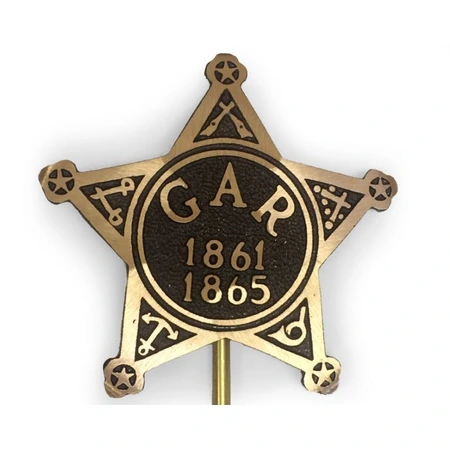
- The Grand Army of the Republic (GAR): Following the Civil War, the GAR became a powerful political and social force. It was instrumental in the establishment of Decoration Day. Figures like Oliver Wendell Holmes Jr. used the platform of the GAR to advocate for a legal philosophy that acknowledged the "passionate" nature of life while upholding the indissoluble nature of the Union.
- Modern Interpretations: Today, the New Hampshire state motto "Live Free or Die" is often invoked in political debates regarding personal liberty and state mandates. However, historians argue that the original context—Stark’s letter to his comrades—suggests a collective responsibility to resist tyranny rather than an individualistic rejection of social order.
Implications: The Burial of the War Powers Act
The inclusion of the War Powers Act in modern Memorial Day iconography suggests a troubling shift in the American landscape. The Act, passed in 1973, was intended to check the U.S. president’s power to commit the United States to an armed conflict without the consent of the U.S. Congress. By depicting this law as "buried" among the graves of soldiers, contemporary critics suggest that the constitutional safeguards meant to prevent unnecessary sacrifice have been eroded.
The Erosion of the Rule of Law
When the legal mechanisms for declaring war are bypassed or ignored, the "rule of law" becomes a casualty. The implication for Memorial Day is profound: if the laws intended to protect the lives of citizens are no longer functional, then the sacrifice of the fallen is stripped of its constitutional context. We are left not with a "lean freedom" protected by law, but with a state of perpetual conflict managed by executive fiat.
The Moral Duty of the Citizen
The lives of Stark, Holmes, and Jones suggest that the duty of the citizen extends beyond the battlefield. For Stark, it was the refusal to accept "fat slavery." For Holmes, it was the dedication of a "heart touched with fire" to the service of the Supreme Court. For Jones, it was the assertion of human dignity through meticulous record-keeping in the face of death.
As the nation observes Memorial Day, the historical narrative suggests that "keeping the faith" requires more than a moment of silence. It requires an active engagement with the principles of the Underground Railroad—recognizing that there are more ways to fight injustice than open combat—and a renewed commitment to the legal structures that ensure the sacrifices of the past were not made in vain.
In a time of crisis, the day deserves less sentiment and more serious reflection. The "lonely pipe of death" continues to sound, but the response must be a living commitment to the freedom that Stark championed and the justice that Holmes sought to codify. The graves of the fallen are not just places of mourning; they are the foundations of a legal and moral architecture that requires constant maintenance by the living.




Leave a Comment