
Cultural Diplomacy and the Creative Economy: The 6th Ibero-American Forum of Deputy Ministers at Rio2C
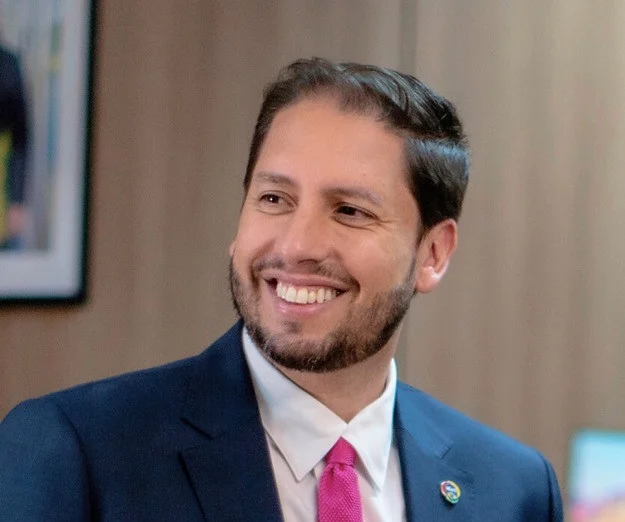
RIO DE JANEIRO, Brazil – In a landmark convergence of public policy and private sector innovation, the sixth meeting of the Ibero-American Forum of Deputy Ministers of Culture has convened this week in Rio de Janeiro. For the first time in its history, this high-level executive gathering is being held within the framework of Rio2C (Rio Creative Conference), the largest creativity and innovation summit in Latin America.
The meeting brings together top-tier cultural officials from 17 member nations: Bolivia, Brazil, Cape Verde, Chile, Colombia, Costa Rica, the Dominican Republic, Ecuador, El Salvador, Guatemala, Honduras, Panama, Paraguay, Peru, Portugal, Spain, and Uruguay. As these representatives descend upon the vibrant "Cidade Maravilhosa," the agenda is clear: to transition from abstract political discourse to concrete, data-driven strategies that will fortify the creative economy across the Ibero-American axis.
I. Main Facts: A New Era of Cultural Integration
The Ibero-American Forum of Deputy Ministers of Culture serves as a specialized executive work group under the aegis of the Organization of Ibero-American States for Education, Science, and Culture (OEI). Unlike traditional ministerial summits that often focus on high-level diplomatic pleasantries, this forum is designed for the "technocrats" and executive secretaries—the individuals responsible for the day-to-day implementation of cultural legislation and economic frameworks.
The Strategic Shift to Rio2C
The decision to host the forum during Rio2C represents a strategic pivot in how cultural policy is formulated in the region. Rio2C is a behemoth of the creative industry, attracting thousands of professionals across the sectors of audiovisual production, music, gaming, publishing, and technology. By placing deputy ministers in the heart of this marketplace, the Brazilian Ministry of Culture aims to bridge the perennial gap between government regulation and market reality.
Key Objectives for the 2024 Session
The primary focus of this year’s meeting revolves around three pillars:
- Policy Modernization: Updating the foundational agreements that govern regional cultural exchange.
- Data Harmonization: Establishing a unified method for measuring the economic impact of culture.
- Capacity Building: Launching educational initiatives to standardize professional skills across member states.
Leadership and Governance
Brazil currently holds the temporary presidency of the Forum. Consequently, the meeting is presided over by Márcio Tavares, the Executive Secretary of Brazil’s Ministry of Culture. Under his leadership, the forum is pushing for a more "hands-on" approach to regional integration, moving beyond symbolic gestures toward tangible economic cooperation.
II. Chronology: From the 2006 Charter to the Digital Frontier
To understand the significance of the current meeting in Rio, one must look at the historical trajectory of Ibero-American cultural cooperation.
- 2006: The Birth of the Ibero-American Cultural Charter. Signed in Montevideo, Uruguay, this charter was a revolutionary document for its time. It established culture as a fundamental right and a pillar of sustainable development. However, the 2006 landscape was vastly different; it was an era before the dominance of global streaming platforms, social media algorithms, and artificial intelligence.
- 2024 (Early Year): Formation of the Forum. The Ibero-American Forum of Deputy Ministers of Culture was formally established in early 2024 as a regional executive work group. The OEI recognized that to meet the challenges of the 21st century, a more agile, technical body was needed—one that could meet frequently and execute policies faster than the annual Ministerial summits.
- The Rio2C Milestone (Current): This week marks the first time the Forum has integrated with a major commercial creative market. This move reflects a global trend where governments are no longer just "patrons" of the arts but "partners" in a multi-billion dollar creative industry.
- Looking Ahead (November 2024): The discussions held this week in Rio de Janeiro are the final "dry run" before the official renewal of the Ibero-American Cultural Charter, scheduled for approval in November. The Rio meeting is where the technical language of that charter is being hammered out.
III. Supporting Data: The Economic Weight of the Creative Sector
The impetus for this meeting is rooted in the significant, yet often under-measured, economic power of the creative industries. In many Ibero-American nations, the creative economy contributes between 2% and 4% of the national GDP—figures that rival traditional sectors like agriculture or mining in some regions.
The Challenge of Measurement
One of the central hurdles for deputy ministers has been the lack of standardized data. Without accurate metrics, it is difficult to lobby for larger budget allocations or to attract foreign direct investment. To address this, a landmark cooperation agreement is being signed during the Rio2C meeting between the OEI and Fundação Itaú (the philanthropic and cultural arm of one of Brazil’s largest private banks).
The agreement focuses on:
- Structuring Indicators: Creating a shared methodology to track employment, export value, and digital consumption of cultural products.
- Sustainable Development Goals (SDGs): Aligning creative output with the UN’s 2030 agenda, proving that a robust film or music industry contributes to social stability and economic equity.
Market Reach
The 17 countries represented in the Forum comprise a market of over 600 million people. The linguistic bridge of Spanish and Portuguese provides a unique competitive advantage in the global market, particularly in the "Screen" (audiovisual) and "Music" sectors. By integrating these markets, the Forum aims to create a "cultural common market" that can stand toe-to-toe with North American and Asian entertainment giants.
IV. Official Responses: Perspectives from the Ground
The atmosphere at Rio2C is one of pragmatic optimism. The leadership emphasizes that this is not a "political" gathering in the traditional sense, but a "sector-focused" workshop.
Rafael Lazarini, Founder of Rio2C
Lazarini highlighted the importance of the forum’s technical nature. "This year, for the first time, we are bringing the Forum. It was an initiative of Brazil’s Ministry of Culture, which recognized the relevance of Rio2C," Lazarini stated. He pointed out that by inviting deputy ministers and executive secretaries rather than just ministers, the event ensures that the participants are those who "roll up their sleeves and get the work done."
Lazarini’s vision for Rio2C has always been about "integration," and he views the presence of the 17 nations as a catalyst for optimizing content production across borders. "The goal is truly to optimize integration among countries and the production of content," he added.
Márcio Tavares, Executive Secretary of Brazil’s Ministry of Culture
Presiding over the meeting, Tavares emphasized the "unprecedented" nature of this convergence. "For the first time, we are bringing the Forum’s discussions into the largest creativity gathering in Latin America," Tavares told Variety.
Tavares is particularly focused on the "Escola Solano Trindade de Cultura e Economia Criativa," a virtual school operated by the Brazilian Ministry. During the meeting, he is presenting Portuguese and Spanish-language courses to be offered to all member countries. This move is seen as a way to democratize access to technical training in the creative sector.
"This is where we build bridges between the public and private sectors," Tavares remarked. "Seeking to further energize and strengthen the production chains of culture and the creative economy in the region is of utmost importance to us."
V. Implications: Shaping the Future of Ibero-American Content
The 6th Ibero-American Forum of Deputy Ministers of Culture is likely to have long-lasting implications for how content is produced and consumed in the region.
1. The Modernization of the 2006 Charter
The renewal of the Ibero-American Cultural Charter is perhaps the most significant outcome. The "new version" to be approved in November will likely include provisions for:
- Digital Sovereignty: How member states can protect their local industries in the face of global streaming dominance.
- Artificial Intelligence: Establishing ethical frameworks for the use of AI in the arts, ensuring that human creators are protected and compensated.
- Intellectual Property: Streamlining IP laws across the 17 nations to allow for easier co-productions.
2. Strengthening Co-Productions
By standardizing policies and building personal relationships between executive secretaries, the Forum paves the way for more "inter-Ibero-American" co-productions. We can expect to see more film and television projects that are co-funded by, for example, Spain, Brazil, and Mexico, allowing for higher production values and broader distribution.
3. Education as an Economic Engine
The introduction of the Escola Solano Trindade’s curriculum to the entire forum suggests a shift toward professionalizing the "backstage" of the creative economy. By training a workforce in both Spanish and Portuguese in areas like cultural management, sound engineering, and digital copyright, the region creates a more resilient and mobile talent pool.
4. A Unified Voice in Global Forums
As these 17 nations align their data and policies, they gain a more powerful collective voice in international organizations like UNESCO and the WTO. A unified Ibero-American front can more effectively advocate for "cultural exception" clauses in trade deals, ensuring that culture is not treated merely as a commodity.
Conclusion
The 6th Ibero-American Forum of Deputy Ministers of Culture at Rio2C represents a sophisticated evolution of cultural diplomacy. By moving the conversation from the halls of government to the floor of a creative trade show, the member states are acknowledging that the future of culture is inextricably linked to the economy. As the meeting concludes, the focus shifts to November, where the new Cultural Charter will set the stage for a more integrated, digitized, and economically robust Ibero-American creative landscape.

Leave a Comment