
Ninhursag: Unveiling the Ancient Sumerian Mother Goddess
Introduction
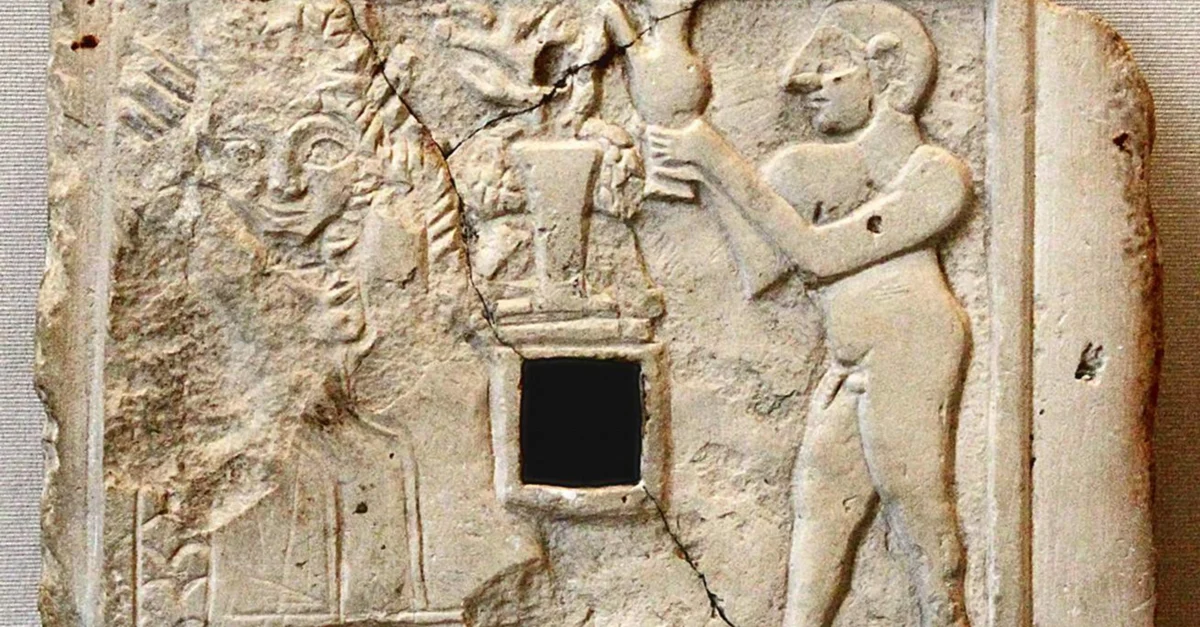
Ninhursag, also known as Ninhursaga, stands as a monumental figure in the ancient Sumerian pantheon, revered as the primordial mother goddess and one of the most ancient and influential deities in Mesopotamian cosmology. Often hailed as the "Mother of the Gods" and "Mother of Men," her profound role in the creation of both divine and mortal beings cemented her status as a central pillar of Sumerian religious belief. Predating and eventually superseding the earlier mother goddess Nammu (or Namma), whose worship is attested as early as the Early Dynastic III period (c. 2600-2350 BCE), Ninhursag embodies the life-giving, nurturing, and sometimes fierce aspects of the feminine divine. Her presence in countless myths and her numerous epithets reflect the multifaceted nature of her power and her adaptability across different cultural narratives and periods. Understanding Ninhursag is crucial to grasping the foundational spiritual landscape of one of civilization’s earliest great cultures.
The Many Faces of the Mother Goddess: Names and Attributes
Ninhursag’s prominence is underscored by the multitude of names she bore, each reflecting a specific aspect of her divine persona or a particular role she played within a mythic narrative. This fluidity in nomenclature speaks to her pervasive influence and the diverse ways in which ancient Mesopotamians perceived and invoked her.
Early Manifestations: Damkina, Damgalnuna, and the Roots of Fertility
Before her most widely recognized name, Ninhursag was known in Sumer as Damkina and Damgalnuna. These early appellations linked her directly to the concept of a nurturing mother goddess, particularly associated with fertility in the ancient city of Malgum. In these initial forms, her primary consort was Sul-pa-e, a minor god connected to the underworld, with whom she bore three children: Asgi, Lisin, and Lil. This early association highlights her fundamental connection to the generative forces of the earth and the cycle of life and death, even at a localized cultic level. However, her enduring legacy largely stems from her more frequent depiction as the wife and consort of Enki, the highly complex god of wisdom, magic, and freshwater. This pairing often positioned her as a balancing force to Enki’s intellect and ambition, emphasizing her role in the practicalities of creation and sustenance.
Lady of the Mountain: Ninhursag and the Triumph of Ninurta
The name "Ninhursag" itself, meaning "Lady of the Mountain," is derived from the epic poem Lugale. In this myth, Ninurta, the formidable god of war and hunting, achieves a monumental victory over the monstrous demon Asag and his formidable stone army. Following this triumph, Ninurta constructs a mountain from the defeated foes’ corpses, a potent symbol of his dominion and the establishment of order. In an act of profound reverence and filial devotion, Ninurta attributes the glory of his victory to his mother, Ninmah ("Magnificent Queen"), subsequently renaming her Ninhursag. This renaming is not merely a change of title but a re-sacralization, imbuing her with the power and majesty of the earth’s highest peaks, symbolizing her unshakeable foundation, abundance, and formidable presence. The mountain, a source of minerals, water, and shelter, became an enduring symbol of her nurturing yet awe-inspiring power.
Queen of the Birthing Hut: Nintud/Nintur and the Akkadian Belet-ili
Further reinforcing her intrinsic connection to life-giving processes, Ninhursag was also revered as Nintud or Nintur, meaning "Queen of the Birthing Hut." The birthing hut was a sacred space, often separate from the main dwelling, where women would go to give birth. This name directly identifies her as the divine patroness of childbirth, overseeing the intricate and often perilous journey of bringing new life into the world. Her presence in the birthing hut ensured protection, eased labor, and blessed the newborn. The Akkadians, who assimilated much of the Sumerian pantheon, knew her as Belet-ili, meaning "Queen of the Gods," a testament to her supreme authority and foundational status within their broader divine hierarchy. Other names like Makh, Mamma, Mama, and Aruru further underscore her universal role as a nurturing, maternal figure, resonating with the primal sound for "mother" across many languages.
Iconography and Ancient Roots
In iconography, Ninhursag is often represented by a distinctive sign resembling the Greek letter omega (Ω), frequently accompanied by a knife. This powerful symbol is widely interpreted as representing the uterus, while the knife is thought to symbolize the blade used to cut the umbilical cord. This visual language powerfully encapsulates Ninhursag’s direct involvement in creation, gestation, and the severance that marks individual birth, solidifying her role as the ultimate mother goddess.
The origins of her worship extend deep into prehistory. While she first appears in written works during the Early Dynastic I period (c. 2900-2750/2700 BCE), archaeological evidence suggests the veneration of a mother goddess figure dating back to at least 4500 BCE, during the Ubaid period (c. 6500-4000 BCE). This predates the arrival of the Sumerians in southern Mesopotamia, indicating a profound, indigenous reverence for a life-giving feminine deity. Ninhursag is thus a prime candidate for the original "Mother Earth" figure, a deity who evolved from earlier manifestations like Nammu and embodied fertility, growth, transformation, creation, pregnancy, childbirth, and universal nurture. Her early names, such as Ki or Kishar, explicitly identify her as "Mother Earth," the very ground from which life springs and upon which it is sustained. Mothers across Mesopotamia frequently invoked her, believing she formed and cared for the child within the womb and ensured its nourishment after birth. As one of the four principal creating deities in Sumerian religious belief—alongside Anu, Enlil, and Enki—Ninhursag is woven into the very fabric of Mesopotamian cosmology, frequently appearing in the most pivotal myths.
The Cosmic Collaborator: Ninhursag in Sumerian Creation Myths
Ninhursag’s importance is most vividly illustrated through her central roles in various Sumerian myths, particularly those detailing the creation of the world and humanity. These narratives not only showcase her power but also reveal the complex dynamics within the divine pantheon.
The Four Creating Deities and Her Primal Role
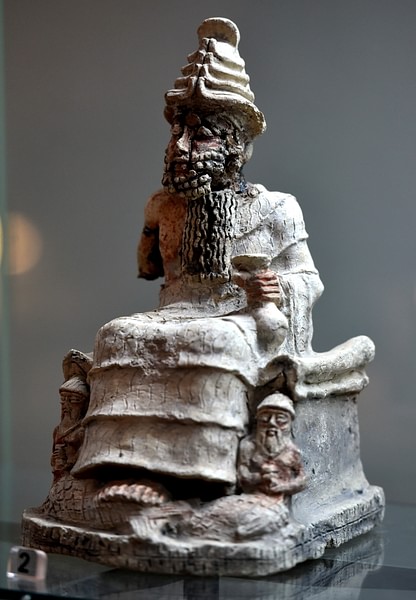
In Sumerian cosmology, Ninhursag stood shoulder-to-shoulder with Anu (sky god), Enlil (god of wind, air, and storms), and Enki (god of wisdom, water, and creation) as one of the four creating deities. While often listed last in later periods, scholarly analysis, such as that by Samuel Noah Kramer, suggests her earlier preeminence: "In an earlier day, this goddess was probably of even higher rank and her name often preceded that of Enki when the four gods were listed together" (Kramer, 122). This highlights a fascinating chronological shift in the perceived hierarchy of the gods, reflecting broader societal changes.
The Garden of Dilmun: Enki and Ninhursag
One of the most famous and complex myths featuring Ninhursag is Enki and Ninhursag, a Sumerian poem that recounts the genesis of the world in the idyllic garden paradise of Dilmun. This narrative paints Ninhursag as a vibrant, youthful goddess, taking a necessary winter’s respite after her arduous efforts in the primordial act of creation.
Enki, drawn by her serene beauty, encounters her in Dilmun and is overcome by love. Their union leads to the birth of Ninsar ("Lady of Vegetation"), a daughter whom Ninhursag blesses with astonishingly rapid growth, allowing her to mature into a woman in just nine days. As spring returns, Ninhursag, ever mindful of her earthly duties, departs Dilmun to continue nurturing the living world. However, Enki’s longing for her leads him down a problematic path. Mistaking Ninsar for Ninhursag, he seduces his own daughter, resulting in the birth of Ninkurra (goddess of mountain pastures), who also matures in nine days. The pattern repeats as Enki, again mistaking Ninkurra for Ninhursag, seduces her, leading to the birth of Uttu ("The Weaver of Patterns and Life Desires").
Initially content with Uttu, Enki’s affections wane as he realizes she is not Ninhursag. He abandons her and returns to his work. Distraught, Uttu appeals to Ninhursag, her great-grandmother, for help. Ninhursag, embodying her role as protector and restorer of order, instructs Uttu to wipe Enki’s seed from her body and bury it in the fertile earth of Dilmun. Nine days later, eight new plants miraculously spring from the ground.
Enki, accompanied by his vizier Isimud, returns to Dilmun. Curious about the new flora, he asks Isimud about each plant. Ignoring the divine prohibition, he tastes all eight, finding them delicious. This transgression enrages Ninhursag. In a demonstration of her ultimate power, she turns the "eye of death" upon Enki, curses him, and withdraws from both paradise and the world, plunging the cosmos into disarray.
Enki falls gravely ill, his body afflicted in eight places, and he faces certain death. The other gods mourn, powerless to heal him, for only Ninhursag possesses the ability to reverse her curse. A fox, an animal sacred to Ninhursag, finds her and persuades her to return. Ninhursag rushes to Enki’s side, drawing him close. In a powerful act of divine midwifery, she places his head against her vulva, kissing him and asking him to identify each site of his pain. As he names them, she draws the illness into her own body and gives birth to eight new deities, each corresponding to one of Enki’s ailments. These include Abu (plant god), Nintul (lord of Magan), Ninsutu (lady of Sut), Ninkasi (goddess of beer), Nazimush (patron of growth), Azimua (healing goddess), Ninti (lady of the rib/life), and Enshag (lord of Dilmun). Through this profound act of restorative creation, Enki is healed, repents for his transgressions, and Ninhursag forgives him. The myth concludes with their return to the vital work of creation, reaffirming Ninhursag’s indispensable role in maintaining cosmic balance. This myth unequivocally establishes Ninhursag as a deity of immense power, capable of inflicting death and, uniquely, reversing it, turning suffering into new life.
The Genesis Connection: A Sumerian Literary Pun
Beyond its intrinsic narrative power, Enki and Ninhursag holds profound implications for later Western religious traditions, particularly the biblical story of creation. Samuel Noah Kramer highlighted a remarkable linguistic connection that suggests this Sumerian myth as a foundational influence. He famously noted the puzzling detail in Genesis where Eve, "the mother of all living," is fashioned from Adam’s rib. Kramer posed the question: "Why did the Hebrew storyteller find it more fitting to choose a rib rather than any other organ of the body for the fashioning of the woman whose name, Eve, according to the biblical notion, means approximately ‘she who makes live’?" (Kramer, 149).
The answer, Kramer argued, lies in a sophisticated Sumerian literary pun. In Enki and Ninhursag, one of the specific organs afflicted in Enki’s body is his rib. The goddess created to heal his rib was named Nin-ti. The Sumerian word ti has a dual meaning: it signifies both "rib" and "to make live." Thus, in Sumerian literature, "the Lady of the rib" (Nin-ti) became intrinsically identified with "the Lady who makes live" through this clever wordplay. This ancient literary pun, Kramer posited, was carried over into the biblical paradise story. While the pun loses its linguistic validity in Hebrew, where the words for "rib" and "who makes live" bear no etymological relation, the narrative detail of the rib persisted, echoing a Sumerian theological concept across millennia and cultures. This revelation profoundly illustrates the deep interconnectedness of ancient Near Eastern mythologies and the enduring legacy of Sumerian thought.
A Shifting Divine Landscape: Enki and Ninmah and the Decline of the Goddess
While Enki and Ninhursag showcases the goddess’s supreme power, another significant myth, Enki and Ninmah, presents a narrative arc where the goddess, initially on equal footing, ultimately yields precedence to the male god. This shift is particularly telling in the broader context of Mesopotamian religious evolution.
The Burden of Creation and the Birth of Humanity
The myth opens with the younger gods exhausted and lamenting their endless toil. They are burdened with the arduous tasks of digging canals, harvesting fields, and performing all manner of menial labor, which prevents them from pursuing higher divine functions or enjoying leisure. Their cries reach Enki’s mother, Nammu, who carries their tears to her son. Enki, initially resting after his own creative endeavors, is roused and, though somewhat annoyed, agrees to his mother’s request: to create beings that will alleviate the gods’ immense burden. He tasks Nammu and Ninmah (Ninhursag by another name) and other fertility goddesses with the crucial mission of creating human beings and imbuing them with life. This narrative positions Ninhursag/Ninmah at the very heart of humanity’s genesis, a direct participant in the fashioning of mortal life.
The Drunken Contest: Enki’s Ascent and Ninmah’s Challenge
Once humans are created, a grand banquet is held in celebration, where the older gods praise Enki’s wisdom and the younger gods rejoice in their newfound freedom from labor. During this celebration, Enki and Ninmah, having consumed a considerable amount of beer, engage in a spirited contest. Ninmah challenges Enki, asserting that while humans’ bodies might be Enki’s design, their fates—whether good or bad—would depend entirely on her will. Enki confidently accepts, declaring, "Whatever fate you decide, good or bad, I will improve it."
Ninmah begins by fashioning a man with weak hands. Enki, true to his word, improves his fate by making him a servant to a king, a position where his weakness would prevent theft and ensure his livelihood. She then creates a blind man, but Enki bestows upon him the gift of music, making him a revered minstrel for the king. This pattern continues, with Ninmah presenting increasingly challenging deformities, each of which Enki skillfully ameliorates, finding a suitable place and purpose for the afflicted. Finally, Ninmah creates a being with neither penis nor vagina. Enki, undeterred, finds a role for this creature as a eunuch, a trusted guardian within the king’s household.
Frustrated by Enki’s repeated successes, Ninmah angrily throws her next lump of clay to the ground. Yet, Enki retrieves it, resuming the game and challenging her to improve the fate of a creature he will now fashion. He creates a man afflicted in every conceivable way, unable to eat, stand, walk, or speak. Ninmah attempts to care for him but is ultimately defeated, proclaiming, "The man you have fashioned is neither alive nor dead. He cannot support himself." Enki counters, reminding her of his own successes with her creations. Although the tablet is broken at this crucial point, the story resumes with Enki as the clear victor, concluding with the lines, "Ninmah could not rival the great lord Enki. Father Enki, your praise is sweet!"
The narrative trajectory of Enki and Ninmah is significant. While Ninhursag is consistently linked with life, caring, and creation across all her myths, this particular story marks a symbolic decline in her divine stature relative to Enki. This shift is often seen by scholars as mirroring real-world societal changes. During the reign of Hammurabi of Babylon (1792-1750 BCE), female deities in Mesopotamia began to be overshadowed by male counterparts, reflecting a broader patriarchal consolidation of power. If Enki and Ninmah dates from this period, it would serve as a powerful literary reflection of the diminishing status of goddesses and, by extension, women in Mesopotamian society. As scholar Jeremy Black noted regarding the challenge of dating Sumerian texts, "Lack of anything but a fairly general historical framework for Sumerian compositions means that any chronological approach to literary questions, such as the development of genres or correlation with historical processes or events, must be largely abandoned" (Black, Reading Sumerian Poetry, 23). Nevertheless, the narrative outcome strongly suggests a later composition, when male deities were ascendant.
The Great Mother in Wider Mesopotamian Narratives
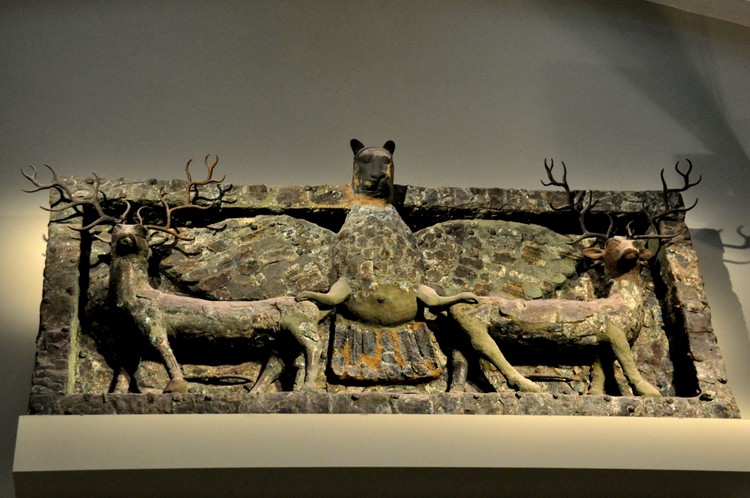
Ninhursag’s pervasive influence extends beyond her primary myths, appearing in other pivotal Mesopotamian texts that underscore her enduring role as a maternal figure and a force of life.
Atrahasis: Sacrifice, Flood, and Maternal Grief
In the epic Atrahasis, Ninhursag plays a critical role in the creation of humanity. Here, humans are fashioned from clay mixed with the flesh, blood, and intelligence of a sacrificed god, a powerful act of divine intervention to relieve the younger gods of their labor. This myth also credits Enki as the deviser of humanity, but Ninhursag is the direct artisan of their physical form. Her maternal bond with humanity is poignantly illustrated during the Great Flood, unleashed by Enlil to destroy mankind. While all the gods mourn the catastrophe, Ninhursag is singled out, her cries of anguish specifically mentioned as she weeps for the death of her "children." This depiction highlights her profound empathy and her enduring connection to the mortal beings she helped bring into existence.
Consort of Anu and Kishar: Primal Earth Mother
In some myths, presumed to be earlier works, Ninhursag is depicted as the consort of Anu, the supreme sky god, and a co-creator of the world. In still other contexts, she is identified with Kishar (also known as Ki), the primordial mother earth. This fluidity in her divine relationships and identifications reinforces her ancient origins and her fundamental role in the very fabric of existence. She consistently maintained her position within the list of the Seven Divine Powers, the oldest and most revered Sumerian gods: Anu, Enki, Enlil, Inanna, Nanna, Ninhursag, and Utu-Shamash. Each of these deities possessed unique gifts for humanity, but Ninhursag, as the Great Mother, presided over all of humankind, from the lowliest commoner to the mightiest king. She was primarily seen as the protector of women and children, overseeing the sacred processes of conception, gestation, and birth, while also holding a position of immense honor among her divine peers.
Worship, Symbolism, and Legacy
Ninhursag’s cult was widespread and deeply ingrained in Mesopotamian society, reflecting her universal appeal and the critical functions she fulfilled.
Nurturer of Kings and Protector of Humanity
The reverence for Ninhursag permeated all levels of society. Early Sumerian rulers proudly described themselves as "constantly nourished by Ninhursag with milk," acknowledging her as the ultimate provider of sustenance and legitimacy for their rule (Kramer, 122). This imagery of a divine wet nurse highlights her role not just in physical birth but in nurturing and sustaining civilizations. Her specific guardianship over women and children made her a particularly accessible deity for the common populace. She was invoked for fertility, safe pregnancies, and successful childbirth, offering hope and protection in an often perilous world.
Scholar E. A. Wallis Budge observed how she "created the gods and suckled kings and terracotta figures of her represent her suckling a child at her left breast" (Budge, 84). The emphasis on the left side in her iconography is significant. In ancient Mesopotamia, and indeed many ancient cultures, the left side was often associated with the feminine, the "dark" or intuitive, while the right was masculine, "light" or rational. Statuary and depictions of Ninhursag often accentuated the left—a child at the left breast, an uncovered left breast, or a raised left arm—symbolizing her potent feminine creative power.
Temples, Rituals, and Festivals
Ninhursag was venerated in numerous cities throughout Mesopotamia. Adab was a primary center of her worship, and she was also strongly associated with Kesh (as evidenced by one of her names, Belet-ili of Kesh, often mistakenly cited as Kish). Temples dedicated to her were found in major urban centers such as Ashur, Ur, Uruk, Eridu, Mari, and Lagash, among many others, testifying to her enduring cult across thousands of years.
The people of Mesopotamia expressed their devotion to Ninhursag, as with other deities, through a combination of private rituals, personal sacrifices, and donations to her temples. Unlike modern congregational worship, there were no weekly services. Instead, the numerous religious festivals held throughout the year provided vibrant public opportunities for expressing reverence, offering prayers, and celebrating the life-giving power of the Great Mother. These festivals were crucial communal events, solidifying the social and spiritual fabric of the cities.
The Enduring Echo: From Mesopotamia to Modern Myth
The legacy of Ninhursag, while experiencing a decline in direct worship, profoundly influenced subsequent religious traditions and cultural archetypes.
The Decline of Goddesses and the Rise of Patriarchal Pantheons
The second millennium BCE marked a significant turning point for feminine deities in Mesopotamia. The ascendancy of male gods, particularly during the reign of Hammurabi of Babylon, led to a systemic shift in the divine hierarchy. After 1750 BCE, male deities dominated the pantheons, a paradigm that persisted even after the Amorites were defeated. Even immensely popular goddesses like Inanna/Ishtar, though still powerful, became secondary to male gods such as the Assyrian Assur. The formidable Ereshkigal, sovereign of the underworld, was eventually given a male consort, Nergal, to co-reign, symbolically diminishing her independent authority. Ninhursag, too, experienced this decline, and by the fall of the Assyrian Empire in 612 BCE, her direct worship had largely ceased.
The "Sinister" Legacy: Linguistic and Cultural Transformations
This shift from goddess-centric to male-dominated pantheons had profound and lasting cultural repercussions. Over time, the left side, once associated with the powerful feminine divine and nurturing (as seen in Ninhursag’s iconography), became connected with darkness, ill omen, and evil. This semantic transformation is evident in the word "sinister," which originated from the Latin word sinister, meaning "left." Long before its appearance in Late Middle English (c. 1375-1425), it had acquired connotations of "threatening," "evil," and "unlucky." The practice of wearing a wedding ring on the left hand, for instance, originated in ancient Rome as a means to ward off the malevolent powers believed to be associated with the left side, a stark reversal of its earlier positive associations with the mother goddess.
Lilith and the Rebellious Feminine
The inversion of goddess symbolism can also be observed in later Judeo-Christian folklore. The Hebrew legend of Lilith, the rebellious first wife of Adam, is a compelling example. Lilith is said to have emerged from Adam’s left side, later flying away from paradise with her demonic offspring. This narrative can be interpreted as a powerful re-casting of earlier, formidable goddess figures into negative, rebellious archetypes. The powerful, independent feminine divine, once revered as a life-giver, was demonized and associated with evil to cement the dominance of patriarchal religious structures.
A Universal Archetype: Ninhursag’s Influence
Despite the decline of her direct cult, Ninhursag’s influence is considered immensely significant in the development of later goddess figures across diverse cultures. Scholars have traced connections between Ninhursag and Hathor and Isis of Egypt, Gaia of Greece, and Cybele of Anatolia, who later became the Magna Mater of Rome. These powerful mother goddesses, each embodying aspects of creation, fertility, and protection, can be seen as spiritual descendants of Ninhursag. Furthermore, elements of this ancient mother goddess archetype, particularly her nurturing and life-giving aspects, eventually contributed to the development of figures like the Virgin Mary, demonstrating the enduring power of the feminine divine across millennia and civilizations. Ninhursag, though her temples may lie in ruins, continues to echo through the corridors of history as a primal force of creation, a testament to the enduring human quest to understand the origins of life and the sacred role of the mother.


Leave a Comment