
The Micro-Revolution of Mixed Reality: Realcast Debuts ‘Just Hoops Nano’ on Meta Quest
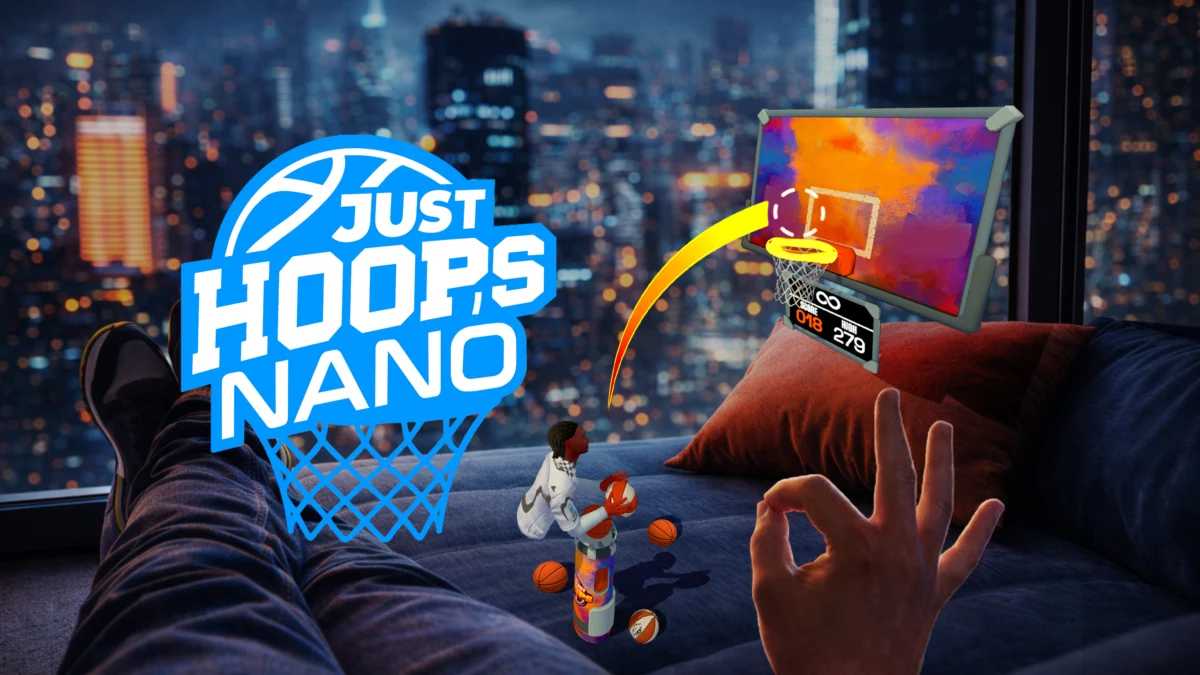
The landscape of Mixed Reality (MR) is undergoing a significant transformation, shifting away from high-intensity, room-scale experiences toward more integrated, "lifestyle" applications that coexist with the user’s physical environment. In a move that underscores this trend, developer Realcast has officially launched Just Hoops Nano on the Meta Quest platform. This release marks a strategic pivot for the franchise, transitioning from the full-scale athletic simulation of the original Just Hoops to a miniaturized, desk-centric experience designed for accessibility and casual play.
Originally slated for a broader "summer" release window, the surprise launch of Just Hoops Nano has caught the VR community’s attention, offering a refined look at how hand-tracking technology and spatial computing can turn any flat surface into a digital playground.
Main Facts: A New Dimension of Desk-Scale Gaming
Just Hoops Nano is a Mixed Reality basketball arcade game specifically engineered for the Meta Quest 2, Quest Pro, and Quest 3. Unlike its predecessor, which required a significant amount of clear floor space to simulate a full basketball court, Nano is designed to be played from a seated or stationary position—be it a desk, a couch, or even a bed.
Key Features and Specifications:
- Platform Availability: Meta Horizon Store (formerly Meta Quest Store).
- Pricing: $7.99 USD.
- Input Methods: Optimized for high-fidelity hand tracking; also supports standard Touch controllers.
- Game Modes: Includes "Around the World," "Zen Mode," and more than 20 dynamic levels featuring moving hoops and complex obstacles.
- Core Philosophy: "Easy to play, hard to master" physics-based gameplay.
The game leverages the passthrough capabilities of the Quest hardware to anchor a digital basketball hoop and ball dispenser into the user’s real-world environment. The interaction model is built around "micro-gestures"—pinching, flicking, and shooting—which are tracked by the headset’s onboard cameras to translate physical intent into digital trajectory.
Chronology: From Arcade Simulation to Spatial Minimalism
The journey of the Just Hoops brand reflects the broader evolution of the XR (Extended Reality) industry. To understand the release of Nano, one must look at the timeline of Realcast’s development cycle and the shifting hardware capabilities of the Meta Quest ecosystem.
The Original Vision (2021–2023)
The original Just Hoops was conceived as a faithful recreation of the classic 1980s and 90s street basketball arcade machines. Released on SteamVR and the Meta Quest Store, it focused on large-scale movements, requiring players to physically mimic the shooting motion of a professional athlete. While successful, the game faced the inherent friction of VR: the need for a dedicated "play space" and the physical fatigue associated with long sessions.
The Announcement of ‘Nano’ (Early 2024)
In early 2024, Realcast teased a miniaturized version of the experience. The goal was to strip away the physical barriers of the game. By moving the scale from "human-sized" to "toy-sized," the developers aimed to tap into the "fidget-toy" appeal of modern mobile gaming while utilizing the immersion of MR.
The Surprise Launch (May 2024)
While industry analysts and fans expected a mid-to-late summer release, Realcast opted for a surprise "shadow drop" in May. This timing allowed the game to capitalize on the recent v64 and v66 firmware updates for Meta Quest, which significantly improved passthrough quality and hand-tracking stability—two pillars upon which Just Hoops Nano relies.
Supporting Data: The Mechanics of "Pinch and Flick"
The success of a "nano" game hinges on the precision of its physics engine. In a miniaturized environment, the margin for error is significantly smaller than in a full-scale simulation. Realcast has implemented a bespoke physics layer that accounts for the velocity of a finger flick and the release point of a pinch gesture.
Technical Analysis of Gameplay
The game features over 20 levels that progress in difficulty. Initial levels provide a static hoop at a short distance, allowing players to calibrate their muscle memory. As the player progresses, the game introduces:
- Dynamic Vectors: Hoops that move horizontally and vertically.
- Obstacles: Physical barriers that require "bank shots" or high-arcing trajectories.
- Longshot Challenges: Testing the limits of the Quest’s hand-tracking volume by placing hoops at the far edge of the user’s desk.
In "Zen Mode," data suggests a focus on user retention through stress reduction. By removing timers and scoreboards, Realcast is positioning Just Hoops Nano not just as a game, but as a "spatial utility"—something a user might keep open in a corner of their vision while listening to a podcast or taking a break from work.
Accessibility and Input
While the game is marketed as a hand-tracking showcase, the inclusion of controller support is a critical data point. Controller support ensures that users in low-light environments (where hand tracking often fails) or those with motor-function limitations can still enjoy the experience. However, the "true" version of the game is widely considered to be the hand-tracking mode, which eliminates the "barrier" of holding plastic hardware.
Official Context: Realcast’s Strategic Vision
While official press releases often focus on the "fun" aspect of gaming, the strategic underpinnings of Realcast’s move toward MR are clear. The developer has consistently sought to lower the "friction" of VR.
In various developer logs and social media interactions, the Realcast team has emphasized that Just Hoops Nano is a response to how people actually use their headsets. Data from the broader VR market suggests that "short-burst" sessions are becoming more common than multi-hour marathons. By pricing the game at $7.99, Realcast is positioning Nano as an "impulse buy" that offers high value-per-minute.
The decision to release the game earlier than expected suggests a high level of confidence in the current state of Meta’s Quest Store. With the Quest 3 now firmly established in the market, there is a growing hunger for "Mixed Reality first" content—games that cannot be played in traditional VR because they require the context of the user’s room to feel "correct."
Implications: The Future of "Couch-Scale" Mixed Reality
The release of Just Hoops Nano is more than just a minor game launch; it is a signal of where the industry is heading. There are several long-term implications for the Meta Quest ecosystem and the XR industry at large.
1. The Death of the "Play Boundary"
For years, the "Guardian" or play boundary has been a necessary evil in VR, reminding users of their physical limitations. Just Hoops Nano represents a shift toward "boundary-less" gaming. Because the game is anchored to a desk or a lap, the risk of hitting a wall or tripping over furniture is eliminated. This makes XR safer and more appealing to a demographic that may have been intimidated by the "blindness" of traditional VR.
2. Spatial Multitasking
As Meta continues to improve its "Augmented Lead" (the ability to run 2D apps alongside 3D games), Just Hoops Nano fits perfectly into a multi-window workflow. We are approaching an era where a user might have a virtual browser open for work, a YouTube window to the side, and a Just Hoops Nano basket on their physical desk for a quick distraction.
3. The "App Store-ification" of VR
The $7.99 price point is significant. It moves away from the $29.99 "premium" pricing of early VR titles and mirrors the early days of the iOS App Store. If developers can find success with smaller, high-quality, low-cost MR titles, we may see an explosion of "Nano" versions of popular franchises—miniature golf on your dining table, tiny racing tracks on your floor, or desktop-sized strategy games.
4. Hardware Validation
For Meta, games like Just Hoops Nano serve as a validation of their investment in color passthrough and AI-driven hand tracking. While "AAA" titles like Asgard’s Wrath 2 show off the power of the headset, Nano shows off the utility and seamlessness of the hardware. It proves that the headset can be a casual device, not just a gaming console.
Conclusion
Just Hoops Nano is a testament to the idea that bigger is not always better in the world of immersive technology. By shrinking the court and focusing on the tactile satisfaction of a well-timed flick, Realcast has created a compelling argument for the "desk-scale" future of Mixed Reality. At $7.99, it represents a low-risk entry point for Quest owners looking to see what their headsets are truly capable of when the virtual and physical worlds collide. As the industry watches the reception of this "surprise" release, it may very well set the template for the next generation of casual spatial gaming.



Leave a Comment