
The Architect of the Uncanny: The Relentless Vision of Hans Rickheit
By Journal Staff
In the landscape of contemporary American comics, few voices resonate with as much haunting, singular clarity as Hans Rickheit. For over a quarter-century, Rickheit has carved a niche within the avant-garde, producing a body of work that defies easy categorization. His narratives—a blend of Victorian industrialism, surrealist horror, and profound melancholy—act as windows into a "deep dark secret underworld" that is as technically meticulous as it is psychologically unsettling.
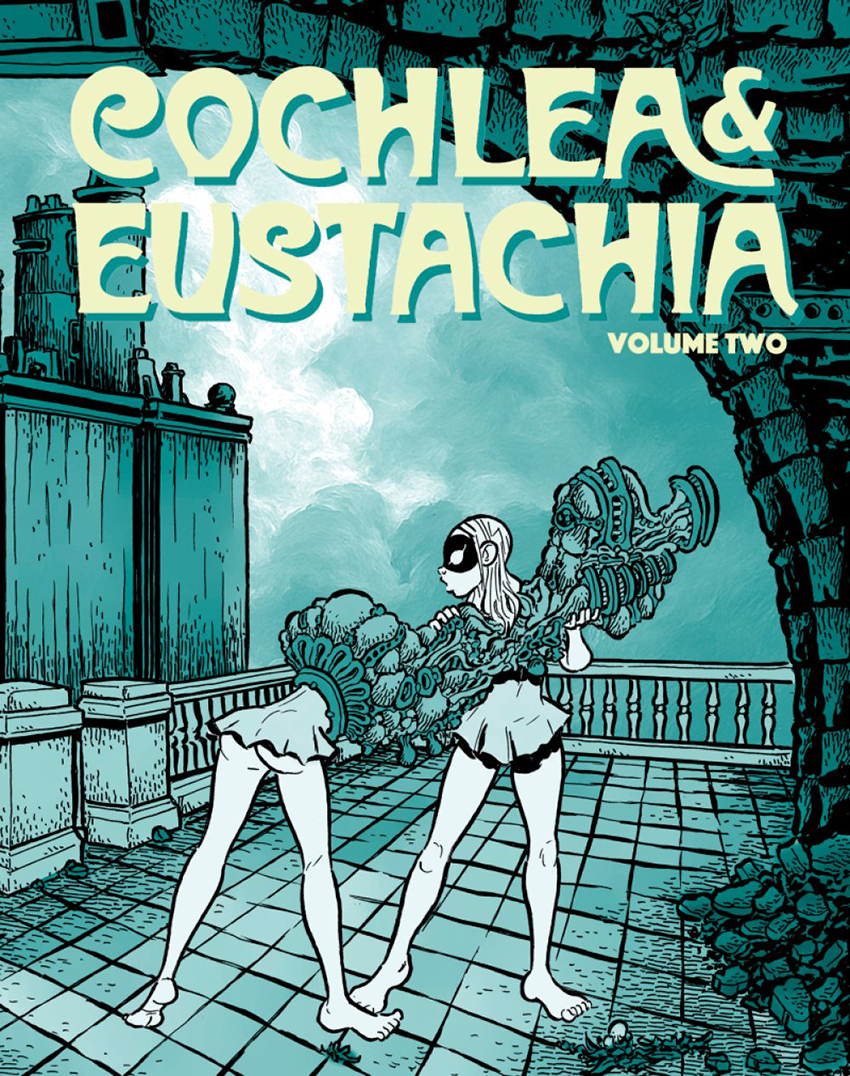
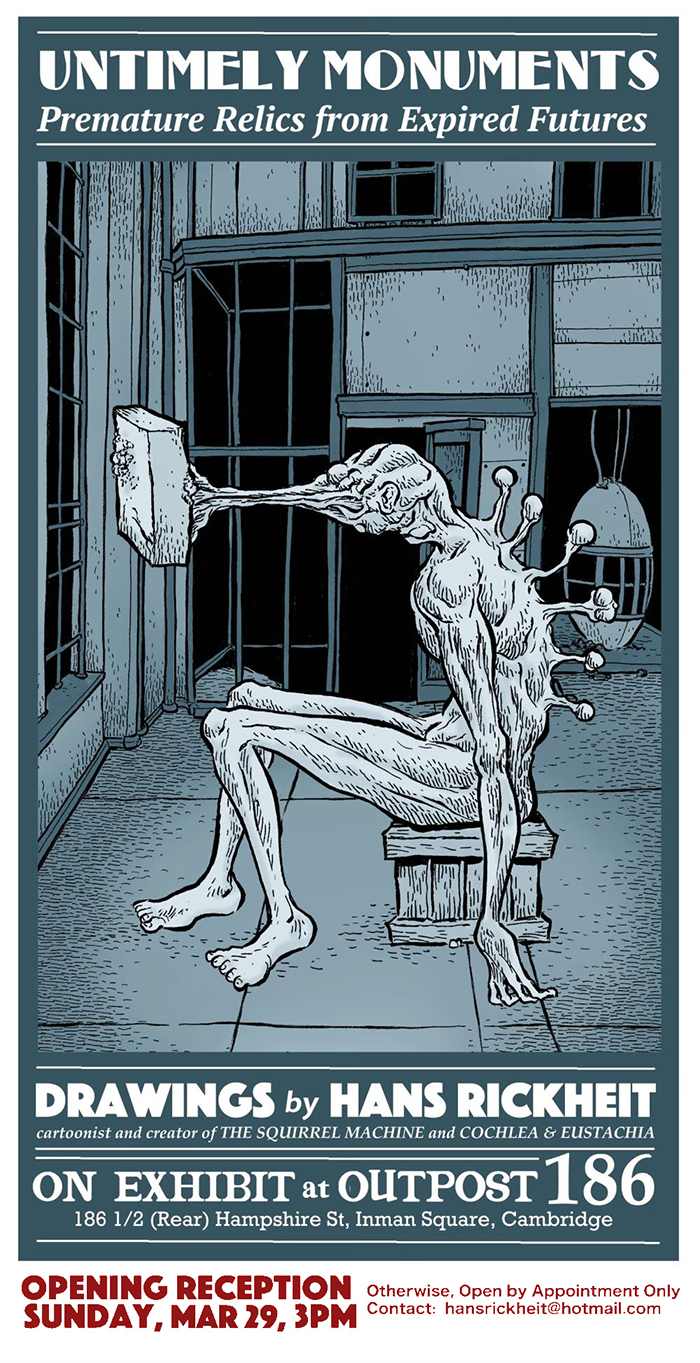
With the recent launch of Cochlea & Eustachia, Volume 2 and a new gallery exhibition entitled "Untimely Monuments" at Outpost 186 in Cambridge, Massachusetts, Rickheit remains a vital, if enigmatic, fixture in the indie comics scene. This report examines the trajectory of his career, his distinctive methodology, and the philosophical underpinnings of an artist who embraces the "misfit" label with both humor and defiance.
Main Facts: A Return to the Mansion
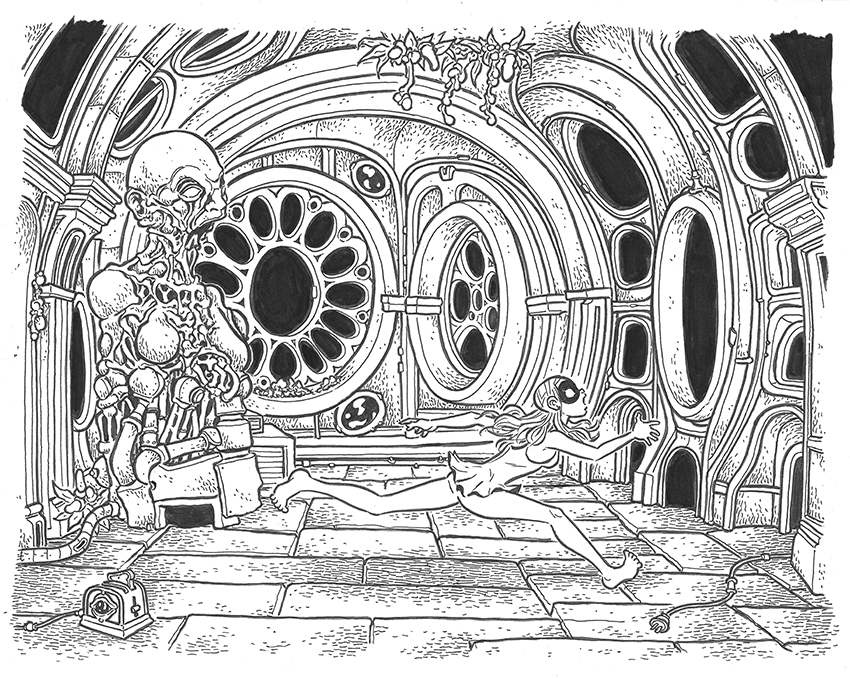
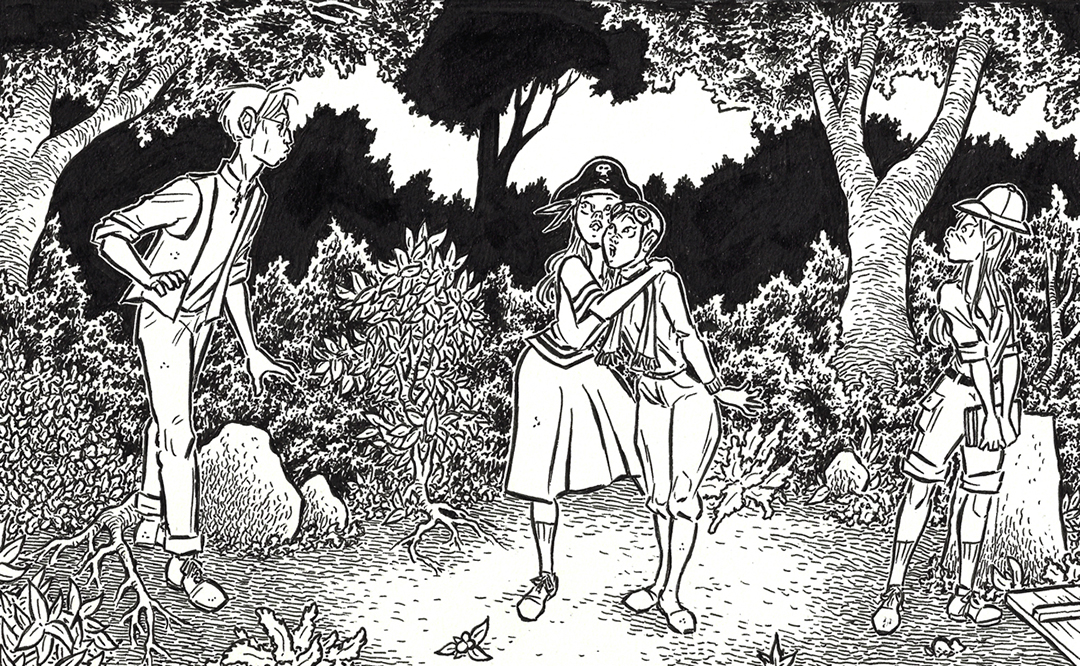
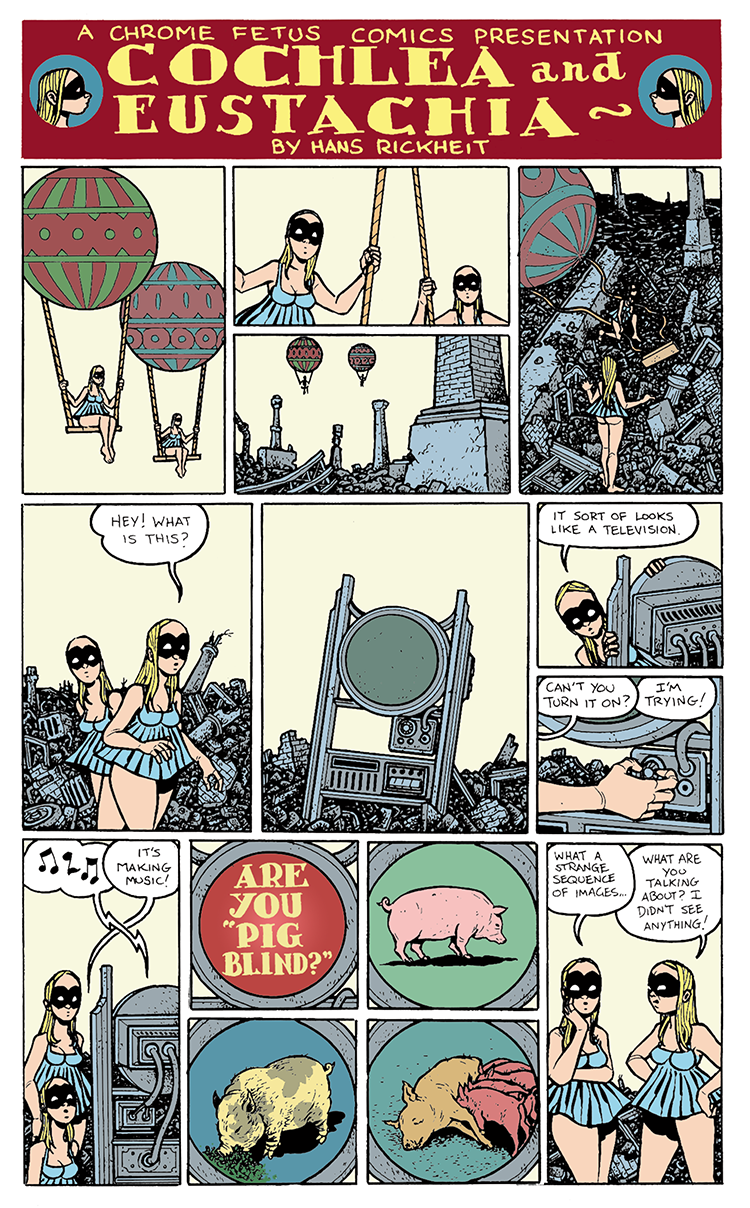
The current moment marks a significant milestone in Rickheit’s career. After an eleven-year production cycle, the artist has finally released the second volume of Cochlea & Eustachia. The series, which features two identical young women navigating the labyrinthine corridors of gothic mansions, has become Rickheit’s most recognizable property.
Simultaneously, Rickheit is engaging with the fine art world through "Untimely Monuments." The show, hosted at Outpost 186—a venue with deep personal roots for the artist—showcases his recent transition into composite drawings. These works involve intricate backdrops derived from photographs of discarded objects and flea market finds, upon which Rickheit later imposes his signature characters.
Despite his status as a "landmark" creator (specifically for his 2009 graphic novel The Squirrel Machine), Rickheit maintains a remarkably grounded and self-deprecating perspective. He describes his current existence as "semi-feral," a continuation of a lifestyle that has seen him inhabit basements, attics, and abandoned factories in the pursuit of his craft.
Chronology: From Gallery Troll to Xeric Laureate
Rickheit’s journey is a testament to the endurance required in the world of alternative publishing. His career can be mapped through several distinct eras of creative evolution:
The Early Years and the "Gallery Troll" Existence
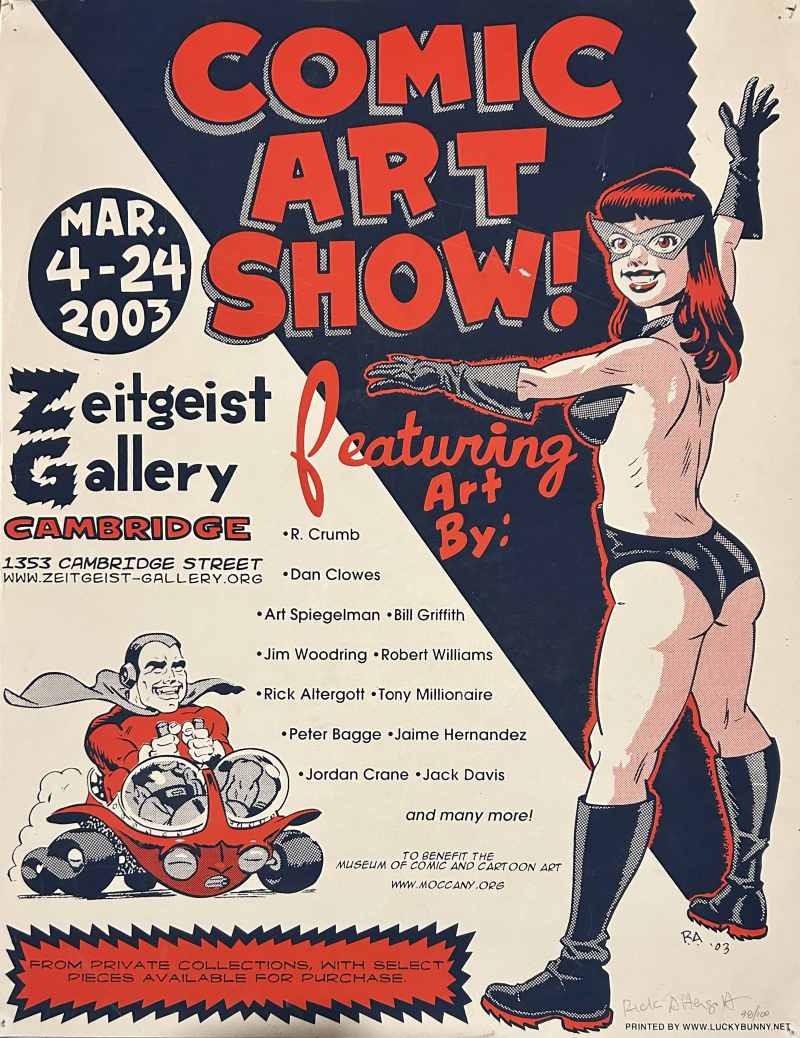
In his twenties, Rickheit lived in the basement of the Zeitgeist Gallery in Cambridge. He describes this period as a "hard-scrabble" existence, characterized by a lack of basic amenities like kitchens or showers. To maintain hygiene, he famously snuck into the nearby Dance Complex to use their facilities, a "non-dancer" among athletes. This period was formative, exposing him to a diverse art scene that refined his technical skills and shaped his aesthetic of decay and industrial ruin.
2002: The Xeric Grant and the 9/11 Threshold
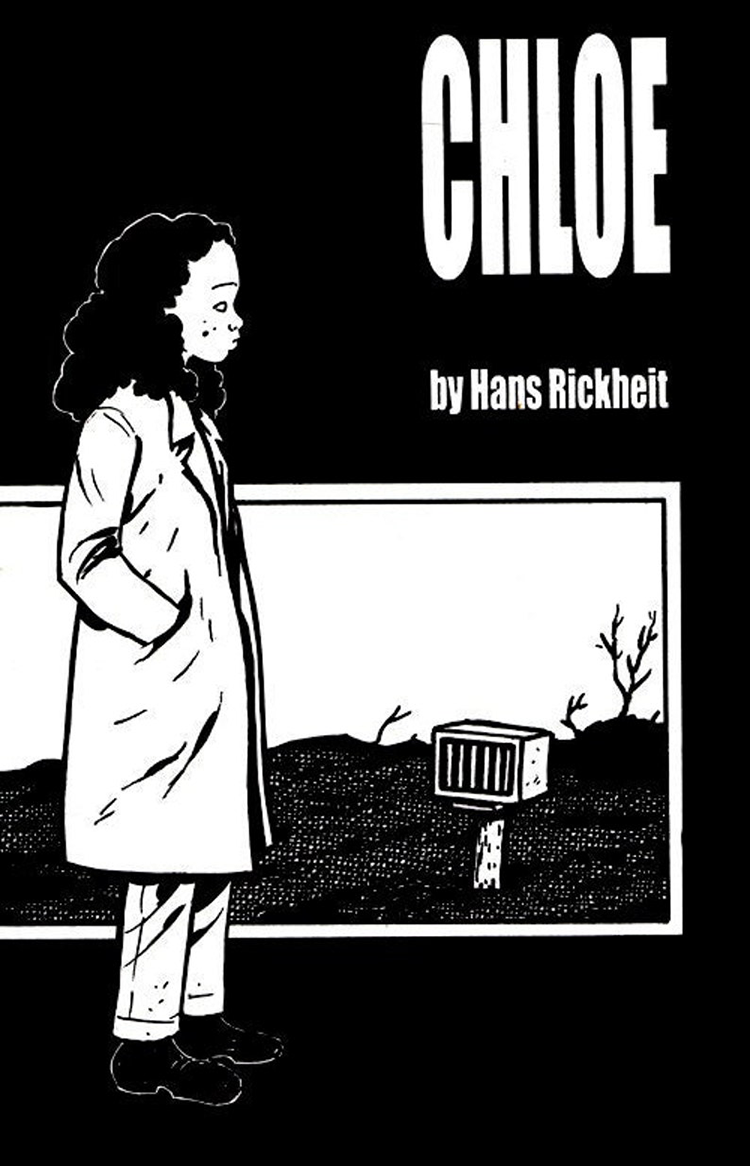
A pivotal moment occurred in 2002 when Rickheit won the prestigious Xeric Grant for his graphic novella, Chloe. The award, established by Teenage Mutant Ninja Turtles co-creator Peter Laird, was the "holy grail" for indie cartoonists. Rickheit received his letter of approval on September 11, 2001. He recalls the day with a surreal clarity: a broken-down car, a ghost-town Boston, and the haunting feeling that the world had to fracture for his "weirdo comics" to finally find a publisher.
2003–2009: The Seattle Breakthrough and The Squirrel Machine
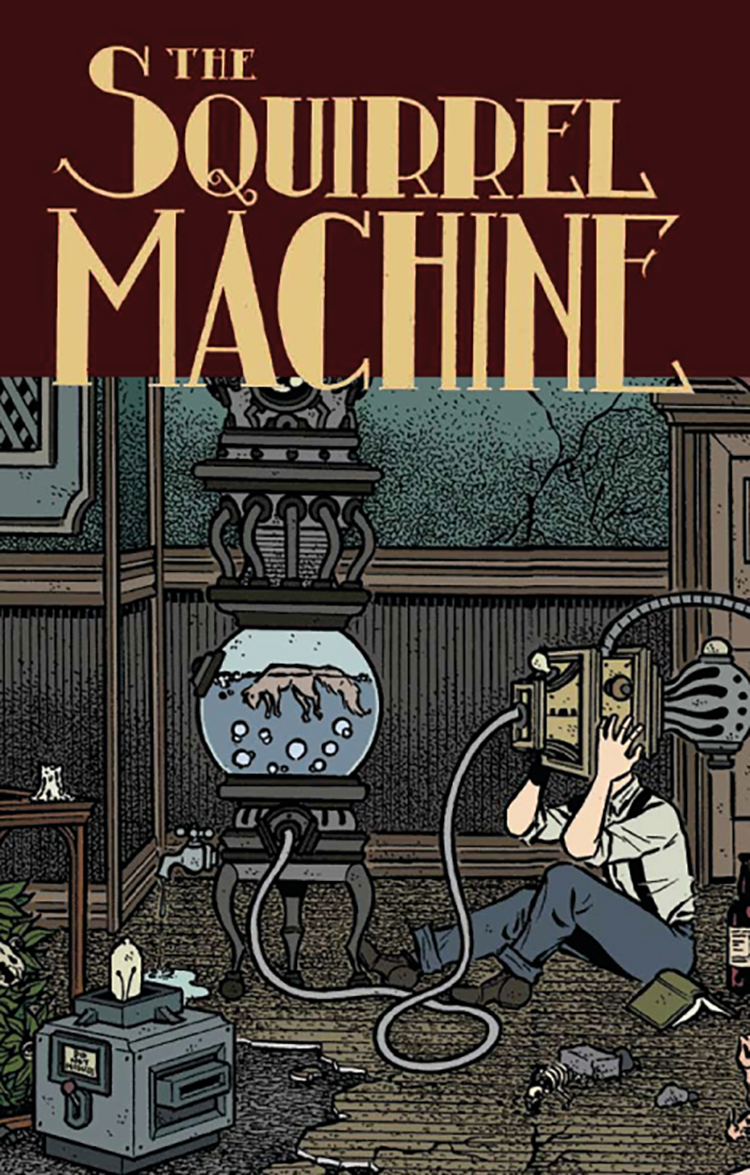
Rickheit’s visibility surged when the Seattle alt-weekly The Stranger began featuring Cochlea & Eustachia. This exposure caught the attention of Fantagraphics Books, the premier publisher of alternative comics. This partnership culminated in the 2009 release of The Squirrel Machine. An eight-year labor of love, the book is widely considered his masterwork, detailing the lives of two teenage misfits in rural New England who build macabre musical instruments from animal carcasses.
2012–Present: Expansion and Collaboration
Following the success of The Squirrel Machine, Rickheit published Folly (2012) and the first volume of Cochlea & Eustachia (2014). He also ventured into adult-oriented material with The Gloaming (2018), a project he describes as an accumulation of "Freudian anxieties." More recently, he has collaborated with his wife, artist Krissy Dorn, on the squirrel-centric series Delia.
Supporting Data: The Rickheit Oeuvre
Rickheit’s work is characterized by a specific set of recurring motifs and technical choices that distinguish him from his contemporaries.
| Work | Release | Key Themes | Technical Notes |
|---|---|---|---|
| Chloe | 2002 | Teenage alienation, subterranean mysteries | Xeric Grant Winner |
| The Squirrel Machine | 2009 | Industrial gothic, roadkill art, reclusive misfits | 8-year production cycle |
| Cochlea & Eustachia | 2014/2026 | Twins, medical journal influence, dream logic | Names derived from ear anatomy |
| The Gloaming | 2018–Pres. | Adult themes, horror, psychological projection | Explicit Freudian focus |
| Delia | 2022 | Anthropomorphic surrealism | Collaboration with Krissy Dorn |
Technical Methodology
Rickheit is a staunch proponent of analog methods. While he uses digital tools for compositing (Clip Studio Paint), the core of his work remains on paper.
- Tools: He predominantly uses affordable Pilot V-Ball pens and has recently transitioned to brushes to increase speed and fluidity.
- Process: He often discards rulers in favor of a "meticulous scribble" approach, prioritizing visual interest over rigid plot structures.
- Aesthetic Influences: His style is a "conglomeration" of influences including the dream comics of Jim Woodring, the stop-motion animations of the Brothers Quay and Jan Švankmajer, and the eerie atmosphere of The Twilight Zone.
Official Responses: Philosophy and Controversy
Throughout his career, Rickheit has faced both acclaim and significant social friction. His "official response" to his own work is one of honest bewilderment; he often invites others to explain his plots to him.
The Philadelphia Incident
One of the most defining moments of Rickheit’s career was a 2000s-era backlash in Philadelphia. During a projection of Cochlea & Eustachia panels, Rickheit was confronted by an audience that interpreted his work as anti-feminist. Despite his own self-identification as a feminist, he was labeled a "white rapist" and socially ostracized from the local art community.
Reflecting on this, Rickheit notes, "I was kind of naïve and didn’t think anyone would be upset by my comics." This incident highlights the tension between Rickheit’s surrealist, often transgressive imagery and the literalist interpretations of political subcultures.
On the Nature of "Weird"
When accused of "making weird art for the sake of being weird," Rickheit’s stance is unapologetic. He views "weirdness" as a relative term and argues that profound strangeness is a worthwhile pursuit. He believes that the most enduring art retains its oddness no matter how many times it is regarded.
Implications: The Value of Limitation in the Age of AI
As the comics industry grapples with the rise of Artificial Intelligence, Rickheit’s career offers a compelling counter-narrative. His philosophy centers on the necessity of limitation.
The Human Element
Rickheit argues that the current output of AI is "bland" because it lacks the constraints of the human condition. For Rickheit, the fact that he uses cheap pens, lives in drafty houses, and struggles with plot is precisely what makes the art interesting. "It’s the limitations that make things interesting," he asserts. "We need to embrace our limitations, lean into them."
The Misfit Legacy
Rickheit’s work serves as a sanctuary for the "misfit." By focusing on characters who are reclusive, eccentric, or physically "other," he validates a segment of the human experience often ignored by mainstream media. Whether he is drawing "The Lady with the Broken Back" or twins named after inner-ear structures, Rickheit is documenting a fictitious personal history that resonates with anyone who has felt out of step with "normal" society.
Future Outlook
With Cochlea & Eustachia Vol. 2 now in circulation and new wordless comics on his drawing table, Hans Rickheit continues to expand his "quirky vision." His career serves as a reminder that in an increasingly polished and digitized world, there is still a profound hunger for the handmade, the difficult, and the unapologetically strange. As long as there are abandoned buildings to explore and "trashy" science fiction to read, Rickheit will likely be in a basement somewhere, pen in hand, documenting the monsters and mansions of the collective unconscious.


Leave a Comment