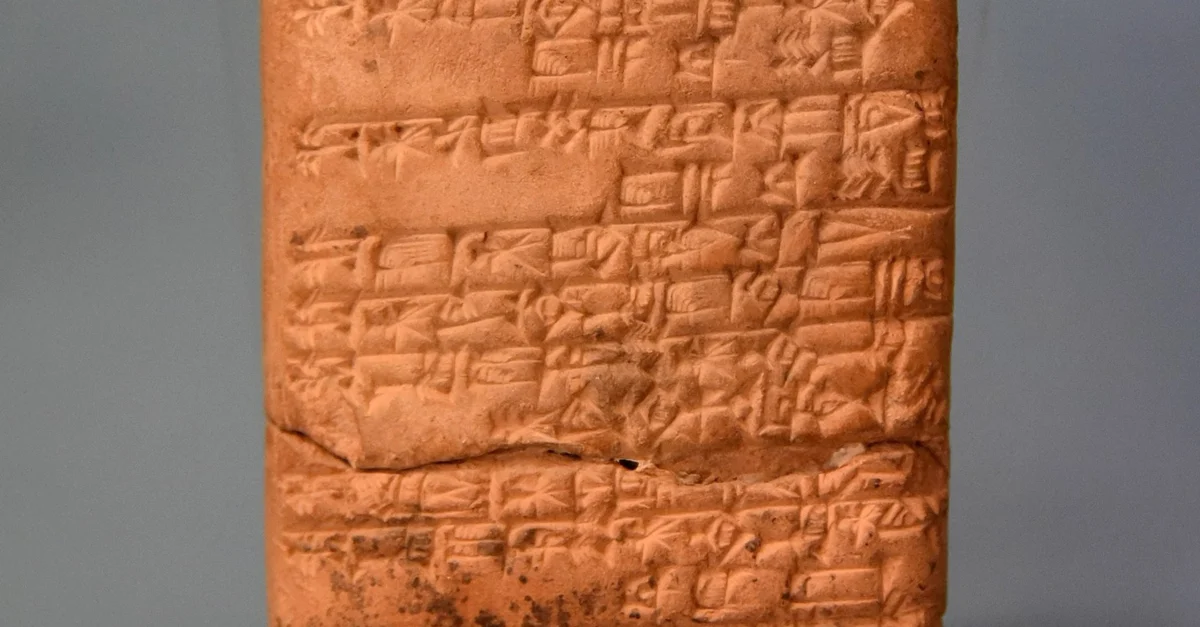
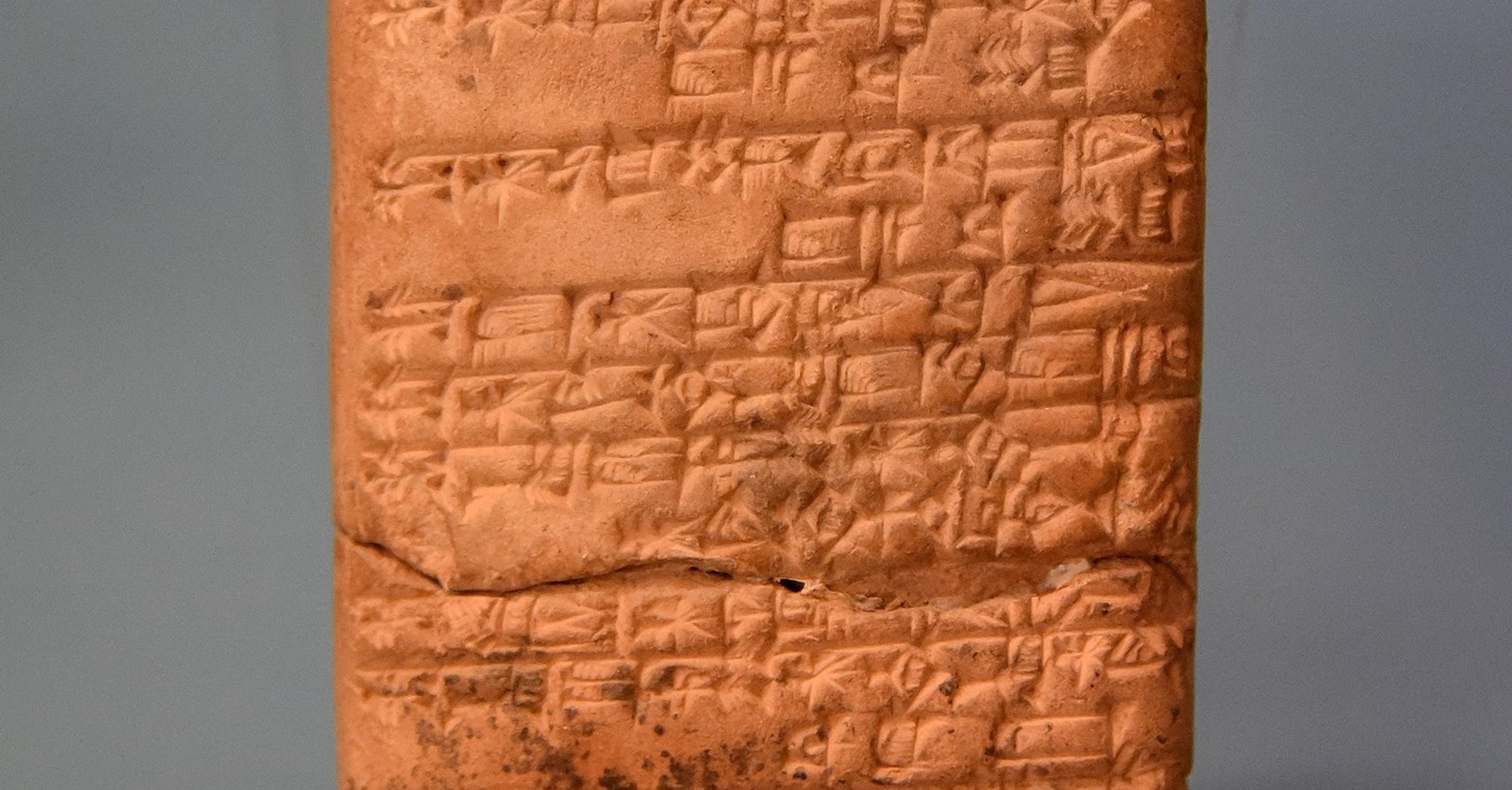
Ur, Mesopotamia – A remarkable Sumerian poem, known to modern scholars as Shulgi and Ninlil’s Barge, offers a vivid window into the religious devotion and sophisticated statecraft of the Ur III Period (c. 2112 – c. 2004 BCE). Dated to the influential reign of Shulgi of Ur (2094 – circa 2046 BCE), this ancient literary work not only celebrates a specific act of piety – the caulking and ceremonial journey of the goddess Ninlil’s sacred barge – but also underscores the intricate relationship between divine favor, royal authority, and the cohesion of a vast Mesopotamian empire. Discovered in the ruins of the sacred city of Nippur, this cuneiform tablet, despite its damaged state, continues to resonate with tales of gods, kings, and the flowing waters of the Tigris and Euphrates.
Main Facts: A Divine Voyage and Royal Blessing
Shulgi and Ninlil’s Barge is a Sumerian literary composition that commemorates a significant religious event from the eighth year of King Shulgi’s reign, an occasion so important it was recorded in his official year formulae as the "Year in which Ninlil’s barge was caulked." The poem’s modern title is a scholarly designation, reflecting the common practice for ancient Mesopotamian texts whose original titles, if they existed, have been lost to time.
At its core, the poem chronicles the meticulous preparation of a ceremonial barge dedicated to Ninlil, the revered consort of the sky god Enlil. Following the barge’s refurbishment, the divine couple, represented by their cultic statues, embark on a sacred river journey from Nippur to Tummal, a nearby sacred site. This celestial voyage culminates in a lavish banquet hosted by King Shulgi himself, an act of profound reverence and generosity towards the gods. The narrative reaches its crescendo with Ninlil’s divine blessing upon Shulgi, promising him a long and prosperous reign – a crucial validation for any ancient monarch.
The physical artifact of the poem, a cuneiform tablet, was unearthed in the mid-19th century amidst the extensive archaeological excavations at Nippur. It is widely believed to have been a scholastic text, part of the curriculum in the city’s prestigious scribal schools. While time has taken its toll, leaving the tablet fractured in places, the surviving verses eloquently convey the profound significance of the event, offering detailed descriptions of ancient riverine travel and the bustling ceremonial life of Mesopotamia. Today, Shulgi and Ninlil’s Barge (also known as Shulgi R) is frequently anthologized, standing as a testament to the rich literary heritage of ancient Sumer.
Chronology: Shulgi’s Ascent and the Sumerian Renaissance
The events depicted in Shulgi and Ninlil’s Barge are deeply embedded within the broader historical tapestry of the Ur III Period, often hailed as the Sumerian Renaissance. This era marked a resurgence of Sumerian art and culture after the preceding Gutian Period (circa 2141 – circa 2050 BCE), during which foreign invaders had destabilized the region and contributed to the downfall of the Akkadian Empire.
The Rise of Shulgi: Shulgi was the second king of the Ur III Dynasty, founded by his father, Ur-Nammu (reign circa 2112-2094 BCE). Ur-Nammu had laid the groundwork for this renaissance, establishing a powerful kingdom centered in Ur and initiating extensive building projects and legal reforms, notably the famous Code of Ur-Nammu. His reign, however, ended tragically in battle against the Gutians around 2094 BCE.
Shulgi inherited a kingdom grappling with the aftermath of Gutian occupation. His early years were characterized by military prowess, as he successfully drove the Gutians from Sumer, avenging his father’s death and solidifying his claim to the throne. With military security established, Shulgi embarked on an ambitious program of domestic reforms that truly defined his long and impactful reign:
Infrastructure Development: He invested heavily in improving roads, canals, and public buildings, crucial for economic prosperity and administrative control.
Economic Boost: Policies were implemented to stimulate trade and bolster the economy, fostering stability across the realm.
Literacy and Education: Recognizing the importance of a literate bureaucracy and a cohesive culture, Shulgi actively encouraged literacy by establishing numerous scribal schools throughout his kingdom. These institutions were instrumental in preserving and transmitting Sumerian literature, including works like Shulgi and Ninlil’s Barge.
Legal and Administrative Standardization: Shulgi either maintained or re-issued his father’s Code of Ur-Nammu, ensuring a consistent legal framework. He also standardized weights and measures, timekeeping, and the calendar, vital steps in unifying the diverse city-states under Ur’s hegemony. Legend even credits him with establishing roadside inns with landscaped gardens, further enhancing travel and communication.
The Pious King and Divine Authority: A critical aspect of Shulgi’s strategy for unity and legitimacy was his careful cultivation of a public image as a pious and benevolent ruler, much like his father. He presented himself as a father figure, a moral exemplar in every respect, particularly in his devotion to the gods. One of the most famous anecdotes illustrating this piety is his legendary run: a staggering 100-mile (160.9 km) journey from Nippur to Ur to officiate a religious festival, followed by an immediate return run from Ur to Nippur to perform the same function, covering a total of 200 miles (321.8 km) on foot in a single day. This feat, immortalized in A Praise Poem of Shulgi, cemented his reputation as a king uniquely dedicated to his divine responsibilities.
It was within this context of consolidating power and reinforcing divine legitimacy that Shulgi, in the eighth year of his reign, orchestrated the ceremonial caulking of Ninlil’s barge. This act was not merely a religious observance but a carefully choreographed display of royal devotion designed to honor the gods and, by extension, secure the stability and prosperity of his kingdom.
Legacy of Ritual: Shulgi’s emphasis on such grand religious ceremonies established a precedent that extended beyond his own rule. His son (or, by some accounts, grandson) Shu-Sin (reign circa 2037 – circa 2028 BCE) continued this tradition, commissioning his own barge for Ninlil and performing a similar ritual in the eighth year of his reign. These acts underscore the enduring political and religious significance of honoring the divine couple, demonstrating a consistent royal strategy for maintaining both divine favor and popular support.
Supporting Data: The Sacred Journey and Literary Echoes
The geographical and religious landscape of Sumer played a crucial role in the narrative of Shulgi and Ninlil’s Barge. Nippur was not just a major urban center but the paramount sacred city of Sumer, chiefly associated with the cult of Enlil, the "Lord of the Wind" and chief god of the Sumerian pantheon, and by extension, his consort Ninlil. Nearby Tummal also held significant sacred status, becoming an important pilgrimage site by the Ur III Period. The kings of this era explicitly claimed their authority derived from Enlil and Ninlil, making observances honoring the divine couple of paramount importance for legitimizing their rule.
The Poem’s Structure and Performance: The poem itself is divided into two distinct sections, each marked by a musical notation at its conclusion: sa-gida and sa-gara. Scholar Shail Vyas suggests these terms may have roots in similar words (sadja and svara) from the distant Indus Valley Civilization, hinting at potential cultural exchanges or shared linguistic heritage across ancient civilizations.
The sa-gida section (lines 1-39) functions as a hymn of praise directly addressing and describing the magnificent barge itself. It imbues the vessel with divine qualities and rich symbolism, comparing its components to natural wonders and celestial bodies. For instance, its "covering reed-mats are the daylight spreading wide over the holy settlements," and its "rudder is a large kij fish in the broad waters." This section vividly brings the barge to life as a sacred object, worthy of the gods it carries.
The sa-gara section provides the narrative core of the event, recounting the journey from Nippur to Tummal, the celebratory banquet, the return to Nippur the following morning, and the climactic blessing bestowed by Ninlil upon Shulgi. This section transforms the ceremonial act into a story, immortalizing the king’s piety and the gods’ benevolence.
As scholar Jeremy Black notes, such poems were "almost certainly sung" and "publicly performed at some ceremonial occasion associated with the festival." The sa-gida would have extolled the barge’s grandeur, while the sa-gara would have recounted the story, together honoring Ninlil and Enlil, as well as other deities mentioned in the work like Enki, Nanna, and Ninurta, whose cult statues would have likely accompanied the divine couple on the journey.
The Power of Ninlil: While Enlil is often depicted as one of the most powerful gods, frequently paralleled with the sky god An (Anu), Ninlil commanded immense prestige, sometimes even exceeding them in influence. In certain myths, she is portrayed as a crucial determinant of fate, consulted by other gods before major decisions were made. This significant role meant monarchs paid her special attention, hoping to secure her benevolent gaze and support for their reign. The poem culminates precisely as Shulgi would have hoped: after the journey, feasting, and return, Ninlil, "with joyful eyes and shining forehead," looks upon the king and blesses him with a prolonged and prosperous rule.
Excerpt from Shulgi and Ninlil’s Barge (as translated by Jeremy Black et al. from The Literature of Ancient Sumer and the Electronic Text Corpus of Sumerian Literature):
1-9: Oh barge, Enki assigned the quay of abundance to you as your fate. Father Enlil looked at you with approval. Your lady, Ninlil, commanded your construction. She entrusted it to the faithful provider, king Shulgi… He will make you perfect and you will be breathtaking to look upon.
41-47: The faithful shepherd Shulgi established the holy festival and the great rituals. The great gods bathe in holy water in Nippur… The mother of the Land, Ninlil the fair, comes out (?) from the house, and Enlil embraces her like a pure wild cow. They take their seats on the barge’s holy dais, and provisions are lavishly prepared.
82-90: With joyful eyes and shining forehead, Ninlil, …, looks upon king Shulgi: "Shepherd …, Shulgi, who has a lasting name, king of jubilation! I will prolong the nights of the crown that was placed upon your head by holy An, and I will extend the days of the holy sceptre that was given to you by Enlil. May the foundation of your throne that was bestowed on you by Enki be firm!… "
These verses vividly illustrate the reverence for the gods, the king’s role as their servant, and the anticipated divine rewards for such devotion.
Official Responses: Statecraft Through Piety
In ancient Mesopotamia, "official responses" were not necessarily formal press releases but rather the deliberate actions and grand public spectacles orchestrated by the ruling elite to communicate their ideology and intentions. Shulgi’s commissioning of Ninlil’s barge and the subsequent festival served as a profound official response to the perceived divine mandate for his rule and the social needs of his subjects.
Royal Ideology and Legitimacy: By actively participating in and funding such elaborate religious ceremonies, Shulgi was officially demonstrating his piety and his direct connection to the divine realm. The blessing from Ninlil at the poem’s conclusion was not just a literary flourish but a crucial validation of his kingship. It was a clear message to his court, his officials, and the broader populace that his authority was divinely sanctioned, making rebellion or dissent an act against the gods themselves. This "official response" of pious devotion was a cornerstone of Ur III royal propaganda, ensuring loyalty and obedience.
Unifying the Realm: Beyond individual legitimacy, these festivals served a vital unifying function across the vast and ethnically diverse Ur III empire. As scholar Stephen Bertman notes, "Festivals in ancient Mesopotamia were grand celebrations of the gifts of the gods… staged by the kings to unify their subjects." By showcasing the monarch’s dedication to the primary deities, Shulgi was setting an example. The message was unequivocal: if the king, burdened with the responsibilities of state, could dedicate himself so fully to honoring the gods, then his subjects certainly could and should do the same. This fostered a shared religious identity and civic duty, binding disparate communities under a common theological framework.
Maintaining Order and Prosperity: The "Year in which Ninlil’s barge was caulked" event, and its subsequent commemoration through poems and further festivals, was an official act designed to secure continued prosperity. The poem explicitly links Shulgi’s piety to Ninlil’s promise of a "lasting name" and an extended reign. This served as an official endorsement of the belief that divine favor was directly tied to human actions, particularly those of the king. By upholding these rituals, the king was fulfilling his sacred duty as the steward of the land and its people, ensuring the gods would continue to bless Sumer with fertility and stability. The continuation of these practices by Shulgi’s successors, such as Shu-Sin, further cemented this as an institutionalized "official response" to maintain the cosmic order and the security of the state.
Implications: Enduring Legacy of a Royal Narrative
The legacy of Shulgi and Ninlil’s Barge extends far beyond its initial ceremonial purpose, offering profound implications for our understanding of ancient Mesopotamian civilization, royal ideology, and the power of literature.
Reinforcing Royal Authority: The poem played a crucial role in reinforcing the divine right of the Ur III kings. By meticulously documenting Shulgi’s devotion and Ninlil’s blessing, it created a literary precedent that future monarchs could reference. This narrative solidified the idea that the king was not just a political leader but a divinely chosen intermediary, whose piety directly influenced the well-being of the entire land. This ideology contributed significantly to the stability and longevity of the Ur III dynasty, demonstrating how religious narratives could be potent tools of statecraft.
Insights into Sumerian Religion and Culture: The work provides invaluable insights into the complex religious practices and beliefs of the Sumerians. It details the importance of specific deities like Enlil and Ninlil, the sacred geography of Nippur and Tummal, and the ceremonial aspects of divine processions and banquets. It illuminates the anthropomorphic nature of the gods, who "lived in houses (temples)" and were "fed and provided with furniture and clothes," just as humans were. Furthermore, the poem’s detailed descriptions of the barge itself offer a glimpse into ancient Sumerian craftsmanship and artistic expression, where even functional objects were imbued with symbolic and aesthetic value.
The Power of Literature and Performance: As a text likely performed at public festivals, Shulgi and Ninlil’s Barge highlights the integral role of oral and written literature in ancient societies. It served not only as entertainment but as a means of historical record, religious instruction, and political propaganda. The enduring appeal of the poem, even in its fragmented state, speaks to the sophisticated literary traditions of Mesopotamia and their capacity to convey complex messages across millennia. Its frequent anthologization today underscores its timeless quality and its continued relevance for understanding the human condition through the lens of antiquity.
A Model for Future Rulers: The poem’s concluding message, where Ninlil blesses Shulgi and implies that future kings should emulate his piety, served as a direct injunction for his successors. The fact that Shu-Sin, among others, continued these rituals confirms that the poem’s ideological impact was felt and acted upon. It illustrates how ancient literature could function as a guide for governance, demonstrating that "taking the time to offer them [the gods] a change of scenery and a banquet was simply an act of common sense" for a king dependent on divine favor for his "stewardship of the land and its people."
In essence, Shulgi and Ninlil’s Barge is more than just an ancient poem; it is a historical document, a religious text, and a political manifesto wrapped into one. It captures the essence of a powerful king’s efforts to unify his realm, secure divine blessings, and leave an indelible mark on history, all through the meticulous enactment and artistic commemoration of a seemingly simple act: the caulking of a goddess’s boat.
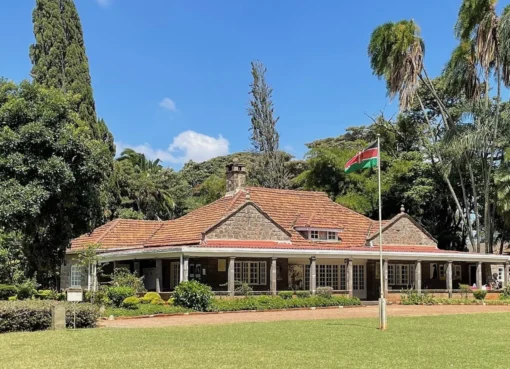
London, UK – With its distinctive thick walls, soaring ceilings, expansive rooms, and wide, sheltering verandahs, the colonial bungalow emerged as a triumph of architectural adaptation, meticulously e
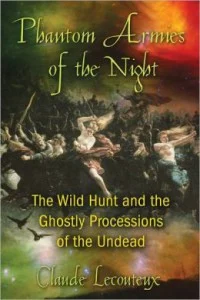
FOR IMMEDIATE RELEASE [City, State] – [Date] – The spectral echoes of ancient Europe continue to captivate scholars and enthusiasts alike, particularly the enduring mystery of the Wild Hunt. A signifi
A historical reevaluation challenges centuries of vilification, revealing how a West Semitic-speaking people, once branded as barbaric invaders, profoundly transformed ancient Egypt, inadvertently lay




Leave a Comment