The Ghost of Bloom in the Modern Panopticon: Re-evaluating Olivier Schrauwen’s Sunday Through a Post-Colonial Lens
When Olivier Schrauwen’s collected Sunday was released in 2024, it was met with a chorus of critical acclaim that almost immediately settled into a singular, repetitive comparison. Critics, overwhelmed by the book’s sheer physical mass and its minute-by-minute chronicling of a single day, reached for the most formidable totem in the Western canon: James Joyce’s Ulysses.
While the comparison is structurally obvious—both works follow a protagonist through the labyrinth of their own consciousness over twenty-four hours—the surface-level similarities often obscure the deeper, more unsettling dialogue between the two texts. As critic Greg Hunter argues, the reflexive linking of Sunday and Ulysses has largely ignored their most vital common ground: their status as post-colonial artifacts. Where Joyce’s masterpiece sought to forge a new identity for a nation emerging from British rule, Schrauwen’s Sunday explores the spiritual and existential stagnation of a Belgium still haunted by its colonial shadows.
Main Facts: The Architecture of a Graphic Epic
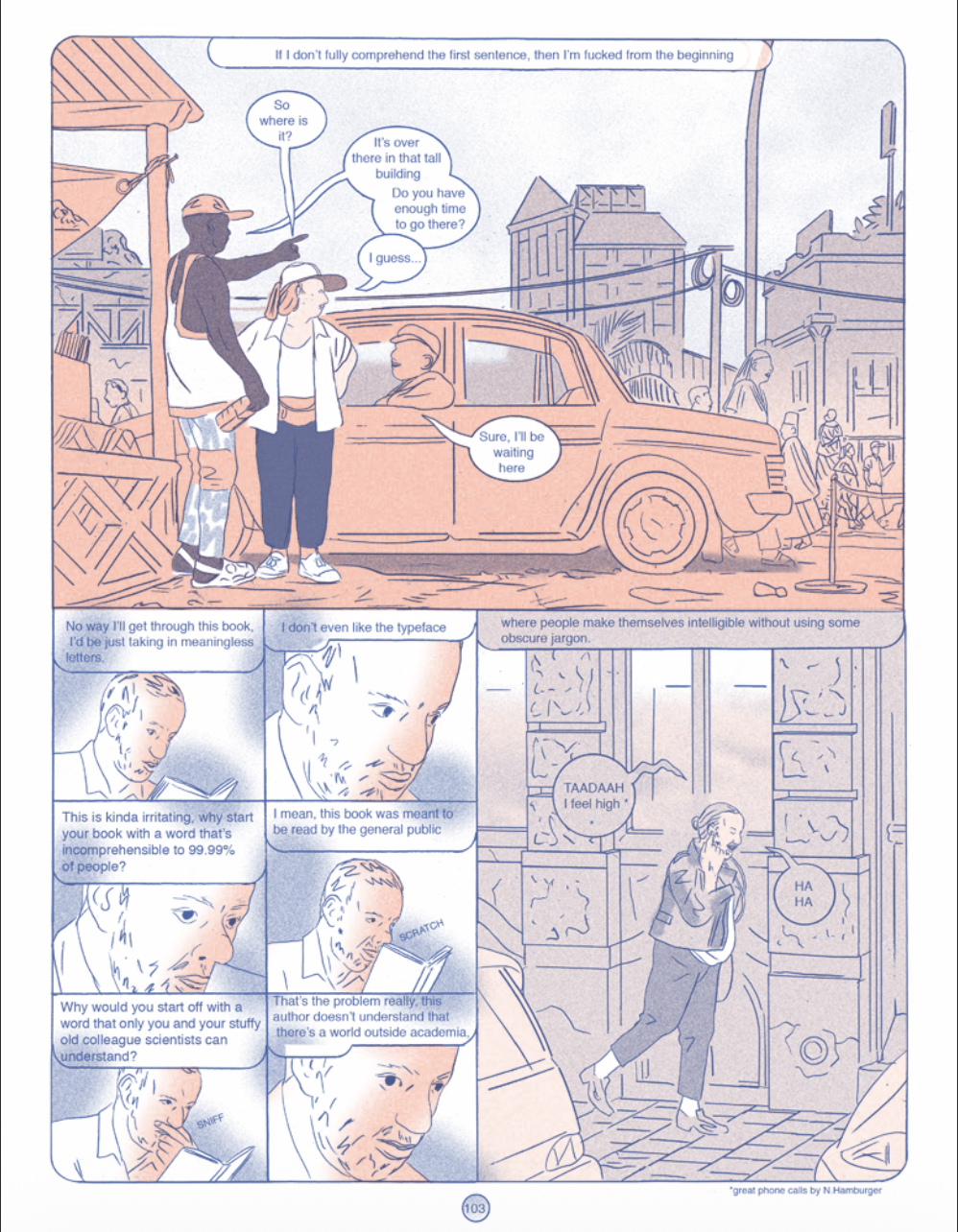
Sunday follows Thibault, a Belgian font designer, through a seemingly mundane Sunday in 2017. The narrative is a sprawling 400-plus page exploration of Thibault’s inner monologue, his petty anxieties, his digital distractions, and his strained relationship with his partner, Migali.
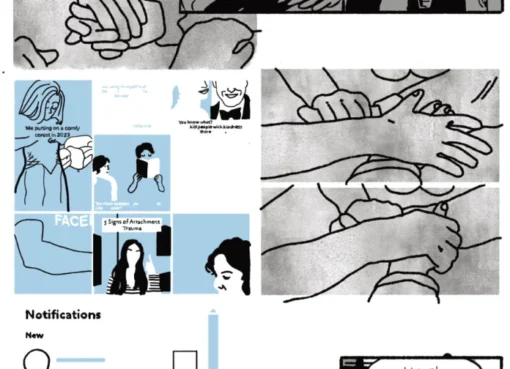
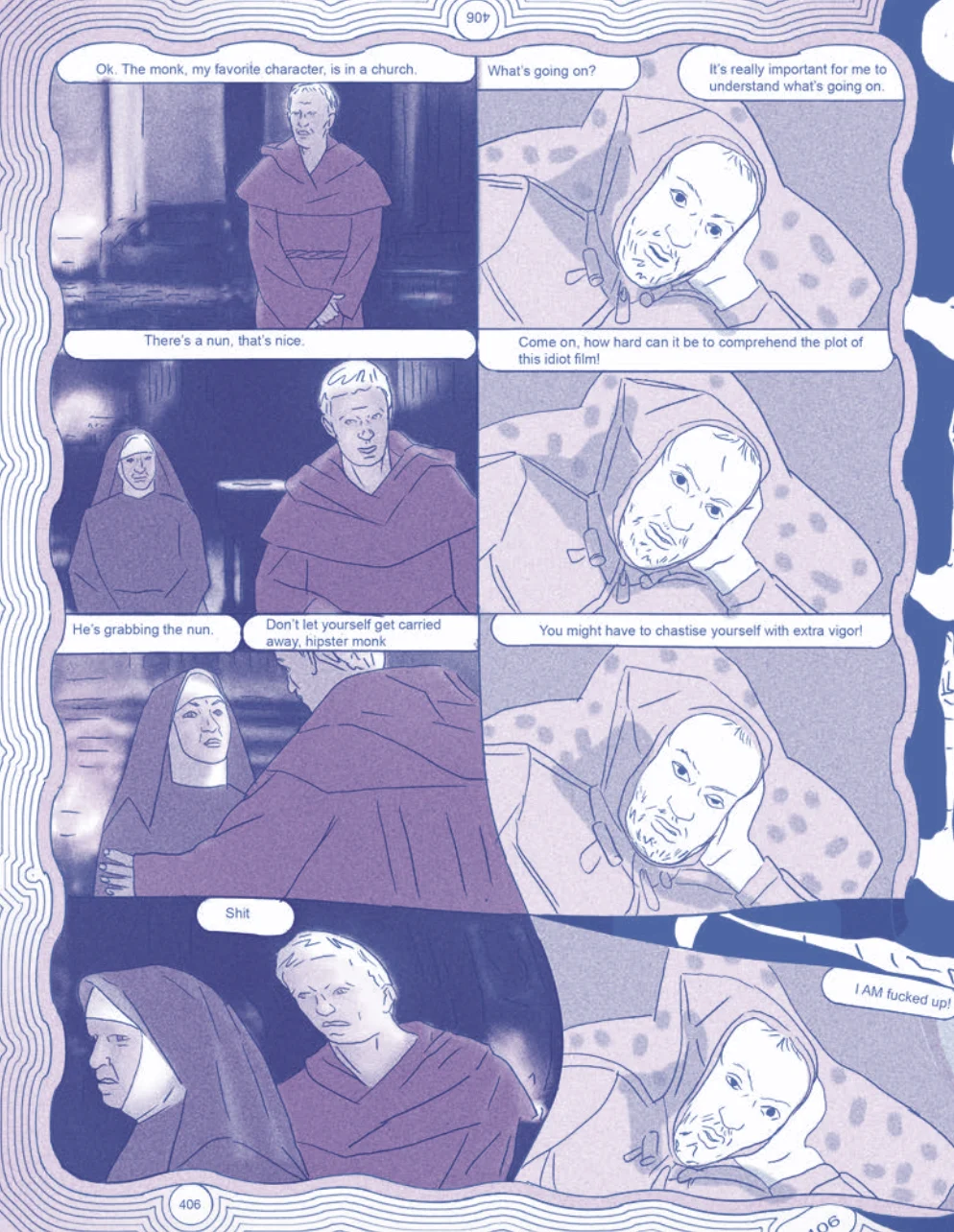
Schrauwen, known for his formalist experimentation and his ability to blend surrealism with deadpan humor, uses a specific visual grammar to represent the "streaming" nature of human thought. The book is not merely a comic but a psychological map, utilizing shifts in color, line weight, and panel structure to mirror the protagonist’s fluctuating states of mind.
The critical consensus, led by figures such as Chris Ware in The New York Review of Books, has focused on Schrauwen’s attempt to "capture the thoughts, experiences, memories, musings, and mania of one man over the minutes and seconds." However, to understand Sunday fully, one must look past the "one-day novel" trope and examine the historical and political undercurrents that inform Thibault’s paralysis.

Chronology: From colonial Farce to Neoliberal Stagnation
To understand the trajectory of Schrauwen’s work, one must view Sunday as a spiritual and thematic sequel to his breakthrough comic, Arsène Schrauwen.
The Colonial Precursor (Early 20th Century)
Arsène Schrauwen followed a fictionalized version of the author’s grandfather through a colonial farce in an unnamed African territory. It was a critique of the absurdity and cruelty of the Belgian colonial project, rendered in a striking two-color palette that emphasized the alienation of the colonizer.
The Post-Colonial Present (2017)
Sunday takes place decades after the formal end of Belgian rule in the Democratic Republic of the Congo, Rwanda, and Burundi. Thibault, the protagonist of Sunday, is Arsène’s descendant—literally and metaphorically. He lives in the world that the colonial generation built: a world of "easy comfort and existential deprivation."
The Literary Parallel (1904/1922)
Joyce’s Ulysses was completed in 1921, just a year before the establishment of the Irish Free State. It was a book written at the precipice of independence, attempting to reconcile the "learning of the European literary tradition" with the "trauma at the loss of the native language." Joyce’s Dublin of 1904 was a city under the thumb of the British Empire, yet vibrating with the potential for a new, pluralistic identity.
Supporting Data: The Post-Colonial Comparison
The most profound connection between Sunday and Ulysses lies in how they handle the concept of national and personal identity in the wake of empire.

Joyce and the "Manly Womanly" Hero
According to Joyce scholar Declan Kiberd, Ulysses was an act of creation. Joyce rejected the "myths of violence" and the rigid definitions of Irishness promoted by revivalists. Instead, he created Leopold Bloom—a man of peace, a "womanly man," and a Jewish Irishman. Bloom is an ambassador from a future where identity is fluid and eclectic. His "heroism" lies in his everyday kindness and his ability to find the lyrical in the commonplace.
Schrauwen and the "Unheroic" Stagnation
In contrast, Thibault in Sunday represents the endpoint of the colonial psyche. He is not forging a new identity; he is decomposing within an old one. Thibault’s monologues are peppered with "metaphors of colonial resonance." He describes his "last day as a free man" while waiting for his partner to return, and he worries about becoming a "parasite" on society—a term that echoes the rhetoric used to justify colonial exploitation.
While Joyce uses stream-of-consciousness to elevate the mundane to the heroic, Schrauwen uses it to document a descent into "stoned babble" and digital addiction. Where Bloom finds communion with Stephen Dedalus, Thibault finds only the blue light of Netflix and the "neoliberal lie" of global connectivity.
Official Responses: Critical Reception and Theoretical Frameworks
The critical reception of Sunday has been a mix of awe at its formal mastery and debate over its moral ambiguity.
The Chris Ware Perspective
In The New York Review, Chris Ware praised Schrauwen’s ability to render the "pure thought on paper." Ware’s analysis focused on the mechanics of the book—how Schrauwen uses the "grammar of cartooning" to make the invisible visible. This perspective validates Sunday as a technical masterpiece on par with the greatest works of 20th-century literature.
The Post-Colonial Critique
Scholars like Declan Kiberd and Richard Ellmann provide the theoretical scaffolding for a deeper reading. Ellmann’s observation that Ulysses makes "the major works of western culture tributary to it" can be applied to Sunday, but with a darker twist. Schrauwen doesn’t just make Western culture tributary; he shows how his characters "pillage" other cultures for their own amusement.
A key scene involves Thibault’s cousin, Rik, joking that Thibault will "pillage" the work of artists in a care home for his "hipster illustrations." This theme of cultural theft—the "pillage" of the colonized by the colonizer—is a recurring motif that critics are only beginning to unpack.
Implications: The Failure of the Modern Epiphany
The most striking difference between Sunday and Ulysses—and the one with the most profound implications for modern readers—is the absence of an epiphany.
The Stolen Inheritance
In Ulysses, the meeting of Bloom and Stephen offers a "new way forward." It is a moment of human connection that transcends the oppressive forces of church and state. In Sunday, no such moment occurs. Thibault spends his day procrastinating, scrolling through Instagram, and indulging in "casual racism" regarding his partner’s trip to The Gambia.
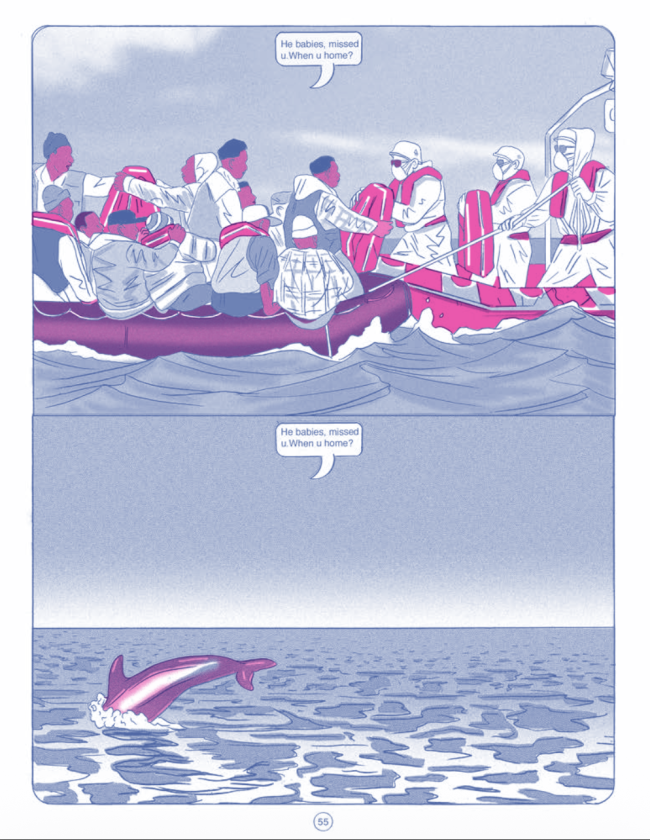
When Thibault’s friends eventually arrive to surprise him for his birthday, they find him passed out on the couch. The story ends before any meaningful interaction can take place. Schrauwen suggests that for the modern European, the "colonial inheritance" is a state of being "technologically dependent and spiritually adrift."
The Personal is Political
Schrauwen’s work poses a haunting question: Are Joycean epiphanies even possible in a world defined by neoliberalism and digital saturation? Thibault’s failure to "wake up"—both literally and metaphorically—suggests that colonialism didn’t just steal from the colonized; it hollowed out the colonizer as well.
The "easy comfort" of Thibault’s life in Belgium is built on the historical "pillage" of the Congo, yet it has left him unable to find meaning in his own existence. He is a "provincial intellectual" who has barely read the philosophy books on his shelves, a man who turns shapes from a woman’s Instagram grid into "glyphs" for a game of decoded messages because he cannot communicate in reality.
Final Assessment
Sunday is a hilarious, technically dazzling, and deeply cynical work. By positioning it alongside Ulysses, we see a stark portrait of how far the Western "hero" has fallen. Leopold Bloom was a man of the world who found the universe in a single day; Thibault is a man of the screen who finds only himself, and even that discovery is one he would rather avoid.
As Greg Hunter concludes, Schrauwen has created a book that sees a cast of characters "spiritually adrift" and asks whether they even have the capacity to seek something better. In the end, Sunday is not just a chronicle of a day; it is a diagnosis of a culture that has inherited everything and understands nothing.
About the Author: Greg Hunter is a prominent comics critic and the author of "New Realities: The Comics of Dash Shaw" (Uncivilized Books). His work focuses on the intersection of formalist art and socio-political themes in contemporary graphic literature.