Beyond the Sands: An In-Depth Retrospective of the Concept Art and World-Building of Denis Villeneuve’s Dune: Part One
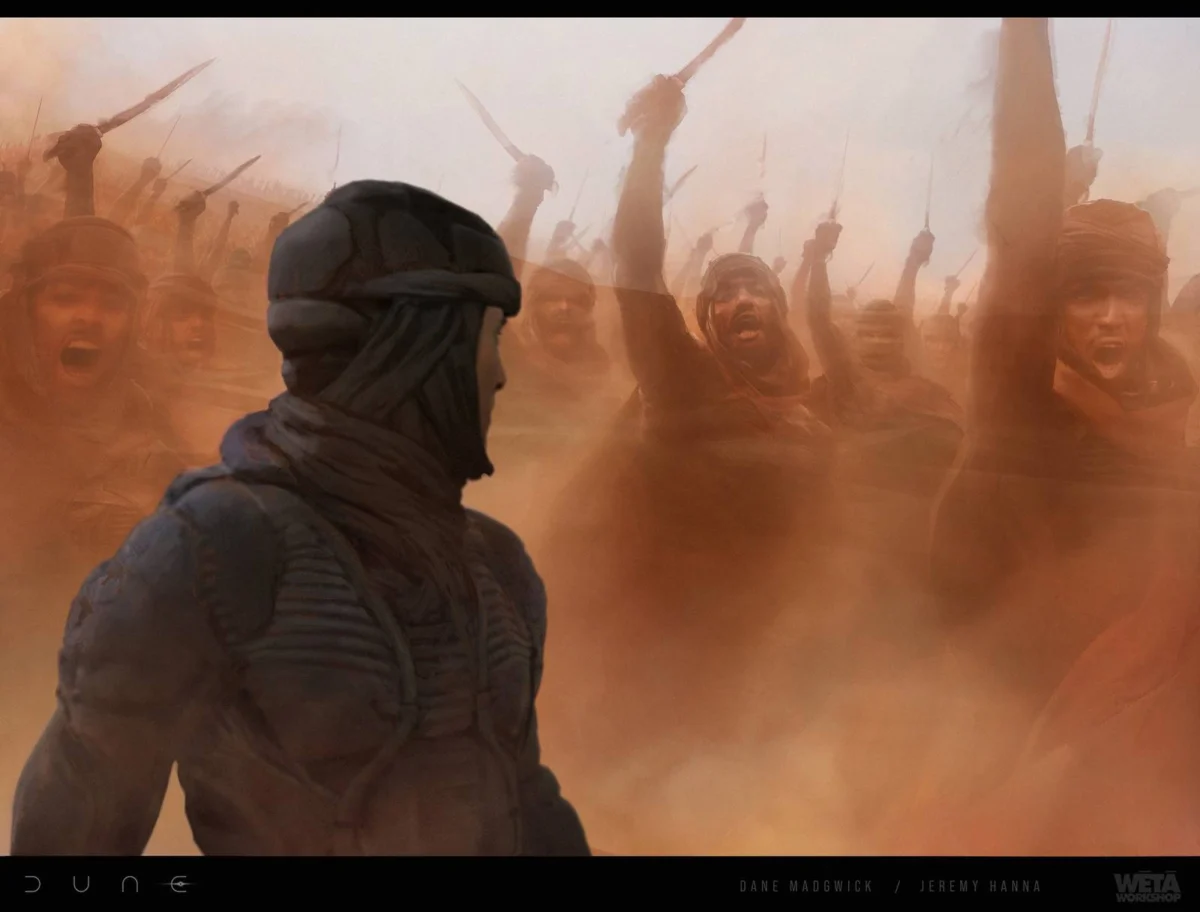
The 2021 release of Denis Villeneuve’s Dune: Part One marked a watershed moment in contemporary science fiction cinema. While Frank Herbert’s 1965 masterpiece was long considered "unfilmable" due to its dense political machinations and psychedelic ecology, Villeneuve’s adaptation succeeded by grounding the ethereal in the tangible. Central to this success was a monumental effort in concept art and production design, a process that has been recently highlighted through an expansive collection of foundational sketches and key art.

This retrospective examination delves into the visual architecture of Arrakis, Caladan, and Giedi Prime, showcasing the work of a global elite of concept artists who translated literary subtext into a visual language of "tactile futurism."

Main Facts: The Blueprint of a Galactic Empire
The visual identity of Dune: Part One is defined by a departure from the "used future" aesthetic of Star Wars or the neon-drenched cyberpunk of Blade Runner. Instead, the production team, led by production designer Patrice Vermette and a curated roster of concept artists, leaned into "Imperial Brutalism." This style emphasizes massive, unadorned stone and concrete structures that reflect the weight of history and the crushing power of the Imperium’s feudal systems.

Key Artistic Contributors
The newly showcased collection features work from a diverse group of visionaries, each tasked with a specific pillar of the Dune universe:

- George Hull and Steve Burg: Focused on the "analog" technology of the future, including the iconic dragonfly-inspired Ornithopters and the gargantuan Spice Harvesters.
- Deak Ferrand and Peter Popken: Responsible for the environmental scale, contrasting the lush, autumnal greenery of Caladan with the oppressive, sun-bleached monoliths of Arrakeen.
- Jerad S. Marantz and Keith Christensen: Specialized in character-driven "functionalism," developing the Stillsuits and the grotesque, gravity-defying form of Baron Vladimir Harkonnen.
- Carlos Huante and Seungjin Woo: Tackled the biological terror and majesty of the Shai-Hulud (the Great Sandworm).
The Triad of Power
The concept art serves to distinguish the three primary factions through color theory and silhouette:

- House Atreides: Defined by deep greens, charcoal grays, and rigid, militaristic lines. Their aesthetic suggests a noble but aging tradition rooted in oceanic heritage.
- The Fremen: Defined by ochre, sand-blasted textures, and "form-follows-function" survival gear. Their designs emphasize invisibility and integration with the desert.
- House Harkonnen: Defined by ink-black surfaces, industrial rot, and insectoid shapes. Their architecture on Giedi Prime suggests a parasitic relationship with nature.
Chronology: From Literary Dream to Cinematic Reality
The visual development of Dune: Part One did not begin in a vacuum; it was the culmination of decades of failed attempts and a rigorous four-year production cycle.

2017–2018: The Foundational Phase
Following the success of Arrival and Blade Runner 2049, Denis Villeneuve officially signed on to direct. The initial phase of concept art was experimental. Artists like Dane Madgwick and Jeremy Hanna were brought in to create "mood boards" that captured the sheer scale of the desert. Villeneuve famously insisted that the designs feel "grounded" and "ancient," avoiding the trope of sleek, glowing technology.

2019: Practical Integration
As the script was finalized, artists like Ed Natividad and Joseph Cross began technical explorations. This was the period when the "Stillsuit"—the most critical piece of technology in the novel—underwent dozens of iterations. The goal was to create a garment that looked like it actually recycled moisture, leading to the complex lattice of tubing and filtration masks seen in the final film.

2020–2021: Post-Production and Visual Refinement
During the global pandemic, the visual effects teams at DNEG used the original concept art as a 1:1 guide for digital extensions. The "Heighliners" (the massive guild ships) designed by Steve Burg were refined to look like hollowed-out cylinders, emphasizing a sense of cosmic mystery rather than standard "spaceship" tropes.

Supporting Data: The Technicality of World-Building
The depth of the Dune concept art is best understood through its technical specifications. The production team moved away from "magic" technology, opting for mechanical solutions that felt plausible.

The Ornithopter: A Masterclass in Biomimicry
George Hull’s designs for the Atreides Ornithopters are perhaps the most celebrated aspect of the film’s hardware. Unlike traditional aircraft, these vessels utilize "flapping" wings. Hull’s concept art drew from the skeletal structures of dragonflies and the cockpits of Huey helicopters. Data from the production shows that two full-scale models were built—one weighing 11 tons—to ensure the actors could interact with a physical object that matched the concept art’s brutalist weight.

The Scale of Shai-Hulud
The design of the Sandworm, led by Carlos Huante, went through a "biological audit." Concept art reveals that the team looked at baleen whales and lampreys for inspiration. The mouth of the worm was designed with thousands of crystalline teeth, resembling a "temple of sand." In the film, the largest worms are depicted as being 400 meters long, a scale meticulously maintained from the early sketches to the final render.

Architectural Brutalism in Arrakeen
The residency of Arrakeen, designed by Peter Popken and Deak Ferrand, is one of the largest sets ever constructed in film history. The concept art dictated that the walls be sloped at specific angles to deflect the 800 km/h "coriolis storms" described in the book. This "defensive architecture" informs every frame of the Arrakis sequences, making the environment feel like a character in its own right.

Official Responses: The Creative Philosophy
The release of these materials has been accompanied by insights from the creative leads, providing a window into the "why" behind the "what."

Patrice Vermette, Production Designer:
"Denis and I didn’t want to make a movie about the future. We wanted to make a movie about a different reality that happened to be in the future. We looked at Zaha Hadid’s architecture, Brazilian Brutalism, and the bunkers of World War II. We wanted the audience to feel the heat and the dust. If a design looked too much like ‘sci-fi,’ we threw it out."

Denis Villeneuve, Director:
"The concept art was my Bible. When we were shooting in the middle of the Wadi Rum desert in Jordan, I would look at the sketches from Deak Ferrand or George Hull to remind myself of the scale we were aiming for. We weren’t just making a movie; we were documenting a world that already existed in our minds."

Jerad S. Marantz, Concept Artist:
"Working on the Baron was a challenge of anatomy. We didn’t want him to just be a ‘big guy.’ We wanted him to look like a predator that had evolved past the need for legs. The concept art focused on the ‘suspensor’ tech—how it would pull on his skin and how his robes would flow around him like an oil slick."

Implications: A New Standard for the Genre
The legacy of the concept art for Dune: Part One extends far beyond the 2021 film. Its influence is already being felt across the industry and within the expanding "Duniverse."

1. The Death of the "Green Screen" Aesthetic
Villeneuve’s insistence on using concept art to build physical sets and find real-world locations (like the rock formations of Jordan and the fjords of Norway) has sparked a trend toward "Tactile Sci-Fi." Studios are increasingly moving away from total CGI environments in favor of the "grounded" look pioneered here.

2. Bridging the Gap to Part Two and Beyond
The foundational work seen in this collection laid the groundwork for Dune: Part Two (2024). The aesthetic of the Fremen sietches and the industrial hellscapes of Giedi Prime were teased in these early sketches, allowing for a seamless visual transition between the two films. Furthermore, the upcoming HBO series Dune: Prophecy is reportedly utilizing the same "visual dictionary" established by these artists to ensure brand consistency across different media.

3. The Preservation of Visual History
The publication of The Art and Soul of Dune and the ongoing release of artist portfolios serve as an educational resource for the next generation of designers. By showing the "failed" sketches and the iterative process—such as Keith Christensen’s various takes on the Bene Gesserit headgear—the production team has provided a masterclass in how to adapt high-concept literature without losing its soul.

In conclusion, the concept art of Dune: Part One is more than just a collection of pretty pictures; it is the skeletal system of a cinematic masterpiece. It proves that in the age of digital excess, the most powerful tool a filmmaker has is a clear, unified, and rigorously researched visual vision. As Paul Atreides says in the film, "Everything is a beginning," and for the visual language of modern science fiction, this collection is exactly that.