"Bow": A Serene Odyssey into the Depths of Solo Tabletop Roleplaying, Inspired by Abzu and Studio Ghibli
Main Facts
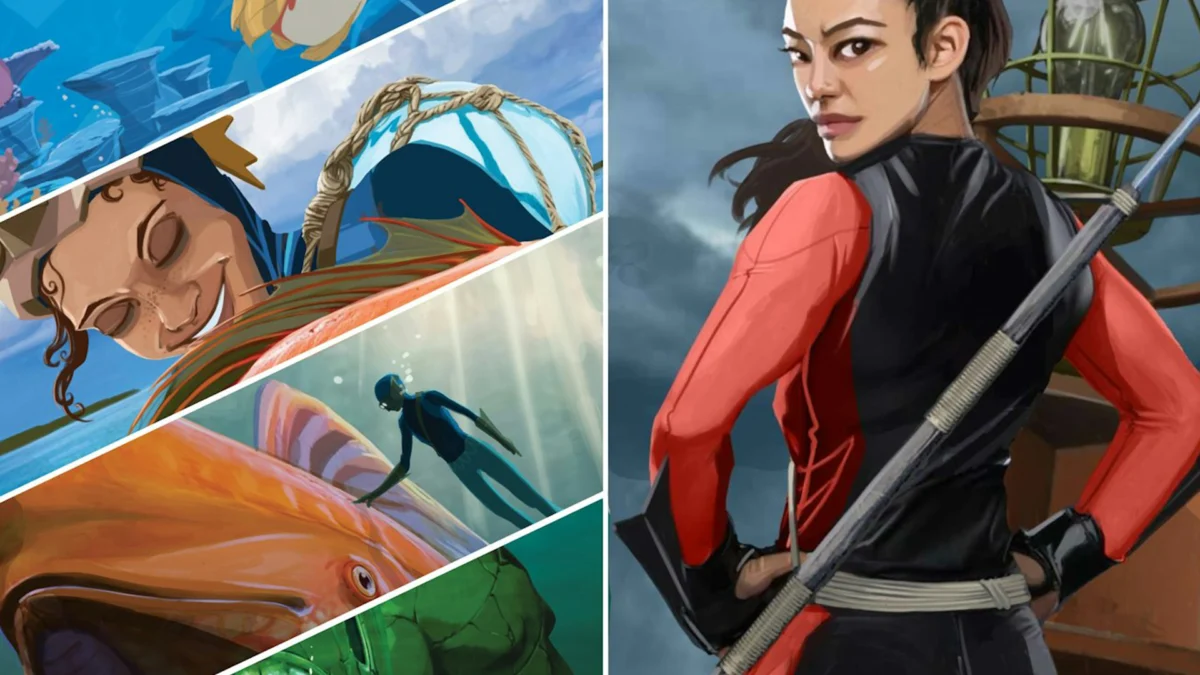
A captivating new solo tabletop roleplaying game (TRPG) titled "Bow" is poised to immerse players in a breathtaking aquatic world, drawing profound inspiration from the tranquil exploration of the video game Abzu and the enchanting animated masterpieces of Studio Ghibli. Developed and published by Hatchlings Games, "Bow" invites players to embody freedivers participating in the illustrious Shoaling Festival, an event of critical importance set against a backdrop of pristine, vibrant oceans. This upcoming roleplaying experience, which can be enjoyed either as a solitary journey or a collaborative duet-journalling game, promises a unique blend of narrative depth, personal reflection, and strategic card-based gameplay. With a crowdfunding campaign slated for launch on Backerkit on May 31st, "Bow" represents a fascinating convergence of digital and animated artistry translated into the tactile world of tabletop gaming, offering an escape into a fantastical underwater realm brimming with wonder and vital challenges.
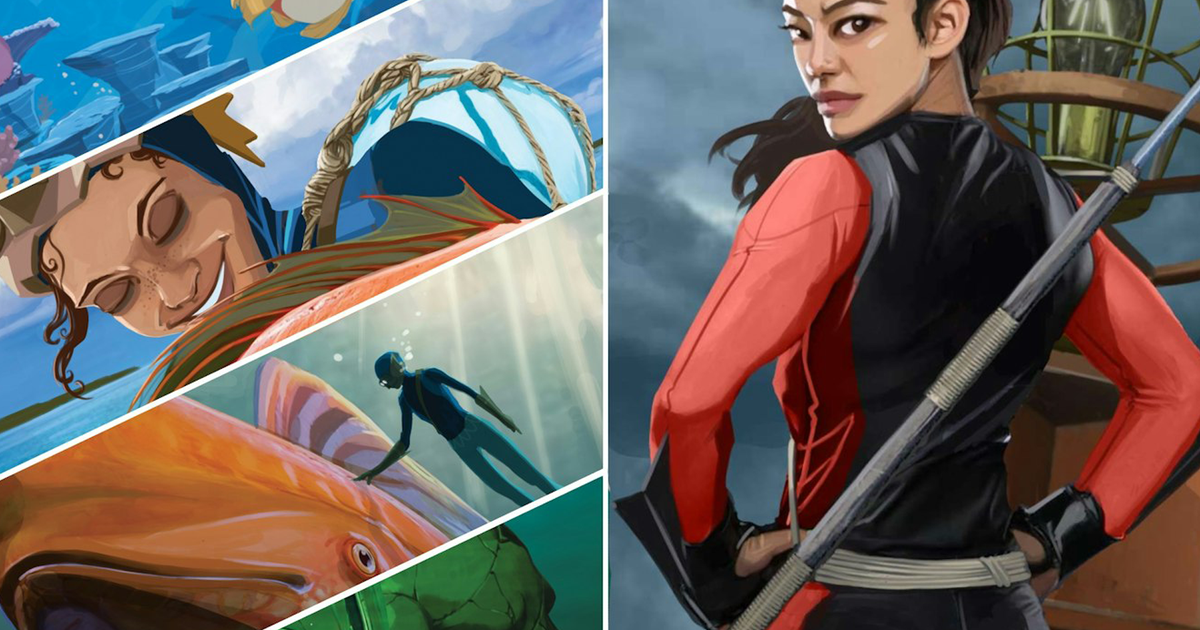
The core premise sees players navigating an intricate race to collect ancient Old-World relics and reach crucial oceanic markers, all while competing against rivals whose identities are woven into the very fabric of the game’s mechanics. The fate of their community, subtly hinted at through the narrative, rests upon their success. The game leverages the established Carta gameplay system by Peach Garden Games, utilizing a 24-card deck arranged in a six-by-four grid to dynamically shape the unfolding story and determine the nature of encounters. Visually, "Bow" is set to feature stunning artwork from WillowsQuest and Alex Connolly, meticulously crafted to evoke the distinctive aesthetic and emotional resonance characteristic of Studio Ghibli’s revered filmography, particularly its glorious seascapes and ecologically conscious narratives.
A Deep Dive into the Concept: "Bow" Unveiled
"Bow" distinguishes itself immediately through its profound and diverse wellspring of inspiration. At its heart lies a vision of a world that is both serene and subtly challenging, encouraging players to explore, reflect, and compete within a beautifully rendered environment. Hatchlings Games has artfully fused elements from disparate media to forge an experience that feels simultaneously familiar and refreshingly novel.
The World of Bow: An Aquatic Odyssey
The fictional universe of "Bow" is a testament to the allure of the deep blue. Players are transported to a planet dominated by "picturesque oceans," a phrase that barely begins to capture the immersive quality Hatchlings Games aims for. This is not merely an aesthetic choice but a foundational element of the gameplay and narrative. The primary influence here, the 2016 indie video game Abzu, is a critical touchstone. Abzu, known for its minimalist storytelling and emphasis on exploration, allows players to glide through stunning underwater ecosystems, encountering diverse marine life and uncovering ancient secrets without the pressure of combat or complex objectives.
"Bow" translates this ethos into a tabletop format. Players are invited to imagine themselves freediving, navigating through "colourful coral reefs" and encountering "all sorts of strange and beautiful creatures." This focus on exploration and the appreciation of natural beauty is paramount. The act of diving, of descending into the unknown, becomes a metaphor for the player’s personal journey of discovery and self-reflection. The game prompts players to describe what they see, how they feel, and what unique encounters they experience, effectively turning the abstract concept of an ocean into a vivid, personal mental landscape. The pristine nature of this ocean suggests an underlying theme of preservation and the delicate balance of ecosystems, reminiscent of many Ghibli narratives.
Ghibli’s Echo: Visuals and Narrative Soul
The influence of Japanese animation powerhouse Studio Ghibli is pervasive throughout "Bow," extending beyond mere visual aesthetics to imbue the game with a particular narrative and emotional texture. Hatchlings Games explicitly references films like Porco Rosso and Nausicaä of the Valley of the Wind, both celebrated for their breathtaking artistry and thematic depth.
Porco Rosso, with its iconic aerial dogfights over the Adriatic Sea, may seem an unusual source of inspiration for an underwater game. However, its "glorious seascapes" and the profound sense of freedom and melancholy associated with its protagonist, a seaplane pilot, resonate deeply with the concept of a freediver navigating vast open waters. The film’s sense of adventure, combined with its poignant exploration of identity and freedom, provides a rich thematic palette for "Bow."
More directly, Nausicaä of the Valley of the Wind offers a compelling parallel, particularly in its depiction of an ecologically ravaged world and a protagonist dedicated to understanding and healing it. The "Old-World relics" that players must collect in "Bow" immediately call to mind the ancient, often dangerous, technologies and mysteries present in Nausicaä. This suggests that the Shoaling Festival might not just be a simple race but a quest with deeper implications for the future of the player’s community, potentially involving the recovery of forgotten knowledge or tools vital for survival or prosperity. The Ghibli influence ensures that the game’s visuals, crafted by artists WillowsQuest and Alex Connolly, are not just pretty pictures but convey a sense of wonder, history, and perhaps even a touch of melancholic beauty, characteristic of Hayao Miyazaki’s works. This artistic direction promises a rulebook that is itself a work of art, enhancing the immersive quality of the game.
Freediving for the Future: The Shoaling Festival
The central narrative engine of "Bow" is the Shoaling Festival, an event that is far more than a mere sporting competition. It is a pivotal moment for the player’s community, making the stakes incredibly high. Players take on the role of freedivers, individuals who possess exceptional skill and courage, delving into the ocean’s depths without the aid of external breathing apparatus. This choice of protagonist emphasizes a connection to nature, self-reliance, and a deep understanding of the aquatic environment.
The festival itself is structured as a race, challenging players to navigate a predetermined route through the ocean, marked by four distinct points. Along this perilous journey, competitors are tasked with collecting "various Old-World relics." These relics are not just arbitrary collectibles; they are crucial to the narrative, hinting at a lost civilization or an ancient past whose knowledge or power is now needed by the contemporary community. The success of the player character and their ability to "beat out their opponents" directly impacts "the future of their community." This adds a profound layer of responsibility and urgency to the gameplay, transforming a simple race into a quest with significant societal implications. The competitive aspect is further enriched by the presence of rival divers, whose distinct personalities and abilities are reflected in the game’s mechanics, creating opportunities for dynamic interactions and strategic decisions.
Gameplay Mechanics: Navigating the Carta System
"Bow" employs a sophisticated yet accessible gameplay system that allows for rich narrative development without the need for a Dungeon Master or extensive rules memorization. This is largely due to its foundation in the Carta gameplay system.
The Carta Core: A Framework for Narrative
The Carta gameplay system, developed by Peach Garden Games, is renowned for its elegant simplicity and its ability to generate compelling narratives using a standard deck of playing cards. It is particularly well-suited for solo and duet journalling games, providing a structured framework that guides the player’s imagination. In essence, Carta games use card draws and layouts to trigger prompts, challenges, and narrative twists, allowing players to build a story collaboratively with the system itself. This makes it an ideal choice for "Bow," as it facilitates spontaneous storytelling and exploration, aligning perfectly with the game’s thematic focus on discovery and personal journey.
For "Bow," the Carta system means that the game isn’t just about rolling dice or making tactical choices in a traditional sense. Instead, it’s about interpreting prompts, making narrative decisions, and recording the outcomes in a journal. This journalling aspect is crucial, as it allows players to personalize their experience, flesh out their character, and create a unique chronicle of their Shoaling Festival adventure. The system’s flexibility means that while the game provides structure, the specifics of each dive, each encounter, and each challenge are left to the player’s interpretation, fostering a deep sense of ownership over the unfolding story.
Cards as Currents: Shaping the Journey
The specific implementation of the Carta system in "Bow" revolves around a deck of 24 playing cards, which are laid out in a six-by-four grid. This grid acts as the game board, a symbolic representation of the ocean itself, with each card drawn or revealed dictating the events of the story. The ingenious aspect of this system is how the suits of the cards are integrated into the gameplay. Each suit – Hearts, Diamonds, Clubs, Spades – is assigned a different type of challenge or narrative encounter that players must overcome during the race. This ensures variety and keeps the gameplay engaging, as players never quite know what kind of obstacle or opportunity the next card will present.
Moreover, the card suits are cleverly designed to represent the rival competitors in the Shoaling Festival. This mechanic introduces a dynamic element of interaction and competition. As players draw or encounter cards of a certain suit, they are not only facing a challenge but also potentially interacting with, or being influenced by, one of their rivals. This could manifest as direct confrontations, indirect obstacles set by competitors, or even moments of unexpected camaraderie. This personification of the suits adds a layer of strategic depth and narrative richness, making the race feel more alive and less like a solitary endeavor, even in a solo game.
The ultimate goal of the race is tied to the collection of aces. If players are able to "uncover four aces" and successfully navigate the challenges presented by their rivals and the ocean itself, they achieve victory. This clear objective provides a satisfying endpoint to the narrative arc, while the journey to reach it is filled with randomized yet thematically consistent events generated by the card system. The interplay between the fixed layout, the randomized draws, and the player’s narrative choices ensures high replayability and a unique story with every playthrough.
The Creative Minds Behind "Bow": Hatchlings Games
Hatchlings Games is quickly establishing itself as a notable and innovative presence in the independent tabletop roleplaying game scene, particularly for its focus on solo and journalling experiences that blend unique themes with accessible mechanics. Their portfolio demonstrates a clear commitment to crafting games that are not only engaging but also often carry deeper meaning or purpose.
A Niche for Innovation: Hatchlings’ Portfolio
"Bow" is not Hatchlings Games’ first foray into Ghibli-inspired solo RPGs. They previously created and published Dragon Dowser, another game that drew from the rich imaginative wellspring of Studio Ghibli. While details on Dragon Dowser suggest a different setting and mechanics, its existence confirms Hatchlings’ affinity for the aesthetic and thematic depth characteristic of Ghibli films. This repeated engagement with Ghibli’s style indicates a deliberate strategy to tap into a beloved visual language that resonates deeply with a broad audience, offering comfort and wonder in equal measure. This also suggests that Hatchlings Games possesses a keen understanding of how to translate such nuanced artistic influences into interactive gameplay.
Beyond fantasy and animation-inspired titles, Hatchlings Games has also demonstrated a remarkable commitment to social impact through gaming. Their tabletop RPG Inspirisles stands out as a unique educational tool, designed to teach British and American sign language. This project underscores the publisher’s philosophy: games can be more than just entertainment; they can be vehicles for learning, empathy, and cultural understanding. This breadth of projects – from fantastical solo adventures to educational tools – showcases Hatchlings Games’ versatility and their dedication to pushing the boundaries of what a tabletop RPG can achieve. Their approach suggests a design philosophy centered on player engagement, meaningful themes, and innovative mechanics that cater to diverse interests and needs. This makes them a publisher to watch in the indie TRPG space.
Chronology and Anticipation: The Road to Launch
The journey for "Bow" is reaching a pivotal stage, with its public debut and fundraising efforts imminent. The anticipation surrounding its release highlights the growing interest in niche yet deeply engaging tabletop experiences.
The Crowdfunding Voyage: Backerkit Launch
The official launch of the crowdfunding campaign for "Bow" is scheduled for May 31st on Backerkit. This date marks the culmination of significant development and creative effort, and the beginning of a crucial phase for the game’s realization. Crowdfunding platforms like Backerkit have become indispensable for independent game developers, providing a direct conduit to potential players and allowing them to gauge interest, secure funding, and foster a community around their projects. For "Bow," a game with such unique inspirations and mechanics, a crowdfunding campaign is an ideal way to connect with an audience that appreciates thoughtful, art-driven, and innovative tabletop experiences.
Backers can typically expect various pledge tiers, offering different levels of engagement and rewards. These often include digital copies of the rulebook, physical editions, exclusive art prints, and perhaps even opportunities to contribute to the game’s development in minor ways (e.g., naming a creature or relic). Stretch goals, common in crowdfunding, will likely introduce additional content such as new prompts, expanded lore, alternative rulesets, or enhanced physical components if the campaign surpasses its initial funding targets. The success of the campaign will not only determine the production quality and distribution scope of "Bow" but also serve as a testament to the appetite for serene, narrative-driven solo RPGs in the current market. Given Hatchlings Games’ track record and the intriguing premise of "Bow," there is a strong potential for a successful and well-supported launch, allowing this unique aquatic adventure to reach a wide array of players eager for a distinct tabletop experience.
Supporting Data and Context
The emergence of "Bow" is not an isolated event but rather indicative of broader trends within the tabletop gaming industry, particularly the evolution of player preferences and the increasing influence of cross-media inspiration.
The Rise of Solo and Duet RPGs
The tabletop roleplaying game landscape has undergone a significant transformation in recent years, with one of the most prominent shifts being the burgeoning popularity of solo and duet RPGs. Once considered a niche within a niche, these formats have exploded in demand, particularly in the wake of global events that emphasized remote play and individual leisure activities. The allure of solo RPGs lies in their unparalleled flexibility: players can engage with the game on their own schedule, without needing to coordinate with a group or find a dedicated Game Master. This accessibility lowers the barrier to entry for many who are curious about RPGs but intimidated by the social commitment or logistical challenges of group play.

Moreover, solo and duet games often foster a deeply personal and introspective narrative experience. Journalling games, like "Bow," encourage players to actively write their story, reflecting on prompts and making choices that shape their unique adventure. This process can be incredibly rewarding, allowing for self-expression and a level of immersion that differs from traditional group play. "Bow" is perfectly positioned within this growing segment, offering a calming, exploratory experience that caters to players seeking a thoughtful escape. Its emphasis on a beautiful, non-combative environment further differentiates it, appealing to those who prefer narrative and discovery over conflict and crunch.
Influence of Video Games and Animation on TRPGs
The cross-pollination between different forms of media has always been a fertile ground for creativity, and the TRPG world is no prime example. "Bow" exemplifies this trend by seamlessly weaving together inspirations from a contemplative video game like Abzu and the emotionally rich animated films of Studio Ghibli. This blending of influences is not merely superficial; it informs the very design and thematic core of the game.
From Abzu, "Bow" inherits its serene underwater setting, its emphasis on exploration, and its sense of wonder at the natural world. The visual and atmospheric qualities of Abzu translate into the game’s prompts and narrative descriptions, encouraging players to visualize vibrant coral reefs and mysterious deep-sea creatures. The Ghibli influence, meanwhile, contributes significantly to the artistic direction, ensuring the game’s aesthetic is evocative and dreamlike. Beyond visuals, Ghibli’s storytelling often touches upon themes of environmentalism, the power of nature, the wisdom of ancient civilizations, and the resilience of the human spirit. These thematic undercurrents are likely to be present in "Bow," elevating the simple race narrative into something more profound. The "Old-World relics" and the "future of their community" hint at a narrative depth that resonates with Ghibli’s often poignant explorations of humanity’s relationship with its world and its past. This synergistic approach demonstrates a sophisticated understanding of how to adapt the strengths of different media into a cohesive and engaging tabletop experience.
Official Responses/Statements
While the original article does not contain direct quotes from Hatchlings Games, the information presented allows us to infer the publisher’s vision and intentions for "Bow."
Hatchlings Games clearly intends for "Bow" to be more than just a game; it is designed as an immersive experience, a journey of discovery and introspection. The developers’ choice to highlight Abzu and Studio Ghibli as primary inspirations speaks volumes about their creative philosophy. They are not merely replicating existing ideas but distilling the essence of what makes these works beloved – their beauty, their emotional resonance, and their capacity to transport audiences to extraordinary places – and translating that into an interactive, player-driven narrative.
The emphasis on "picturesque oceans" and "strange and beautiful creatures" suggests a commitment to fostering a sense of wonder and ecological appreciation within the game. Hatchlings Games appears to be crafting an experience that encourages players to slow down, observe, and connect with a fantastical natural world. The role of the freediver and the Shoaling Festival, with its high stakes for the community, also implies a narrative that explores themes of responsibility, tradition, and the pursuit of a greater good. The publisher, through its game design, seems to be advocating for a style of play that is reflective and personal, where the player’s written journal becomes an integral part of the adventure. Furthermore, the selection of the Carta system indicates a preference for elegant, narrative-focused mechanics that empower the player to be the primary storyteller, ensuring that each playthrough is uniquely their own. This commitment to player-centric storytelling and evocative world-building forms the cornerstone of Hatchlings Games’ approach to "Bow."
Implications and Future Outlook
"Bow" is poised to make a significant splash in the tabletop roleplaying game community, with potential implications for both the solo RPG landscape and the broader appeal of independent game development.
Impact on the Solo RPG Landscape
"Bow" has the potential to enrich the solo RPG landscape by offering a distinct thematic and aesthetic experience. Many solo RPGs tend to lean towards fantasy, sci-fi, or horror genres, often involving survival, combat, or mystery. "Bow," with its focus on serene underwater exploration, competitive freediving, and Ghibli-esque wonder, provides a refreshing alternative. This unique blend could attract players who are looking for a more meditative, visually inspiring, and less combat-oriented solo experience. Its journalling mechanics, combined with the structured randomness of the Carta system, could also serve as an excellent entry point for newcomers to solo RPGs, offering guidance without stifling creativity.
Furthermore, by drawing from Abzu and Studio Ghibli, "Bow" demonstrates how inspiration from diverse media can lead to truly innovative tabletop design. This could encourage other designers to look beyond traditional RPG influences and explore new thematic territories, further diversifying the solo RPG market. Its success could solidify the demand for games that prioritize atmosphere, personal narrative, and gentle competition over more aggressive or complex mechanics.
The Broader Appeal: Beyond the Niche
While "Bow" is a solo/duet journalling RPG, a niche within a niche, its unique selling points give it the potential for broader appeal. Fans of Abzu who enjoyed its tranquil exploration and beautiful aesthetics will find a familiar spirit in "Bow," albeit in a different medium. More significantly, the enormous global fanbase of Studio Ghibli, drawn to its distinctive art style, heartfelt storytelling, and often profound themes, could be captivated by "Bow." The promise of a game that evokes the magic of Ghibli films could introduce many who are unfamiliar with TRPGs to the hobby. This cross-pollination could broaden the audience for tabletop games, attracting individuals who prioritize art, narrative, and emotional depth over traditional gaming conventions.
The gentle competitive aspect, centered around a festival and community stakes, also provides a relatable human element that can resonate with a wider audience. If "Bow" proves successful, it could pave the way for future expansions, spin-offs, or even a series of Ghibli-inspired games from Hatchlings Games, further solidifying their brand as creators of thoughtful and beautifully crafted experiences.
A Testament to Indie Creativity
Ultimately, "Bow" stands as a testament to the vibrancy and ingenuity of the independent tabletop game development scene. Hatchlings Games, through its previous titles like Dragon Dowser and Inspirisles, has demonstrated a commitment to unique concepts and player-centric design. "Bow" continues this tradition, showcasing how small studios can leverage compelling inspirations and innovative mechanics to create experiences that rival, and often surpass, those from larger publishers in terms of creativity and emotional resonance. Its upcoming crowdfunding campaign on Backerkit on May 31st will be a crucial moment, not just for "Bow" itself, but as a barometer for the continued appetite for imaginative, diverse, and artfully crafted tabletop adventures that push the boundaries of the medium. The anticipation surrounding "Bow" is a clear indicator that players are eager for new worlds to explore, and Hatchlings Games is ready to deliver an unforgettable aquatic odyssey.