The Digital Cost of Heritage: Veteran Editor John Freeman Launches Fundraiser to Save ‘downthetubes’
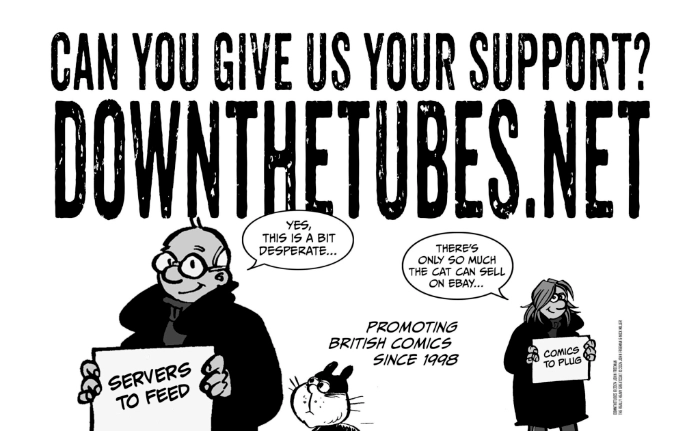
The landscape of independent journalism, particularly within the niche sectors of the arts and popular culture, faces an increasingly precarious future. This reality was underscored this week as John Freeman, a titan of the British comic book industry and former editor at Marvel UK and Titan Magazines, launched an urgent GoFundMe campaign. The goal: to secure the survival of downthetubes, one of the longest-running and most respected news outlets dedicated to the British comic scene.
As digital infrastructure costs continue to spiral globally, the campaign highlights a growing crisis for independent digital archives and news hubs that operate on the periphery of corporate media. Freeman’s appeal for £2,100 to cover rising hosting fees is not merely a request for operational costs; it is a plea for the preservation of a vital cultural resource that has documented the evolution of British sequential art for over a quarter of a century.
Main Facts: A Veteran’s Fight Against Rising Infrastructure Costs
John Freeman, the architect behind downthetubes, has officially turned to the community to bridge a widening financial gap. The site, which has been a staple of the comic industry since its inception in 1998, has seen its overhead costs balloon to unsustainable levels. According to the campaign details, the annual hosting bill has reached just over £2,100—a figure that represents a staggering increase from previous years.
The financial pressure on downthetubes is a microcosm of the challenges facing independent webmasters. While the site generates a modest income through affiliate links and advertising, these revenue streams have failed to keep pace with the aggressive pricing models of modern web hosting providers. Freeman, whose career includes prestigious roles such as editing Doctor Who Magazine and overseeing projects for Titan, operates the site alongside a dedicated team of volunteers. Despite this high level of professional expertise, the site remains a labor of love rather than a profit-driven enterprise.
The GoFundMe campaign serves as a critical intervention. Without these funds, the site’s ability to remain online—and by extension, its massive archive of interviews, reviews, and industry news—is at immediate risk. For the British comic industry, which often struggles for visibility against the dominant American "Big Two" (Marvel and DC), the loss of downthetubes would mean the silencing of its most consistent advocate.
Chronology: From the Dial-Up Era to the Modern Hosting Crisis
To understand the gravity of the current situation, one must look at the 26-year trajectory of downthetubes. The site’s history mirrors the evolution of the internet itself, moving from a passion project in the late 1990s to a primary source for industry professionals and fans alike.
1998–2010: The Formative Years
Launched in 1998, downthetubes began during the infancy of the World Wide Web. At the time, digital news for British comics was sparse. Freeman, leveraging his extensive contacts from his time at Marvel UK, created a platform that bridged the gap between the mainstream press and the burgeoning indie scene. Throughout the 2000s, the site expanded its scope, documenting the rise of digital comics and the resurgence of classic British titles.
2011–2020: Expansion and Initial Stability
As the site grew, so did its technical requirements. However, for much of this decade, hosting costs remained relatively manageable for a site of its size. The platform became a crucial hub for reporting on major events like the Lakes International Comic Art Festival and the various changes at 2000 AD and The Beano. It was during this period that downthetubes solidified its reputation as an archival powerhouse, hosting deep-dive features on the history of British comics that are found nowhere else.
2022: The First Financial Warning
The first significant sign of financial strain appeared two years ago. In 2022, Freeman was forced to run his first major GoFundMe campaign when hosting fees jumped to £1,500. This was a sharp increase from the £620 recorded just two years prior. The community responded positively, allowing the site to transition to more robust servers to handle its increasing traffic.
2024: The Current Emergency
In August 2024, the situation reached a breaking point. The renewal notice for the site’s hosting came in at over £2,100. This nearly 400% increase over a four-year period (from £620 to £2,100) reflects a broader trend in the tech industry where "legacy" hosting plans are being phased out in favor of expensive, high-bandwidth enterprise solutions. Faced with a bill that far exceeds the site’s annual ad revenue, Freeman launched the current fundraiser to ensure the site remains live through the next billing cycle.
Supporting Data: The Economics of Niche Digital Media
The financial data provided by Freeman offers a sobering look at the "hidden costs" of maintaining a high-traffic news site. The jump from £620 to £2,100 in four years is not an isolated incident but part of a global shift in how data is priced.
The Hosting Inflation Curve
- 2020: £620 (Baseline operational cost)
- 2022: £1,500 (141% increase)
- 2024: £2,100+ (40% increase from 2022; 238% increase from 2020)
These increases are often attributed to several factors:
- Security Overheads: As cyber threats evolve, hosting providers mandate more expensive security protocols and SSL certifications.
- Bandwidth Demands: As downthetubes has grown its archive of high-resolution images and long-form articles, the data transfer requirements have increased.
- The "Enshittification" of Hosting: Many industry analysts have noted that mid-tier hosting providers have consolidated, leading to reduced competition and higher prices for independent operators who require more than a basic blog setup but cannot afford "Big Tech" enterprise pricing.
Revenue vs. Expenditure
For a site like downthetubes, revenue is primarily derived from Google AdSense and affiliate marketing (such as Amazon or Bookshop.org links). However, the "ad-pocalypse" and the rise of ad-blockers have significantly diminished the returns for niche publishers. While a site may have tens of thousands of loyal readers, the conversion rate of those readers into ad revenue is often insufficient to cover the technical infrastructure required to serve them.
Official Responses: John Freeman and the Community
In his appeal to readers, John Freeman was transparent about the site’s financial standing and its reliance on the goodwill of the community. His statement highlights the personal nature of independent publishing.
"As regular readers know, downthetubes is a comic site primarily promoting British comics, run by me… complemented by contributions from a fantastic team of volunteers," Freeman wrote. "But what I don’t have is the capacity to cope well with a large bill, especially when it’s a hosting bill of just over £2100."
The Industry Perspective
The response from the comic book community has been one of immediate support, but also concern. Industry veterans have noted that Freeman’s work provides "free" PR for creators and publishers who often lack the marketing budgets of larger corporations.
Prominent figures in the British indie scene have taken to social media to advocate for the fundraiser, noting that downthetubes serves as a "virtual museum" for the medium. Unlike social media platforms like X (formerly Twitter) or Facebook, where content is ephemeral and easily lost to algorithms, downthetubes provides a searchable, permanent record of the industry’s output.
The Volunteer Component
It is important to note that the £2,100 does not go toward salaries. Freeman and his team of volunteers provide their editorial services for free. The funds are strictly for the "pipes" that keep the information flowing. This distinction has been a key factor in the campaign’s success, as donors recognize that their contributions are going directly toward the site’s physical existence rather than administrative overhead.
Implications: What Happens if Independent Sites Fail?
The struggle of downthetubes raises a critical question: What is the future of specialized, independent journalism in an era of rising costs and platform volatility? The implications of this fundraiser extend far beyond the British comic industry.
1. The Loss of Institutional Memory
If downthetubes were to go dark, decades of interviews with legendary creators—many of whom are no longer with us—would vanish. In the digital age, we often assume that information is permanent, but the reality is that the "digital dark age" is a very real threat. Independent sites are the primary keepers of niche history.
2. The Visibility Gap for Emerging Talent
Mainstream media outlets rarely cover the intricacies of the British small press or the local comic convention circuit. downthetubes provides a platform for new artists to find an audience. Without such hubs, the barrier to entry for new creators becomes significantly higher, as they lose a primary channel for discovery.
3. The Shift to the "Patronage Model"
The necessity of this GoFundMe campaign suggests that the traditional "ad-supported" model for independent news is effectively dead. To survive, niche sites must move toward a patronage model—relying on direct support from their audience. While this builds a stronger community, it also makes the existence of these sites fragile, dependent on the fluctuating disposable income of their readers.
4. A Call for Better Infrastructure Support
There is a growing conversation within the arts community regarding whether sites like downthetubes should qualify for cultural grants or institutional backing. Given its role as a promotional vehicle for British culture, some argue that the site performs a public service that should not be left entirely to the whims of the market.
Conclusion
The fundraiser for downthetubes is a reminder that the "free" internet comes at a high price for those who build it. John Freeman’s career has been dedicated to the promotion of others’ creativity; now, the community has the opportunity to ensure that his platform continues to serve as a beacon for the British comic industry.
As of this writing, the campaign continues to draw support from fans, creators, and historians alike. The success of this drive will not only keep the servers running for another year but will also send a clear message: the history and future of British comics are worth paying for.
For those wishing to support the continued promotion of British comics, the downthetubes GoFundMe remains active, seeking to ensure that 26 years of history remains accessible to all.