"Breath of the Dragon" Ignites Young Adult Fantasy with Ancient Wisdom and Modern Relevance
FOR IMMEDIATE RELEASE
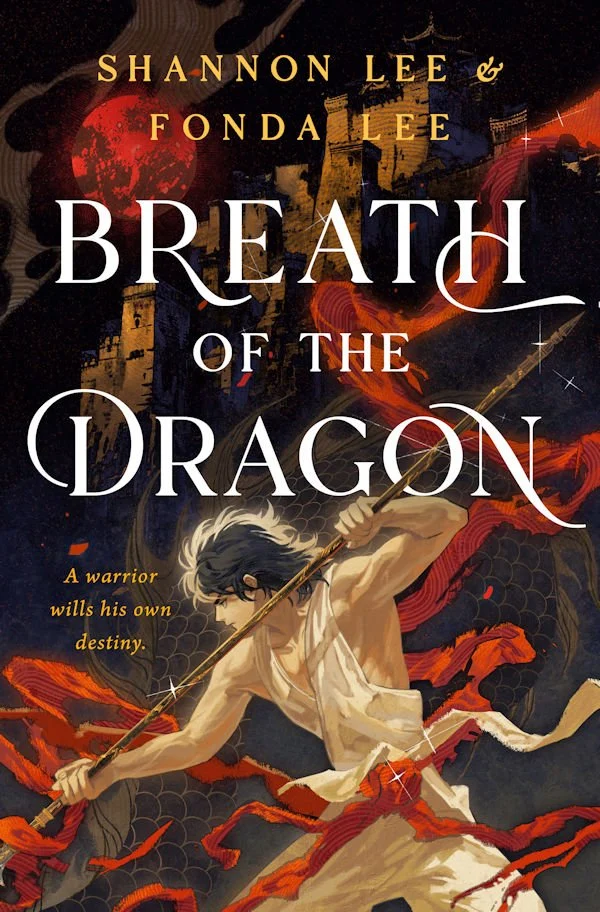
LONDON, UK – A groundbreaking new voice has emerged in the young adult fantasy landscape with the release of Breath of the Dragon, the inaugural volume of the highly anticipated Breathmarked Duology. Released in January 2025, this epic coming-of-age story is the product of a unique collaboration between Shannon Lee, daughter of the legendary martial artist and philosopher Bruce Lee, and Fonda Lee, the celebrated, World Fantasy Award-winning author of Jade City. The novel offers readers a rich, non-European fantasy world infused with profound philosophical insights, challenging the conventional boundaries of the genre and setting a new standard for thoughtful storytelling.
The collaboration brings together an unparalleled blend of martial arts philosophy and masterful fantasy world-building. Shannon Lee, CEO of the Bruce Lee Family Companies and chairperson of the Bruce Lee Foundation, draws directly from her father’s extensive writings and teachings to imbue the narrative with themes of discipline, unity, and honor. Fonda Lee, whose Green Bone Saga has garnered critical acclaim for its intricate world-building and complex characters, lends her award-winning literary craftsmanship to construct a vibrant, immersive world inspired by ancient China. The result is a narrative that is both exhilarating and deeply contemplative, appealing to a broad spectrum of readers while offering a unique cultural lens.
Main Facts: A Story Forged in Honor and Destiny
Breath of the Dragon introduces readers to sixteen-year-old Jun, a youth yearning to prove his worth and reclaim his family’s honor. His ambition is fixed on the elite Guardian’s Tournament, a prestigious event held biannually to select the new protector of the magical Scroll of Earth. Jun believes a victory could rectify a past mistake that led to his father’s disgrace and their banishment from their home, separating them from his mother and twin brother.
However, Jun’s father vehemently forbids his participation, asserting there is no future in the path of a warrior, particularly for Jun, who lacks a "breathmark." Unlike his twin brother, Sai, Jun was not born with the distinctive patch of dragon scales that signify special abilities, bestowed by the realm’s revered deity, Dragon. Undeterred by this perceived disadvantage and his father’s strictures, Jun’s determination propels him to stow away with the traveling performers Chang and his daughter, Ren, on their journey to the capital, the very heart of the tournament.
As Jun enters the fiercely contested Guardian’s Tournament, he quickly discovers that the stakes are far greater than personal glory or family honor. He finds himself embroiled in a struggle that transcends individual ambition, realizing he may be fighting not just for a better life, but for the very fate and stability of his entire country. The narrative thus evolves from a personal quest into an epic confrontation with political corruption, societal division, and the profound responsibilities that accompany true power.
Chronology: The Breathmarked Duology Unfolds
Breath of the Dragon, released in January 2025, marks the highly anticipated beginning of the Breathmarked Duology. The decision to structure the story across two volumes allows for a comprehensive exploration of its intricate plot, diverse characters, and deep philosophical underpinnings. This approach enables the authors to build a rich, expansive world and develop Jun’s character arc with meticulous detail, ensuring that readers are fully invested in his transformative journey.
The second installment, Mark of the Warrior, is scheduled for release on October 27, 2026. This relatively swift follow-up within a two-year window is a strategic move, designed to maintain reader engagement and capitalize on the momentum generated by the first book. While Breath of the Dragon offers a satisfying narrative conclusion to its immediate conflicts and demonstrates significant growth in Jun’s character, it also deftly lays the groundwork for the larger, ongoing epic quest. This ensures that while readers can appreciate the first book as a standalone experience, the compelling nature of the narrative will inevitably leave them eagerly anticipating the duology’s resolution. The sequential release promises a cohesive and immersive reading experience, allowing the overarching story to develop its full potential.
Supporting Data: Unpacking the Narrative and Its Rich Tapestry
Literary Craftsmanship and Accessibility
The prose of Breath of the Dragon stands out for its crisp, clean, and beautifully direct style. This deliberate choice by the authors significantly benefits the young adult genre, making the narrative highly accessible without sacrificing depth. In an era where fantasy literature can often lean towards verbose descriptions or complex sentence structures, the clarity of Breath of the Dragon serves as an ideal entry point for young readers embarking on their journey into fantasy.
Unlike more ornate literary styles that might, as one reviewer noted, cause younger readers to lose the narrative thread amidst poetic flourishes, Breath of the Dragon prioritizes engaging storytelling. The language is precise, allowing readers to remain fully immersed in the plot and character development. This accessibility ensures that the profound themes and intricate world-building are absorbed effortlessly, fostering a love for literature and fantasy in a new generation. The writing style acts as a clear window into a compelling world, rather than a decorative barrier.
A World Beyond Western Tropes
A significant highlight of Breath of the Dragon is its pioneering presentation of a fantasy world rooted in non-European cultural influences. While medieval European settings have long dominated the fantasy genre, this novel bravely ventures into a realm inspired by Ancient China. This choice offers a refreshing departure, providing readers with an opportunity to explore new cultural landscapes, architectural styles, social structures, and mythologies.
The deliberate shift away from familiar Western tropes allows for a rich tapestry of unfamiliar references, from furnishings and weaponry to clothing and customs. While an initial lack of immediate cultural cues might challenge some readers accustomed to more familiar settings, this slight disorientation ultimately serves to deepen immersion. It invites readers to actively engage with and learn about a distinct cultural framework, enriching their understanding of global storytelling. This move not only diversifies the fantasy genre but also introduces young readers to a broader spectrum of global history and aesthetics, making the world feel genuinely fresh and imaginative.
The Guardian’s Tournament and Political Intrigue
At the heart of Breath of the Dragon lies the Guardian’s Tournament, a pivotal event that serves as both a stage for martial prowess and a crucible for political machinations. This tournament is far more than a simple test of skill; it is a microcosm of the larger societal struggles within Jun’s world. The narrative deftly weaves in elements of opposing political factions vying for control, the pervasive influence of organized crime, the corrupting temptations of wealth, and the insidious evils of unchecked power.
Without revealing specific plot details, the story illustrates how these forces coalesce around the tournament, transforming it from a sacred tradition into a tool for manipulation. Jun, initially focused on personal redemption, slowly uncovers the layers of corruption that threaten the integrity of the Guardianship and, by extension, the stability of the entire country. The presence of traveling performers, moving through both rural landscapes and bustling cities, provides a unique perspective on the diverse social strata and the varied impact of these political undercurrents on everyday lives. This intricate web of intrigue elevates the story beyond a simple coming-of-age tale, positioning it as a commentary on power, responsibility, and the resilience required to challenge a flawed system.
Magic, Martial Arts, and Inner Strength
The world of Breath of the Dragon is imbued with a unique magic system, a divine gift bestowed by the deity Dragon in the form of "Breath Marks." These marks manifest as patches of dragon scales on an individual’s skin, granting a myriad of abilities, ranging from psychological enhancements to formidable physical powers. This concept introduces an intriguing dichotomy within the narrative, particularly through the contrast between Jun and his twin brother, Sai Li, who is "Breath Marked."
Jun, however, is not. His journey is defined by this absence, forcing him to rely solely on his innate capabilities and an unwavering commitment to self-mastery. The novel emphasizes intense mental and physical training, coupled with strict discipline, as the means by which Jun cultivates his inner strength. This thematic focus underscores the powerful message that true power and worth are not merely inherited or divinely bestowed, but meticulously forged through relentless effort and personal conviction. The integration of martial arts training within this framework further highlights the significance of discipline, focus, and the development of one’s full human potential, independent of supernatural aid.
Official Responses and Philosophical Foundations: Embodying Bruce Lee’s Legacy
Embodying Bruce Lee’s Legacy
One of the most profound aspects of Breath of the Dragon is its explicit aim to translate and share the timeless philosophies of Bruce Lee with a new generation. Shannon Lee and Fonda Lee have meticulously woven these teachings into the very fabric of the narrative, transforming abstract concepts into tangible experiences for the protagonist, Jun. The authors have openly stated their intention to consult Bruce Lee’s writings, ensuring that his principles of physical and mental discipline, unity, and honor resonate deeply throughout the story.
The novel is a masterclass in illustrating how these philosophies manifest in character development and moral choices. For instance, the emphasis on taking ownership and control of one’s body, mind, and spirit as the pathway to self-actualization is powerfully articulated through Jun’s journey. Ren, Jun’s companion, serves as a poignant voice for these ideals. Her assertion, "Marked or not, every one of us has Breath enough to will our own destiny into being," directly echoes Lee’s belief in individual agency and the power of the human will. Similarly, her wisdom, "The gifts we work for are greater than the ones we’re given," champions the value of earned mastery over inherent talent, a core tenet of Bruce Lee’s philosophy on personal growth and discipline.
The book consistently highlights the importance of respecting others, especially mentors and those from whom one learns, and the necessity of cultivating a disciplined and clear mind. This extends to a robust rejection of division and mistrust, and a strong condemnation of self-serving motives. Jun’s internal reflections, such as his realization that "The people on the other side of the wall were not so different from those here; they’d merely been born elsewhere. It didn’t make them inherently weak or evil," embody Bruce Lee’s philosophy of unity and transcending artificial boundaries. His observations on societal decay, noting that "…people were happy for the tournament to continue under Cobu’s new rules even if it ruined the integrity of the Guardianship and threatened the stability of the country. There was money to be made, and bloodshed entertained the masses," serve as a stark warning against the perils of greed and apathy, echoing Lee’s ethical framework. Jun’s character, though initially flawed and occasionally short-sighted, matures into a sympathetic figure embodying many traits worthy of emulation, guided by an evolving sense of honor and integrity.
Authors’ Vision: A Shared Purpose
The collaboration between Shannon Lee and Fonda Lee transcends mere co-authorship; it represents a shared vision to bridge philosophical depth with compelling fantasy. Shannon Lee’s commitment to preserving and disseminating her father’s legacy finds a perfect vehicle in Fonda Lee’s proven ability to construct intricate narratives and vivid worlds. Together, they have crafted a story that is not only entertaining but also intellectually stimulating, offering young readers not just an escape, but also tools for self-reflection and personal development. Their combined expertise ensures that Breath of the Dragon is more than just a book; it is an experience designed to inspire and empower.
Implications and Impact: Redefining YA Fantasy
Redefining Young Adult Fantasy
Breath of the Dragon is poised to significantly impact the young adult fantasy genre by broadening its scope both culturally and thematically. By setting its narrative in an Ancient China-inspired world, it actively contributes to the growing demand for diverse representation in fantasy literature, offering readers perspectives beyond the often-recycled European medieval archetypes. This cultural richness introduces new aesthetic, historical, and philosophical frameworks, enriching the genre’s tapestry.
Furthermore, the novel’s deep integration of Bruce Lee’s philosophies elevates its thematic complexity beyond typical YA narratives. It introduces concepts of self-mastery, unity, and honor not as simple plot devices, but as integral components of character development and world-building. This approach empowers young readers to engage with profound ethical and existential questions through an accessible and exciting story, fostering critical thinking and personal growth. The book’s success could encourage more authors to explore culturally diverse settings and incorporate deeper philosophical underpinnings into their YA works, pushing the genre towards greater maturity and global relevance.
Broad Appeal and Future Prospects
While recommended for readers aged fourteen and up due to its portrayal of fighting and occasional, though mild, cursing, the strong moral compass of its themes and the absence of overt romance make Breath of the Dragon broadly accessible. The authors’ choice to include some stronger language, while minor, prompts a consideration for future works in the genre to invent world-specific curses, potentially expanding the book’s reach to an even younger demographic. Ultimately, the book’s appeal is primarily dictated by a reader’s comprehension and willingness to engage with its rich narrative and philosophical depth.
The first book of the Breathmarked Duology offers a satisfying narrative arc for Jun Li, showcasing considerable character growth and addressing immediate goals. However, the larger, epic quest remains unfinished, ensuring that readers will eagerly await Mark of the Warrior. This strategic pacing ensures sustained interest and investment in Jun’s ongoing journey. The physical presentation of the book, featuring sprayed edges that offer a unique tactile and auditory experience, further enhances its appeal to collectors and adds a distinctive charm to the reading process.
A Prescient Message for Modern Times
The novel culminates with a quote that resonates with profound and prescient insight, delivered by Jun’s mentor, Chang: "These are dangerous times. I can sense the Breath in this city turning bad, like a winter wind. Win or lose, we’re about to be caught in it." This powerful statement transcends the immediate context of the narrative, serving as a timeless warning about societal health, leadership, and the collective spirit of a community.
In an increasingly complex and divided world, Chang’s words underscore the delicate balance between individual ambition and collective well-being. The "Breath turning bad" can be interpreted as a metaphor for societal corruption, moral decay, or the rise of divisive forces. This philosophical undertone reinforces the novel’s core message: that vigilance, integrity, and unity are essential in navigating turbulent eras. Breath of the Dragon thus offers not only an exhilarating fantasy adventure but also a potent, reflective commentary on the challenges of our own modern world, making it a truly impactful and memorable read for its target audience and beyond.