
The Shifting Sands of the Mandoverse: The Mandalorian Season 4 Gives Way to a Cinematic Future
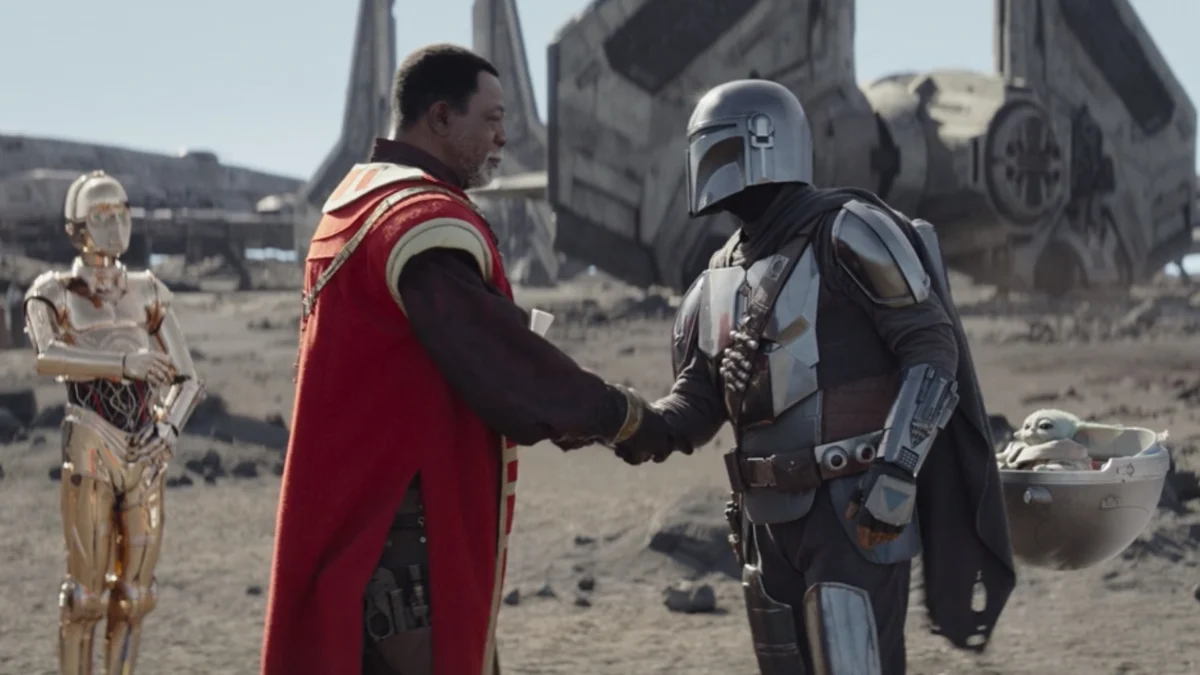
In a galaxy far, far away, the roadmap for Star Wars releases has often felt as unpredictable as a hyperspace jump through an uncharted nebula. The recent revelation regarding The Mandalorian Season 4 and the upcoming film The Mandalorian and Grogu serves as a prime example of Lucasfilm’s evolving, and at times perplexing, storytelling strategy. Far from being a direct continuation, the movie is poised to replace what was once envisioned as the fourth season of the critically acclaimed Disney+ series, leaving fans navigating a "fluid" release landscape where traditional logic frequently gives way to strategic pivots.
For many viewers, the distinction between a fourth season and a standalone film featuring the same beloved characters remains a source of considerable confusion. While both projects are undeniably rooted in the established narrative of the first three seasons of The Mandalorian, their intended scope, audience approach, and place within the broader Star Wars universe appear to diverge significantly. This article delves into the intricate web of decisions, industry challenges, and creative ambitions that led to this unexpected turn, exploring the apparent demise of The Mandalorian Season 4 and the potential trajectory of its cinematic successor.
A Timeline of Development and Pivots
The journey of The Mandalorian has been marked by both critical acclaim and a continuous adaptation to the demands of a sprawling franchise. From its inception, the series carved out a unique space within the Star Wars canon, introducing audiences to the stoic bounty hunter Din Djarin and his adorable, Force-sensitive ward, Grogu. Its success paved the way for an interconnected web of Disney+ shows, affectionately dubbed the "Mandoverse," setting the stage for ambitious future narratives.
Season 4’s Inception and Initial Progress
The idea of a fourth season for The Mandalorian was not merely a fleeting thought; it was a project actively in development. Series creator Jon Favreau had reportedly completed substantial work on the scripts for The Mandalorian Season 4. As early as 2020, even before the release of the show’s second season, actor Giancarlo Esposito, who portrays the formidable Moff Gideon, hinted at the long-term vision for the series. Esposito stated that the initial two seasons were designed to lay the groundwork for significant questions and plot points that would eventually be addressed across seasons three and four. This indicated a planned, multi-season arc for Din Djarin and Grogu.
Season 3, which premiered in 2023, felt in many ways like a soft reboot, reconnecting Din Djarin and Grogu, resurrecting Moff Gideon, and weaving in numerous threads from other Mandoverse shows, some of which did not exist when Season 2 concluded. By the end of the third season, the duo had officially solidified their bond, with Grogu formally adopted by Din, and were embarking on a new chapter of freelance adventures across the galaxy. This was precisely the narrative springboard from which The Mandalorian Season 4 was intended to launch. Favreau himself confirmed that he was deep into the writing process, having completed at least a draft of each episode for the planned fourth season, when a pivotal decision altered its course.
The Catalyst: Strikes and Strategic Re-evaluation
The year 2023 proved to be a tumultuous one for Hollywood, marked by significant writers’ and actors’ strikes that brought much of the industry to a standstill. These widespread production delays forced studios to re-evaluate their entire slates, assessing budgets, timelines, and the strategic positioning of their key franchises. For Lucasfilm and Disney, this period of introspection became a critical juncture for the Star Wars universe.
During this re-evaluation, a fundamental shift in strategy emerged: the decision to transition The Mandalorian from a streaming series for its fourth season into a theatrical feature film. This was not a cancellation in the traditional sense, but rather a strategic reallocation of resources and narrative focus. The original scripts for The Mandalorian Season 4 were, in essence, put into a drawer, their potential storylines now requiring significant re-working or outright abandonment to fit the new cinematic format. The direct translation of multi-episode television arcs into a condensed film narrative proved unfeasible, as Favreau later explained. The meticulously crafted episodic structure, designed to delve deep into lore and character development over several hours, simply could not be crammed into a two-hour movie without substantial alterations.
The Birth of The Mandalorian and Grogu
The official announcement of The Mandalorian and Grogu as a feature film, directed by Jon Favreau, solidified the pivot. This cinematic venture was positioned as an immediate priority, essentially occupying the slot that The Mandalorian Season 4 would have filled. While the film will pick up on the established premise of Din Djarin and Grogu working together, its existence fundamentally underscores Lucasfilm’s temporary departure from the episodic television format for this particular narrative thread.
The mere fact that a completed, or near-completed, season of a hugely popular show could be shelved in favor of a movie highlights the dynamic and often reactive nature of modern franchise management. It also raises questions about the long-term viability of a fourth season of the series. While not explicitly ruled out forever, those involved, particularly Favreau, have understandably shifted their focus entirely to the film. When pressed on the possibility of a revived Season 4, Favreau’s official response, "talk to [Lucasfilm president] Dave Filoni," suggests that any future for the show is, at best, an unconfirmed plan dependent on a myriad of factors, including budgets, schedules, and genuine audience interest following the movie’s release. The original version of Season 4, however, is definitively off the table, its narrative threads woven into a tapestry that can never be precisely replicated.
The Rationale Behind the Cinematic Leap
The decision to transform The Mandalorian Season 4 into a theatrical film, The Mandalorian and Grogu, was not made lightly. Lucasfilm and Disney have offered several explanations, painting a picture of strategic foresight in response to industry challenges and evolving audience consumption habits.
Lucasfilm’s Vision: Broader Reach and New Audiences
A primary driver behind the cinematic pivot, as articulated by former Lucasfilm president Kathleen Kennedy, was the desire for broader audience reach. In an interview with Deadline, Kennedy highlighted the streaming space’s utility for "experimentation," contrasting it with the perceived difficulty of achieving similar flexibility in the movie arena. She emphasized the appeal of launching a Mandalorian movie after three successful seasons, leveraging an established audience while simultaneously creating a new entry point for younger and uninitiated viewers. "We gave the young audience an opportunity to enter Star Wars at a different place and not feel like you have to have seen everything," Kennedy explained. "It can become their Star Wars."
Jon Favreau echoed this sentiment, underscoring the delicate balance required in crafting Star Wars narratives for both dedicated fans and newcomers. He noted the challenge of satisfying those who "might have seen everything with Star Wars" while simultaneously extending "an outstretched hand to somebody new, who may not have done it and seen it before." The theatrical experience, with its inherent grandeur and marketing potential, is seen as a more effective vehicle for achieving this dual objective than another season on a streaming platform. The perceived ability of a film to transcend the dedicated subscriber base of Disney+ and attract a wider, more casual audience to cinemas appears to be a key calculation.
The Efficiency Argument: Production Delays and Consolidation
Beyond audience expansion, the 2023 writers’ and actors’ strikes undeniably played a significant role in the strategic shift. The widespread production delays forced Disney to re-evaluate its entire Star Wars slate, leading to a determination that producing The Mandalorian and Grogu as a movie would be "more efficient and effective" than proceeding with a fourth season of the show.
This "on-paper story" suggests a pragmatic decision rooted in the logistical complexities of filmmaking. Converting a planned season into a movie could streamline production, potentially circumventing some of the challenges posed by the strike-induced backlogs and uncertainties. It offered a way to deliver a high-profile Star Wars project to audiences within a revised timeline, ensuring continued engagement with the franchise during a period of disruption. In an industry where momentum is crucial, a cinematic release could maintain visibility and excitement more effectively than a potentially delayed or piecemeal streaming season.
Unspoken Undercurrents: The State of the Mandoverse
While official statements emphasize strategic growth and efficiency, a few lingering questions and unspoken factors likely influenced the decision. The most prominent among these is the peculiar state of Lucasfilm’s theatrical film pipeline. The Mandalorian and Grogu will be the first Star Wars theatrical release since 2019’s The Rise of Skywalker. Over the years, numerous other Star Wars film projects have been announced, developed, and subsequently put on hold or quietly canceled – including a standalone Rey movie, Donald Glover’s Lando film, Taika Waititi’s enigmatic Star Wars project, and perhaps most relevantly, Dave Filoni’s "Mandoverse" movie, which was envisioned as an epic culmination of the various Mandalorian spin-off shows.
The question then arises: was The Mandalorian and Grogu simply the most readily adaptable project to fill a gaping hole in Lucasfilm’s theatrical schedule? If other high-profile film projects were not ready for production, converting an already-in-progress Mandalorian season into a movie might have been seen as a practical way to get any Star Wars film into cinemas. This interpretation suggests a degree of reactive decision-making, aiming to re-establish a theatrical presence for the franchise.
Furthermore, there appears to be a slight contradiction in the messaging. While the film is promoted as a "better gateway for new and younger fans," Dave Filoni himself has described the movie as a "big celebration" of these characters. A "celebration" implies a deep familiarity with the existing lore and character journeys, making it less of an accessible entry point for true newcomers. For a film intended to attract a wide, potentially new audience, basing it directly on the narrative of an existing streaming series, whose name value largely appeals to those already familiar with it, is an interesting strategic choice.
An unspoken factor that cannot be ignored is the somewhat mixed reception to recent Mandoverse-adjacent projects, including Ahsoka, The Mandalorian Season 3, and The Book of Boba Fett. While none were outright failures, critical and audience responses indicated varying degrees of enthusiasm, with some expressing concerns about pacing, narrative coherence, or the perceived dilution of the central Mandalorian storyline. If The Mandalorian Season 4 was indeed intended to lead directly into Ahsoka Season 2 and Filoni’s larger Mandoverse film, as early reports suggested, then Disney might have felt it prudent to consolidate the narrative. Instead of continuing to invest heavily in multiple interconnected streaming series amidst production delays and fluctuating audience sentiment, a more focused cinematic event might have been deemed a safer, higher-impact investment. It’s worth noting that these decisions predate Dave Filoni’s promotion to Chief Creative Officer of Lucasfilm, a role that will undoubtedly grant him more direct influence over the future direction and scale of the Mandoverse moving forward.
What The Mandalorian Season 4 Would Have Been – And What We Lost
The pivot from an episodic fourth season to a feature film inevitably means a significant alteration to the story originally planned for Din Djarin and Grogu. Based on the information that has emerged, the scrapped Season 4 would have been a far more expansive and lore-heavy undertaking, deeply integrated into the overarching narrative of the Mandoverse.
Deepening the Lore: Thrawn, Shadow Council, and New Republic
The core of The Mandalorian Season 4’s proposed storyline would have been heavily dedicated to establishing crucial plot points for Ahsoka Season 2 and potentially laying the groundwork for Dave Filoni’s Mandoverse culmination film. Central to this narrative was the formidable Grand Admiral Thrawn. Jon Favreau explicitly stated that the Thrawn storyline was intended to be a significant component of Season 4, directly setting up the character’s arc in the subsequent season of Ahsoka. "It would have heavily linked to Ahsoka Season 2," Favreau confirmed. "You can’t just take those scripts and turn them into a movie. There were a lot of characters, it assumed you’d watched the whole show, and it was teeing up what was happening moving into [the second season of] Ahsoka. It was about Grand Admiral Thrawn and following the larger storyline [of this era of the Star Wars timeline]."
This reveals a vision for Season 4 that was far from a standalone adventure. It was designed to be an intricate piece of a larger puzzle, exploring the complexities of the post-Empire galaxy through the lens of Din Djarin and Grogu’s freelance assignments. Beyond Thrawn, rumors (though unconfirmed) suggested expanded roles for the shadowy remnants of the Imperial hierarchy, often referred to as The Shadow Council, as well as various factions and figures within the fledgling New Republic. This would have allowed Season 4 to delve deeper into the political and ideological struggles of the era, addressing lingering lore questions posed by the show’s earliest seasons and further cementing its place within the broader Star Wars narrative.
The initial premise of Season 4 would have indeed picked up from Din and Grogu’s established dynamic as a clan of two, taking on assignments across the galaxy. However, the key distinction lies in how these assignments would have served the narrative. Instead of merely being episodic adventures, they would have been vehicles for unfolding a richer, more interconnected Mandoverse mythos, gradually drawing Din and Grogu into the larger galactic conflict against the rising threat of Thrawn and the Imperial remnants.
The Interconnected Web of the Mandoverse
The most significant implication of the shift from Season 4 to a movie is the departure from a deeply interconnected narrative. The Mandalorian Season 4, as originally conceived, was not just a season of television; it was a foundational piece of the Mandoverse mosaic. It was intended to be a conduit for crucial plot developments that would ripple through Ahsoka and other spin-offs, culminating in Filoni’s theatrical event. The television format allowed for the gradual build-up of stakes, the introduction of multiple characters, and the exploration of complex subplots necessary to weave such an intricate tapestry.
The cinematic version, The Mandalorian and Grogu, is, by contrast, designed to be more of a standalone experience. While it will certainly draw upon the characters and their established relationship, the necessity of condensing a multi-episode narrative into a single film mandates a more focused, streamlined plot. This suggests a potential pulling back from the deeper, more intricate lore elements and the expansive cast of characters that Season 4 would have featured, in favor of a narrative that prioritizes accessibility and a self-contained story arc. The film, in this context, might function more as a "fresh start" for Din and Grogu, utilizing their established dynamic as a launchpad for new adventures that are less beholden to the ongoing developments in other Mandoverse series.
The Fate of the Original Scripts and Future Prospects
Given the timeline, with Ahsoka Season 2 not expected until 2027 (well after The Mandalorian and Grogu film’s release and potentially after any hypothetical new season of The Mandalorian), the original scripts for Season 4 are effectively obsolete. Their heavy reliance on setting up Ahsoka Season 2 means they cannot be aired as is. Any future iteration of The Mandalorian as a series would require entirely new scripts, carefully crafted to accommodate the events of The Mandalorian and Grogu film and whatever unfolds in the second season of Ahsoka.
The prospects for a future The Mandalorian Season 4 remain uncertain. While Lucasfilm hasn’t explicitly closed the door, the current focus is squarely on the film. Whether the show eventually returns in an episodic format will likely hinge on several factors: the critical and commercial success of The Mandalorian and Grogu, the continued appetite from Disney for original streaming content of this scale, and the availability of key creative talents like Jon Favreau and Dave Filoni. With Dave Filoni now at the helm as Chief Creative Officer, the strategic direction of the entire Star Wars franchise is in his hands, and his vision will dictate how large The Mandalorian will be moving forward, both on screen and on the small screen.
In conclusion, the journey from The Mandalorian Season 4 to The Mandalorian and Grogu film is a testament to the dynamic and often unpredictable nature of modern franchise management. While the original vision for Season 4 offered a deep dive into an interconnected Mandoverse, the cinematic pivot represents a strategic shift towards broader accessibility and a potentially more consolidated narrative. Fans now await the film with a mix of anticipation for new adventures and a nostalgic reflection on what might have been, as the "fluid" world of Star Wars continues to surprise and evolve.

Leave a Comment