Choreographing a Cultural Phenomenon: Inside the Technical and Emotional Artistry of Netflix’s ‘Best of the Best’
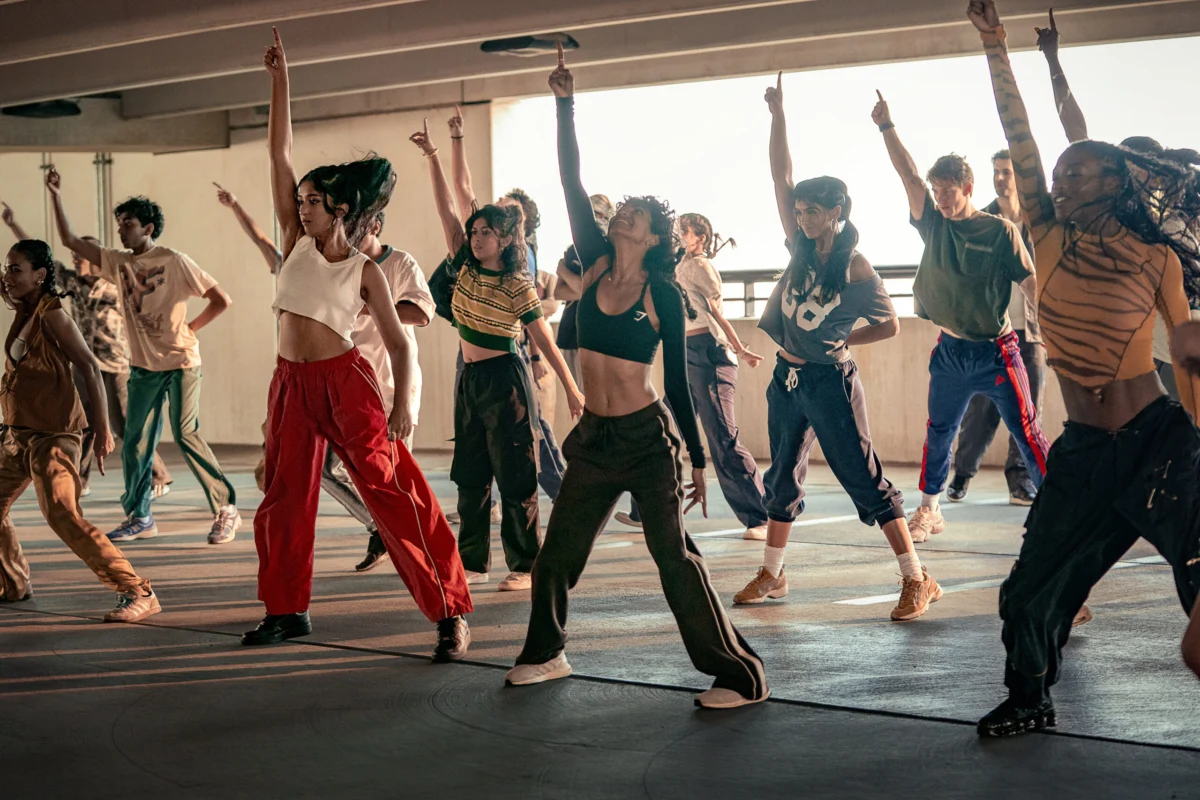
The world of collegiate Bollywood dance competitions is one of high stakes, intense glitz, and a level of "extra-ness" that defines a specific corner of the South Asian American experience. In Netflix’s latest feature, Best of the Best, director Lena Khan attempts—and largely succeeds—in capturing this lightning in a bottle. Far from being a mere collection of musical numbers, the film serves as a masterclass in how movement can mirror psychological evolution. Through a rigorous combination of data-driven narrative tracking, innovative cinematography, and a refusal to rely on genre clichés, the production team has crafted a film that treats the dance floor as a battlefield for identity, friendship, and cultural reclamation.
Main Facts: A New Standard for the Dance Genre
Best of the Best follows the journey of UCLA’s premiere Bollywood fusion dance team, Agni, as they navigate the cutthroat circuit of national competitions. At the center of the narrative is Maya (Maitreyi Ramakrishnan), a "fearlessly innovative" freshman who finds herself at odds with the team’s established traditions. While the team captain, Ronak (Ankur Rathee), advocates for the high-octane, "extra" energy synonymous with Bollywood, Maya pushes for a deeper, more nuanced representation of Indian culture that moves beyond the typical wedding-themed tropes.
The film’s script, penned by the veteran comedic and narrative duo Hasan Minhaj and Prashanth Venkataramanujam, sets a high bar for the production. The dialogue promises a story of codependency, ambition, and reconciliation—a promise that director Lena Khan had to fulfill through the film’s elaborate dance sequences. Unlike many films in the genre where the music serves as a break from the plot, Best of the Best utilizes dance as the primary vehicle for character development.

The production was defined by several key technical achievements:
- Narrative Mapping: The use of complex line graphs and Google Sheets to ensure every dance move corresponded to a specific point in the characters’ emotional arcs.
- Visual Innovation: A collaboration between cinematographer Adam Carboni and a trio of choreographers to create in-camera illusions, avoiding the "music video" aesthetic.
- The Heist Finale: A climactic 10-minute sequence involving a British Museum heist theme, 50-watt static lasers, and massive moving set pieces.
Chronology: From "Mighty Graphs" to the Final Cut
The development of Best of the Best began with a script that demanded the impossible: dance sequences that were narratively essential but flexible enough to be executed on a "blistering" shooting schedule.
Phase 1: The Script and the Musical Foundation
The process started with the music. Music supervisor Kier Lehman worked alongside Khan to craft remixes that honored South Asian traditions while sounding "vital and current." These tracks became the heartbeat of the production, providing the tempo for both the choreography and the emotional beats.

Phase 2: The "Mighty Graphs" of Emotion
Before a single dancer took the stage, Lena Khan and her team engaged in a unique pre-production phase. They developed "mighty graphs" on Google Sheets and extensive PowerPoints to map out the "macro journey" of the characters. For Maya and her best friend Anjali (Priyanka Kedia), the graph tracked their shift from codependency to attachment issues, and finally, to a healthy, supportive partnership. Every dance was plotted as a point on this graph, ensuring that the movement reflected their internal state at that specific moment in the film.
Phase 3: The Collaborative Shoot
On set, the production faced the reality of a tight Netflix schedule. Most dance sequences had to be captured in just one or two takes. This necessitated a "mini-miracle" every day, requiring the choreography team (Phillip Chbeeb, Makenzie Dustman, and Joya Kazi) to work in constant sync with the camera crew. The filming of the finale, in particular, was the culmination of weeks of "PreViz" (pre-visualization) work, where choreographers used handheld cameras to sketch out the pace for the professional Steadicam operators.
Supporting Data: The Technical Architecture of the Dance Floor
To understand the scale of Best of the Best, one must look at the technical data and innovative "tricks" employed by the cinematography and choreography departments.

Cinematographic Innovations
Cinematographer Adam Carboni drew from his background in music videos and commercials to ensure the film didn’t look like a standard television musical.
- The Sunflower Transition: In one notable scene, two dancers fill the frame with handheld sunflowers. As they lower the props, a new character has seamlessly replaced the former in a single, unedited shot—a clever use of physical blocking over CGI.
- Motion Control: Instead of a traditional training montage, Carboni used motion-control rigs to create the illusion of a single continuous take, making the team’s preparation feel like a choreographed dance in itself.
- The Phone Perspective: For scenes involving social media gossip (featuring Lilly Singh), the team used "plate work" to make the viewer feel as though they were inside the smartphone, heightening the "always-on" pressure of the dance circuit.
The Physics of the Finale
The finale—a British Museum heist to "take back" the Koh-i-noor diamond—was a massive undertaking.
- Laser Grid: The "Ocean’s Twelve"-inspired laser sequence used 50-watt static lasers. To keep dancers safe, choreographers originally used yarn to mark the "beams" during rehearsal so the dancers could memorize the exact physical gaps.
- Set Design: The dancers were required to move massive walls and frames that had to be heavy enough not to tip but light enough to be pushed during a high-speed routine. These frames were decorated with historically accurate South Asian pottery and artwork, curated by Joya Kazi to add layers of cultural meaning to the background.
Official Responses: Insights from the Creative Team
The creative leads of Best of the Best emphasize that the film’s success relied on a level of integration rarely seen in Hollywood.

Director Lena Khan on the "Listenability" of the Film:
"I told [Kier Lehman] that I wanted to be able to listen to this movie. You should be able to tell the story and the relationships and the feelings through the movement and the music," Khan told IndieWire. She noted that the atypical route of Maya and Anjali’s friendship—moving through codependency and attachment—was the most rewarding part of the "graphing" process.
Choreographer Makenzie Dustman on Female Partnership:
Dustman highlighted the nuance of the Maya-Anjali duet: "What’s really hard with female counterparts and actual dance partnerships is you don’t know who’s leading. There has to be the sensitivity to who is going to initiate this next move… we’re trying to emulate that awareness and this high sensitivity."
Cinematographer Adam Carboni on Maintaining "Humble" Origins:
Despite the "grand-scale production," Carboni was adamant about keeping the spirit of a collegiate team alive. "We couldn’t just throw scale at every dance… we brainstormed ways to create unexpected moments using optical illusions and simple in-camera tricks."

Choreographer Phillip Chbeeb on the Physical Toll:
Chbeeb reflected on the "mini-miracles" required for the finale, noting that the crew often had no rehearsal time for specific lighting cues. "The choreographers are in real-time on headsets cueing the spotlights… we have shots we literally have to get right now and get the timing perfect."
Implications: A New Chapter for South Asian Representation and Dance Cinema
The release of Best of the Best on Netflix carries significant implications for both the film industry and the South Asian diaspora.
Challenging the Bollywood Monolith
By centering the plot on Maya’s refusal to perform a "wedding-themed" routine, the film directly addresses the Western tendency to reduce Indian culture to a few recognizable clichés. It argues that "Bollywood" is not just a style of dance, but a vessel for "extra" emotion—a way to feel "really alive." This distinction allows the film to celebrate Bollywood while simultaneously pushing the boundaries of what "fusion" can mean, incorporating elements of hip-hop, contemporary, and even heist-movie tropes.

The Revival of the Dance Film
Dance movies have become a rarity in the modern cinematic landscape, often relegated to low-budget franchises or stage-to-screen adaptations. Best of the Best proves that there is still a hunger for original, high-production-value dance narratives. By integrating the choreographers into the pre-production and design phases—a rarity in the industry—the film sets a new precedent for how dance should be filmed: not as a spectacle to be observed, but as a language to be spoken.
Emotional Resonance and Art Imitating Life
The emotional weight of the project was felt by the cast and crew alike. Joya Kazi noted that during the filming of the final duet between Maya and Anjali, "there was not a dry eye in the room." This "virtuous cycle" of art imitating life—where the dancers’ physical exhaustion and eventual triumph mirrored the characters’ journey—lends the film an authenticity that resonates with anyone who has ever been part of a high-stakes team.
Ultimately, Best of the Best is more than a movie about winning a trophy. It is an exploration of the "messiness of humanity," told through the precision of movement. As it streams globally, it stands as a vibrant testament to the power of cultural innovation and the enduring strength of female friendship.